Simon Cowell Biography: The Mailroom Clerk Who Owns the Formats
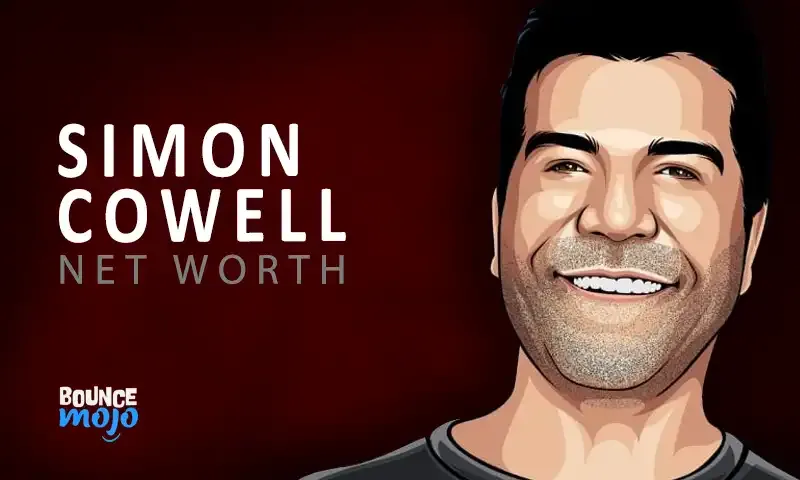
The public version of Simon Cowell is a man in a white t-shirt telling a nervous teenager their singing reminds him of a cat being reversed over. That version is worth a judging fee. The version that matters commercially is a man who spent thirty years learning, expensively, that fees are worthless and rights are everything.
Elstree, and a Father Who Already Knew the Building
He was born in Lambeth, London on October 7, 1959, and grew up in Elstree, Hertfordshire, in a comfortable, slightly theatrical household. His mother, Julie Brett, was a dancer and socialite. His father, Eric Cowell, worked in property and as an executive at EMI.
That last detail is the whole starting position. Cowell did not break into the music business; he was already inside the perimeter. What he did not have was patience for school. He left formal education early with limited qualifications, drifted through odd jobs — including a stint as a runner on a film set — and eventually took the job his father’s world could offer him.
The Mailroom Was Not a Metaphor
He started in the EMI Music Publishing mailroom, genuinely sorting post. He was, by his own accounts, an indifferent employee at first and a fast learner second, and he climbed to assistant to an A&R executive — the job that involves listening to enormous quantities of bad music and occasionally identifying something that isn’t.
Then he did the thing that defines him. He left the safe job. In the early 1980s he set up E&S Music with his former EMI boss, and in 1983 co-founded Fanfare Records with Iain Burton.
Broke in His Twenties
Fanfare worked for a while. Its biggest moment was Sinitta’s “So Macho” in 1986, a hit that established Cowell as someone who could manufacture a pop record rather than merely admire one. The label also sold exercise videos and an Italian Baroque-pop orchestra, which tells you how few artistic principles were at stake.
Then it collapsed. Fanfare folded in 1989 and took Cowell’s money with it. He has described the aftermath bluntly: he lost everything and moved back into his parents’ house in his late twenties, watching a business he had built disappear because he did not control enough of it.
He does not present this as character-building. He presents it as data. Every structural decision he made afterwards — about ownership, about formats, about who holds the rights when the show gets sold to forty countries — traces back to a bankruptcy at 30.
Novelty Records, Wrestlers, and the Teletubbies
The rebuild was unglamorous. He went to BMG as an A&R consultant and set up S Records, and he made money on material that no self-respecting label executive would put on a CV: Power Rangers records, Zig and Zag, World Wrestling Federation tie-ins, a Teletubbies single.
The snobbery this attracted missed the point. Cowell was demonstrating that he understood the actual mechanism of pop — that a record is a product with an audience, and the audience does not need to be cool for the cheque to clear.
His first genuinely large payday came from a television-derived idea. In 1995 he persuaded Robson Green and Jerome Flynn, two actors from the ITV drama Soldier Soldier, to record “Unchained Melody”. It went to No. 1, became the best-selling UK single of 1995, and their album was the best-selling album of the year. He then signed Westlife and Five.
He had found his method: identify a pre-built audience, then give it exactly what it already wants.
Pop Idol: Being the Only Person Willing to Say It
Television was the logical extension. He joined the judging panel of Pop Idol in 2001 and American Idol in 2002, and the on-screen persona arrived fully formed — flat, unbothered, willing to tell a contestant the truth in front of their parents.
It worked because everyone else on those panels was being kind and nobody believed them. Cowell’s cruelty functioned as a credibility system: if his criticism was real, his praise was worth something. That single mechanism carried the format across dozens of countries.
He then built his own. Syco produced The X Factor from 2004 and the Got Talent franchise, which became one of the most widely licensed television formats in the world. His artists — Leona Lewis, Il Divo, One Direction, Little Mix, James Arthur, Olly Murs — came out of shows he owned pieces of, which meant he monetised the same act twice.
Buying Back His Own Company
The most consequential thing he has done had no cameras on it. Sony had held a large stake in Syco for years. In July 2020 Cowell bought out Sony Music’s stake in the television joint venture, taking sole ownership of the Got Talent and X Factor formats, with Sony keeping the music-side catalogue and roster.
That is the Fanfare lesson executed at scale. A judge earns a fee per season and stops earning when the show ends. A format owner earns from every version in every territory, forever, whether or not he appears on screen. Our Simon Cowell net worth breakdown works through what that ownership is actually worth against the judging money, and the richest celebrities list puts the total in context.
August 2020: The Metal Rod
Weeks after the Sony deal, he fell off an electric bike at his Malibu home and broke his back. Surgeons operated for six hours and fitted a metal rod. He later said the X-ray showed how close he had come to a spinal injury that would have stopped him walking.
He recovered, and then in January 2022 came off another e-bike near his London home and broke his arm. The period visibly changed him — a stricter diet, more talk about his son and less about the next commission. His son Eric, born in February 2014 to his partner Lauren Silverman, is named after his father, who died in 1999.
December 10: Doing It Again on Camera at 66
The most revealing recent move is that he went back to the beginning. Simon Cowell: The Next Act, a Netflix docuseries from Syco and Box to Box Films, premiered in December 2025 and followed him assembling a new boy band from open auditions.
The result was a seven-piece called December 10, named after the launch date. Their first single, “Run My Way”, arrived on January 30, 2026 and charted at No. 68 in the UK.
That number is small, and the fact that he made the series anyway is the interesting part. At 66, with the formats fully owned and nothing left to prove, he chose to be filmed attempting the one thing that can still publicly fail — picking five or seven strangers and betting that the public wants them. The mailroom clerk never entirely left.
Shop Simon Cowell on Amazon
Books, audiobooks, merch and more, handpicked for fans.
As an Amazon Associate we earn from qualifying purchases.
Frequently Asked Questions
Where did Simon Cowell grow up?+
He was born in Lambeth, London on October 7, 1959, and raised in Elstree, Hertfordshire. His father Eric worked in property and at EMI; his mother Julie was a dancer.
What was Simon Cowell's first job in music?+
The mailroom at EMI Music Publishing. He had also worked as a runner on a film set before that. He worked his way up to assistant to an A&R executive before leaving to start his own label.
Did Simon Cowell ever go broke?+
Effectively, yes. Fanfare Records, the label he co-founded, collapsed in 1989, and he has spoken about losing everything and moving back in with his parents in his late twenties before rebuilding at BMG.
What was Simon Cowell's first big hit?+
Persuading actors Robson Green and Jerome Flynn to record 'Unchained Melody' in 1995. It went to No. 1 and became the best-selling UK single of the year, and the duo's album was the year's best-selling album.
Does Simon Cowell own The X Factor and Got Talent?+
He does now. In July 2020 he bought out Sony Music's stake in the Syco television joint venture, taking sole ownership of the Got Talent and X Factor formats. Sony retained the music-side assets.
What happened in Simon Cowell's bike accident?+
In August 2020 he broke his back falling from an electric bike at his Malibu home and had a six-hour operation to fit a metal rod. He has said an X-ray showed how close he came to being unable to walk. He broke his arm in a second e-bike crash in London in January 2022.
Want the money side of the story?
Read Simon Cowell's Full Net Worth Breakdown →Shop Simon Cowell on Amazon
Books, audiobooks, merch and more, handpicked for fans.
As an Amazon Associate we earn from qualifying purchases.