Shaun White Biography: The Raw Truth Behind the Flying Tomato
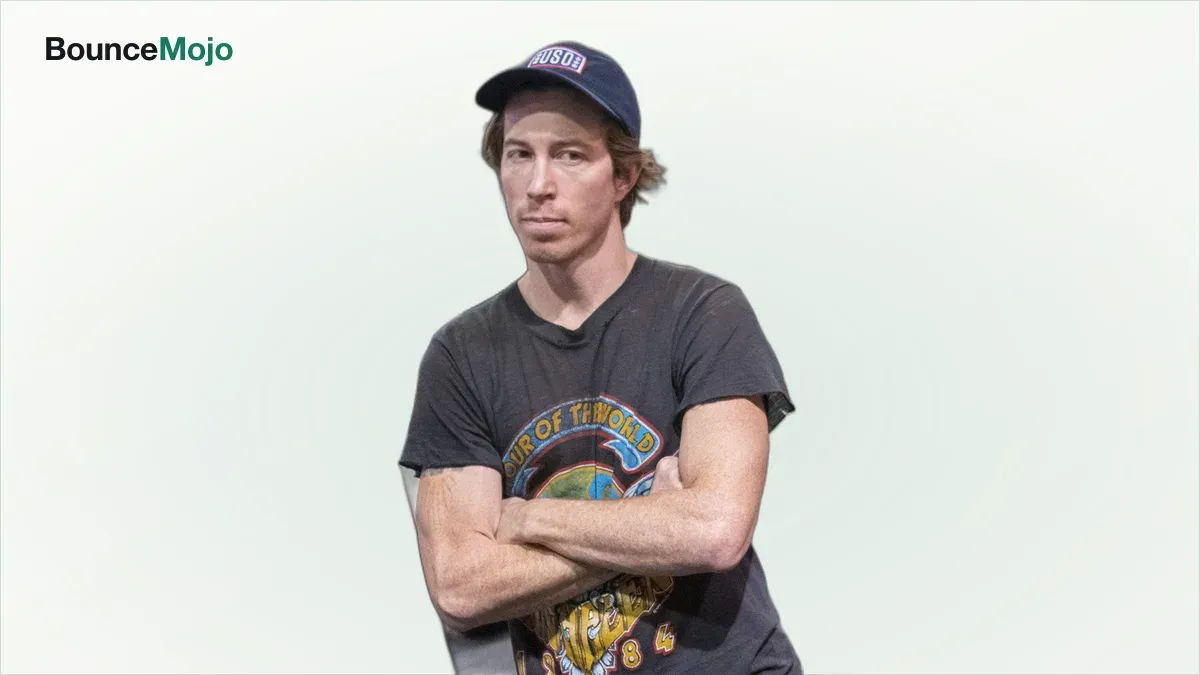
Everybody remembers the red hair flying out of the halfpipe. Almost nobody remembers that Shaun White had two open-heart surgeries before he could walk.
Here’s what most people miss: the most decorated snowboarder in history started life as a baby fighting to survive, and the fight never really left him.
The Myth vs. The Reality
The myth is a natural. Shaun White, the Flying Tomato, a red-haired kid who floated higher than anyone and made spinning upside down look like breathing, born with a gift for the air.
That version is real. It’s also missing the hardest chapter.
Here’s the truth: before White ever touched a snowboard, he was a sick infant. He was born with a serious congenital heart defect and needed two open-heart operations before his first birthday. The “natural” athlete came into the world with a heart that needed fixing, and everything he did afterward was built on top of that fragile start.
Think about it. We look at a three-time Olympic champion and assume the body was always the advantage. But White’s body was, at the very beginning, the thing working against him. The dominance we remember was a rebuttal to how his life started, not a straight line from it.
Now, surviving that start took a certain kind of family, and White had exactly the right one. Which raises the question: what does a household look like when it turns a fragile kid into a fearless one?
The World That Made Shaun White
To understand White, you have to understand the California board-sports culture that raised him.
He was born on September 3, 1986, in San Diego, to parents Roger and Cathy. This was Southern California in the late 1980s and 1990s, ground zero for skateboarding, surfing and the emerging world of snowboarding. Board sports weren’t a hobby there. They were a lifestyle, an identity, a whole subculture with its own heroes and rules.
The White family lived it. They were avid snowboarders who would pile into a van and drive to the San Bernardino Mountains, sometimes sleeping in resort parking lots so the kids could ride. This wasn’t a wealthy, country-club upbringing. It was a scrappy, board-obsessed one, built on family road trips and a love of the mountain.
Here’s the deal: White came up right as snowboarding was exploding from a fringe activity into an Olympic sport. The timing was perfect. A prodigiously talented kid in the exact culture and the exact era when that talent could become global fame and, eventually, real money.
But first, that kid had to survive infancy, and then he had to be tough enough to keep up with an older brother on the mountain.
The Crucible: Early Life and the Climb
The environment that shaped him
Two things defined young Shaun White: a repaired heart and an older brother.
The heart came first. Born with tetralogy of Fallot, a congenital defect, White underwent two open-heart surgeries before he turned one. He survived, but that beginning shaped his family’s protectiveness and, paradoxically, his own hunger to push limits. A kid who fights that hard to live early often grows up unafraid of much else.
Then came snowboarding, and it came through his older brother, Jesse. White started on skis but switched to a board to keep up with Jesse on the mountain. He was six. A year later, he landed his first sponsorship from Burton Snowboards, still a child, already backed by the biggest name in the sport.
You might be wondering: how does a seven-year-old land a pro sponsorship? By being visibly, undeniably special. White wasn’t just good for his age. He was good, period, throwing himself down mountains with a fearlessness that came, in part, from a life that had already tested him.
He was also skateboarding at the same skate park, on the same days, which is where he met a mentor who would change everything.
The catalyst
The catalyst had a famous name: Tony Hawk.
At a Southern California skate park, the nine-year-old White crossed paths with Tony Hawk, the most famous skateboarder alive. Hawk saw the talent immediately and took White under his wing, mentoring him and helping him turn pro in skateboarding at just 16. That relationship gave White something rare: a direct line to the top of a sport, and a template for how to turn board-sports talent into a career.
Here’s the kicker: White didn’t pick one board. He rode both. He became elite at snowboarding and skateboarding at the same time, eventually competing in both the Winter and Summer X Games. That dual mastery, guided early by Hawk, is what turned a talented kid into a crossover superstar.
The fragile baby was becoming the most marketable athlete in action sports. But the biggest triumph, and the scariest moment, were still ahead.
The Key Players
No life this big is a solo act, and White was shaped by a handful of essential people.
Start with Roger and Cathy White, his parents, who built their family life around the mountain and backed his career from the start. The van trips, the parking-lot nights, the willingness to chase snow, all of it came from parents who made board sports the family’s shared passion.
Then there’s Jesse White, the older brother who got Shaun snowboarding in the first place. The instinct to keep up with an older sibling is one of the oldest engines in sports, and it put a board under Shaun’s feet.
And there’s Tony Hawk, the mentor. Hawk didn’t just teach White tricks. He showed him what a life at the top of action sports could look like, and helped him become a professional while he was still a teenager.
Later, sponsors like Burton and Red Bull became key players too, less mentors than partners, the brands that bankrolled his career and eventually made him rich.
Now: with the right family, the right mentor and the right sponsors, White had everything he needed to dominate. And for a while, he did. But greatness in his sport came with real, physical danger.
The Turning Point
The pinnacle
The pinnacle came three times, but the most dramatic was the last.
White won his first Olympic gold in the halfpipe at the 2006 Turin Games, then defended it at Vancouver in 2010. He was already the face of snowboarding, the most decorated athlete in Winter X Games history, a mainstream celebrity in a sport that had once been a fringe pursuit.
But his third gold, at PyeongChang in 2018, is the one that defines him. Months before the Games, while training in New Zealand, White crashed hard into the edge of a superpipe. The injuries to his face required 62 stitches. Most athletes would have been shaken for a season. White qualified for the Olympic team anyway.
Then, in the final, he trailed Japan’s Ayumu Hirano coming into his last run. He needed something close to perfect. He landed back-to-back 1440s, two full spins each, and stole the gold with a 97.75. A man who’d been stitched back together months earlier had just delivered under the most pressure of his life.
Here’s the truth: that run was the whole story of his life in 60 seconds. Damage, then defiance.
The price
But the fearlessness that won those medals came with a price.
White’s body took a beating across two decades of pushing the limits of what a snowboarder could do. The New Zealand crash was only the most visible of many. Competing at the edge of gravity for that long leaves scars, some literal, and by his final Olympics, in 2022, the young challengers had caught up. He finished fourth in Beijing and retired, closing the competitive chapter without the storybook ending.
There was a personal cost too. Life lived on tour, chasing snow and sponsorships and a global brand, is not a settled one. White spent his prime years as a full-time athlete and celebrity, with all the pressure and public scrutiny that comes with being the face of a sport.
The medals were dazzling. The wear underneath them was real, and it eventually caught up.
The Unvarnished Truth
White is a hero to millions, but his story isn’t spotless, and honesty serves it better than a halo.
He was, for years, the dominant force in a sport, and dominance breeds resentment. Some in the snowboarding community bristled at his mainstream fame, his corporate deals, and the sense that he’d turned a rebellious counterculture into a polished, sponsor-friendly product. To purists, White sometimes represented the commercialization of the very thing they loved.
There were also personal controversies. In 2016, White faced a sexual harassment lawsuit from a former bandmate, which was settled out of court. When the allegations resurfaced during his 2018 Olympic run, his initial dismissive response drew criticism, and he later apologized for how he’d handled it. It’s a real part of his public record.
Here’s what’s easy to miss: the same drive and self-belief that made him a champion could read as arrogance off the mountain. The traits that win golds are not always the traits that win goodwill. White has had to reckon with that.
None of it erases the achievements. It just makes the man more complicated than the highlight reel.
Controversies and Criticisms
White’s career carried genuine controversy, and it’s worth naming plainly.
The most serious was the 2016 harassment lawsuit from a former member of his band, which he settled. His handling of questions about it at the 2018 Olympics, initially brushing it off as “gossip,” was widely criticized, and he apologized afterward, acknowledging he should have responded differently.
There was also the long-running tension with snowboarding’s roots. Critics argued that White’s relentless corporate polish and mainstream stardom drifted from the sport’s anti-establishment culture. Fair or not, it followed him: the richest, most famous snowboarder ever was also, to some, the least “core.”
And there’s the honest debate about legacy. Was White the greatest halfpipe rider of all time, or a supremely marketed athlete who arrived at the perfect moment for snowboarding’s Olympic boom? The truthful answer is he was genuinely great and genuinely lucky in his timing, and reasonable fans argue the ratio.
So what does a life like this actually teach the rest of us? Quite a lot.
What We Can Learn From Shaun White
Navigating hard times
White’s real lesson starts at birth: adversity early can build a spine of steel.
A baby who survives two heart surgeries, then grows into a competitor who takes 62 stitches to the face and wins gold months later, has a relationship with fear that most people never develop. White learned early that the body’s limits are negotiable, and he spent his life negotiating.
In other words: the hardest starts sometimes forge the toughest people. What tries to stop you early can become the thing that makes you unstoppable.
The success blueprint
The blueprint here is about converting fame into ownership before it’s too late.
For years White was the face of other people’s brands, Burton, Red Bull, Target. Then he got smart. He launched his own company, Whitespace, and eventually his own competition league, so he’d own the value he created instead of just renting his image out.
Want the fuller picture of how that played out financially? The full net worth breakdown shows how three golds became a $65 million empire built on endorsements, real estate and his own brand. And to see where he ranks among the sport’s biggest fortunes, the richest Olympians list puts it in context.
The deeper takeaway is about reinvention. The competing had to end. White made sure his income didn’t end with it, by building businesses that outlast the athlete. If your career has a shelf life, and most do, the winners are the ones who build something that keeps earning after the last run.
Which brings us to the final reckoning on the man.
Final Verdict
Shaun White is going to be remembered for the hair and the halfpipe, and that sells the story short.
Most people will file him under “Flying Tomato,” the flashy natural who dominated snowboarding and cashed in. A smaller, smarter group will remember the fuller arc: a baby who fought through two heart surgeries, a scrappy van-trip kid mentored by Tony Hawk, a dual-sport phenom who took 62 stitches to the face and still landed back-to-back 1440s to steal a third gold.
Here’s the bottom line: the medals made him famous, but the survival and the reinvention are what make him worth studying. He turned a fragile start into fearlessness, and fearlessness into a business empire that no longer needs him to compete.
He is the richest snowboarder in history. He is also proof that the way you start doesn’t have to be the way you finish. And in the long run, that comeback, from the operating table to the top of the podium and into the boardroom, is the version worth remembering.
Shop Shaun White on Amazon
Books, audiobooks, merch and more, handpicked for fans.
As an Amazon Associate we earn from qualifying purchases.
Frequently Asked Questions
Where did Shaun White grow up?+
White grew up in San Diego, California, in a family of avid snowboarders who often stayed in a van in resort parking lots so the kids could ride the San Bernardino Mountains.
Was Shaun White born with a heart condition?+
Yes. White was born with tetralogy of Fallot, a congenital heart defect, and needed two open-heart surgeries before his first birthday before going on to become an Olympic champion.
Who mentored Shaun White as a child?+
Skateboarding legend Tony Hawk befriended a nine-year-old White at a California skate park and mentored him, helping him turn pro in skateboarding at 16.
Why is Shaun White called the Flying Tomato?+
The nickname came from his shock of long red hair flying through the air on big halfpipe runs. In Italy he's also known as Il Pomodoro Volante, the Flying Tomato.
How many Olympic gold medals did Shaun White win?+
White won three Olympic gold medals in the halfpipe at the 2006, 2010 and 2018 Winter Games, capping the last with a dramatic final run after a serious training crash.
Want the money side of the story?
Read Shaun White's Full Net Worth Breakdown →Shop Shaun White on Amazon
Books, audiobooks, merch and more, handpicked for fans.
As an Amazon Associate we earn from qualifying purchases.