Alex Ferguson Biography: The Story of Football's Greatest Manager
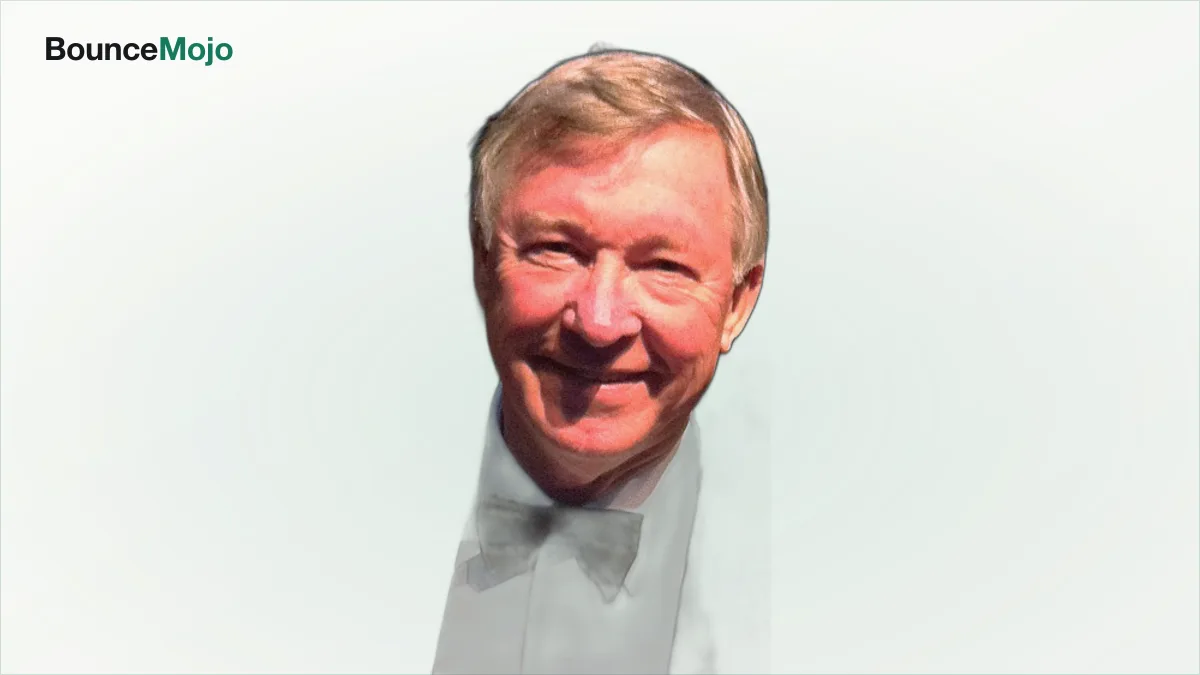
Everybody remembers the trophies and the treble. Almost nobody remembers the shop steward from a Glasgow shipyard who led a strike before he ever led a team.
Here’s what most people miss: the thing that made Ferguson so ferociously driven wasn’t a love of football. It was where he came from.
The Myth vs. The Reality
The myth is a monument. Sir Alex Ferguson, the invincible knight of the dugout, 38 trophies, the hairdryer, the man who bent the biggest club in England to his will for a quarter of a century. A born winner, engineered for command.
That version is real. It’s also wildly incomplete.
Here’s the truth: the “born winner” story erases the most important part. Ferguson was a shipyard worker’s son from Govan, a jobbing striker who never played for his country, a union man who organized a strike, and a manager who was very nearly sacked in his early years at Manchester United. The monument was actually a stubborn, insecure, endlessly competitive man who refused to be beaten.
Think about it. We love a story of effortless authority because it lets us off the hook. If Ferguson was just born to command, then his success is untouchable and unrepeatable. But that’s not what happened. He was a man who clawed his way up from nothing and carried the chip on his shoulder into every dressing room he ever ran.
Now, that chip didn’t appear by accident. It was hammered into him by a specific city, a specific class, and a specific era. Which raises the question: what world produces a man this driven and this unforgiving?
The World That Made Alex Ferguson
To understand Ferguson, you have to understand the Govan he came up in, and the hard industrial Scotland that shaped him.
He was born on 31 December 1941 and raised in Govan, a shipbuilding district on the Clyde where work was tough, money was tight, and toughness was currency. His father worked in the yards. This was not a world of comfort or entitlement. It was a world where you earned respect and never gave an inch.
But the era mattered too. Ferguson came of age when Scottish football was fiercely tribal and working-class communities lived and died by their clubs. He played as a striker, most notably for Rangers, one of Glasgow’s two giants, but his playing career was solid rather than sensational, and it left him with something more valuable than glory: a burning sense that he had unfinished business in the game.
Here’s the deal: Ferguson also spent time working outside football, even leading a strike as a shop steward in the shipbuilding industry. That experience in organizing men, managing conflict and standing firm under pressure was, in its own way, an apprenticeship for management.
But the real making of him came not as a player, but the moment he first stood on the touchline in charge. And that is where the story turns.
The Crucible: Early Life and the Climb
The environment that shaped him
Two things defined the young Ferguson: hunger and grievance.
The hunger came from Govan, where nothing was handed to you. The grievance came from a playing career that never reached the top. He was good, good enough to play for Rangers, but he never won the caps or the glory his ambition demanded. For a man that competitive, falling short as a player left a wound that only management could heal.
So he threw himself into coaching young, taking his first job at East Stirlingshire before moving to St Mirren, where he showed the first flashes of the ruthless, detail-obsessed manager he would become. He was building something the playing career had denied him.
You might be wondering: how does a middling striker become the greatest manager of his age? The answer is that management rewarded exactly the traits that had held him back as a player. His intensity, his refusal to lose, his willingness to confront anyone, these were liabilities on the pitch and superpowers on the touchline.
By the time he took over at Aberdeen in 1978, the hungry outsider had found the one arena where his fire became fuel.
The catalyst
The catalyst was Aberdeen.
In an era when Scottish football was carved up entirely by the Old Firm, Rangers and Celtic, Ferguson took a provincial club and broke the duopoly. He won three league titles, four Scottish Cups, and then the unthinkable: the 1983 European Cup Winners’ Cup, beating a Real Madrid side managed by the legendary Alfredo Di Stéfano in the final.
Here’s the kicker: Aberdeen proved Ferguson could win anywhere, against anyone, with less. He built the whole club in his image, controlling every detail, driving his players relentlessly, and refusing to accept the natural order. That performance made him the most coveted manager in Britain.
In November 1986, Manchester United came calling, a fallen giant that hadn’t won a league title in nearly two decades. Ferguson took the job knowing it could make or break him.
The man who broke the Old Firm was about to attempt something even harder. But the early years would test him almost to breaking point.
The Key Players
No reign this long is a solo act, and Ferguson was surrounded by people who shaped his path.
Start with Cathy Ferguson, his wife of more than 50 years. She was his anchor and his conscience, the person who famously talked him out of retiring when he first considered it. Ferguson has said that leaving would have been the biggest mistake of his life, and it was Cathy who stopped him. She died in 2023.
Then there’s Sir Matt Busby, the iconic Manchester United manager who rebuilt the club after the Munich air disaster. Busby was the ghost of greatness Ferguson had to live up to, the standard by which any United manager would forever be measured.
And there’s Cristiano Ronaldo, one of many young players Ferguson signed and developed. Ferguson bought him as a raw teenager and turned him into a global superstar, a testament to his eye for talent and his skill at building men, not just teams.
There was also John Magnier, the Irish racing magnate and United shareholder who became Ferguson’s partner in the racehorse Rock of Gibraltar, before a bitter dispute over the horse’s stud rights fractured their relationship and helped open the door to the Glazer takeover.
Now: surround yourself with the right anchor and the right rivals, and you can build something historic. Ferguson was about to do exactly that. But the beginning nearly ended it all.
The Turning Point
The pinnacle
The pinnacle came in Barcelona, in May 1999.
Manchester United went into stoppage time of the Champions League final losing 1-0 to Bayern Munich. Then, in the space of two minutes, United scored twice to win 2-1, completing an unprecedented treble of the Premier League, FA Cup and European Cup in a single season. It was the greatest night in the club’s modern history, and Ferguson’s masterpiece.
That treble sat atop a mountain of success. Across 26 years, Ferguson won 38 trophies at United, including 13 Premier League titles and a second Champions League in 2008. No British manager has ever come close.
Here’s the truth: he became the most decorated manager in the history of the British game, and he did it while never once losing his hunger to win the next one.
The price
Because the same relentless drive that won the trophies nearly cost him the job before it began.
Ferguson’s first years at United were rocky. Trophies didn’t come quickly, the press turned, and by late 1989 there were open calls for him to be sacked. A single FA Cup run in 1990 is often credited with saving his job. The greatest managerial career in British football history was, at one point, hanging by a thread.
There was a personal price too. Ferguson’s obsessive control and volcanic temper, the famous “hairdryer treatment,” made him feared but also cost him relationships. Star players from David Beckham to Roy Keane and Jaap Stam were moved on the moment Ferguson felt they threatened his authority. Winning always came first, even at the expense of loyalty.
He’d spent a lifetime demanding total control. It built a dynasty, but it also left a trail of fractured relationships that took years to mend.
The Unvarnished Truth
Ferguson is not a flawless hero, and pretending otherwise does his story a disservice.
He could be ruthless to the point of coldness, discarding players and staff who had given him everything. His feuds were legendary, with rival managers, with journalists, with his own directors and shareholders. The Rock of Gibraltar dispute showed a man willing to go to the High Court against a business partner over money and principle, a fight that ultimately helped usher in the Glazer ownership that United fans came to resent.
There’s also the loneliness of his kind of authority. Ferguson ruled by control and, at times, by fear, and that leadership style, effective as it was, could isolate him. He admitted his temper was a weapon he sometimes regretted using.
Here’s what’s easy to miss: his greatest strength and his greatest flaw were the same trait. The obsessive, uncompromising drive that made him unbeatable also made him hard to work with and quick to fall out with people. The gift was the curse.
None of that erases the trophies. But it does explain why Ferguson’s legacy is admired more than it is loved.
Controversies and Criticisms
Ferguson’s career carried real controversy, and it’s worth being honest about it.
The Rock of Gibraltar affair was the most damaging. What began as a shared love of horse racing with United shareholder John Magnier turned into a bitter legal dispute over the racehorse’s lucrative stud rights. The fallout soured Ferguson’s relationship with major shareholders and is widely seen as a factor in the sequence of events that led to the Glazer family’s controversial takeover of the club.
There were the feuds, too. Ferguson waged long, public wars with rival managers and with sections of the media, at times banning journalists and broadcasters he felt had crossed him. Critics argued he wielded his power over the game unfairly.
There’s also a fairer debate about the resources behind his success. Some point out that Ferguson had the financial muscle of the world’s biggest club for much of his reign, and that his brilliance at Aberdeen is the truer measure of his genius than the trophies bought with United’s spending power. Ferguson had extraordinary drive. He also, eventually, had extraordinary means.
So what does a life like this actually teach the rest of us? A lot, and not the lessons you’d expect.
What We Can Learn From Alex Ferguson
Navigating hard times
Ferguson’s real lesson isn’t about winning. It’s about surviving the years when the winning hasn’t started yet.
For his first three seasons at United, he was under siege, one bad result from the sack. Most people would have crumbled. Ferguson held his nerve, backed his methods, and rebuilt the club’s entire youth structure while the results caught up. The dynasty everyone remembers was built on the patience of the years everyone forgets.
In other words: the trophies were the easy part. Holding steady when the pressure said quit, that was the real test.
The success blueprint
The blueprint here is about control, culture and the long game.
Ferguson didn’t just pick teams. He built cultures, controlled every detail of his clubs, and thought in decades rather than seasons. He rebuilt his United sides three or four times over, refusing to let a great team grow old and stagnant. That willingness to break up success before it broke down was his true secret.
Want the fuller picture of how that translated into wealth? The full net worth breakdown shows how 38 trophies became a fortune built on salaries, an ambassador role and shrewd investments. And to see how he ranks among the game’s biggest earners, the richest coaches list puts it in context.
The deeper takeaway is about identity. Ferguson proved that talent alone wins nothing without relentless will and the patience to endure the lean years. The people who last are the ones who keep building when the results say stop.
Which brings us to the final reckoning on the man.
Final Verdict
Sir Alex Ferguson is going to be remembered for the wrong thing.
Most people will file him under “38 trophies,” the greatest British manager, the treble, the hairdryer. A smaller, smarter group will remember something harder and more valuable: a Govan shipyard worker’s son who was nearly sacked before he won anything, who broke the Old Firm with a provincial club, and who then spent 26 years building and rebuilding a dynasty through sheer, unyielding force of will.
Here’s the bottom line: the trophies made him famous. The refusal to ever accept defeat made him great. He turned a modest playing career and a working-class chip on his shoulder into the most decorated managerial reign the British game has ever seen.
He is the greatest manager in the history of British football. He is also living proof that will, more than talent, is what builds something that lasts. And in the long run, that harder truth is the version worth remembering.
Shop Alex Ferguson on Amazon
Books, audiobooks, merch and more, handpicked for fans.
As an Amazon Associate we earn from qualifying purchases.
Frequently Asked Questions
Where did Alex Ferguson grow up?+
Ferguson was born on 31 December 1941 and grew up in the Govan district of Glasgow, a tough shipbuilding area where his father worked in the yards. That working-class world shaped his relentless character.
Was Alex Ferguson a footballer before management?+
Yes. Ferguson was a striker in Scottish football, most notably with Rangers, but he never reached the heights as a player that he later achieved as a manager. His playing career was solid rather than spectacular.
What did Alex Ferguson achieve at Aberdeen?+
At Aberdeen, Ferguson broke the Old Firm's grip on Scottish football, winning three league titles and the 1983 European Cup Winners' Cup, beating Real Madrid in the final, before Manchester United came calling.
How many trophies did Alex Ferguson win at Manchester United?+
Ferguson won 38 trophies at Manchester United across 26 years, including 13 Premier League titles, five FA Cups and two Champions Leagues, in 1999 and 2008. The 1999 treble is his crowning achievement.
When did Alex Ferguson retire?+
Ferguson retired at the end of the 2012-13 season, signing off with one final Premier League title, and was knighted in 1999 for his services to football.
Want the money side of the story?
Read Alex Ferguson's Full Net Worth Breakdown →Shop Alex Ferguson on Amazon
Books, audiobooks, merch and more, handpicked for fans.
As an Amazon Associate we earn from qualifying purchases.