Magic Johnson Biography: The Smile That Saved Lives
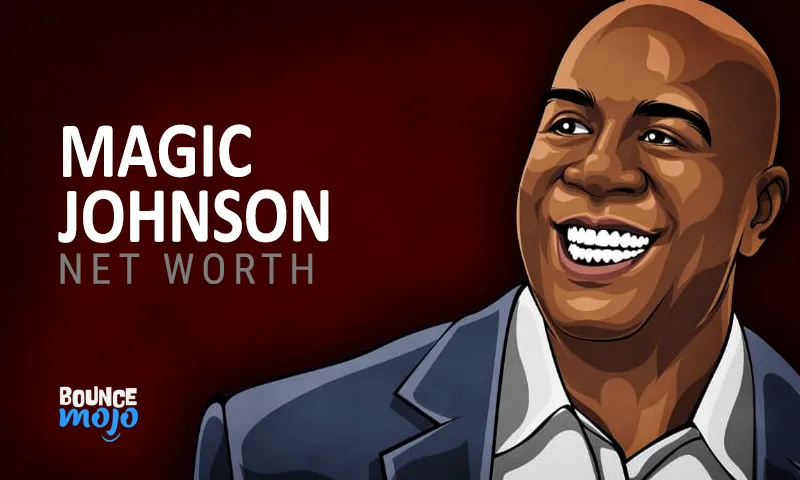
Ask which moment made Magic Johnson a historic figure and most people will say 1979, or Game 6 in 1980. Both are wrong. The moment came in a suit, at a podium, with his career already over.
November 7, 1991
Before the season, a routine insurance physical had come back with a result he did not understand. A second test confirmed it. He was HIV-positive.
In 1991 that was widely understood to be a death sentence. There was no effective treatment yet, and the virus carried a brutal stigma, wrongly branded a “gay disease” in an America drowning in misinformation and fear.
He stepped to a podium and told the world he was retiring immediately because he had HIV. He was 32. He was calm. He smiled. He promised to become a spokesman and fight the disease. The room went silent, and then the country came apart.
Plenty of stars in that position would have hidden the diagnosis, retired quietly, and vanished. He named the thing that scared everyone, in public, when doing so risked his reputation, his endorsements, and his dignity. Understanding why that took the nerve it did means going back thirty-two years, to a house in Michigan with seven children in it.
Lansing, Seven Kids, One Paycheck Stretched Thin
Earvin Johnson Jr. arrived on August 14, 1959, into a Lansing that ran on the auto industry. His father, Earvin Sr., worked a shift at a General Motors plant and then hauled garbage at night to feed a family of nine. His mother, Christine, cleaned schools.
This was the working-class Midwest before the plants started closing. You worked, you went to church, and you did not complain.
Basketball found the boy early. He bounced from court to court around Lansing looking for a game, which earned him his first nickname, “June Bug.” He shoveled the neighbor’s driveway so he could shoot in winter. He dribbled to the store. He slept with the ball.
His father taught him to watch the game the way a foreman watches a factory floor. They studied NBA broadcasts together, Earvin Sr. pointing out the outlet pass, the box-out, the small things. That habit of seeing the whole floor at once would later look like sorcery to everyone else.
The Bus to Everett High
Court-ordered desegregation bused him to Everett High School, a mostly white school across town where he was not welcome at first. There were fights early on, and slurs, and a coach he clashed with. He thought about quitting.
He didn’t. Before he ever rescued the NBA, that was the thing he had to survive.
A Sportswriter Names a Fifteen-Year-Old
In the winter of his sophomore year he put up 36 points, 18 rebounds, and 16 assists in a single high-school game. A Lansing State Journal writer named Fred Stabley Jr. decided the kid needed a nickname. “Dr. J” and “Big E” were taken, so Stabley tried “Magic.” It stuck to everyone except his family.
His mother hated it. A devout Christian, Christine thought calling her son “Magic” bordered on blasphemy. To her he was always Junior. That tension, the public legend against the humble kid his mother raised, followed him his whole life.
1979, and the Rivalry That Rescued a Dying League
Pro basketball in the late 1970s was in trouble. Finals games were shown on tape delay, after the local news. Attendance sagged. Cocaine rumors dogged the league. Executives worried the sport was dying.
He led Everett to a state title, stayed home to play for Michigan State, and as a sophomore took the Spartans to the 1979 NCAA final against an undefeated Indiana State team led by a lanky sharpshooter named Larry Bird. Michigan State won 75 to 64. Magic scored 24. It remains the highest-rated college basketball game ever televised, and it lit a fuse.
Larry Bird is the reason the smile was never the whole story. The rivalry was real and personal; Magic later admitted the first thing he did every morning was check Bird’s box score, and Bird once said facing Magic ruined his summers. They were opposites on paper, Black and white, flash and fundamentals, coast and heartland, and the country picked sides. Then in 1985, filming a shoe commercial at Bird’s home in Indiana, they sat down for lunch and discovered they were the same person: two poor Midwestern kids who loved their families and hated losing. The rivalry became one of the closest friendships in sports. When the diagnosis came, Bird was among the first to call.
The Rookie Who Played Center in Game 6
In 1980 the Lakers reached the Finals against Philadelphia. Kareem sprained his ankle badly in Game 5 and could not travel for Game 6, so the coach did the unthinkable and started a 20-year-old rookie point guard at center.
Magic answered with 42 points, 15 rebounds, and 7 assists. The Lakers won the title. He remains the only rookie ever named Finals MVP, and many trace the birth of “Showtime” to that night.
When he had arrived in Los Angeles the year before, Kareem Abdul-Jabbar was the aging king of the franchise, the sky-hook still unstoppable. Magic’s arrival did not push him aside; it extended his prime by half a decade. The veteran anchor and the young conductor built a dynasty together: five championships in 1980, 1982, 1985, 1987, and 1988, three regular-season MVP awards, three Finals MVPs. The Lakers-Celtics Finals of that decade, Magic against Bird again and again, dragged the NBA out of the ditch and into the golden age it still lives off.
The third and most important name in his life arrived alongside all of it. Earlitha “Cookie” Kelly was his college sweetheart, patient through years of an on-again, off-again relationship while he chased fame and, by his own admission, a lot of women. They married in September 1991. Six weeks later his world detonated.
What He Said About How He Got It
By his own account in his 1992 book, he was a young man who lived recklessly. Fame in 1980s Los Angeles came with an endless supply of temptation and he did not turn it down. He has said plainly that his own behavior is how he contracted the virus. He has never blamed anyone else or dressed it up.
That honesty is rarer than the passing was. He was also terrified, and has said so, describing the fear of those early years, the funerals he attended, the friends the disease took, the uncertainty about whether he would see his children grow up. He was not a man who felt no fear. He was a man who felt all of it and stood up anyway.
The book itself drew criticism at the time for how candidly it discussed his personal life, including remarks about sexuality and the virus that some found dated even then.
Three Attempts to Get His Old Life Back
He tried to return for the 1992 All-Star Game and won MVP. He played for the Dream Team in Barcelona that summer and won gold. Then, when he attempted a full comeback for the 1992-93 season, other players’ fear of the virus, some of it voiced out loud, pushed him back into retirement. He came back once more in 1996, at 36, played 32 games, and walked away for good.
That was not weakness. It was a man testing how much of his old life he could still have.
He also turned his private catastrophe into a public mission, launching the Magic Johnson Foundation, joining the national AIDS commission, and letting his own face become proof that the disease did not discriminate. Researchers and doctors have credited the announcement with driving a surge in HIV testing. He did not simply endure the fear. He gave it a job.
Starbucks in the Neighborhoods the Chains Had Written Off
When he retired he did not chase the endorsement checks most stars grab. He studied. He asked to sit in on deals. He treated his fame as investment capital rather than a paycheck.
His insight was to put money where money was scarce: Starbucks franchises and movie theaters in urban neighborhoods the big chains had skipped, with less competition, loyal customers, and huge returns. He cashed those exits out and rolled the proceeds into bigger bets, a life-insurance company, real estate, and eventually ownership stakes in the Los Angeles Dodgers, LAFC, the Sparks, and the NFL’s Washington Commanders.
Not everything landed. Some critics argued the early “urban” ventures used his name and public goodwill to open doors, and questioned how much of the community benefit was real rather than branding. His brief turn as Lakers head coach in 1994 was a flop; he went 5 and 11 and quit, admitting he was not built for coaching. His 2017 to 2019 run as the Lakers’ president of basketball operations ended in a sudden resignation announced to reporters without telling the owner or the coach first. Critics called it chaotic. Even admirers admitted it was messy.
None of it dented the larger arithmetic. The patient, own-the-asset approach is why he sits among the richest NBA players of all time, and why his fortune dwarfs what Michael Jordan or almost any player earned on the floor. The man who made his name giving assists spent his second life making one enormous assist to himself. How the $1.2 billion came together is broken down in our Magic Johnson net worth analysis.
Thirty Years After the Death Sentence
He is still here. Healthy, more than three decades after a diagnosis the world assumed would kill him, with roughly three times as much life after basketball as during it, and the after has been larger than the game ever was.
On the court he is a top-five point guard in history and the co-author, with Bird, of the modern NBA. Off it he is a survivor and a builder who assembled an empire one owned asset at a time. He earned barely three percent of his fortune playing the sport he is famous for.
To hear it in his own voice, read My Life, written with William Novak in the raw months right after the diagnosis. It is the story told before he knew how it would end, by a man who chose to keep living out loud.
Shop Magic Johnson on Amazon
Books, audiobooks, merch and more, handpicked for fans.
As an Amazon Associate we earn from qualifying purchases.
Frequently Asked Questions
Where did Magic Johnson grow up?+
Earvin Johnson Jr. was born on August 14, 1959, in Lansing, Michigan, the fourth of seven children. His father worked an auto-plant shift by day and hauled trash at night.
How did Magic Johnson get his nickname?+
A Lansing State Journal sportswriter named Fred Stabley Jr. gave the 15-year-old the name 'Magic' after a high-school game in which he posted 36 points, 18 rebounds and 16 assists. His mother thought it was blasphemous.
Why is Magic Johnson and Larry Bird's rivalry so famous?+
It started with the 1979 NCAA final, the most-watched college game ever, and carried into the 1980s when their Lakers-Celtics battles revived a fading NBA. The rivals later became close friends after filming a 1985 shoe commercial together.
What happened when Magic Johnson announced he had HIV?+
On November 7, 1991, Magic retired and revealed he was HIV-positive. At a time many wrongly saw the virus as only a gay white man's disease, his announcement forced America to confront the truth that anyone could contract it.
Did Magic Johnson write a book?+
Yes. His autobiography My Life, written with William Novak, was published in 1992, months after his diagnosis.
Want the money side of the story?
Read Magic Johnson's Full Net Worth Breakdown →Shop Magic Johnson on Amazon
Books, audiobooks, merch and more, handpicked for fans.
As an Amazon Associate we earn from qualifying purchases.