Andy Reid Biography: The Patient Mind Behind a Football Dynasty
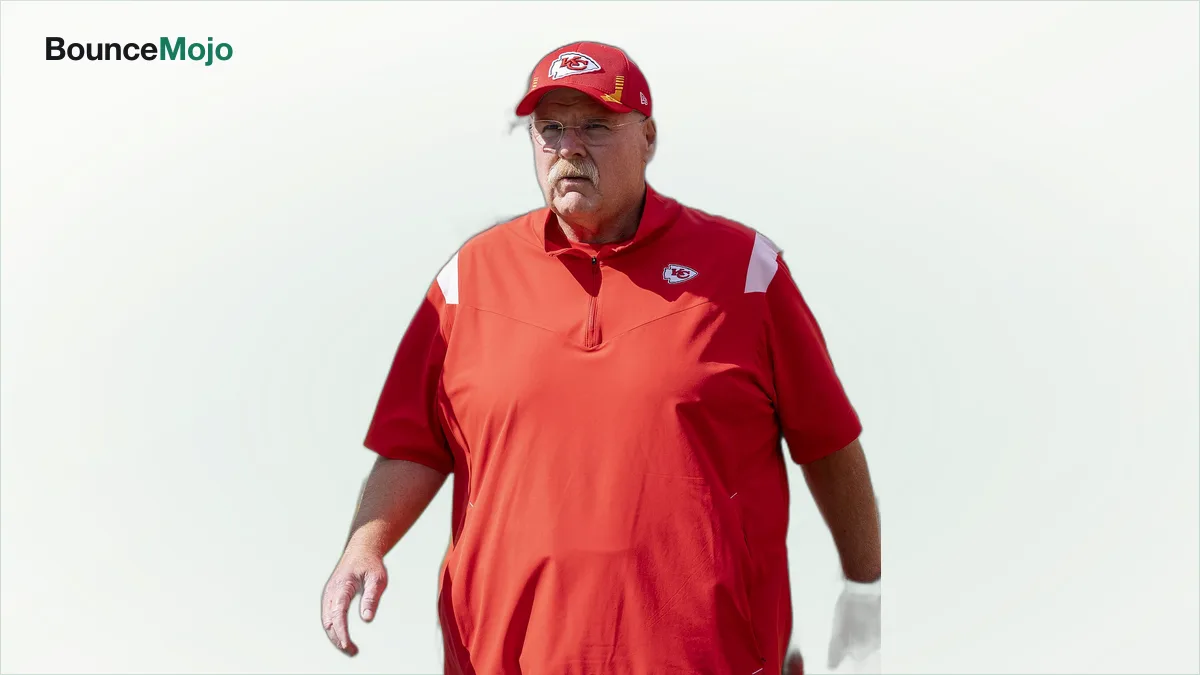
Everybody remembers the Super Bowl trophies and the confetti in Kansas City. Almost nobody remembers the two decades Andy Reid spent being called the best coach who couldn’t win the big one.
Here’s what most people miss: the patience that made Reid look like a nearly-man for years is the exact thing that eventually built a dynasty.
The Myth vs. The Reality
The myth is simple now. Andy Reid, the offensive genius, the mastermind who built the most dominant team in football, a guaranteed Hall of Famer collecting rings.
That version is real. It’s also a recent invention.
Here’s the truth: for most of his career, Reid was the opposite of a champion. He was the brilliant coach who kept falling just short, who reached a Super Bowl and lost it, who won more regular-season games than almost anyone but couldn’t get over the final hurdle. The “genius” label came with a cruel asterisk for the better part of 20 years. And underneath the football, he carried a private grief most fans never fully grasped.
Think about it. We love a story of inevitable greatness because it’s clean. But Reid’s greatness wasn’t inevitable at all. It was earned through years of disappointment, adjustment, and the kind of patience that would have gotten most coaches fired long before the payoff arrived.
Now, that patience didn’t come from nowhere. It was forged by a specific upbringing and a specific, long apprenticeship. Which raises the question: what makes a man wait that long, and keep believing?
The World That Made Andy Reid
To understand Reid, you have to understand the Los Angeles he grew up in and the football journey that shaped his patience.
He was born on March 19, 1958, in Los Angeles, California, and he was big from the very start, a giant of a kid, remembered by friends as the largest in every room. Size steered him toward the offensive line, the least glamorous, most selfless position on a football field, where the whole job is protecting someone else and never getting the glory. It was fitting training for the career to come.
But the path to coaching mattered too. Reid played college ball at BYU as an offensive tackle, then started at the very bottom of the profession, grinding through college coaching jobs. This was not a fast-tracked prodigy. It was a young man learning the craft the slow way, one small job at a time, building the deep technical knowledge that would later define him.
Here’s the deal: everything about Reid’s early life pointed toward patience and service, the lineman’s mentality, the long climb through the coaching ranks. He was being built for the long game before he ever knew it.
But the break that changed his life came from one man’s phone call. And that’s where the real story starts.
The Crucible: Early Life and the Climb
The environment that shaped him
Two things defined the young coach Reid: obscurity and obsession.
The obscurity was real. For years, Reid was an anonymous college assistant, far from the NFL, doing the unglamorous work of teaching linemen and studying the game in fine detail. There were no shortcuts and no spotlight, just the accumulation of knowledge.
The obsession was with offense. Reid became fascinated by the mechanics of moving the ball, the design of plays, the development of quarterbacks. He was building an expertise that most coaches never reach, the kind that only comes from years of patient, unnoticed study.
You might be wondering: how does an anonymous college assistant end up running an NFL team? The answer is Mike Holmgren. In 1992, Holmgren hired Reid onto his staff with the Green Bay Packers, pulling him into the professional game at last. There, over seven seasons, Reid worked during the Brett Favre era, absorbing the famed West Coast offense and coaching alongside some of the sharpest minds in football. The patient student finally had the platform his knowledge deserved.
By the end of the 1990s, Reid was ready to lead his own team. The long apprenticeship was about to pay off.
The catalyst
The catalyst was a job nobody expected him to get.
In 1999, the Philadelphia Eagles, a struggling franchise, made a bold hire: Andy Reid, a position coach with no head-coaching experience, over more famous candidates. It was a leap of faith, and Reid rewarded it. He drafted quarterback Donovan McNabb, built a consistent winner, and turned the Eagles into perennial contenders.
Here’s the kicker: Reid didn’t just coach the games. He ran the whole operation, shaping the roster, the culture, and the offensive identity of the team. For 14 seasons, Philadelphia was among the most reliably competitive franchises in the league, and Reid became one of the most respected coaches in football.
There was just one problem, the one that would haunt him for years. He kept reaching the edge of glory and falling short. The Eagles made deep playoff runs and even a Super Bowl, but the ultimate prize stayed out of reach. The genius was building a legacy with a hole in the middle of it.
But before the football story reached its cruelest turn, real life delivered a blow no season could match.
The Key Players
No life this long is a solo act, and Reid was shaped by the people around him.
Start with Mike Holmgren, the mentor who brought him into the NFL. Holmgren’s decision to hire an unknown college assistant changed the entire trajectory of Reid’s life, and the West Coast offense Reid learned under him became the foundation of everything that followed.
Then there’s Tammy Reid, his wife of more than four decades and the steady partner through every move, every triumph, and every heartbreak. Behind a coaching career defined by relentless hours, she was the constant.
And there’s Patrick Mahomes, the once-in-a-generation quarterback Reid drafted and developed in Kansas City. Their partnership became one of the most productive coach-player relationships in NFL history, and it finally gave Reid the piece he’d spent a career searching for.
There was also Donovan McNabb, the quarterback who defined Reid’s Philadelphia years, and whose talent Reid nurtured into a decade of contention.
Now: surround yourself with the right mentor, the right partner, and the right quarterback, and you can build something historic. Reid was about to. But first came a loss that put all of it in perspective.
The Turning Point
The pinnacle
The pinnacle, when it finally came, arrived in Kansas City.
After being let go by Philadelphia following the 2012 season, Reid took over the Chiefs in 2013 and rebuilt them into a contender. The transformation accelerated dramatically when the team drafted Patrick Mahomes, and together they turned Kansas City into the dominant force in the sport. Reid, the coach who could never win the big one, finally won it, and then kept winning, capturing three Super Bowl titles.
For a man who had been the best coach without a ring for the better part of two decades, the vindication was total. He wasn’t just great anymore. He was a champion, several times over, and one of the winningest coaches the game has ever produced.
Here’s the truth: the titles were sweeter precisely because of how long he’d waited for them.
The price
Because the highest price Reid paid had nothing to do with football.
In August 2012, during his final year in Philadelphia, Reid’s oldest son, Garrett, died of an accidental overdose at the Eagles’ training camp. Garrett had battled addiction for years, and his death was a devastating, public loss for a father who had spent his life on football fields. No trophy, before or since, could ever balance that grief.
Reid has spoken about the loss with painful honesty, and it reframes everything about his story. The patience, the perspective, the refusal to let a game define his worth, all of it was shaped by a father who knew the difference between a hard season and real tragedy.
He had spent a career chasing a championship. But the deepest wound of his life reminded everyone, including him, that the game was never the most important thing.
The Unvarnished Truth
Reid is not a flawless figure, and his story carries real weight beyond the wins.
For years, his coaching drew legitimate criticism: questionable clock management in big moments, playoff losses that fit a frustrating pattern, an inability to close out the biggest games. The “can’t win the big one” label wasn’t unfair for a long stretch, and Reid wore it. He had to evolve, late in his career, to finally shed it.
There’s also the unavoidable human tragedy at the center of his life. The loss of his son is not a footnote to his success. It is the context for all of it, a reminder that behind the genial, mustachioed public figure was a father who endured the worst thing a parent can face.
Here’s what’s easy to miss: Reid’s greatest professional strength, his patience, is inseparable from his life’s hardest lessons. The perspective that let him keep believing through decades of near-misses was earned at a terrible cost.
None of that diminishes the achievement. But it does explain why Reid seems to hold his success so lightly.
What We Can Learn From Andy Reid
Navigating hard times
Reid’s real lesson isn’t about winning. It’s about enduring, and about keeping the game in its proper place.
For nearly 20 years, he was told he’d never win the biggest one. He absorbed criticism, buried a son, got fired, and started over. Instead of breaking, he adjusted, kept working, and eventually built the greatest run of his career in his sixties. The patience is the point.
In other words: the championships were the easy part. Surviving the losses, the criticism, and the grief, and staying whole, was the real work.
The success blueprint
The blueprint here is about the long game.
Reid never chased a shortcut. He learned his craft from the bottom up, apprenticed for years under a mentor, and then coached continuously for decades, letting his knowledge and his wins compound. Want the fuller picture of how that translated into wealth? The full net worth breakdown shows how a lifetime of coaching built a $25 million fortune. And to see how he ranks among the best-paid names in the profession, the richest coaches list puts it in context.
The deeper takeaway is about persistence. Reid proved that being close for a long time is not the same as failing, and that the people who last long enough, and keep adapting, often get their reward at the end. Greatness, sometimes, is just refusing to quit.
Which brings us to the final reckoning on the man.
Final Verdict
Andy Reid is going to be remembered for the trophies. He should be remembered for the wait.
Most people will file him under “Super Bowl-winning coach,” the mastermind of a dynasty. A smaller, smarter group will remember the fuller story: a giant, gentle kid from Los Angeles who learned football from the ground up, spent decades as the best coach without a title, lost a son, got fired, and then, in the twilight of a long career, finally built something no one could take from him.
Here’s the bottom line: the championships made him a legend. The patience and the grief made him human. By waiting through 20 years of disappointment and never losing his perspective, he became something better than a genius, he became a coach players and fans genuinely love.
He is a three-time champion and one of the winningest coaches in history. He is also proof that the longest roads sometimes lead to the biggest rewards. And in the long run, that patient story is the version worth remembering.
Shop Andy Reid on Amazon
Books, audiobooks, merch and more, handpicked for fans.
As an Amazon Associate we earn from qualifying purchases.
Frequently Asked Questions
Where did Andy Reid grow up?+
Reid was born on March 19, 1958, in Los Angeles, California, where he grew up as a famously large kid before playing offensive line in college at BYU.
How did Andy Reid start coaching?+
Reid began in the college ranks before Mike Holmgren hired him to the Green Bay Packers in 1992, where he spent seven seasons as an assistant during the Brett Favre era.
When did Andy Reid become a head coach?+
Reid was named head coach of the Philadelphia Eagles in 1999, a role he held for 14 seasons before joining the Kansas City Chiefs in 2013.
How many Super Bowls has Andy Reid won?+
Reid has won three Super Bowls as head coach of the Kansas City Chiefs, ending a decades-long wait for his first championship after years as one of the sport's best coaches.
What tragedy did Andy Reid face?+
In 2012, Reid's oldest son, Garrett, died of an accidental overdose at the Eagles' training camp, a devastating loss the coach has spoken about with painful honesty.
Want the money side of the story?
Read Andy Reid's Full Net Worth Breakdown →Shop Andy Reid on Amazon
Books, audiobooks, merch and more, handpicked for fans.
As an Amazon Associate we earn from qualifying purchases.