Pete Dye Net Worth (2026): The Golf Architect's $50M in Sand and Fear
On This Page
- What Was Pete Dye’s Net Worth?
- How Did Pete Dye Make Money?
- How Did Pete Dye Build His Fortune?
- What Did Pete Dye Own?
- 🏠 Real Estate
- 🏌️ His Signature Courses
- 🚜 Tools of the Trade
- Pete Dye’s Business & Investments
- How Does Pete Dye Compare?
- Why Pete Dye’s Legacy Still Pays
- Net Worth: Year by Year
- Connected Wealth
- Top Takeaways to Success
- Frequently Asked Questions
You already know the best golfers get rich. What you probably don’t know is that one of the wealthiest men in the sport barely played it for a living.
Here’s the reality: Pete Dye was worth an estimated $50 million, and he earned nearly every dollar of it moving dirt, not sinking putts. He designed the courses the pros feared, and developers paid him a fortune to do it.
What Was Pete Dye’s Net Worth?
Pete Dye’s net worth was an estimated $50 million at the time of his death in 2020. That figure comes from public reporting by outlets like Celebrity Net Worth and golf-industry profiles, and it made him one of the wealthiest people in golf who never earned his money as a touring pro.
Treat that number as a well-researched estimate rather than an audited figure. Private design fortunes are hard to pin down, and different sources land in a similar range. What is not in doubt is how he built it: with a bulldozer, a wild imagination, and a name developers were willing to pay a premium for.
Here’s why that matters. Most rich golfers hit a ball. Dye reshaped the ground they hit it on.
How Did Pete Dye Make Money?
Dye’s fortune was built on fees, not prize checks. The big pillars:
- Design fees for 100-plus courses. Elite architects command large fees per project, and Dye designed or co-designed well over a hundred courses across the United States and beyond.
- Championship venue commissions. Building courses that host majors and Players Championships, like TPC Sawgrass and Whistling Straits, put him at the top of the pay scale.
- Resort and real-estate development. Developers hired Dye to anchor luxury communities and resorts, where a signature course lifts the value of every home and hotel room around it.
- Renovations and redesigns. Established courses paid him to modernize and toughen their layouts, a steady stream of repeat work.
- Reputation premiums. Once his name meant “the hardest, most memorable course in the region,” clients paid extra just to attach it to a project.
The lesson sits in that last line: he sold a signature, and a signature is worth more than a service.
Think about the economics of a marquee design commission. Building a championship-caliber course is a multi-year project involving huge budgets, and the lead architect’s fee scales with the prestige and difficulty of the job. Dye specialized in exactly the projects that paid the most: high-profile resorts, tournament venues, and reclaimed land that scared off easier designers. Each one commanded a premium, and Dye had the reputation to demand it.
Then there’s the repeat business. A designer who builds a beloved course gets called back for renovations, and referred to the developer’s next project, and the one after that. Dye’s most famous holes became a rolling advertisement, generating leads for decades without him spending a dollar on marketing.
How Did Pete Dye Build His Fortune?
Dye did not start in design. He sold life insurance in Indianapolis and was, by all accounts, very good at it. He was also a strong amateur golfer, good enough to qualify for the U.S. Open and win state titles.
But here’s how he did it. A trip to Scotland in the early 1960s changed everything. Dye studied the old links courses, their pot bunkers, railroad-tie walls, and brutal, natural difficulty, and brought those ideas home. He turned that inspiration into a design philosophy nobody else was selling.
His breakthrough courses, Crooked Stick in Indiana and then Harbour Town Golf Links in South Carolina, announced a new voice in architecture. Harbour Town, built with a young Jack Nicklaus consulting, proved that shorter, trickier, more strategic courses could still terrify the best players. From there the commissions never stopped. He earns a place among the wealthiest names on our richest golfers list precisely because he built the stages, not just the performances.
What Did Pete Dye Own?
Dye’s real “assets” were the courses themselves, but his personal holdings reflected a comfortable, self-made life rather than flashy excess.
🏠 Real Estate
Dye and his wife Alice kept homes tied to their work and their roots, including property in Indiana and a longtime base in Florida, near many of the projects that defined his later career. He lived well without the trophy-mansion arms race common among touring pros, funneling his energy and money into the next design instead.
🏌️ His Signature Courses
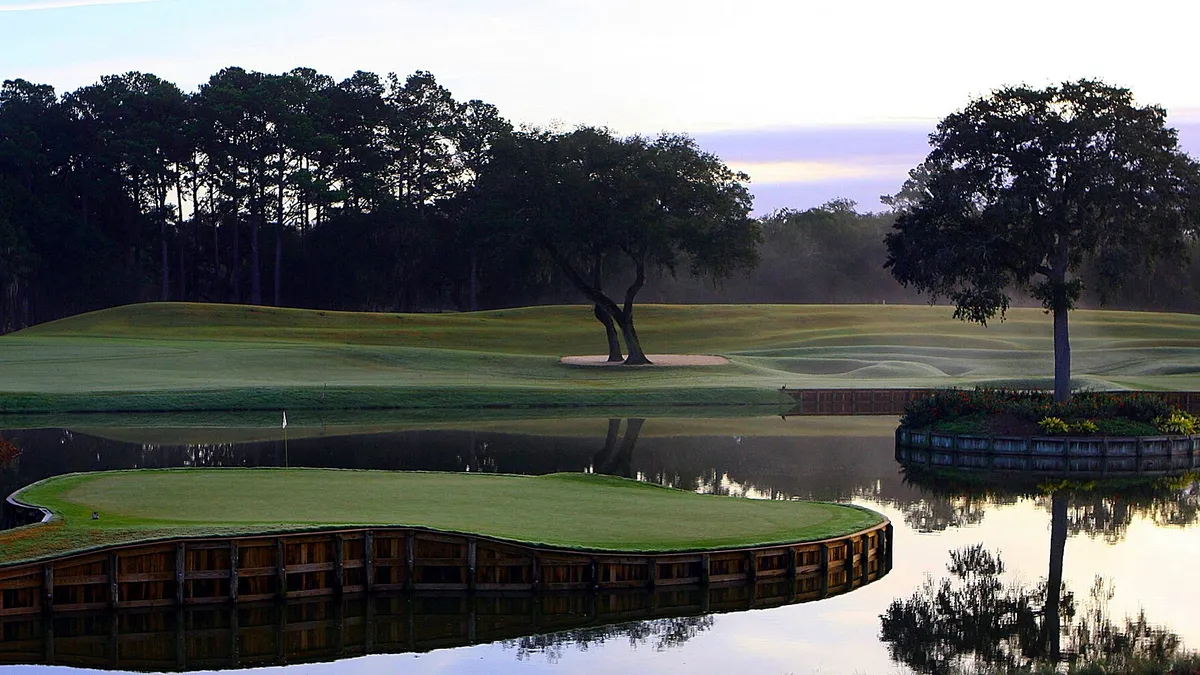
The real portfolio was in the ground. TPC Sawgrass in Ponte Vedra Beach, home of the Players Championship and its famous island green 17th. Whistling Straits in Wisconsin, a mock-links masterpiece that hosted PGA Championships and a Ryder Cup. The Ocean Course at Kiawah Island. Harbour Town Golf Links. Crooked Stick. Each one kept his name in front of millions of golf fans every year, an advertising asset money can’t easily buy.
🚜 Tools of the Trade
Famously hands-on, Dye often operated the earth-moving equipment himself, tweaking mounds and bunkers by eye. His “office” was a job site, and his most valuable possession was arguably his own instinct for how a hole should scare and reward a player.
Pete Dye’s Business & Investments
Strip away the romance and Dye ran a design firm, one of the most sought-after in the world. He and Alice Dye built a family enterprise; their sons Perry and P.B. Dye became course architects too, extending the brand into a second generation.
The genius of the business was the moat. Once a developer decided they wanted “a Pete Dye course,” there was no substitute. His island greens, railroad-tie bunkers, and deceptive angles were instantly recognizable, which let him charge premium fees and pick prestige projects. His work for clients like Herb Kohler at Whistling Straits and Deane Beman at TPC Sawgrass turned raw or reclaimed land into destinations that generate revenue to this day. In other words, he didn’t just get paid once; his courses keep earning tournaments, memberships, and real-estate value long after the invoice cleared.
How Does Pete Dye Compare?
Dye’s $50 million is modest next to the billion-dollar fortunes of playing legends, but the comparison misses the point. Players like Tiger Woods and Rory McIlroy earned their money by winning; Dye earned his by building the arenas.
Among architects, he sits at the very top. His only real rival for influence is Jack Nicklaus, who parlayed a legendary playing career into a design empire worth an estimated $400 million, far more than Dye, but Nicklaus started from the wealth and fame of 18 major titles. Dye reached elite status as a designer first and foremost. For the full ranking of golf’s biggest fortunes and where a course architect fits among the champions, see our richest golfers list, and the wider world of the richest athletes.
Why Pete Dye’s Legacy Still Pays
What separates Dye from nearly every other name in golf is durability of a different kind. His fortune came from work that keeps working. A great course hosts events, sells memberships, and anchors property values for generations.
That is the ultimate version of the money playbook: build an asset once, and let it earn for decades. Dye turned swampland and scrubland into championship venues, sold his name as a premium brand, and passed the business to his family. He proved you don’t have to win a major to get rich in golf. Sometimes you just have to build the hole everyone remembers. For the full picture of how the sport’s fortunes stack up, see our richest golfers list.
Pete Dye Net Worth: Year by Year
| Year | Net Worth |
|---|---|
| 2005 | $25 Million |
| 2010 | $35 Million |
| 2015 | $45 Million |
| 2020 | $50 Million |
| 2026 | $50 Million (est.) |
Connected Wealth
Shop Pete Dye on Amazon
Books, audiobooks, merch and more, handpicked for fans.
As an Amazon Associate we earn from qualifying purchases.
🏆 Top Takeaways to Success
- 1
Sell a signature, not a service. Pete Dye's terrifying, one-of-a-kind courses became a brand, so developers paid a premium just to attach his name to a project.
- 2
Partner with someone who complements you. His wife Alice was a champion golfer and co-designer whose input shaped some of his most famous holes, doubling their creative firepower.
- 3
Own the hard problems. Dye took ugly, unwanted swampland and turned it into championship venues, which is exactly why clients paid him instead of an easier designer.
- 4
Let your best work advertise the next job. One iconic hole, the island green at TPC Sawgrass, generated decades of referrals and repeat commissions.
- 5
Build assets that keep earning. A great course hosts tournaments for generations, so Dye's designs kept his name, and his firm's demand, alive long after the ground was moved.
Frequently Asked Questions
What was Pete Dye's net worth?+
Pete Dye's net worth was an estimated $50 million at the time of his death in 2020, built almost entirely through golf course architecture rather than playing the game professionally.
What courses did Pete Dye design?+
Dye designed or co-designed more than 100 courses, including TPC Sawgrass, Whistling Straits, the Ocean Course at Kiawah Island, Harbour Town Golf Links and Crooked Stick, several of which host major championships.
How did Pete Dye make his money?+
Almost all of Dye's fortune came from design fees and development consulting. Top architects can command six and seven-figure fees per project, and Dye built championship venues that commanded premium rates.
Is Pete Dye still alive?+
No. Pete Dye passed away on January 9, 2020, at the age of 94. He had been living with Alzheimer's disease in his final years. He is remembered as one of the most influential course architects in history.
Was Pete Dye in the World Golf Hall of Fame?+
Yes. Dye was inducted into the World Golf Hall of Fame in 2008 for his contributions as a designer, a rare honor for someone who never won on tour as a player.
Shop Pete Dye on Amazon
Books, audiobooks, merch and more, handpicked for fans.
As an Amazon Associate we earn from qualifying purchases.