Pete Dye Biography: The Insurance Man Turned Golf's Feared Architect
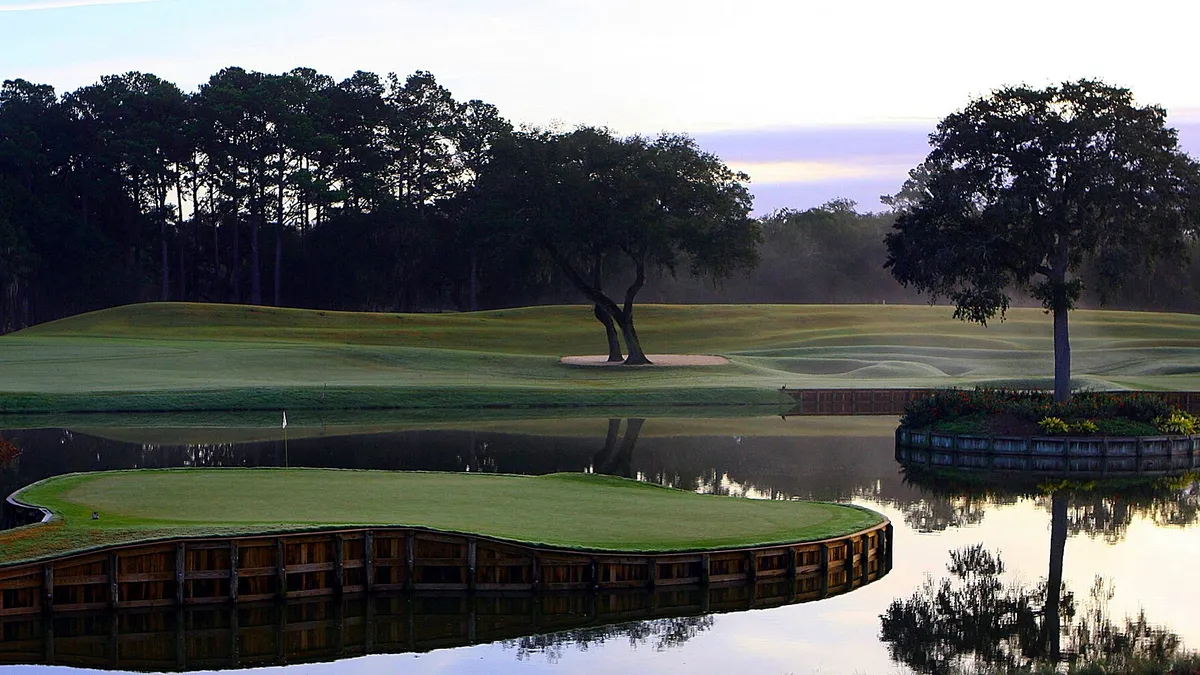
Most golf fans know Pete Dye’s work without knowing his name. They know the hole, the little island green surrounded by water, where careers wobble and dreams drown.
Here’s what most people miss: the man who designed the courses that terrify the best players in the world sold life insurance for a living before he ever touched a bulldozer.
The Myth vs. The Reality
The myth is simple. Pete Dye: the mad genius, the diabolical designer who woke up one day and decided to torture professional golfers with island greens and impossible bunkers.
The reality is richer.
Here’s the deal: Dye was not some tortured artist raging against the game. He was a disciplined, self-made businessman from Indiana who loved golf, studied it obsessively, and happened to have a once-in-a-generation eye for how land and fear could combine into art.
He built difficulty on purpose, yes. But not out of cruelty. He believed a great course should test the mind as much as the swing, that intimidation was a legitimate part of the game, and that a golfer should have to think and sweat over every shot.
You might be wondering: how does an insurance salesman end up reshaping an entire sport? To understand that, you have to understand the world he came from, and the world he traveled to.
The World That Made Pete Dye
Paul Burke Dye Jr. was born in 1925 in Ohio and raised largely in Urbana, where his father built a nine-hole course. So golf was in the soil of his childhood.
He served in the Army during World War II, played competitive amateur golf good enough to reach a U.S. Open, and then settled into a respectable life in Indianapolis selling insurance. By every conventional measure, he had made it.
Now: American golf in the 1950s was dominated by a certain look, long, green, manicured, forgiving. Courses were built to a formula. Nobody was asking for anything different, and nobody was getting it.
Think about it: Dye was operating inside a comfortable career and a settled design orthodoxy. It would have been easy to stay put. Then he went to Scotland, and everything he thought he knew about golf came apart.
The Crucible: Early Life and the Climb
The Environment That Shaped Him
Dye grew up around his father’s course, learning early that a golf hole is a designed thing, not an accident of nature. He met Alice O’Neal in college, and she was a phenomenal player, a multiple-time amateur champion who would win more titles than he ever did.
Here’s the truth: Alice was not a sidekick. She was his equal and, in many ways, his sharpest collaborator. Their marriage in 1950 became a design partnership that lasted a lifetime.
They started small, tinkering with courses around Indiana in the late 1950s while Dye still worked in insurance. Crooked Stick, near Indianapolis, became an early canvas. The couple poured their own money and instincts into the ground, learning by doing.
But the real catalyst was a plane ticket.
The Catalyst
In 1963, the Dyes traveled to Scotland and toured the ancient links courses, St. Andrews, Prestwick, and others. What Dye saw there rewired his brain.
Let that land. He saw pot bunkers with steep faces, railroad ties shoring up hazards, small greens, wild undulations, and difficulty that came from nature and cunning rather than sheer length. This was golf as a puzzle, not a procession.
He came home and started translating those old-world ideas into a bold new American style. Harbour Town Golf Links in South Carolina, opened in 1969 with a young Jack Nicklaus consulting, stunned the golf world. It was short, tight, and fiendishly strategic, the opposite of the era’s power courses.
It gets better, and stranger. Because the course that would truly make him famous, and infamous, was still ahead. And it would center on a single, terrifying shot over water.
The Key Players
No one builds a legacy alone, and Dye’s story runs through a handful of essential people.
Alice Dye. His wife, partner, and creative equal. A champion golfer and pioneering female architect, she is credited with the idea for the famous island green at TPC Sawgrass, among other contributions. Their partnership is the beating heart of his career.
Jack Nicklaus. The greatest player of his era, who consulted with Dye on Harbour Town early in Nicklaus’s own design journey. The two became the twin titans of golf architecture, sometimes rivals, always giants. Nicklaus went on to build a design empire of his own.
Deane Beman. The PGA Tour commissioner who hired Dye to build TPC Sawgrass on a patch of Florida swampland, creating the “stadium golf” concept and Dye’s most iconic course.
Herb Kohler. The Wisconsin businessman who commissioned Whistling Straits, giving Dye a blank canvas along Lake Michigan to build a mock-Irish links that would host major championships.
By the way, notice the pattern: visionaries kept handing Dye difficult land and daring him to make magic. He always did. And the most magical, and most hated, result was about to change golf forever.
The Turning Point
The Pinnacle
Dye’s masterpiece rose out of a swamp.
In 1980, TPC Sawgrass opened in Ponte Vedra Beach, Florida, built on soggy, unpromising land. Its centerpiece became the par-3 17th, an island green surrounded almost entirely by water, one of the most photographed and feared holes in the sport. Every year at the Players Championship, the world watches the best golfers alive flinch at a wedge shot.
He didn’t stop there. Whistling Straits, the Ocean Course at Kiawah Island, Crooked Stick, PGA West, courses that would host PGA Championships, Ryder Cups, and U.S. Opens. In 2008 he was inducted into the World Golf Hall of Fame, a rare honor for a man who never won on tour.
As his net worth breakdown lays out, that body of work also built a fortune estimated near $50 million.
The Price
Here’s the kicker: the very courses that made him immortal also made him a lightning rod.
Pros complained his designs were unfair, tricked-up, more about humiliation than skill. Some holes were softened after players revolted. The Ocean Course at the 1991 Ryder Cup was so brutal it earned nicknames not fit for print. Dye’s genius came bundled with controversy, and he wore it like a badge.
And in his final years, the price turned personal. He faced Alzheimer’s disease, losing the sharp mind that had reshaped a sport. His beloved Alice passed away in 2019, and Pete followed in 2020.
The Unvarnished Truth
Dye’s flaws were the flip side of his gifts, and he never hid from them.
He could be stubborn to a fault, reworking holes obsessively, driving the earth-moving equipment himself, and trusting his own eye over blueprints. He designed by feel, which produced brilliance and, occasionally, holes that had to be tamed after the fact.
Now: some critics argued he crossed the line from strategic to sadistic, that a few of his designs punished good shots and rewarded luck. Fair or not, the debate followed him everywhere.
The most honest thing about Dye is that he didn’t care much for consensus. He built what he believed golf should be, difficult, dramatic, memorable, and let the arguments happen. That conviction is exactly what made his courses unforgettable.
Controversies and Criticisms
Dye’s career generated its share of storms.
Too hard, too tricky. The most persistent criticism was that his courses valued difficulty over fairness. Touring pros grumbled that his tiny greens, blind shots, and water everywhere turned skill into a coin flip on certain holes.
The 17th at Sawgrass. Beloved by fans and TV producers, the island green has been called a gimmick by purists who argue a major-quality course shouldn’t hinge on a nerve-shredding wedge over water. Dye never apologized for it.
The Ocean Course reputation. The Kiawah course, especially in high wind, has been described as almost unplayable for amateurs, feeding the narrative that Dye built spectacle over sport.
Credit and collaboration. Because Alice contributed so heavily, and his firm grew into a family operation, some debate lingers over exactly who deserves credit for which famous features. Dye himself was often quick to credit Alice, which speaks well of him.
The environmental and cost debate. Dye’s willingness to dramatically reshape land, moving enormous volumes of earth to sculpt his mounds, bunkers, and hazards, occasionally drew questions about cost and environmental impact. His courses were ambitious and expensive to build and maintain, a reflection of a designer who refused to compromise his vision to save a dollar or a truckload of dirt.
Ahead of his time, or too far ahead? Some traditionalists felt Dye’s dramatic, high-difficulty style pushed golf architecture away from its subtle roots. Others credit him with dragging the entire field forward. That tension, innovator versus provocateur, followed him throughout his career and still colors how his work is judged today.
What We Can Learn From Pete Dye
Navigating Hard Times
The first lesson is about reinvention at any age. Dye didn’t leave insurance for architecture as a hungry kid; he did it as a settled adult with a comfortable life. He bet on a strange new idea when he had every reason to play it safe.
But here’s the truth his career makes plain: comfort is not the same as fulfillment. Dye walked away from a sure thing to chase work that lit him up, and it made him a legend and a fortune.
Notice the timing, too. Dye didn’t make his leap as a wide-eyed kid with nothing to lose. He was an established professional with a family, a career, and a reputation, exactly the position most people use to justify playing it safe. He proved that reinvention isn’t reserved for the young. It’s available to anyone willing to trade certainty for a bigger idea.
The Success Blueprint
If you want the replicable part, it’s this: find the thing only you can do, then make it unmistakable.
Dye didn’t compete on the same terms as other architects. He built a signature so distinctive that “a Pete Dye course” became its own category, which let him charge premium fees and choose prestige projects. That is how he sits high on our richest golfers list without ever cashing a tour paycheck, and among the wider richest athletes his fortune stands out for how he earned it.
Becoming Better
The deepest lesson is about partnership. Dye’s greatest asset wasn’t a bulldozer or a blueprint. It was Alice, his equal, his collaborator, his check and his spark.
In other words, he multiplied his own talent by refusing to work alone. The man who built the loneliest shot in golf, that island green surrounded by water, built his life and his legacy hand in hand with someone he trusted completely.
Final Verdict
Pete Dye is one of the most important figures golf has ever produced, and “important” matters more here than “famous,” though the two ended up the same. More than 100 courses. Multiple major venues. A Hall of Fame induction. A signature hole watched by millions every year.
And here’s the twist that reframes everything: the insurance salesman who never won on tour reshaped how the world’s greatest players experience the game, and he did it by making them afraid. The full picture of the fortune he built, and the family firm that carries his name, lives in his net worth breakdown. His story proves you don’t have to be the best player in the world to leave the deepest mark on a sport. Sometimes you just have to see the ground differently than everyone else.
Shop Pete Dye on Amazon
Books, audiobooks, merch and more, handpicked for fans.
As an Amazon Associate we earn from qualifying purchases.
Frequently Asked Questions
Who was Pete Dye?+
Pete Dye was an American golf course architect widely regarded as one of the most influential and creative designers in the sport's history, responsible for TPC Sawgrass, Whistling Straits and more than 100 other courses.
What made Pete Dye's courses so hard?+
Dye used deceptive angles, railroad-tie bunkers, tiny target greens and dramatic water hazards to test the nerve of even the best players. His island green 17th at TPC Sawgrass is one of the most fearsome shots in golf.
Was Pete Dye married?+
Yes. Dye was married to Alice Dye, a champion amateur golfer and pioneering course architect in her own right. She was his design partner and is credited with shaping several of his most famous holes.
When did Pete Dye die?+
Pete Dye died on January 9, 2020, at age 94. He had been living with Alzheimer's disease. His wife Alice had passed away the previous year, in 2019.
What is Pete Dye's most famous course?+
His most famous work is likely TPC Sawgrass in Ponte Vedra Beach, Florida, home of the Players Championship and its iconic par-3 17th island green, one of the most recognizable holes in all of golf.
Want the money side of the story?
Read Pete Dye's Full Net Worth Breakdown →Shop Pete Dye on Amazon
Books, audiobooks, merch and more, handpicked for fans.
As an Amazon Associate we earn from qualifying purchases.