Michael Jordan Biography: The Cut That Built the Greatest Ever
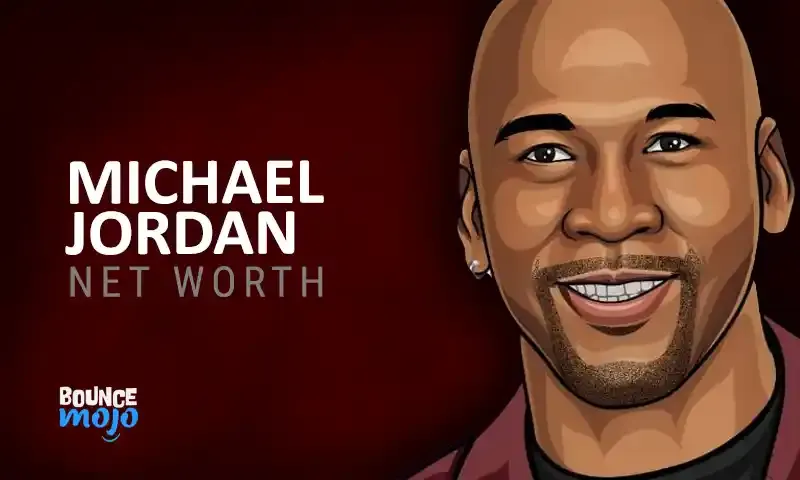
You already know the six rings, the tongue, the Jumpman on half the sneakers in America. That version of Michael Jordan is real. It is also the least useful one.
The moment that actually built him didn’t happen on a championship stage. It happened when he got left off a list.
The Sheet of Paper on the Laney High Wall, Fall 1978
In the fall of 1978, Jordan tried out for varsity at Emsley A. Laney High School in Wilmington, North Carolina. He was about 5-foot-11 and only a sophomore. When the roster went up, his name was on the junior varsity list. A taller, less gifted teammate made the cut instead.
Was he actually “cut”? Not exactly. He was never told to stop playing basketball. Assigning a sophomore his size to JV was standard. But the distinction meant nothing to a 15-year-old who felt passed over. He went home, shut the door, and cried. Deloris Jordan remembered it plainly in “The Last Dance”: her son came home upset, and they cried together, because she knew how badly he wanted it.
He turned the sting into a weapon he never put down. Jordan later said that whenever he was tired or thinking about quitting a workout, he would close his eyes and see that varsity list without his name on it. Then he’d keep going.
That summer he grew close to four inches. He attacked the JV season, dropping 40-point games. He made varsity as a junior and became the best player on the floor.
Before the List: Wilmington, and a Brother He Couldn’t Beat
Michael Jeffrey Jordan was born on February 17, 1963, in Brooklyn, New York, but the city was never really his. His family moved south to Wilmington while he was still a toddler.
This was the coastal South in the 1960s and 70s: a mid-sized port town, tobacco country not far off, still carrying the weight of segregation and slow to change. James Jordan worked as an equipment supervisor for General Electric. Deloris Jordan worked at a bank. They raised five kids on discipline, church, and the flat expectation that you would work for whatever you got.
Michael, the fourth of five, was not even the best athlete in his own family for a while. His older brother Larry was quicker, tougher, and beat him in the backyard so relentlessly that Michael later credited those brutal one-on-one games for his edge.
By his own account, young Michael was not a grinder at first. He was talented, competitive, and a little lazy, coasting on ability while Larry out-worked him. He loved baseball as much as basketball, maybe more, a detail that becomes important later in the saddest possible way.
Fifteen Seconds Against Georgetown, 1982
The Laney breakout earned him a scholarship to the University of North Carolina, one of the sport’s crown programs, coached by Dean Smith.
Smith shaped the player. His disciplined team system ironically capped Jordan’s gaudy scoring, but sharpened his fundamentals and his mind. Rivals joked that Smith was the only man who ever held Jordan under 20 points. What Smith actually gave him was the foundation to become unguardable.
It paid off in year one. As a freshman in the 1982 NCAA title game, Jordan spotted up on the left wing against Georgetown and buried a 16-foot jumper with about 15 seconds left. North Carolina won 63-62. He didn’t even watch it go in; he turned away. Jordan later said the shot “turned my name from Mike to Michael Jordan.”
Six Rings, and the Pistons Who Made Him Earn Them
Drafted third by the Chicago Bulls in 1984, Jordan was Rookie of the Year and an instant phenomenon. For years afterward, the “Bad Boys” Detroit Pistons beat his teams bloody and out of the playoffs. He got stronger. He got meaner.
He also got help. Scottie Pippen became the perfect co-star, a two-way genius who let Jordan chase both offense and defense without collapsing. Dennis Rodman later arrived as the rebounding madman who did the ugly work nobody else wanted. Coach Phil Jackson supplied a system, the triangle offense, and the Zen patience to manage the most demanding superstar in the league.
In 1991 the dam broke. The Bulls beat Magic Johnson’s Lakers for the title, then won again in 1992, then again in 1993. Jordan was Finals MVP every time, a scoring champion, a defensive terror, the biggest name in sports on the planet.
You’d think that was the summit. Between the first three-peat and the second, everything fell apart.
July 1993: A Lexus Parked Beside a North Carolina Highway
In July 1993, James Jordan was driving home from a funeral in North Carolina when he pulled over to nap in his Lexus. Two young men, Daniel Green and Larry Demery, robbed and murdered him. His body was found weeks later in a South Carolina swamp and identified through dental records.
Michael Jordan was 30 and had just won three straight titles. His father, his best friend, the man with the easy grin who traveled to watch him play and shared his love of baseball, was gone in a senseless roadside killing.
It broke something. That October, exhausted and grieving, Jordan retired from basketball entirely, saying he’d lost the desire. Then he did something almost no one saw coming. He signed with the Chicago White Sox organization and reported to the Double-A Birmingham Barons, chasing a dream he and his father had shared.
He hit .202 that season, riding buses through the Southern League, a global icon in a minor-league uniform. Critics mocked him. He didn’t care. He was grieving his dad on a baseball diamond.
In March 1995, he faxed the world two words: “I’m back.” After a rusty first run he built a second dynasty more dominant than the first, with titles in 1996, 1997 and 1998. Six rings, six Finals MVPs, no Finals losses.
What the 500 Hours of Footage Actually Showed
That final 1998 season became “The Last Dance,” a 10-part documentary built from roughly 500 hours of behind-the-scenes footage. It showed the world what the winning cost, and it wasn’t pretty.
Jordan was not a warm and fuzzy leader. He was a tyrant on the practice floor. He needled teammates. He punched Steve Kerr in practice. He rode role players until they cracked or hardened. He invented slights to motivate himself, holding grudges against opponents who barely knew they’d offended him. In the documentary he choked up defending his methods, saying that if you didn’t want to compete at his level, you shouldn’t have laced up next to him.
The same fire that produced six rings made him hard to be around. He admitted as much.
The Golf Bets, the Casino Night, and a Conspiracy With No Evidence
Jordan is a serious, high-stakes gambler, and he has never fully hidden it. In the early 1990s a businessman and golf partner, Richard Esquinas, claimed in a book that Jordan owed him more than a million dollars from golf bets, a figure Jordan disputed. Jordan was also seen at an Atlantic City casino the night before a 1993 playoff game, drawing heavy criticism. In a 2005 interview tied to his book, he admitted to CBS that he had at times pushed gambling too far, calling some of it “stupid” and something he regretted.
The fevered theory that the NBA secretly “suspended” him in 1993 by letting him retire to hide a gambling problem has never been supported by any evidence. The league and Jordan’s teammates have flatly denied it. The honest summary: Jordan gambled recklessly at times, admitted it, and there is no proof it was ever more than that.
A second criticism has followed him just as long, captured in a line often attributed to him: “Republicans buy sneakers too.” Jordan long avoided politics, and critics called it a cop-out for a man with historic influence. He later put real money behind civil-rights and community causes, but the early reticence remains a fair knock.
The Royalty Clause His Mother Made Him Sit Through
In 1984 Jordan wanted to sign with Adidas. Deloris insisted he at least sit down and listen to Nike. That instruction changed the financial history of sports.
The genius wasn’t the shoe. It was the structure. Jordan’s camp pushed for a royalty on every pair sold rather than a flat fee, so his upside had no ceiling. Air Jordans exploded, generating an estimated $126 million in year one, and Jordan Brand became a division that today throws off billions. He earned an estimated $2 billion-plus from Nike over the years, dwarfing the roughly $90 million he made in NBA salary.
He later bought control of the Charlotte Hornets for a reported $175 million and sold his majority stake in 2023 at a roughly $3 billion valuation, becoming the first athlete billionaire and taking a place at or near the top of the richest NBA players list. Full numbers are in his net worth breakdown, and they are absurd.
The transferable part is one line: own equity, not a paycheck.
He Never Forgave the List
Jordan’s response to pain is the whole engine. Left off a varsity roster, he memorized the humiliation and burned it for fuel. Father murdered, he didn’t fake being fine; he stepped away, grieved on a baseball field, and came back when he was ready. He put it best himself: he’d missed more than 9,000 shots, lost almost 300 games, failed over and over, and that is exactly why he succeeded.
So he is the shy kid from Wilmington who got left off a list and never forgave it. A son who answered a roadside murder with a minor-league bus. A tyrant and a genius, a gambler and a self-made billionaire, the most competitive person a generation of athletes ever met.
If you want that mindset in his own words, read “Driven from Within” (2005), written with Mark Vancil. It’s not a play-by-play memoir. It’s Jordan on the mentors, the obsession and the discipline behind the myth, told through the people who shaped him. Read it if you want to understand the engine, not just admire the machine.
Shop Michael Jordan on Amazon
Books, audiobooks, merch and more, handpicked for fans.
As an Amazon Associate we earn from qualifying purchases.
Frequently Asked Questions
Was Michael Jordan really cut from his high school team?+
Sort of. As a 5-foot-11 sophomore at Laney High in 1978, Jordan was not chosen for varsity and played junior varsity instead. He was not thrown off basketball entirely, but the omission stung, and he has called it the fuel that drove him for decades.
What was Michael Jordan's college shot?+
As a freshman at North Carolina, Jordan hit a 16-foot jumper with about 15 seconds left to beat Georgetown 63-62 in the 1982 NCAA championship game. He later said it turned his name from 'Mike' into 'Michael Jordan.'
How did Michael Jordan's father die?+
James Jordan Sr. was murdered in July 1993 during a robbery while he napped in his car along a North Carolina highway. His death came months before Jordan's first NBA retirement and his brief pro baseball career.
How many NBA championships did Michael Jordan win?+
Six, all with the Chicago Bulls, in two three-peats: 1991, 1992, 1993, then 1996, 1997 and 1998. He was Finals MVP in all six.
Want the money side of the story?
Read Michael Jordan's Full Net Worth Breakdown →Shop Michael Jordan on Amazon
Books, audiobooks, merch and more, handpicked for fans.
As an Amazon Associate we earn from qualifying purchases.