Matt Groening Biography: Fifteen Minutes That Built Springfield
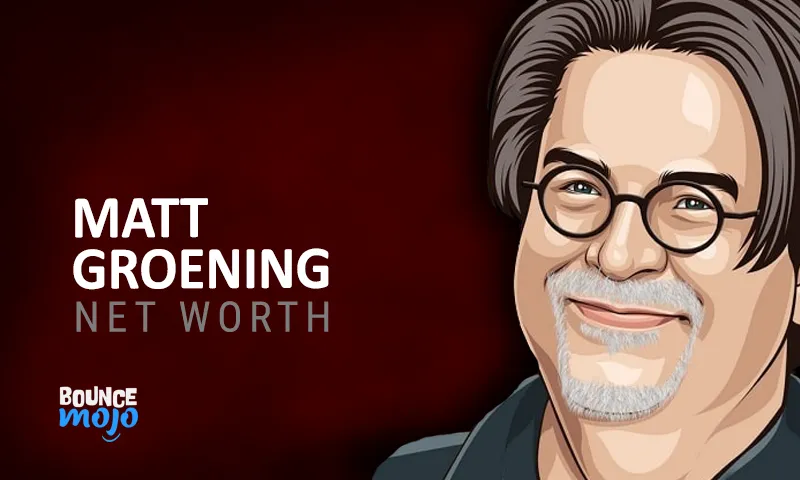
The most consequential fifteen minutes in television history were spent by a 33-year-old cartoonist sitting in a producer’s waiting room, panicking, drawing a family of five with overbites because he had just decided not to sell the thing he had come to sell.
That is not an origin myth polished up for interviews. It is the actual mechanism by which Matt Groening became one of the wealthiest people in entertainment, and it turned on a point of ownership rather than a point of inspiration.
Portland, Where Homer and Marge Were Real People
Matthew Abram Groening was born on 15 February 1954 in Portland, Oregon. His father, Homer Philip Groening, was a Mennonite filmmaker, advertiser and cartoonist. His mother, Margaret Ruth, was a former teacher. Among his siblings were sisters named Lisa and Maggie, plus a brother, Mark, and a sister, Patty.
So the family at the centre of the longest-running scripted show in American history is, name for name, his own — with one substitution. He would not use his own name for the delinquent son, so he used an anagram of “brat.”
Growing up in a house where the father made films and drew cartoons for a living matters more than the name-borrowing. Groening did not have to discover that drawing could be a job. He had watched it be one.
A College With No Grades
He went to The Evergreen State College in Olympia, Washington — an experimental institution with no grades and no required courses, which he has described, accurately, as the only place that would have suited him. He edited the student paper and drew for it.
Then he moved to Los Angeles in 1977, aged twenty-three, intending to write. What he got instead was a run of jobs he later summarised as “a series of lousy jobs”: clerk at a record store, landscaping at a sewage treatment plant, a stint in a nursing home, chauffeuring and ghostwriting for a retired film director, and one appearance as a film extra.
Life in Hell, Photocopied by Hand
He processed the misery the way cartoonists do. Life in Hell began as a self-published comic about the indignity of living in Los Angeles — a one-eared rabbit called Binky, a bleak sense of humour about work, love and rent — and he photocopied it and handed it out at the record store.
It was picked up by the Los Angeles Reader, then syndicated across alternative weeklies through the 1980s. His then-girlfriend Deborah Caplan collected the strips into books — Love Is Hell, Work Is Hell — and handled the business, which is how the strip became a functioning income rather than a hobby. The final Life in Hell strip ran on 16 June 2012, after roughly three decades.
That strip is the whole reason the rest of this happened, because Groening owned it outright.
The Lobby, 1987
James L. Brooks — the producer behind Terms of Endearment and Taxi — read Life in Hell, liked it, and asked Groening to adapt it into short animated segments for The Tracey Ullman Show.
Groening arrived at the meeting and realised, waiting outside, that the deal would require him to sign over rights in the strip. He was not prepared to. So in the lobby he sketched something new and disposable that he was happy to hand over: a yellow, badly behaved family named after his own.
The shorts debuted on 19 April 1987. They were crude and popular. Fox commissioned a half-hour series, and The Simpsons premiered on 17 December 1989.
Because the family had been invented for that meeting, Groening’s stake in it was structured from the outset alongside Brooks and co-developer Sam Simon — a creator’s position, on a network show, negotiated by someone whose main leverage was a willingness to walk away. That structure is the source of nearly everything in the net worth breakdown.
Cancelled Three Times, and Still Alive
Futurama, co-developed with the mathematician-turned-writer David X. Cohen, launched on Fox in 1999. It was smarter and denser than The Simpsons and Fox handled it badly, shuffling timeslots until it died in 2003. Comedy Central revived it from 2008 to 2013. Hulu revived it again in 2023.
A show cancelled by three separate networks and resurrected twice is an unusual asset, and it says something about Groening’s position: he outlasted the executives.
Disenchantment, a fantasy series for Netflix, ran from 2018 to 2023. In 2026 it re-entered the picture, with Futurama confirming a full crossover — the three shows now explicitly sharing a multiverse, which is either a genuine piece of world-building or the most efficient way ever devised to keep a cancelled series earning.
The Part That Was Never Really About Cartoons
Two criticisms follow him. The first is that The Simpsons has long outlived its creative peak and that its continued existence is now a licensing decision rather than an artistic one. The second is that his day-to-day authorship of the show has been minimal for decades — that the writers’ room, and figures like Sam Simon, Al Jean and Cohen, did the work while Groening held the credit and the equity.
Both are largely fair, and neither is really a rebuttal. Groening’s decisive contribution was not a joke or an episode. It was a refusal, made in a lobby in 1987, to sign away something he owned in exchange for a television opportunity. Everything downstream — the merchandise, the syndication, the theme-park land, the position among the wealthiest names on the richest comedians list — flows from that one negotiating instinct.
Season 40, and What’s Left to Do
He married Deborah Caplan in 1986; they divorced in 1999 and have two sons, Homer (known as Will) and Abe. In 2011 he married the Argentine artist Agustina Picasso, with whom he has five children, including two sets of twins.
Professionally, the machine has been extended well past his seventies. Fox has renewed The Simpsons through season 40, carrying it into the 2028–29 season, and a sequel to the 2007 feature is dated for September 2027, twenty years after the first.
The kid from Portland who drew a one-eared rabbit because Los Angeles was making him miserable will be collecting on a family he invented in a waiting room for at least another three years. The lesson is unglamorous and almost entirely about paperwork: the person who owns the thing gets to keep the thing.
Shop Matt Groening on Amazon
Books, audiobooks, merch and more, handpicked for fans.
As an Amazon Associate we earn from qualifying purchases.
Frequently Asked Questions
Are the Simpsons named after Matt Groening's family?+
Mostly. His father was Homer, his mother Margaret, and two of his sisters are Lisa and Maggie. Bart is an anagram of 'brat' — Groening substituted himself rather than use his own name.
What was Life in Hell?+
A comic strip Groening began self-publishing in Los Angeles in the late 1970s, photocopied and handed out at the record store where he worked. It ran in alternative weeklies until its final strip on 16 June 2012.
Why did Matt Groening create the Simpsons instead of adapting Life in Hell?+
James L. Brooks wanted Life in Hell for animated shorts, but the deal meant signing away rights to the strip. Groening sketched a new family in the lobby minutes before the meeting rather than give up the work he owned.
Is The Simpsons still running in 2026?+
Yes. Fox renewed it through season 40, taking it to the 2028–29 television season, and a feature sequel to the 2007 film is dated for September 2027.
Want the money side of the story?
Read Matt Groening's Full Net Worth Breakdown →Shop Matt Groening on Amazon
Books, audiobooks, merch and more, handpicked for fans.
As an Amazon Associate we earn from qualifying purchases.