Michael Phelps Biography: The Raw Truth Behind the Greatest Olympian
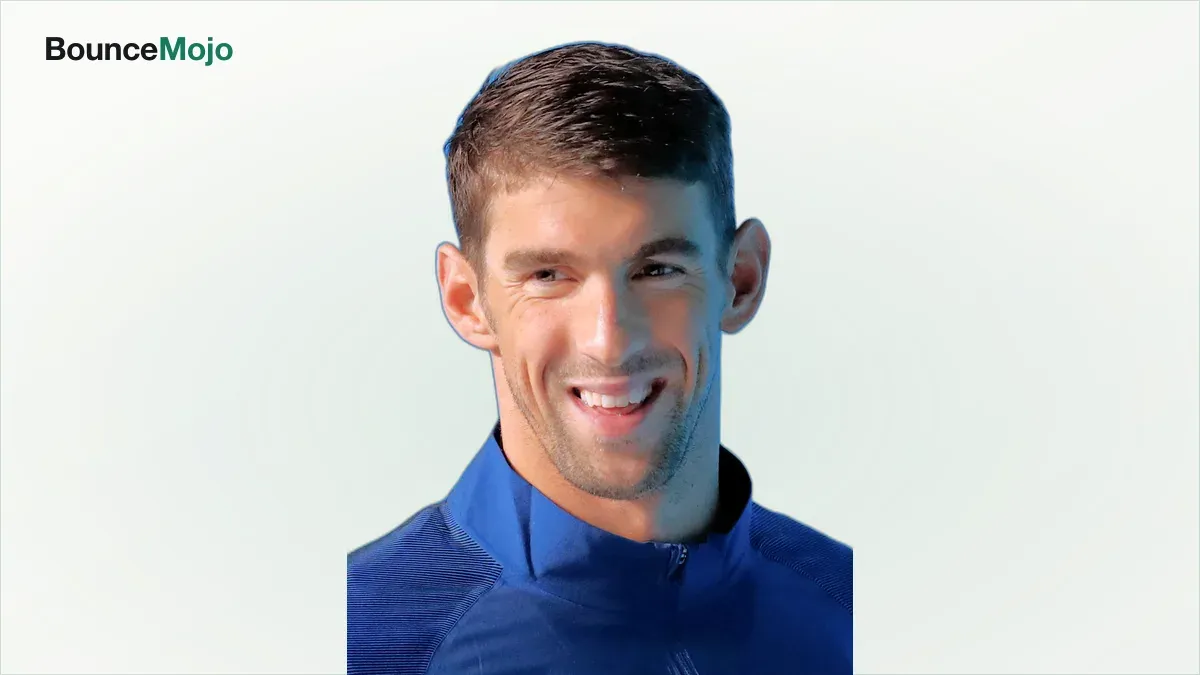
Everybody remembers the eight golds in Beijing. Almost nobody remembers the kid who couldn’t sit still in class.
Here’s what most people miss: the thing that nearly broke Michael Phelps as a child is the exact thing that made him unbeatable in the water.
The Myth vs. The Reality
The myth is a machine. Michael Phelps, the human torpedo, engineered for one purpose, racking up golds like a video-game character with the cheat codes on. Twenty-eight medals. Twenty-three golds. A body supposedly built by nature to swim.
That version is real. It’s also wildly incomplete.
Here’s the truth: the “perfect athlete” story erases the most important part. Phelps was a hyperactive, bullied kid with ADHD who couldn’t sit through a class, whose parents split when he was nine, and who spent stretches of his adult life so depressed he didn’t want to get out of bed. The machine was actually a very human person fighting battles that had nothing to do with the pool.
Think about it. We love a story of effortless genius because it lets us off the hook. If Phelps was just born this way, then his greatness is untouchable and unrepeatable. But that’s not what happened. He was a mess of restless energy who found one place where that energy became fuel instead of a problem.
Now, that place didn’t appear by accident. It was handed to him by a specific city, a specific family, and a specific era. Which raises the question: what world produces a kid this driven and this fragile at the same time?
The World That Made Michael Phelps
To understand Phelps, you have to understand the Baltimore he came up in, and the decade that shaped American swimming.
He was born on June 30, 1985, and raised in Rodgers Forge, a tidy neighborhood near Baltimore. This was middle-class Maryland, not a glamorous training center. His mother, Debbie, was a schoolteacher who became a principal. His father, Michael Sr., was a Maryland State Trooper and former football player. On paper, a stable, athletic, all-American household.
But the era mattered too. Phelps came of age as American swimming was professionalizing, when a talented kid could realistically dream of Olympic gold and, increasingly, of turning that gold into a living. The sport was still amateur in spirit but sharpening its edges, and clubs like the North Baltimore Aquatic Club were becoming factories for elite talent.
Here’s the deal: Phelps had two older sisters, Whitney and Hilary, who swam competitively before he did. The pool was already the family language. When a restless little brother needed somewhere to burn his energy, the water was right there, waiting.
But the stable household cracked before he ever became a champion. And that crack is where the real story starts.
The Crucible: Early Life and the Climb
The environment that shaped him
Two things defined young Michael Phelps: a diagnosis and a divorce.
In sixth grade, he was diagnosed with ADHD. A teacher reportedly told his mother that her son would never be able to focus on anything. He was bullied at school, teased for his big ears, his lisp, and his inability to sit still. For a kid, that’s a brutal combination: told you’re broken, then punished for it.
Then, when he was nine, his parents divorced. Phelps has said the split hit him and his sisters hard, and his relationship with his father grew distant for years afterward. So picture it: a hyperactive, bullied kid, watching his family come apart, with one place on earth where none of that could touch him.
The water.
You might be wondering: how does a kid that scattered become the most focused athlete alive? The answer is that the pool didn’t fight his ADHD. It absorbed it. The endless laps, the black line on the bottom, the total sensory quiet under the surface, all of it gave his overclocked brain exactly the structure it was starving for. He wasn’t fighting his wiring anymore. He was using it.
By ten, he held a national record for his age group in the 100-meter butterfly. The broken kid had found the one arena where he was untouchable.
The catalyst
The catalyst had a name: Bob Bowman.
At the North Baltimore Aquatic Club, a young, intense coach named Bowman took over Phelps’ training. Phelps has described him as something close to a drill sergeant, rigid, demanding, relentless. And Bowman saw immediately what the teachers had missed. This wasn’t a problem child. This was a once-in-a-generation talent who needed discipline to focus his fire.
Here’s the kicker: Bowman didn’t just coach the swimming. He built the whole athlete. He controlled the training, the schedule, the mindset, drilling in a routine so rigid that Phelps could execute under any pressure. That partnership, formed when Phelps was barely a teenager, would carry through every single Olympic Games of his career.
At 15, Phelps made the 2000 Sydney Olympics, the youngest American male swimmer on the team in nearly 70 years. He didn’t medal. But months later he broke a world record, becoming the youngest man ever to do so.
The kid who couldn’t focus was about to rewrite the record books. But the people around him would pay a price too.
The Key Players
No life this big is a solo act, and Phelps was surrounded by people who bent his path.
Start with Debbie Phelps, his mother. She was the anchor, the single parent who drove him to practice, believed him when the school system didn’t, and became a fixture in the stands, filmed crying at nearly every big race. Phelps’ whole story runs through her steadiness.
Then there’s Bob Bowman, the coach who was part mentor, part father figure, part tormentor. Their relationship was combustible and deeply loyal. Bowman pushed Phelps to places he didn’t want to go, and Phelps, for all his rebellions, kept coming back to the man who understood how his mind worked.
And there’s Mark Spitz, a rival Phelps never actually raced. Spitz won seven golds at the 1972 Munich Games, a record that stood for 36 years. Spitz became the ghost Phelps chased, the number that defined ambition for an entire era of swimming.
There was also his father, Michael Sr., whose absence after the divorce left a wound Phelps has spoken about for years, a quiet ache underneath all the winning.
Now: surround yourself with the right people and chase the right ghost, and you can achieve something historic. Phelps was about to do exactly that. But triumph came with a bill he wouldn’t be able to read until years later.
The Turning Point
The pinnacle
The pinnacle came in the water in Beijing, in August 2008.
Phelps arrived at the 2008 Games with one impossible target: eight gold medals in a single Olympics, one more than Spitz’s legendary seven. Everything had to go right. And it did, sometimes by fractions of a second. In the 100-meter butterfly, he out-touched Milorad Cavic by one hundredth of a second, a finish so close it needed the timing system to confirm it.
Eight events. Eight golds. Seven world records. It was the single greatest performance in Olympic history, and it broke a mark that had stood for over three decades.
Across his career, the totals became almost absurd: 28 Olympic medals, 23 of them gold, over five Games from Sydney in 2000 to Rio in 2016. No one in Olympic history, in any sport, is close.
Here’s the truth: he became the most decorated Olympian ever, and it still wasn’t enough to make him happy.
The price
Because the same relentless drive that won the medals had a dark underside.
After the 2012 London Games, Phelps sank into a deep depression. He has said publicly that he didn’t want to be alive, that he sat in his room for days, that he contemplated suicide. The identity he’d built entirely around swimming left him hollow when the racing stopped. The machine, it turned out, didn’t know who he was without a black line to follow.
There were public stumbles too. A photo of him with a marijuana pipe cost him sponsorships. Two DUI arrests, one in 2004 and a more serious one in 2014, forced a reckoning. The 2014 arrest sent him into rehab and, by his own account, saved his life.
He’d spent 20 years being the fastest human in the water. He’d never learned how to just be a person. That was the price of admission, and it nearly cost him everything.
The Unvarnished Truth
Phelps is not a flawless hero, and pretending otherwise does his story a disservice.
He struggled with alcohol. He made reckless choices behind the wheel that could have hurt people, not just his image. For years he channeled everything into swimming and left the rest of his emotional life unbuilt, which is a big part of why the crashes hit so hard when they came.
There’s also the loneliness of his kind of greatness. Being the best on earth at one thing can wall you off from every other part of a normal life. Phelps has admitted he used swimming to avoid dealing with the divorce, the absent father, the depression, right up until avoidance stopped working.
Here’s what’s easy to miss: his greatest strength and his greatest wound were the same trait. The obsessive, all-consuming focus that made him unbeatable also made him unable, for a long time, to cope with anything outside the pool. The gift was the curse.
None of that erases the medals. But it does explain why his second act, mental-health advocacy, is arguably more important than the first.
Controversies and Criticisms
Phelps’ career carried real controversy, and it’s worth being honest about it.
The 2009 photograph showing him with a marijuana pipe triggered a suspension and lost him a major sponsor. It was a young man’s mistake, splashed across every front page.
More serious were the two DUI arrests. The second, in 2014, came with a suspension from USA Swimming and a stint in rehab. Phelps has never hidden from either. He’s called that low point the moment he finally faced himself.
There’s also a fairer debate about the machine narrative itself. Some critics argue the “born to swim” framing, the wingspan, the double-jointed ankles, the ideal proportions, undersells how much brutal, unglamorous work went into his success, and how much luck and resources a Baltimore swim club and a devoted single mother provided. Phelps had extraordinary genetics. He also had a support system most talented kids never get.
So what does a life like this actually teach the rest of us? A lot, and not the lessons you’d expect.
What We Can Learn From Michael Phelps
Navigating hard times
Phelps’ real lesson isn’t about winning. It’s about what to do when the winning stops.
For most of his life, his entire identity was swimming. When that ended, and after the depression nearly took him, he had to build a self that could survive without a scoreboard. He went to rehab. He got honest about his mental health. He rebuilt his relationship with his father before his father passed. He started a family.
In other words: the medals were the easy part. Learning to be okay as an ordinary human, that was the real gold.
The success blueprint
The blueprint here is about turning a perceived weakness into your engine.
Phelps was told his ADHD made him broken. Instead, the sport channeled that same restless intensity into the most focused athletic career in history. He didn’t fix the wiring. He found the arena where it became an advantage.
Want the fuller picture of how that translated into wealth? The full net worth breakdown shows how 23 golds became a nine-figure business built on endorsements and his own brand. And to see how he ranks among the sport’s biggest fortunes, the richest Olympians list puts it in context.
The deeper takeaway is about identity. Phelps proved that being the best in the world at something is not the same as being well. If you build your entire self on one achievement, you’ll be lost the moment it ends. The people who last are the ones who become more than their trophies.
Which brings us to the final reckoning on the man.
Final Verdict
Michael Phelps is going to be remembered for the wrong number.
Most people will file him under “23 golds,” the greatest Olympian, the stat line that can’t be beaten. A smaller, smarter group will remember something harder and more valuable: a bullied kid with ADHD who found his one safe place in the water, dominated the planet for 16 years, then nearly lost himself when the racing stopped, and clawed his way back to become an advocate for the very struggles he once hid.
Here’s the bottom line: the medals made him famous. What he did after the medals made him matter. By going public about depression and suicidal thoughts, he gave millions of people permission to say they weren’t okay either.
He is the most decorated Olympian in history. He is also living proof that the trophy was never the point. And in the long run, that second story, the human one, is the version worth remembering.
Shop Michael Phelps on Amazon
Books, audiobooks, merch and more, handpicked for fans.
As an Amazon Associate we earn from qualifying purchases.
Frequently Asked Questions
Where did Michael Phelps grow up?+
Phelps grew up in the Rodgers Forge area of Towson, near Baltimore, Maryland, the youngest of three children raised largely by his mother Debbie, a school principal, after his parents divorced when he was nine.
Did Michael Phelps have ADHD?+
Yes. Phelps was diagnosed with ADHD in sixth grade and was bullied at school. Swimming became the outlet that channeled his restless energy, and he has since spoken about how the diagnosis shaped him.
Who was Michael Phelps' coach?+
Phelps trained under Bob Bowman at the North Baltimore Aquatic Club from age 10, a demanding, drill-sergeant style mentor who guided him through every Olympic Games of his career.
How many Olympic medals did Michael Phelps win?+
Phelps won 28 Olympic medals, 23 of them gold, across five Games, making him the most decorated Olympian in history. His eight golds at the 2008 Beijing Games broke Mark Spitz's record.
Did Michael Phelps struggle with depression?+
Yes. Phelps has spoken openly about battling depression and suicidal thoughts, especially after the 2012 Olympics, and has become one of the most prominent athlete advocates for mental health.
Want the money side of the story?
Read Michael Phelps's Full Net Worth Breakdown →Shop Michael Phelps on Amazon
Books, audiobooks, merch and more, handpicked for fans.
As an Amazon Associate we earn from qualifying purchases.