Miguel Indurain Biography: The Story of Cycling's Quiet Giant
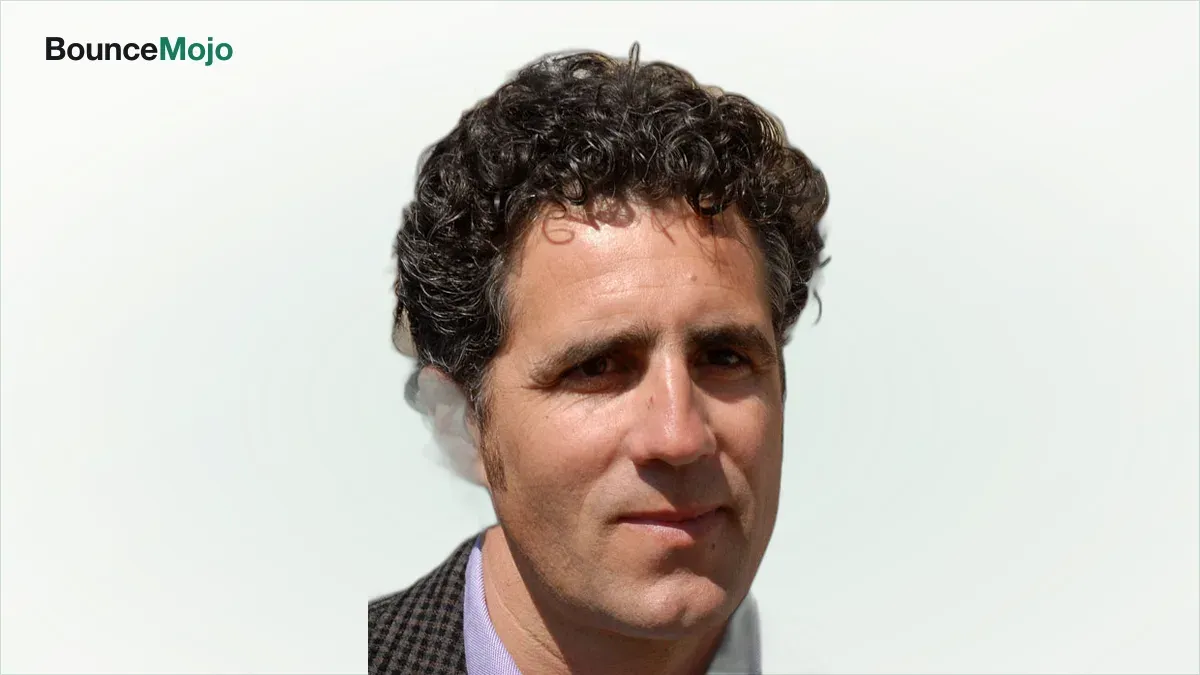
The yellow jersey, the machine-like time trials, the calm face that never seemed to crack. That’s the Miguel Indurain most fans remember.
Here’s what most people miss: the most dominant Tour rider of the 1990s was so shy that fame made him deeply uncomfortable. His whole story turns on how a quiet farm boy carried the weight of a nation without ever losing himself.
The Myth vs. The Reality
The myth is that Indurain was a machine. Cold, unbeatable, emotionless on the bike.
The reality is gentler and stranger.
Here’s the truth: behind the machine was one of the most humble and private athletes cycling has produced. Indurain hated the spotlight. He spoke quietly, avoided controversy, and wanted nothing more than to return home to Navarre when the racing was done. The calm everyone saw wasn’t coldness. It was the composure of a genuinely modest man carrying enormous pressure.
Now think about what that meant. Every July, a shy farmer’s son became the face of Spanish sport, expected to win, watched by millions. He never once let it break him.
That steadiness was his superpower. To understand where it came from, you have to start in a small town in northern Spain.
The World That Made Miguel Indurain
Miguel Indurain Larraya was born on July 16, 1964, in Villava, a town in the Navarre region of northern Spain. His family worked the land, and Miguel grew up surrounded by the rolling roads and farmland of the region.
This was Spain in the years of change, emerging from decades under Franco into a new democratic era. Cycling had deep roots in the north, and the roads of Navarre and the nearby Pyrenees were perfect training grounds for a young rider with big lungs and bigger legs.
Indurain got his first serious bike as a way to get around, then discovered he was faster than everyone else. He was tall, powerful, and unusually calm, a teenager who let his legs do the talking. Local clubs quickly noticed the quiet boy who could ride away from everyone.
But here’s the kicker: raw power alone doesn’t win five Tours. What Indurain had was a body built for one thing above all, and it would take years for the right team to unlock it.
The Crucible: Early Life and the Climb
The environment that shaped him
Indurain’s upbringing on the farm gave him a grounded, unshowy character that never left him. He was disciplined, patient, and comfortable with hard, repetitive work, exactly the temperament long-distance cycling rewards.
He turned professional in 1985 with the Reynolds team, which later became Banesto. At first he was a support rider, a domestique built to help his team leaders. His physiology was extraordinary: a huge heart and lungs that let him produce power few humans could match. But he was raw, and he needed guidance.
The talent was undeniable. The question was whether he could become a leader in his own right.
The catalyst
The turning point came under the guidance of his team and his mentor, veteran Spanish champion Pedro Delgado.
For years Indurain served Delgado loyally at the Tour de France. Then, gradually, the roles reversed. As Delgado aged, Indurain’s power made him the natural leader. In 1991 he seized his chance and won his first Tour de France, announcing himself as the sport’s new master against the clock.
Here’s the deal: that first yellow jersey unlocked something. Once Indurain learned he could win, he simply kept winning.
Want to know how far that took him? All the way to a record no one had ever set before.
The Key Players
You cannot tell the Indurain story without a few names.
Pedro Delgado is the first, the Spanish champion Indurain served before surpassing. Delgado’s leadership at Banesto taught Indurain how to ride a Grand Tour, and the graceful handover between them is one of cycling’s better stories of mentorship.
His Banesto team is the second key player. The Spanish squad was built around Indurain’s strengths, protecting him in the mountains and setting him up to demolish the field in the time trials. Great as he was, his dominance was a team achievement as much as an individual one.
His wife, Marisa, is the third. She was the private anchor of a man who wanted nothing more than a normal life away from the cameras. Together they built a quiet family life in Navarre, the place Indurain always returned to.
Here’s the truth: everything was about to converge on an achievement no cyclist had ever managed.
The Turning Point: Triumph and Its Hidden Cost
The pinnacle
Start with the triumph, because the streak was historic.
From 1991 to 1995, Indurain won the Tour de France five times in a row. No rider in history had won five consecutive editions. He did it with a distinctive style: overwhelming the field in the time trials, where his enormous engine crushed rivals by minutes, then defending calmly in the mountains without ever panicking.
He also won the Giro d’Italia twice, in 1992 and 1993, doubling up the Giro and the Tour in the same year, a rare and grueling feat. In 1996, he added Olympic gold in the individual time trial at the Atlanta Games, capping his record with the one prize that had eluded him.
For half a decade, “Big Mig” was the most dominant stage racer on earth, and a national hero in Spain.
The price
Now the cost, which came suddenly.
In 1996, chasing a sixth straight Tour, Indurain finally cracked. He struggled in the mountains, lost time, and finished well down the standings. The invincible champion looked human at last, and the disappointment stung a proud man who had never known Tour failure.
Rather than cling on and fade, Indurain made a decision that defined his character. He retired at the end of 1996, walking away at thirty-two while still capable, refusing to become a shadow of himself. For a man who valued his privacy and his dignity, leaving on his own terms mattered more than one more title.
You might be wondering how someone so dominant handled the vulnerabilities behind the machine. The answer humanizes him.
The Unvarnished Truth
Let’s not pretend the calm was effortless.
Indurain’s greatest strength, his composure, occasionally read as blandness. He was so undramatic, so unwilling to attack or entertain, that some critics called his racing boring. He won by grinding rivals down in time trials, not by thrilling mountain raids, and purists sometimes wanted more spectacle.
He also carried the burden of racing in cycling’s most controversial era, the mid-1990s, when the sport’s doping culture would later come under intense scrutiny. Indurain was never proven to have doped and consistently denied it, but the era itself casts a long shadow over every champion of the time.
Here’s the truth: his modesty, which everyone admired, sometimes made him hard to read. He gave little of himself to the public, and that reserve, so genuine, occasionally left fans wanting to know a man who preferred to stay unknown.
Even so, that same reserve is what kept him grounded when fame could have swallowed him whole.
Controversies and Criticisms
For such a clean-cut figure, Indurain’s controversies are mostly about style and era, not scandal.
The biggest knock was that his racing lacked drama. Dominant time trials and defensive mountain riding won titles but rarely set pulses racing, and some felt his reign, however historic, was less thrilling than the eras around it.
The doping cloud over 1990s cycling is the more serious context. Indurain was never sanctioned and always maintained his integrity, but he competed in a period the sport has since had to reckon with honestly.
Beyond that, the criticisms are minor. In a career of enormous scrutiny, Indurain’s biggest sins amount to being too calm, too modest, and too efficient to entertain everyone.
Here’s the thing though: none of it dents the record. Because five straight Tours and an Olympic gold answer every question that matters.
What We Can Learn From Miguel Indurain
Navigating the darkness
When the streak finally ended in 1996, Indurain faced the choice every champion dreads: hang on or walk away.
He walked away with his dignity intact. Rather than chase fading glory, he retired on his own terms and returned to the life he loved in Navarre. The lesson isn’t about quitting. It’s about knowing your own worth well enough to leave before the game takes it from you.
The success blueprint
Now the part that built the fortune and the legacy.
Indurain never chased hype or headlines. He maximized his one great gift, an extraordinary engine, through discipline and teamwork, then protected everything he earned with the same calm he showed on the bike. That grounded approach is why he ranks among the wealthiest and most respected figures in cycling. The full money breakdown lives in our Miguel Indurain net worth analysis, and you can see where he sits among the richest athletes overall, alongside fellow Tour legend Eddy Merckx.
In other words, the quietest champion built one of the steadiest careers in the sport.
Becoming better
The deepest lesson is about composure under pressure. Indurain carried a nation’s expectations every July and never let them crack him. He proved you can be relentless without being loud, dominant without being cruel, and famous without losing yourself. His calm wasn’t the absence of pressure. It was mastery over it.
So what’s the final word on cycling’s quiet giant?
Final Verdict
Miguel Indurain is the rare champion whose greatest quality was his stillness.
He won five straight Tours de France, two Giri d’Italia, and Olympic gold, all with a composure that made rivals feel they were racing a machine. Off the bike, he was the opposite of a machine: humble, private, and devoted to the quiet life of his home region.
Here’s the bottom line: the winning was never the whole story. Behind it was a farmer’s son from Villava whose enormous engine and unbreakable calm let him carry a nation’s hopes without ever cracking, then walk away with his dignity fully intact.
Anyone who remembers only the machine has missed the man. Indurain’s real story is the quiet, and it built a legend the sport still holds up as a model of grace.
Shop Miguel Indurain on Amazon
Books, audiobooks, merch and more, handpicked for fans.
As an Amazon Associate we earn from qualifying purchases.
Frequently Asked Questions
Where did Miguel Indurain grow up?+
Miguel Indurain was born on July 16, 1964, in Villava, a town in Navarre, northern Spain, where his family farmed and he grew up cycling the local roads.
Why was Miguel Indurain called 'Big Mig'?+
The nickname came from his large physical build and enormous engine. At 1.88 m with unusually powerful lungs and heart, he was a giant among the lighter climbers of his era.
What made Miguel Indurain a great cyclist?+
He was a time-trial specialist with extraordinary physiology, able to crush rivals against the clock and defend calmly in the mountains, winning five consecutive Tours de France.
Did Miguel Indurain win an Olympic medal?+
Yes. He won gold in the individual time trial at the 1996 Atlanta Olympics, adding an Olympic title to his five Tour de France crowns.
Why did Miguel Indurain retire?+
After his Tour win streak ended in 1996 and a difficult final season, Indurain retired at the end of 1996, choosing to leave the sport rather than fade, and returned to a quiet life in Navarre.
Want the money side of the story?
Read Miguel Indurain's Full Net Worth Breakdown →Shop Miguel Indurain on Amazon
Books, audiobooks, merch and more, handpicked for fans.
As an Amazon Associate we earn from qualifying purchases.