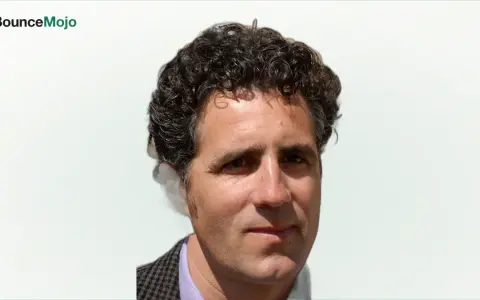
Larry Brown Biography: The Journeyman Who Won It All, Twice

Everybody remembers the two championships at two different levels. Almost nobody remembers the small, undersized point guard who was told he was too little to matter.
Here’s what most people miss: the thing that defined Larry Brown, the restlessness that made him move from team to team his entire life, is the exact same thing that made him the most uniquely accomplished coach the sport has ever seen.
The Myth vs. The Reality
The myth is a distinction. Larry Brown, the only coach to win both an NCAA title and an NBA championship, a Hall of Famer, a teacher of “the right way” to play. A man whose résumé is untouchable.
That version is real. It’s also wildly incomplete.
Here’s the truth: the same résumé that makes Brown singular also makes him basketball’s ultimate wanderer. He coached a dozen teams in the ABA, in college, and in the NBA, rarely staying anywhere for long, always chasing the next challenge or fleeing the last one. The decorated legend the record books celebrate was also a man who could never quite sit still.
Think about it. We love a story of pure coaching genius because it feels tidy. But Brown’s genius came bundled with a restlessness that cost him roots, relationships, and, at times, his reputation. He was brilliant and unsettled at once, and you can’t separate the two.
Now, that restlessness didn’t come from nowhere. It came from a Brooklyn childhood marked by early loss and a lifelong need to prove himself. Which raises the question: what makes a man both that driven and that unable to stay?
The World That Made Larry Brown
To understand Brown, you have to understand the New York he came up in, and the loss that shadowed his childhood.
He was born on September 14, 1940, in Brooklyn, into a Jewish family whose roots ran back to a grandfather who emigrated from Minsk and opened a bakery. When Larry was still a boy, his father died suddenly, and the family relocated to Long Beach on Long Island, where he was raised largely by his mother and grandmother. That early absence left a mark on a kid who would spend a lifetime searching.
The era mattered too. Brown came of age when New York City playground basketball was the beating heart of the sport, a world where a small, quick, clever guard could earn respect that his size would otherwise deny him. He learned the game in that demanding culture, where basketball IQ counted more than height.
Here’s the deal: at 5-foot-9, Brown was always going to be underestimated. He couldn’t overpower anyone, so he had to out-think them, a necessity that turned him into a student of the game long before he ever coached it.
But being a smart, small guard was only the start. The path from playground point guard to dual champion would run through one of the most important mentors in basketball history. And that relationship is where the real story begins.
The Crucible: Early Life and the Climb
The environment that shaped him
Two things defined the young Larry Brown: undersized talent and a hunger to prove it.
He earned a scholarship to the University of North Carolina, where he played under Frank McGuire and then, crucially, the young Dean Smith. Brown was a first-team All-ACC guard, small but relentless, the kind of player who wins by understanding the game more deeply than his opponents. At Carolina he absorbed a philosophy of unselfish, fundamentally sound basketball that he would preach for the rest of his life.
Then came a playing career that proved his doubters wrong. Too small for the NBA of his day, Brown won a gold medal at the 1964 Olympics and became a star in the American Basketball Association, a three-time All-Star, an All-Star Game MVP, and a champion with the Oakland Oaks, leading the league in assists in its early seasons.
You might be wondering: how does a small guard become a legendary coach? The answer is that Brown’s whole game was already about teaching, seeing the floor, making others better, playing the right way. Coaching wasn’t a career change. It was the natural extension of the player he’d always been.
By the early 1970s, his playing days winding down, Brown was ready to move to the bench. The student was about to become the teacher, and the wandering was about to begin.
The catalyst
The catalyst had a name: Dean Smith.
At North Carolina, Smith didn’t just coach Brown, he shaped how Brown saw basketball itself. The emphasis on fundamentals, unselfishness, and precise execution that Smith drilled into his players became the core of Brown’s own coaching identity. Brown would spend decades passing down a version of what Smith gave him.
Here’s the kicker: that Carolina foundation made Brown a teacher first and a strategist second, and it’s exactly what let him walk into broken teams and fix them. He wasn’t chasing gimmicks. He was installing timeless principles, and they worked everywhere he went.
Brown started coaching in the ABA with the Carolina Cougars and the Denver franchise, immediately winning Coach of the Year honors. The small guard nobody wanted was, it turned out, a natural leader of men. But the pattern that would define his life, arrive, succeed, move on, was already taking shape.
The Key Players
No career this sprawling is a solo act, and Brown was surrounded by people who shaped his path.
Start with Dean Smith, the North Carolina coach and mentor whose philosophy became the bedrock of Brown’s entire coaching life. Their bond ran from Brown’s playing days through his whole career, teacher and student across generations.
Then there’s Danny Manning, the star of Brown’s 1988 Kansas team. “Danny and the Miracles” caught fire in March and delivered Brown his college national championship, one half of the distinction that makes him unique.
And there’s Allen Iverson, the electric, undersized superstar Brown coached to the 2001 NBA Finals in Philadelphia. Their relationship was famously combustible, a fundamentals-obsessed coach and a fiercely individual talent, yet together they reached the sport’s biggest stage.
There was also Herb Brown, Larry’s older brother and himself an NBA head coach, a fellow basketball lifer who shared the family’s devotion to the game.
Now: absorb the right philosophy and apply it relentlessly, and you can win at any level. Brown was about to prove it in the most literal way possible, by winning at every level there is. But the same drive would keep him from ever settling down.
The Turning Point
The pinnacle
The pinnacle came not once, but twice, sixteen years apart.
The first came in 1988 at Kansas. Brown’s Jayhawks stumbled through much of the season, but behind Danny Manning they surged through the NCAA Tournament and won the national championship, one of the most improbable title runs in college history.
The second came in 2004 with the Detroit Pistons. In his first season there, Brown took a gritty, star-less roster, a team of role players and defenders, and beat a superstar-laden Lakers team to win the NBA championship. It was a triumph of exactly the selfless, fundamental basketball Dean Smith had taught him decades earlier.
With that title, Brown became the only coach in history to win both an NCAA and an NBA championship, a distinction that still stands alone. He also became the only coach to lead eight different NBA franchises to the playoffs, the ultimate proof of a turnaround touch.
Here’s the truth: he reached the mountaintop at both levels of his sport, something no other coach has ever done, and it still wasn’t enough to make him stay anywhere for long.
The price
Because the restlessness that drove him also cost him.
Brown could never seem to settle. He left teams abruptly, chased new jobs, and earned a reputation as a coach who would win big and then be gone, sometimes within a year or two. The season after his Kansas title, the program was hit with NCAA sanctions tied to his tenure, and it was banned from defending its championship, the only time a defending champion has been barred from the tournament.
There was a personal toll to all the moving, too. A life spent relocating from city to city, franchise to franchise, is a hard way to build stability, and Brown’s constant motion became as much a part of his story as his winning. The genius and the wandering were inseparable.
He’d won everywhere, but he’d rarely stayed anywhere. That was the price of his restless brilliance, and he paid it across an entire career.
The Unvarnished Truth
Brown is not a tidy hero, and pretending otherwise misses what makes his story real.
His career carried genuine controversy. The NCAA sanctions that followed his Kansas departure, and later a suspension and probation during his time at SMU over a failure to report academic fraud by a staffer, are real marks on the record. Brown was never personally cast as the central villain in those cases, but they happened on his watch.
There’s also the wandering itself. Brown’s habit of leaving teams, sometimes bitterly, sometimes abruptly, frustrated franchises, players and fans who felt he never fully committed. The same hunger that made him great made him hard to hold onto.
Here’s what’s easy to miss: his greatest strength and his greatest flaw were the same trait. The relentless drive to fix, to teach, to chase the next challenge is what made him able to win anywhere, and also what kept him from building a lasting home. The gift was the restlessness, and so was the cost.
None of that erases the two championships. But it does explain why his legacy is admired and debated in equal measure.
Controversies and Criticisms
Brown’s career carried real controversy, and it’s worth being honest about it.
The NCAA violations are the most serious. After he left Kansas in 1988, the program was placed on probation and banned from the 1989 tournament, an unprecedented penalty for a defending champion. Decades later, his tenure at SMU ended amid a suspension and postseason ban tied to an academic-fraud case involving a staff member.
Then there’s the journeyman critique. Some observers argued that Brown’s constant movement undercut the very team-first values he preached, that a coach demanding loyalty and sacrifice from players didn’t always model that stability himself. It’s a fair tension in his story.
On the other side, Brown earned enormous respect as a teacher of the game. His coaching tree is deep, his influence on how basketball is taught is real, and his commitment to fundamentals and unselfish play shaped generations of players and coaches. Few have given more to the craft of coaching itself.
So what does a career like this actually teach the rest of us? More than the trophies suggest.
What We Can Learn From Larry Brown
Navigating hard times
Brown’s real lesson isn’t about winning. It’s about mastering a craft so completely that you become valuable anywhere.
For 40 years, through firings, departures and controversies, Brown was almost never out of work, because his ability to teach and to turn teams around was undeniable. Whatever the drama around any given exit, the next opportunity always came, because his skill was real and rare.
In other words: the championships were the highlights. Being genuinely, provably excellent at your craft is what kept the doors opening for four decades.
The success blueprint
The blueprint here is about applying timeless principles instead of chasing trends.
Brown won at every level with the same philosophy, unselfish, fundamentally sound, defensively committed basketball, the “right way” he learned from Dean Smith. He didn’t reinvent himself for each job. He installed proven principles and made them work with whatever talent he had, from Danny Manning to Allen Iverson to a team of Detroit role players.
Want the fuller picture of how that translated into wealth? The full net worth breakdown shows how four decades of coaching salaries became an eight-figure fortune. And to see how he ranks among the sport’s biggest coaching names, the richest coaches list puts it in context.
The deeper takeaway is about rarity. Brown proved that doing something no one else has ever done, winning it all at two different levels, creates a legacy that lasts. Master the fundamentals so deeply that you can win anywhere, and you become impossible to replace.
Which brings us to the final reckoning on the man.
Final Verdict
Larry Brown is going to be remembered for the wrong thing.
Most people will file him under “journeyman,” the coach who could never stay put, who left a trail of exits behind him. A smaller, smarter group will remember something rarer and more valuable: the only coach in the history of the sport to win both an NCAA championship and an NBA title, a small Brooklyn kid who out-thought everyone, learned the game the right way, and then proved it could win at every level there is.
Here’s the bottom line: the wandering made him a punchline for some. The winning made him singular. By taking his teacher’s principles and applying them relentlessly across 40 years and a dozen teams, he built a résumé no coach has ever matched.
He is a Hall of Famer and the only dual college-and-NBA champion in history. He is also living proof that mastering a craft can carry you anywhere, even if it never quite lets you stay. And in the long run, that second story, the rare, restless brilliance, is the version worth remembering.
Shop Larry Brown on Amazon
Books, audiobooks, merch and more, handpicked for fans.
As an Amazon Associate we earn from qualifying purchases.
Frequently Asked Questions
Where did Larry Brown grow up?+
Brown was born on September 14, 1940, in Brooklyn, New York, and grew up in Long Beach, New York, after his father died when Larry was a child, raised largely by his mother and grandmother.
Did Larry Brown play basketball?+
Yes. Brown played at the University of North Carolina under Frank McGuire and Dean Smith, won a 1964 Olympic gold medal, and starred as a point guard in the ABA, winning a championship and an All-Star Game MVP.
What is Larry Brown best known for?+
Brown is the only coach in history to win both an NCAA championship (Kansas, 1988) and an NBA title (Detroit Pistons, 2004), a feat no other coach has ever achieved.
How many teams did Larry Brown coach?+
Brown coached across the ABA, college and the NBA, leading nine different NBA franchises and multiple college programs, and is the only NBA coach to take eight different teams to the playoffs.
Is Larry Brown in the Hall of Fame?+
Yes. Brown was inducted into the Naismith Memorial Basketball Hall of Fame in 2002 as a coach, recognizing one of the most accomplished and well-traveled careers in the sport's history.
Want the money side of the story?
Read Larry Brown's Full Net Worth Breakdown →Shop Larry Brown on Amazon
Books, audiobooks, merch and more, handpicked for fans.
As an Amazon Associate we earn from qualifying purchases.