Nick Saban Biography: The Coal-Country Perfectionist and The Process
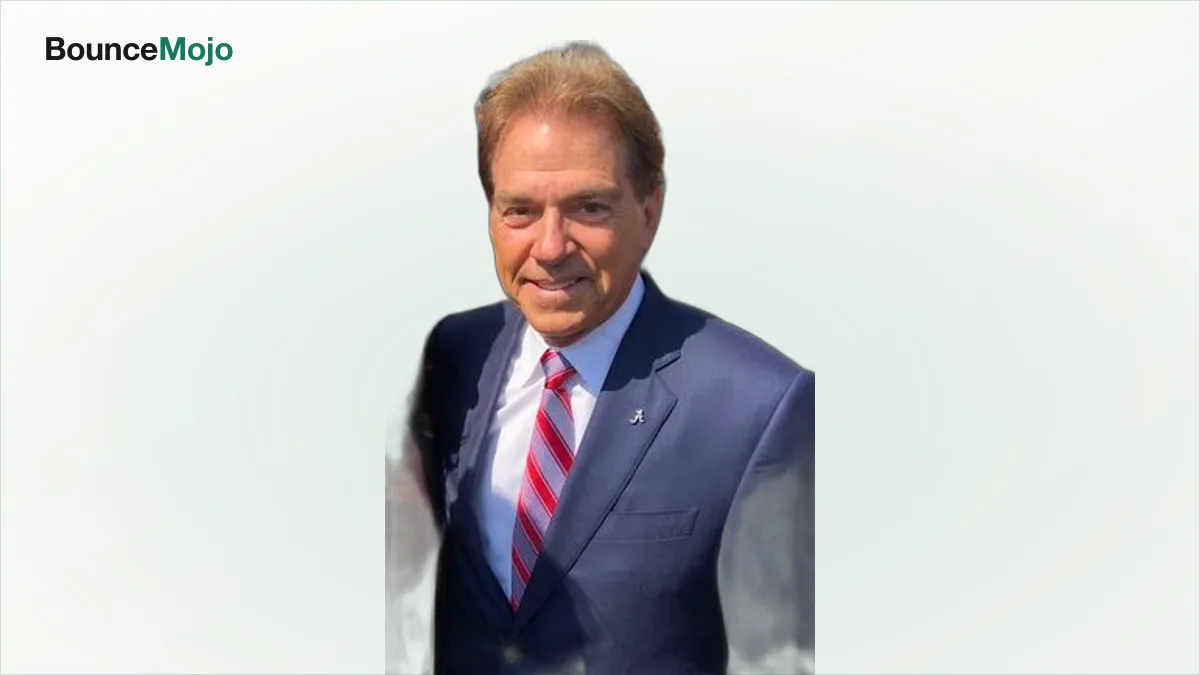
Everybody remembers the trophies and the trademark scowl. Almost nobody remembers the kid wiping down cars at his father’s gas station until they were spotless, then doing it again because they weren’t spotless enough.
The thing that made Nick Saban impossible to work for is the exact thing that made him impossible to beat, and it was installed in him long before he ever thought about coaching.
Monongah: The Gas Station Standard
Saban was born on August 11, 1951, and raised in Monongah, near Fairmont, in the heart of West Virginia coal country. This was hard, working-class Appalachia, a place where nothing came easy and nothing was wasted. His father, Nick Saban Sr., ran a Gulf service station and a Dairy Queen; his mother, Mary, worked alongside the family. On paper, a stable, industrious household.
The standard set inside that household is what mattered. Nick Sr. was a fierce disciplinarian who also coached local Pop Warner football, and he demanded perfection in everything — the way a car was washed, the way a pass route was run, the way a job was finished. Young Nick learned that “good enough” was an insult. If a customer’s car wasn’t flawless, it got done again.
That is the seed of everything downstream: the obsessive attention to detail, the refusal to accept a job half-done, the sense that the standard is the point. All of it traces back to a service station and a Dairy Queen in Monongah. Saban has spoken about how his father’s death, while Nick was still young, left a mark, and how much of his drive amounts to an attempt to clear a bar set decades earlier.
The popular version of him — the unfeeling machine, the football robot who runs software and stamps out champions — erases that origin entirely, and it flatters him in the wrong direction. If Saban is simply wired this way, his dominance is untouchable and unrepeatable. What actually happened is stranger: an anxious perfectionist found the one profession where an inability to relax became a competitive weapon.
Kent State, Don James, and the Career He Never Planned
He didn’t go looking for that profession. He almost missed it.
Saban was a talented high school athlete who went on to play defensive back at Kent State in the early 1970s. He was a smart, tough player rather than a future pro, the kind who understood the game more deeply than his own body could execute it. That gap — seeing everything, unable to physically dominate — is often what makes a coach.
It wasn’t the plan. Saban intended to go into business, possibly car sales. What changed his mind had a name: Don James, his head coach at Kent State, a meticulous, organized leader who ran his program with a precision Saban recognized from his own upbringing. When Saban’s playing days ended, James offered him a job as a graduate assistant. Saban took it intending to do it briefly, and never left the profession again.
That first job revealed the truth about him. Coaching rewarded exactly the traits his father had drilled in: obsession with detail, refusal to accept mistakes, willingness to out-work everyone in the building. He wasn’t merely good at it. He was built for it.
He climbed the hard way, through assistant jobs at Syracuse, West Virginia, Ohio State, Navy and Michigan State, and then into the NFL.
Miss Terry, Belichick, and the Ghost of Bear Bryant
Three people finished what Monongah started.
Terry Saban, his wife of more than 50 years, known to Alabama fans as “Miss Terry,” married him in their West Virginia hometown in 1971. She became the human counterweight to his intensity, running the family and the foundation while he ran the football program.
Bill Belichick gave him the system. Saban served as Belichick’s defensive coordinator with the Cleveland Browns in the early 1990s, and that partnership between two obsessive, detail-driven minds sharpened his defensive philosophy and hardened a specific belief: a program is a system to be engineered, not a team to be motivated.
Bear Bryant was the ghost. The legendary Alabama coach’s championship legacy became the standard Saban would eventually chase, at the very school Bryant made famous.
LSU 2003, Miami, and the Job He Denied Wanting
Saban won a national title at LSU in 2003, then detoured to the NFL as head coach of the Miami Dolphins. That job ended awkwardly, and the manner of the ending is still the most-cited black mark on his career: he flatly told reporters, “I’m not going to be the Alabama coach,” then took the Alabama job days later, in 2006. Dolphins fans and much of the media never forgot the reversal, and it dented his reputation for a time.
It also fit a pattern people around him had noticed. The early part of his career carried a reputation for job-hopping — Michigan State, then LSU, then the Dolphins, each move for a bigger opportunity, each one stinging the people left behind.
In 2007 he took over a struggling Alabama program. What followed was the most dominant run in modern college football.
Six Titles in Fifteen Years, and Not One Easy Morning
Starting with the 2009 championship, Saban delivered six national titles at Alabama across a decade and a half. He recruited relentlessly, developed NFL talent by the dozen, and rebuilt his staff and roster year after year without letting the standard slip. Seven national titles in total, more than any coach in the modern era, past even Bryant’s mark at Bryant’s own school. The full net worth breakdown shows how record salaries and a dealership empire turned that run into a $200 million fortune, and the richest coaches list puts it against the sport’s other big earners.
He became the greatest college coach ever and still couldn’t enjoy it for more than a few minutes. The morning after a championship, he was famously already worried about the next season.
By his own admission he was almost incapable of contentment. The perfectionism that made his teams great made him anxious, short-tempered and difficult — a man who could win a national title and be furious about a missed tackle. He could be cold and cutting with players, staff and reporters, and his intensity built a culture of fear alongside the excellence; not everyone who passed through his programs remembers him fondly. He has talked about how hard it was to switch off, to be present, to enjoy a win before the worry took over, and about the ordinary things he missed because the next game was always looming.
His greatest strength and his greatest flaw were one trait. The gift was the curse.
What “The Process” Actually Means
The philosophy that came out of all this is more borrowable than the caricature suggests, and it is not about winning.
“The Process” rests on one hard-won idea: you cannot control the outcome, so control the effort in front of you. Faced with a huge, intimidating goal, Saban taught his teams to ignore the scoreboard and the championship entirely and obsess over the next practice, the next rep, the next play. Do that relentlessly and the results follow.
The trophy was never the target. The standard was — and the standard came from a father almost impossible to satisfy. Saban could have carried that as a wound. Instead he found the arena where his inability to be satisfied became the most valuable thing about him. That is the transferable part, and no stadium is required.
January 2024: Walking Away From a Game He Stopped Recognizing
Two criticisms followed him to the end. As his pay climbed to the top of the sport, critics used him as the face of a system where coaches earned tens of millions while the players who won the games were, for most of his career, unpaid. And more reflective skeptics questioned the “Process” mystique itself, arguing that elite recruiting budgets, a blue-blood program and Alabama’s resources did more of the work than the machine narrative admits.
The second one he answered by proxy, badly. As name-image-likeness money and the transfer portal reshaped recruiting, Saban became one of the loudest voices warning the changes were damaging college football — principled to supporters, resistance to a fairer deal for players to detractors. Either way, the disciplined world he had mastered no longer existed.
He retired in January 2024, after 17 seasons at Alabama and a 51-year coaching career, and moved to television as an analyst on ESPN’s College GameDay.
Most people will file him under “seven national titles.” A smaller, smarter group will remember the coal-country kid raised on impossible standards who turned a father’s relentlessness into the most disciplined program the sport has ever seen, dominated for a generation, and walked away when the game stopped matching the world he had built. The trophies made him famous. The standard made him great, and the standard came from a gas station and a Dairy Queen in Monongah. That is the part worth teaching, and it is proof that the machine everyone marveled at was, underneath, a very human man trying to meet a bar set a lifetime ago.
Shop Nick Saban on Amazon
Books, audiobooks, merch and more, handpicked for fans.
As an Amazon Associate we earn from qualifying purchases.
Frequently Asked Questions
Where did Nick Saban grow up?+
Saban grew up in Monongah, West Virginia, near Fairmont, in coal country. His father ran a service station and a Dairy Queen, where a young Nick worked and absorbed a demanding standard of perfection.
Did Nick Saban play football?+
Yes. Saban played defensive back at Kent State in the early 1970s under coach Don James, who later gave him his first job in coaching as a graduate assistant.
How many national championships did Nick Saban win?+
Saban won seven national championships, one at LSU in 2003 and six at Alabama (2009, 2011, 2012, 2015, 2017, and 2020), the most by any coach in the modern college football era.
What is 'The Process'?+
'The Process' is Saban's coaching philosophy of focusing on the task in front of you, the next practice, the next play, rather than the scoreboard or the championship, and trusting that results follow relentless standards.
When did Nick Saban retire?+
Saban retired in January 2024 after 17 seasons at Alabama, ending a 51-year coaching career, and moved into a television role as an analyst on ESPN's College GameDay.
Want the money side of the story?
Read Nick Saban's Full Net Worth Breakdown →Shop Nick Saban on Amazon
Books, audiobooks, merch and more, handpicked for fans.
As an Amazon Associate we earn from qualifying purchases.