Kevin Nash Biography: From Basketball Dream to Wrestling Empire
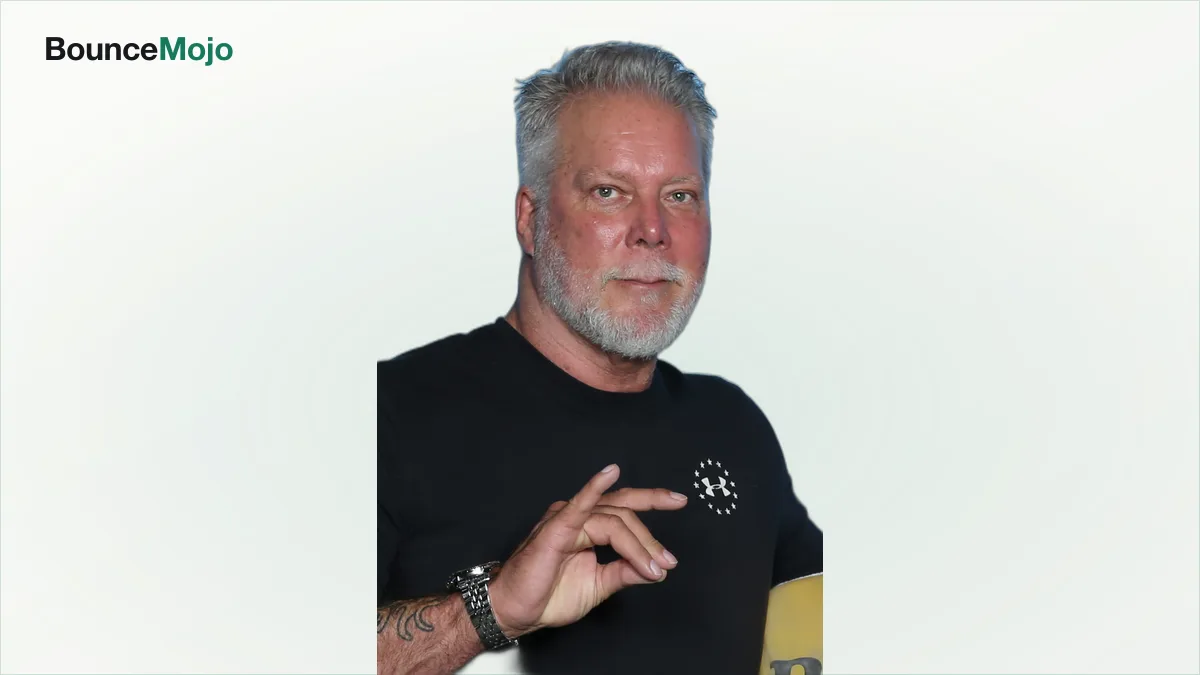
Kevin Nash never planned to be a wrestler. He wanted to play basketball, and for a while, he did.
Here’s what most people miss: the man who became a seven-foot wrestling giant is one of the sharpest business minds the industry ever produced. He did not just perform. He outmaneuvered the whole system.
The Myth vs. The Reality
The myth is that Kevin Nash succeeded on size alone, a big man who lucked into the right era.
Here’s the truth: the brain mattered more than the frame.
The reality is that Nash was one of the most calculating and influential figures backstage in wrestling history. He negotiated landmark contracts, shaped storylines, and wielded creative power that few performers ever hold. The seven-foot body opened the door. The mind built the empire.
What makes Nash different is that he treated wrestling like a business from the start. While others chased glory, he chased leverage, guaranteed money, creative control, and ownership of the movements he helped create. He was a strategist in a giant’s body.
And to understand that strategic mind, you have to go back to a Detroit boy who faced loss early.
The World That Made Kevin Nash
Kevin Scott Nash was born on July 9, 1959, in Detroit, Michigan. His childhood was marked by tragedy: his father died of a heart attack when Kevin was just a boy.
Picture it: a young kid in a tough industrial city, learning early that life offers no guarantees.
Here’s the deal: that early loss and hardscrabble upbringing forged a self-reliance that would define him. Nash grew into an enormous, athletic young man, and sports became his ticket forward. He excelled at basketball, earning a path out of Detroit through his height and skill.
Detroit in the 1960s and 1970s was a hard place to grow up, but it bred toughness and pragmatism. Those traits would serve Nash far better than any wrestling gimmick, giving him the grounded, no-nonsense approach that made him such a shrewd operator later on.
First, though, he chased a very different dream.
The Crucible: Early Life and the Climb
The Environment That Shaped Them
Nash pursued basketball seriously, playing at the University of Tennessee and even reaching the NCAA tournament. He later played professionally in Europe, chasing a career on the court.
The environment was competitive and grueling, elite athletics with no safety net.
Now: fate intervened. A serious knee injury ended his basketball dreams, forcing Nash to find another path. He served in the U.S. Army and worked various jobs before wrestling entered the picture, almost by accident. The giant needed a new arena.
The Catalyst for Breakout
Nash’s early wrestling years were rough. In WCW, he cycled through a string of forgettable gimmicks, Steel, Oz, Vinnie Vegas, none of which caught on. He was a big man in search of the right vehicle.
But here’s the truth: the break came when he moved to the WWF at the urging of his friend Shawn Michaels. Repackaged as Diesel, Nash finally clicked, becoming Michaels’ bodyguard and then a champion in his own right, holding the WWF Championship for a record reign in the 1990s.
He had found stardom. But his most consequential move was still ahead.
The Key Players
Nash’s career and fortune ran through a tight circle of friends.
The most important is Scott Hall, his best friend and partner in the defining move of his career. The two jumped to WCW together and co-founded the nWo, their real-life bond fueling one of wrestling’s greatest storylines.
Then there is The Kliq, the powerful backstage group of Nash, Hall, Shawn Michaels, Triple H and Sean Waltman. This band of friends wielded enormous creative influence in 1990s wrestling, and their loyalty to one another shaped countless careers, including their own.
You might be wondering about his biggest partner.
Hulk Hogan joined Nash and Hall to complete the nWo, and that trio created a phenomenon that helped WCW dominate the ratings war. The business partnership made all three even richer.
Those relationships shaped him. And together they created the moment that made him a legend.
The Turning Point
The Pinnacle of Achievement
The turning point came in 1996. Nash and Scott Hall, freshly signed to lucrative WCW contracts, invaded the promotion as outsiders and, with Hulk Hogan, formed the New World Order. It was a cultural earthquake.
It gets better: the nWo helped WCW beat WWF in the ratings for 83 straight weeks and became one of the most valuable brands in wrestling history, still selling merchandise today. Nash was at the very center of it, a multi-time WCW World Champion and a creative force behind the scenes.
Here’s what made it genius rather than luck. The nWo worked because it blurred the line between reality and storyline in a way audiences had never seen. Nash and Hall presented themselves as real outsiders invading a rival company, and fans could not tell how much was scripted. That ambiguity electrified wrestling and drew millions of new eyes to WCW. Nash, ever the strategist, understood exactly why it worked and helped steer the angle to keep himself at its profitable center.
For a stretch, he was one of the most powerful and best-paid men in the entire industry.
The Price of Admission
But the backstage power came with a reputation. Nash’s creative influence in WCW, particularly his role in booking decisions, drew heavy criticism from fans and peers who blamed the Kliq’s politics for some of WCW’s later decline.
Here’s the kicker: the very leverage that made him rich made him a target. Some accused him of prioritizing his friends and himself over the good of the product.
The physical toll was real too. Years of working as a giant wore on his body, contributing to injuries that shaped the later part of his career and his eventual move toward acting and part-time roles.
Behind the success was a man whose power invited as much resentment as respect.
The Unvarnished Truth
Nash has always been refreshingly blunt about the business and himself.
He has openly admitted to playing backstage politics and looking out for his friends and his own interests, refusing to pretend he was a selfless company man. That candor is disarming in an industry built on kayfabe.
He has also faced the deepest kind of personal loss. The death of his close friend Scott Hall, and later the tragic loss of his own son, marked him profoundly. Nash has spoken with raw honesty about that grief, revealing the vulnerable man behind the giant.
Think about it: that honesty is why fans respect him. Nash does not sell a fake image of nobility. He tells it straight, about the politics, the money, and the pain, which makes him one of the most trusted voices in wrestling commentary today.
That bluntness has also drawn criticism.
Controversies and Criticisms
Nash’s career carries real controversy.
His backstage power in WCW remains hotly debated, with critics arguing the Kliq’s influence and his booking decisions contributed to the company’s downfall. It is the central knock on an otherwise legendary run.
His role in the “Curtain Call” incident and the general perception of the Kliq as a self-serving clique frustrated many peers who felt shut out of the inner circle.
Here’s the deal: Nash has never run from these criticisms. On his podcast and in interviews, he addresses them head-on, offering his side with humor and honesty rather than defensiveness. He owns his choices, good and bad, which has softened much of the old resentment into grudging respect.
His own words reveal the sharp mind behind it all.
Quote Analysis and Literary Breakdown
Nash speaks with a dry wit that reveals his intelligence.
“It’s a work, always a work.” He often reminds fans that wrestling is theater and business, a framing that captures his clear-eyed, unsentimental view of the industry he mastered.
On the guaranteed contracts: Nash has spoken proudly about negotiating deals that paid him regardless of his schedule, framing it as simply outsmarting a system that underpaid talent for years. It reveals his business-first instinct.
On loss: his raw reflections on the deaths of Scott Hall and his son show a depth of feeling that his tough persona usually hides. They humanize a man often seen only as a giant.
Read together, the quotes show a strategist and a survivor, a man who understood the business coldly but felt his losses deeply.
There is a clear lesson in that.
What We Can Learn From Kevin Nash
Navigating Hard Times
Nash’s life teaches resilience through reinvention. He lost his father young, saw his basketball dream end in injury, and survived years of failed gimmicks before finding stardom. Each setback pushed him to adapt.
His lesson is that a closed door is not the end. Nash turned a career-ending knee injury into a completely different, and far more lucrative, path. He kept finding the next arena.
The Success Blueprint
The professional lesson is about leverage. Nash understood that value comes from negotiation and ownership, not just performance. He pioneered guaranteed contracts and took equity in the nWo brand, which is why he sits among the savviest earners on our richest wrestlers list.
The financial lesson is diversification. He built income across wrestling, film and media, spreading his earnings so no single industry could sink him, a strategy that mirrors the smartest names on our richest athletes list.
Becoming Better
The deepest lesson from Nash is about thinking like an owner, not just a worker. In a business that chewed up and spat out countless talented performers, Nash treated his career as an enterprise. He negotiated hard, protected his interests, took stakes in the brands he built, and turned his fame into second and third careers. Most people trade their time for a paycheck and hope for the best. Nash traded his value for guarantees, ownership, and control. There is real wisdom in a man who understood that being talented is not enough, and that knowing your own worth is the difference between a good career and a lasting fortune.
That business mind points to a clear final take.
Final Verdict
Kevin Nash’s story is about a giant who won with his brain. From a Detroit boy who lost his father early to a basketball prospect, and finally to Diesel and the nWo, he turned a series of dead-ends into one of wrestling’s most influential careers.
He survived early loss, a shattered basketball dream, and years of failed gimmicks. Then he found stardom, co-founded a phenomenon, and, crucially, made sure he got paid what he was worth every step of the way. He built a Hollywood career and a beloved podcast on top of it all.
What lingers is the intelligence. Nash proved that in a business of muscle and spectacle, the smartest man in the room usually wins. He outnegotiated, outmaneuvered, and outlasted an entire era, all while carrying the private weight of profound personal loss. Big Daddy Cool was always cooler, and sharper, than the giant frame suggested. He treated wrestling like the business it truly is, and he came out the other side both a legend and a wealthy man.
There is a quiet dignity in how he carried it all. The politics, the criticism, the grief, Nash absorbed them without ever losing his sense of humor or his clarity about what mattered. In his later years, through his podcast and interviews, he became something like the sport’s wise elder statesman, telling the truth about an industry he understood better than almost anyone. He earned that voice the hard way, by living every side of the business, the triumphs and the losses alike, and coming through with his mind and his fortune intact.
Shop Kevin Nash on Amazon
Books, audiobooks, merch and more, handpicked for fans.
As an Amazon Associate we earn from qualifying purchases.
Frequently Asked Questions
Where did Kevin Nash grow up?+
Kevin Nash was born July 9, 1959, in Detroit, Michigan. He lost his father to a heart attack when he was young and grew up to become a standout basketball player.
Did Kevin Nash play basketball?+
Yes. Before wrestling, Nash played college basketball at the University of Tennessee and later professionally in Europe, until a knee injury ended his career.
What is Kevin Nash best known for?+
Nash is best known as Diesel in WWF and as a co-founder of the New World Order (nWo) in WCW, one of the most influential factions in wrestling history.
What was 'The Kliq'?+
The Kliq was an influential backstage group of friends including Nash, Scott Hall, Shawn Michaels, Triple H and Sean Waltman who wielded significant creative power in 1990s wrestling.
Has Kevin Nash acted in movies?+
Yes. Nash has appeared in films including Magic Mike, John Wick and The Punisher, building a steady second career in Hollywood.
Want the money side of the story?
Read Kevin Nash's Full Net Worth Breakdown →Shop Kevin Nash on Amazon
Books, audiobooks, merch and more, handpicked for fans.
As an Amazon Associate we earn from qualifying purchases.