Ken Griffey Jr. Biography: The Kid Who Made Baseball Cool Again
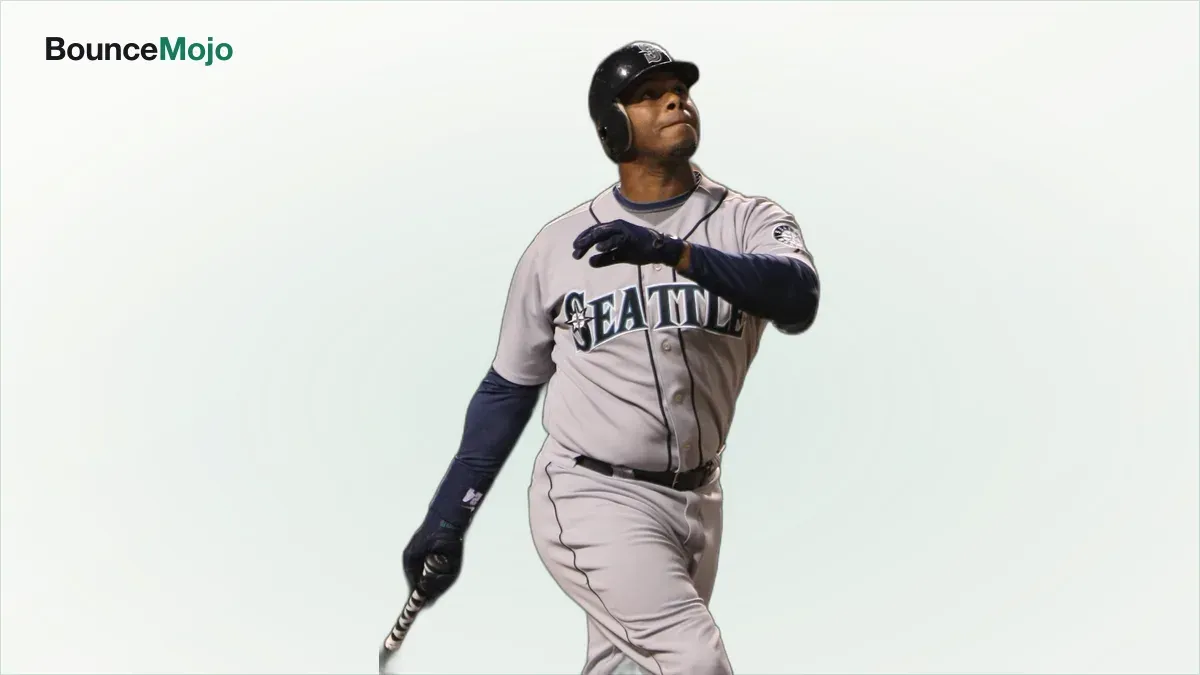
Everyone remembers the swing. Almost nobody remembers how close the kid with that swing came to walking away from all of it.
Here’s what most people miss: the smiling, backwards-cap phenom who made baseball fun again was carrying a weight that nearly ended his story before it began.
The Myth vs. The Reality
The myth is a highlight reel. Ken Griffey Jr. as the coolest man in baseball, cap turned backwards, smile wide, launching moonshots and robbing home runs with a grace that made the hardest sport look easy.
That version is real. It just skips the hard part.
Here’s the truth: the effortless star everyone fell in love with was, at one point, a teenager crushed by expectation. The joy that radiated off him on the field was earned, not given. Griffey made baseball look like a game because he had already fought a private battle to keep loving it.
Think about it: the player most responsible for making the sport feel young and fun in the 1990s was also one of the most scrutinized prospects of his time, the son of a champion, drafted first overall, expected to be great before he threw a single professional pitch.
Now, that kind of pressure doesn’t appear out of thin air. It gets built into you, usually by the family and the era you’re born into. Which raises the question: what kind of world produces a kid like that?
The World That Made Ken Griffey Jr.
To understand Griffey, you have to understand the clubhouse he grew up inside.
He was born on November 21, 1969, in Donora, Pennsylvania, the same small steel town that produced Stan Musial. But his real childhood address was a major league locker room. His father, Ken Griffey Sr., was a key outfielder for Cincinnati’s “Big Red Machine,” the Reds dynasty that won back-to-back World Series in 1975 and 1976.
That’s the world young Griffey inhabited: not sandlots and dreams, but real dugouts, real superstars, and a front-row seat to what greatness actually looked like day to day. He shagged fly balls where legends took batting practice. He learned the game from the inside before most kids learn to keep score.
The 1980s baseball he came up in was also changing. The sport was drifting, some said, feeling old and slow next to a rising, flashier NBA. It was hungry for a face that could make it feel young again.
But here’s the kicker: the boy being groomed to save baseball’s cool factor was, in high school, quietly falling apart. And that’s where the real story starts.
The Crucible: Early Life and the Climb
The environment that shaped him
Growing up as Ken Griffey Sr.’s son was a gift and a burden stitched together.
The gift was obvious. Access, coaching, and a baseball IQ absorbed by osmosis. Young Griffey attended Archbishop Moeller High School in Cincinnati, where he became one of the most dominant prep players in the country, hitting for power and average against competition that had no answer for him.
The burden was heavier than anyone outside the family knew. Being a phenom meant living under a microscope, carrying his father’s name, and shouldering expectations no teenager should have to. The tension at home and the pressure of it all reached a breaking point.
You might be wondering: how bad did it get? Bad enough that as a high-schooler, Griffey attempted to take his own life by swallowing pills. He survived, and years later he spoke about it openly, hoping it might help another kid drowning under expectation. That honesty reframed everything about the “effortless” star. Nothing about him was effortless. He simply chose to keep going.
The catalyst
The catalyst was the 1987 MLB Draft.
The Seattle Mariners made him the first overall pick, handed him a $160,000 signing bonus, and sent an 18-year-old to chase a career his father had already defined. Griffey tore through the minors. Two years later, in 1989, he made the Mariners’ opening-day roster at 19.
Here’s the deal: he didn’t just make it. He arrived like a comet. By his early twenties he was a Gold Glove center fielder and a middle-of-the-order slugger, all of it wrapped in that unmistakable joy.
And then came a moment that no family in baseball history had ever managed.
The Key Players
No story this big is a solo act, and Griffey’s is anchored by the people around him.
Start with Ken Griffey Sr., the father, the standard, and eventually the teammate. In August 1990, the Mariners signed the elder Griffey so that father and son could play together in the same big-league outfield. On September 14, 1990, they hit back-to-back home runs, the first and only father-son duo to ever do it. For a family that had lived so much of its life inside the game, it was the perfect chapter.
Then there’s Barry Larkin, Griffey’s high-school teammate at Moeller who became a Hall of Fame shortstop of his own. The two came out of the same Cincinnati pipeline and remained linked as symbols of what that program produced.
There was also the city of Seattle itself, less a person than a partner. The Mariners had never really mattered nationally until Griffey. He gave the franchise an identity, a fanbase, and eventually a reason to stay in the city at all.
Now: with a supporting cast like that, the only thing left was the peak. And Griffey’s peak was one of the brightest the sport has ever seen, with a cost hiding underneath it.
The Turning Point
The pinnacle
The pinnacle was the mid-1990s, and it doubled as a rescue mission for baseball in Seattle.
In 1995, the Mariners faced the New York Yankees in a decisive playoff series. In the bottom of the 11th inning of Game 5, with the season on the line, Edgar Martinez doubled and Griffey came flying around from first base, sliding home with the winning run and disappearing under a pile of teammates. That single sprint is credited with helping keep the franchise in Seattle and delivering the ballpark that eventually replaced the Kingdome.
Two years later, in 1997, Griffey won the American League MVP with 56 home runs. He was, for a stretch, the best and most famous player alive, his backwards cap and swing plastered across shoes, cereal boxes, and a best-selling video game.
Here’s the truth: for a few golden years, Ken Griffey Jr. was baseball.
The price
But every peak has a downslope, and Griffey’s came early.
In 2000, he engineered a trade to his hometown Cincinnati Reds, chasing family and a chance to win where his father once did. Then his body betrayed him. A brutal run of hamstring, knee, and ankle injuries wrecked much of his Reds tenure, robbing fans of what should have been a decade-long victory lap.
The player who once seemed physically incapable of a bad day spent his thirties fighting to stay on the field. He still finished with 630 home runs, but the numbers everyone once projected, a real shot at the all-time record, slipped away with each new stint on the disabled list.
It gets more human, though. Because the same drive that made him a superstar also left him carrying pressures the public rarely saw.
The Unvarnished Truth
Griffey wasn’t a flawless figure, and the polished image sometimes hid the strain.
Early in his career he was known to clash with the front office and, at times, with his father over expectations. The relentless pressure of being a prodigy, the thing that nearly broke him in high school, followed him into the pros as a quiet, grinding weight.
There was frustration, too, over the injuries. A competitor built for greatness had to watch his own body cap what he could achieve. For a man whose whole identity was fluid, joyful excellence, being unable to stay healthy was its own kind of torment.
Here’s what’s easy to miss: his openness about his teenage mental health crisis was, for its era, remarkably brave. He turned his lowest moment into something that could help others. The flaw and the grace lived in the same person.
None of that made him immune from criticism, though. Even legends collect a few knocks.
Controversies and Criticisms
Griffey’s career is famously low on scandal, which is part of why he was so beloved. But he wasn’t beyond debate.
The loudest criticism was never really moral, it was about his exit from Seattle. When he pushed for the trade to Cincinnati in 2000, some Mariners fans felt abandoned by the player who had defined their franchise. Time softened that, and Seattle later welcomed him back as a beloved icon and eventually a part-owner, but the sting was real at the time.
There were also whispers, common to any superstar, about clubhouse moodiness and a stubborn streak. And his final act, a quiet mid-season retirement in 2010 after a slow start back with Seattle, struck some as an anticlimactic end for a player of his stature.
Then there’s the great “what if.” Critics and fans alike still wonder what his numbers would have been without the injuries. It’s a compliment disguised as a complaint. He was so good that even 630 home runs felt like an underachievement.
So what does a career like this actually teach? More than the highlights suggest.
What We Can Learn From Ken Griffey Jr.
Navigating hard times
Griffey’s life is a lesson in surviving pressure that could have crushed him.
He hit rock bottom as a teenager and kept going. He came back from a low no scouting report could measure and turned it into a Hall of Fame career. The lesson isn’t “be tough.” It’s that the people who look most effortless are often the ones who fought hardest, in private, just to stay in the game.
In other words: joy on the surface is not the same as ease underneath. Griffey chose joy on purpose.
The success blueprint
The blueprint here is about turning talent into something you own.
Griffey didn’t just play well. He became a brand, a logo, a face the whole sport could sell. His backwards cap and signature swing turned into merchandise and endorsements that funded his life long after his last at-bat. Want the fuller money picture? The full net worth breakdown shows exactly how a swing became a fortune. And to see where he ranks among the game’s wealthiest, the richest baseball players list puts it in context.
The deeper takeaway is about presence. Griffey made people love baseball by loving it out loud. Talent gets you noticed. Joy makes you unforgettable.
Which brings us to the final word on The Kid.
Final Verdict
Ken Griffey Jr. will be remembered as the man who made baseball cool, and that undersells him.
Most people will file him under “greatest swing ever” and move on. The fuller picture is a kid who survived a private crisis, carried his father’s name without buckling, saved a franchise with a single slide home, and did all of it with a smile that made a slow sport feel young again. He hit 630 home runs. He won 10 Gold Gloves. In 2016 he entered the Hall of Fame with 99.32% of the vote, then the highest share ever cast.
Here’s the bottom line: the numbers are enormous, and they still aren’t the point. The point is how he made people feel. Griffey played the game like it was a gift, because he knew, better than almost anyone, how close he came to losing it.
He didn’t just play baseball. He reminded a generation why they loved it. And that’s the version worth remembering.
Shop Ken Griffey Jr. on Amazon
Books, audiobooks, merch and more, handpicked for fans.
As an Amazon Associate we earn from qualifying purchases.
Frequently Asked Questions
Where did Ken Griffey Jr. grow up?+
Griffey was born in Donora, Pennsylvania, and grew up largely in Cincinnati, Ohio, where his father Ken Griffey Sr. played for the Reds. He starred at Archbishop Moeller High School.
Did Ken Griffey Jr. and his father play together?+
Yes. In 1990 and 1991, Ken Griffey Jr. and Ken Griffey Sr. played together for the Seattle Mariners, becoming the first father-son duo to play in the same MLB lineup and to hit back-to-back home runs.
Why was Ken Griffey Jr. called 'The Kid'?+
He earned the nickname as an 18-year-old phenom who reached the majors young, played with joy, and wore his cap backwards, projecting a youthful charisma that helped make baseball popular in the 1990s.
What struggles did Ken Griffey Jr. face?+
As a teenager Griffey clashed with the pressures of being a top prospect and reportedly attempted suicide in high school, a low point he later spoke about openly. Injuries also cut short his later career.
What is Ken Griffey Jr.'s legacy?+
Griffey is remembered as one of the greatest and most beloved players ever, a 2016 first-ballot Hall of Famer with 630 home runs and 10 Gold Gloves who helped save baseball in Seattle.
Want the money side of the story?
Read Ken Griffey Jr.'s Full Net Worth Breakdown →Shop Ken Griffey Jr. on Amazon
Books, audiobooks, merch and more, handpicked for fans.
As an Amazon Associate we earn from qualifying purchases.