Ion Tiriac Biography: The Brasov Boy Who Out-Earned Tennis Legends
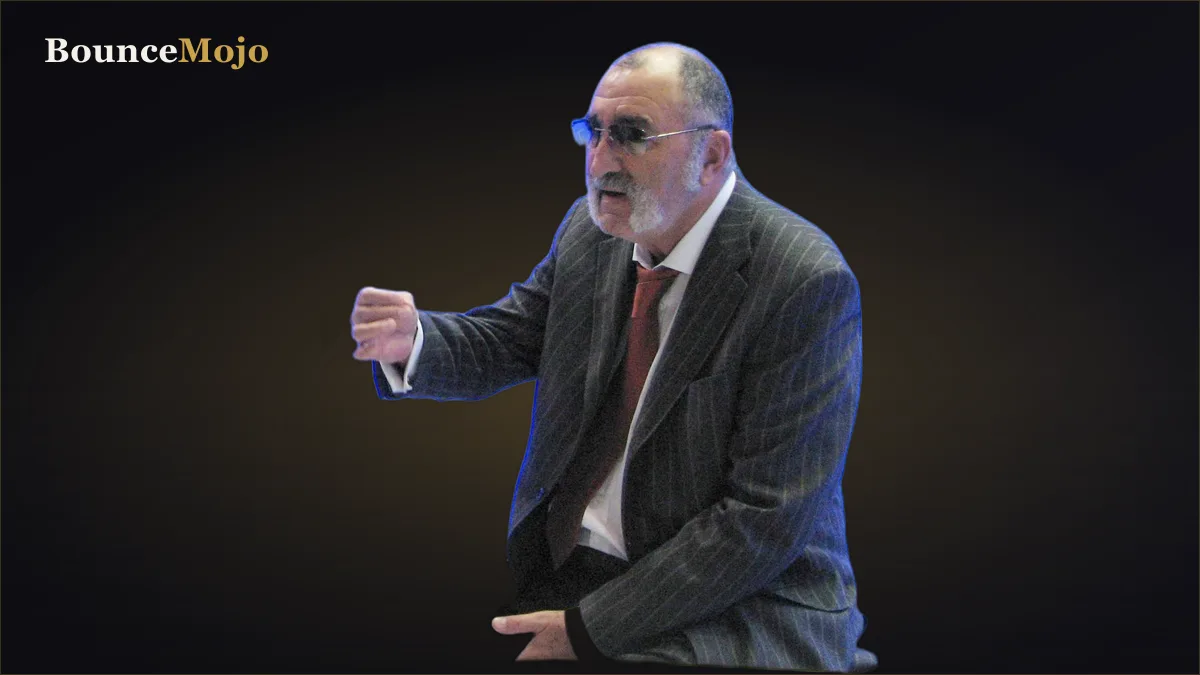
Ion Tiriac never won a singles major. He is richer than Federer, Nadal and Djokovic combined.
Tennis remembers him as the “Brasov Bulldozer”: the glowering enforcer with the walrus mustache, a tennis heavy rather than a tennis great. That reading gets the man exactly backwards. Tiriac was never a tennis player who later dabbled in business. He was a businessman who used tennis as a passport, and the mustache was the disguise.
The Case Against “He Got Lucky After Communism”
The lazy version of this story says a Romanian ex-player happened to be standing there when a command economy collapsed in 1989 and simply picked up the pieces.
The timing is real. The luck is not. Tiriac spent roughly 20 years assembling the exact network, credibility and capital that let him pounce the moment Romania opened, with no guarantee any of it would ever pay off. Most people wait for the opportunity and then scramble to prepare. He reversed the order, prepared for two decades in silence, and was already moving while everyone else was still studying. Timing handed him the door. Preparation is why he got through it first.
Everything below is the receipt for that claim.
Two Sports, One Passport: Innsbruck 1964 to Roland Garros 1970
His first international sport wasn’t tennis at all. It was ice hockey, and he represented Romania at the 1964 Winter Olympics.
Sit with that. Before he was a tennis name he was a national-team athlete in a completely different, brutal winter sport. Growing up in Brasov, a city ringed by the Carpathians, under a communist system that controlled travel, money, opportunity and ambition, sport was one of the only doors to the wider world. He walked through it twice, first on the ice, then on the court.
The toughness transferred. He became a Davis Cup stalwart and, in 1970, a French Open doubles champion, strong and cunning rather than elegant, and entirely aware of it. He built his game around will, not beauty.
The far more valuable thing he built was an education. As a communist-era athlete permitted to travel and compete in the West, Tiriac saw two worlds most Romanians never glimpsed. He watched how capital moved, how deals got done, how the rich stayed rich. He learned languages, built a network across Europe, and stored it all away. Where his peers saw a tennis tour, he saw a curriculum in money and power that no university back home could have offered. That hidden apprenticeship, not any trophy, is what he eventually cashed in.
Vilas, Becker, Nastase: Learning the Money From the Other Chair
Stepping off the court and into management is where the education got expensive and specific.
Guillermo Vilas was the champion Tiriac coached to Grand Slam singles glory, proof he could take raw talent and convert it into titles, and his closest look yet at how sport and money intertwine. Boris Becker came next, a teenage phenomenon Tiriac managed through his world-conquering years, which meant playing the sponsorship and endorsement game at its highest level. Goran Ivanisevic and others followed. Ilie Nastase, his flamboyant compatriot and Davis Cup partner, was the opposite number in every sense: Nastase the showman, Tiriac the strategist, together carrying Romanian tennis onto the world stage.
Managing athletes put him inside the flow of big money, global brands and high-stakes negotiation. He wasn’t building tennis careers so much as running a masterclass in commerce with someone else paying tuition.
1989: The Bank That Didn’t Exist Yet
When Romanian communism collapsed, the decisive figure in Tiriac’s story turned out not to be a person at all. It was the post-communist market itself, the opponent he read better than anyone.
He founded Banca Tiriac, Romania’s first private bank, filling a need an entire nation suddenly had. He built Tiriac Auto into a dominant dealership empire as Romanians bought cars in a free market for the first time. Insurance, leasing and real estate followed. Within a decade the former doubles player was one of Romania’s richest men, and a man who had earned modest sums on the tennis tour was sitting on a fortune that would cross a billion dollars, then double. The full accounting is in his net worth breakdown.
He didn’t ride the wave of Romania’s transformation. He built parts of the wave. When a whole country needed banking, cars, insurance and credit almost overnight, he was among the very few with the money, the contacts and the nerve to supply it.
That climb is also the replicable part, and it’s less romantic than it sounds: reputation and network compound if you keep converting them. A decent playing career became coaching. Coaching became management. Management became the credibility and cash that built a bank. Each stage funded the next, which is how he ended up at the very top of our richest tennis players list. You don’t need to be the most talented. You need to keep trading each win for a bigger platform.
Feared Rather Than Liked, and Untroubled By It
Reinventing yourself that completely costs something, and in Tiriac’s case the cost was warmth.
On court, critics accused him of gamesmanship and of using his fearsome presence to rattle opponents. He rarely apologized, seeing it as part of the fight. In business he has long been described as abrasive and uncompromising, a negotiator who gives no ground. As one of Romania’s most powerful businessmen through a chaotic transition era, his deals and connections drew the scrutiny that follows any tycoon who rises fast in a young market, and his prominence has occasionally put him near Romania’s political currents, inviting the usual questions that trail wealthy, well-connected figures. His empire has weathered all of it, and nothing has dented his standing as a self-made success.
What he never did was smooth the edge over. He traded the identity of an athlete for that of a tycoon and accepted being respected and feared more than loved. Some read that as a flaw, a life defined by winning and short on warmth. The other reading is clarity: a man who knew exactly what he was and refused to perform otherwise.
His greatest strength and his sharpest edge are the same trait. The instinct that dragged a mountain-town boy through two international sports and into a billion-dollar empire is the same one that made him a man few dared cross. He built on it rather than apologizing for it.
And that is the twist the tennis world still hasn’t quite absorbed. The intimidating Bulldozer was never really a tennis man. He was a strategist wearing an athlete’s mustache, and he understood long before his peers that the biggest wins in life are not handed out on Centre Court. The trophy is rarely where the fortune lives. His fortune, detailed in his net worth breakdown, rewards a lifetime of exactly that. Tiriac won far more by reading the game behind the game than he ever did by winning matches, and the kid from behind the iron curtain didn’t merely escape it. He turned freedom into an empire.
Shop Ion Tiriac on Amazon
Books, audiobooks, merch and more, handpicked for fans.
As an Amazon Associate we earn from qualifying purchases.
Frequently Asked Questions
Did Ion Tiriac play in the Olympics?+
Yes. Before his tennis career took off, Tiriac represented Romania in ice hockey at the 1964 Winter Olympics, making him a rare two-sport international athlete. He was born on May 9, 1939, in Brasov, in the Transylvanian mountains.
What was Ion Tiriac's biggest tennis achievement?+
As a player, his standout result was winning the 1970 French Open men's doubles title. He is even better known for coaching Guillermo Vilas to Grand Slam singles glory.
How did Ion Tiriac become a billionaire?+
After tennis, Tiriac built a business empire in post-communist Romania, founding the country's first private bank and a major auto-dealership group, along with insurance and real estate interests.
Is Ion Tiriac still alive?+
Yes. Now in his late eighties, Tiriac remains one of Romania's most prominent businessmen and a fixture in the tennis world, with an estimated fortune of around $2.3 billion.
Want the money side of the story?
Read Ion Tiriac's Full Net Worth Breakdown →Shop Ion Tiriac on Amazon
Books, audiobooks, merch and more, handpicked for fans.
As an Amazon Associate we earn from qualifying purchases.