Alistair Overeem Biography: Two Decades Fighting Across Two Sports
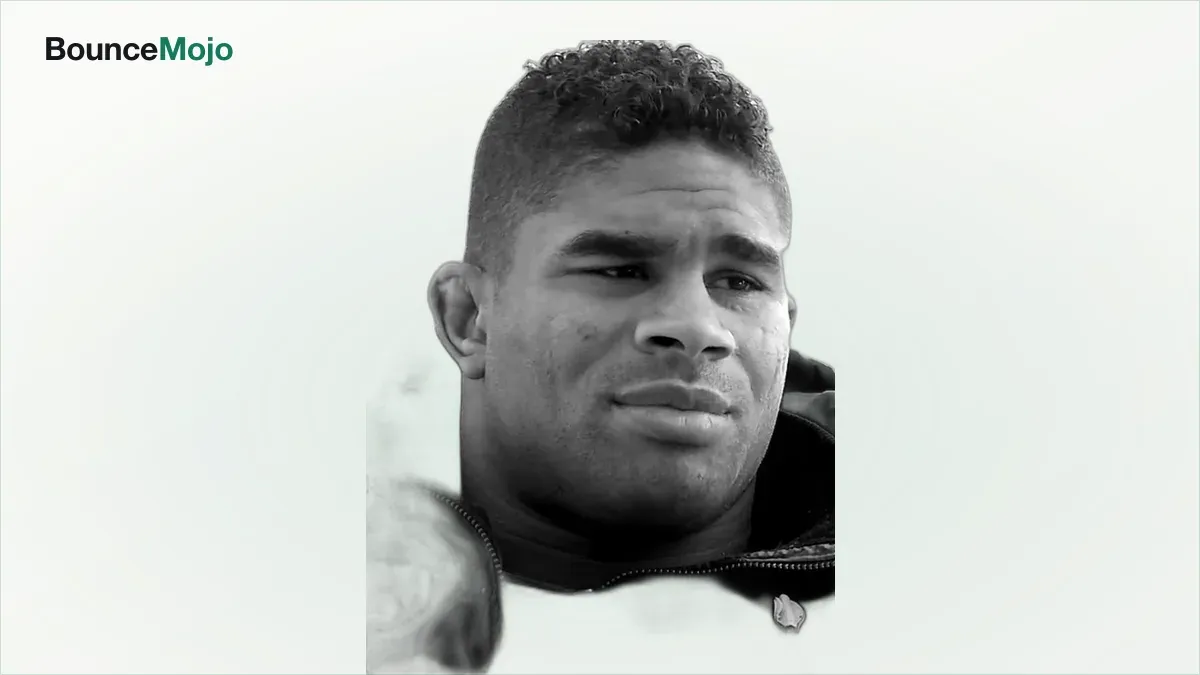
Alistair Overeem is one of the most feared strikers combat sports ever produced. A giant who moved with terrifying speed.
Here’s what most people miss: the massive heavyweight everyone remembers started as a lean, almost slight light heavyweight. The body was rebuilt. So, in many ways, was the man inside it.
The Myth vs. The Reality
The myth is that Alistair Overeem was always a monster, a natural heavyweight born to bully smaller men.
Here’s the truth: he built that body from scratch.
The reality is that Overeem began his career as a lean light heavyweight, dangerous but far from imposing. Over years, he transformed himself into one of the largest, most muscular heavyweights in the sport, a change so dramatic it became part of his legend and, later, part of his controversy.
What made Overeem different was not size he was born with. It was reinvention. He remade his physique, his weight class, and his entire competitive identity, then went and won titles in two separate combat sports. Most fighters find one thing they do well and repeat it. Overeem kept rebuilding himself until he was unbeatable in more than one arena.
And to understand that drive, you have to start with a broken home in two countries.
The World That Made Alistair Overeem
Alistair Cees Overeem was born on May 17, 1980, in London, England, to a Dutch mother and a Jamaican father. When his parents divorced, he was young, and his mother moved him and his older brother Valentijn to the Netherlands.
Picture it: a mixed-race kid, born in one country, raised in another, finding his footing in the Dutch suburbs.
Here’s the deal: the Netherlands happened to be the beating heart of world kickboxing and a hotbed of mixed martial arts. Overeem grew up in exactly the right place to become a fighter, surrounded by a Dutch striking tradition that produced some of the deadliest strikers on earth.
He was athletic and restless, and his older brother was already drawn to combat sports. That proximity, an older sibling leading the way and a country obsessed with fighting, pointed a young Overeem toward the gym. What began as following his brother became a calling.
Consider the odds. A mixed-race boy from a broken home, born in one country and raised in another, had no obvious blueprint for success. What he had was a fighting nation at his doorstep and a brother willing to bring him along. The Netherlands of the 1990s was producing some of the most technically brilliant strikers in the world, and Overeem grew up inside that pressure cooker. He learned early that in Dutch gyms, respect was earned in sparring, not given, and that lesson shaped a young man who would spend his life proving himself against bigger, more established fighters.
He just had no idea how far it would take him.
The Crucible: Early Life and the Climb
The Environment That Shaped Them
Overeem came up in the Dutch fight scene alongside his brother Valentijn, training in the striking-heavy style that defined the region. He turned professional young and fought constantly, learning his craft in a brutal, high-volume environment.
The catalyst was simply the culture around him. In the Netherlands, kickboxing and MMA were not fringe pursuits. They were serious, respected sports with real money and real legends. Overeem absorbed that world, sharpening a striking game that would one day terrify heavyweights.
Now: he was fighting as a light heavyweight in those early years, quick and sharp but physically unremarkable next to the giants he would later face.
The Catalyst for Breakout
The turning point was the decision to move up in weight and remake his body. Overeem bulked up dramatically, adding mass and power, and stepped into the heavyweight ranks of both MMA and kickboxing.
Here’s the truth: the transformation supercharged his career. As a heavyweight, his speed and striking made him a nightmare. He won the Strikeforce heavyweight title, headlined in Japan’s DREAM promotion, and set his sights on kickboxing’s biggest prize.
The lean kid from the Dutch suburbs was becoming a genuine monster. But the size that made him famous would also raise hard questions.
The Key Players
Overeem’s journey ran through family, mentors, and rivals.
The first and most important was his brother, Valentijn Overeem, a professional fighter himself who pulled Alistair into the sport and shared the early grind. Their bond is the foundation of his origin story.
The Dutch fight community provided mentors and training partners who shaped his striking, part of a national tradition that produced legends like Bas Rutten and a generation of feared kickboxers. Overeem was a product of that ecosystem.
You might be wondering about his rivals.
His long career pitted him against the best heavyweights of multiple eras, including Fabricio Werdum, with whom he shared a lasting rivalry across promotions. These wars defined his prime and pushed him to keep evolving.
Those relationships forged a two-sport champion. And the peak, when it came, was historic.
The Turning Point
The Pinnacle of Achievement
The turning point came in 2010. Overeem, already a champion in MMA, entered the K-1 World Grand Prix, kickboxing’s most prestigious tournament, and won it. In doing so he became one of the very few athletes to hold major titles in both MMA and elite kickboxing at essentially the same time.
It gets better: it made him a global attraction. Few fighters could claim mastery of two combat sports, and that rarity earned him premium fights and premium purses everywhere he went, from Japan to the United States.
He was, for a moment, arguably the most complete striker in heavyweight combat sports.
The Price of Admission
But the climb had a cost. Overeem’s dramatic physical transformation drew suspicion, and a failed drug test connected to his UFC career led to a lengthy suspension that damaged his reputation and delayed his shot at UFC gold.
Here’s the kicker: he never captured the UFC heavyweight championship, the one prize that eluded him. He came close, headlining and contending for years, but the belt stayed out of reach.
The two-decade war also wore on his body. The knockouts, the weight, the endless fights, all of it accumulated. Greatness in two sports came with a heavy physical toll.
Behind the dominance were vulnerabilities he never fully escaped.
The Unvarnished Truth
Overeem’s career is inseparable from the questions around his transformation.
The failed drug test and suspension are real, and they complicate his legacy. Critics point to his sudden size and his positive result as evidence, while supporters note his skill and dedication. The truth is that the controversy shadows an otherwise remarkable résumé.
He was also, at times, inconsistent. For all his fearsome reputation, Overeem suffered brutal knockout losses, and his chin became a talking point late in his career. The monster could be dominant one night and finished the next.
Think about it: that unevenness is deeply human. Overeem was neither invincible nor a fraud. He was a supremely talented fighter with real flaws, real setbacks, and a career long enough to expose every weakness alongside every strength.
Those flaws fueled ongoing debate.
Controversies and Criticisms
The doping suspension is the central controversy of Overeem’s career, and it will always temper how his transformation is remembered.
Beyond that, critics have questioned his heart in certain fights and his tendency to fade in the later rounds of grueling bouts. His dramatic knockouts, both delivered and suffered, made him thrilling but unpredictable.
Here’s the deal: Overeem largely let his record speak. He continued fighting for years after the controversy, rebuilding respect through sheer persistence and by facing the sport’s best. He never fully escaped the shadow, but he never hid from competition either.
His own words offer a window into how he saw it all.
Quote Analysis and Literary Breakdown
Overeem spoke like a man supremely confident in his craft.
“I’m the Demolition Man.” His nickname and self-description captured the terror he inspired, a striker who ended fights violently and knew it.
On his transformation and longevity, he framed reinvention as strength: adapting, growing, refusing to stay the same fighter. Whatever the controversy, his belief in constant evolution was genuine.
On never winning the UFC title, he stayed philosophical, pointing to everything he had achieved across two sports rather than dwelling on the one belt he missed. It was the perspective of a man with a fuller résumé than almost anyone.
Read together, his words reveal a fighter who defined himself by breadth and dominance, not by a single crown.
There is a real lesson in that breadth.
What We Can Learn From Alistair Overeem
Navigating Hard Times
Overeem’s response to controversy and defeat teaches persistence. After a damaging suspension and hard knockouts, he kept competing at the top level for years. He rebuilt, adapted, and refused to let a low point be the end of the story.
His reinvention teaches the power of change. He was not content with the fighter he started as. He remade his body, his weight class, and his game, proving that identity is not fixed.
The Success Blueprint
The professional lesson is versatility and longevity. Overeem mastered two sports and stretched his career across two decades, banking far more than fighters with brief, single-discipline runs. That durability is why he ranks among the sport’s wealthiest heavyweights on our richest MMA fighters list.
The deeper lesson is that a career built on craft, rather than one lucky windfall, can still create real, lasting wealth. Overeem earned every dollar the hard way, and the length and breadth of his work is exactly what made the fortune.
Becoming Better
There is a final lesson buried in Overeem’s story, and it is about identity. He never let a single defeat, or even a career-defining controversy, become the whole of who he was. He kept fighting, kept adapting, kept showing up against the best long after his critics had written him off. That refusal to be defined by his lowest moments is a quiet kind of strength. It says that a person is the sum of a long effort, not any one night, and that reinvention is always available to those willing to do the work.
That points to a clear final take.
Final Verdict
Alistair Overeem’s story is about reinvention and endurance. Born in London, raised in the Netherlands, he followed his brother into fighting and then rebuilt himself into something almost no one else has been: a champion in two combat sports at once.
He did it over twenty relentless years. He transformed his body, conquered kickboxing’s biggest tournament, held MMA titles, and fought the best heavyweights of three eras. The controversy over his transformation and the UFC belt he never won complicate the legacy, but they do not erase it.
What lingers is the sheer scope. “The Reem” spent his life proving he could remake himself and win anywhere, and the length of his war became the size of his legend. Few fighters ever mastered more, or lasted longer, than the giant who started out as a slim kid in the Dutch suburbs.
He was never the cleanest story, and he was never the safe pick to win. But he was, for the better part of two decades, one of the most dangerous and most versatile men in all of combat sports. He conquered kickboxing and MMA, fought on three continents, and outlasted almost everyone who started when he did. Whatever the asterisks, the body of work is undeniable. Overeem built a career, a fortune, and a legacy out of one relentless idea: that a fighter can always become something more than he was yesterday.
Shop Alistair Overeem on Amazon
Books, audiobooks, merch and more, handpicked for fans.
As an Amazon Associate we earn from qualifying purchases.
Frequently Asked Questions
Where is Alistair Overeem from?+
Alistair Overeem was born on May 17, 1980, in London, England, to a Dutch mother and a Jamaican father. After his parents divorced, he moved with his mother and older brother to the Netherlands, the country he represented throughout his career.
What is Alistair Overeem famous for?+
He is famous for being one of the rare fighters to hold major titles in both MMA and K-1 kickboxing, and for a dramatic physical transformation from a light heavyweight into a massive heavyweight.
Did Alistair Overeem fight in the UFC?+
Yes. Overeem was a top UFC heavyweight contender for years and ranked among the promotion's highest career earners, though he never captured the UFC heavyweight championship.
What titles did Alistair Overeem win?+
Overeem won the Strikeforce and DREAM heavyweight titles in MMA and the prestigious K-1 World Grand Prix in kickboxing, a rare double across two combat sports.
Is Alistair Overeem's brother a fighter?+
Yes. His older brother Valentijn Overeem was also a professional mixed martial artist, and the two came up together in the Dutch fight scene.
Want the money side of the story?
Read Alistair Overeem's Full Net Worth Breakdown →Shop Alistair Overeem on Amazon
Books, audiobooks, merch and more, handpicked for fans.
As an Amazon Associate we earn from qualifying purchases.