Allen Iverson Biography: The Answer Who Changed Basketball Forever
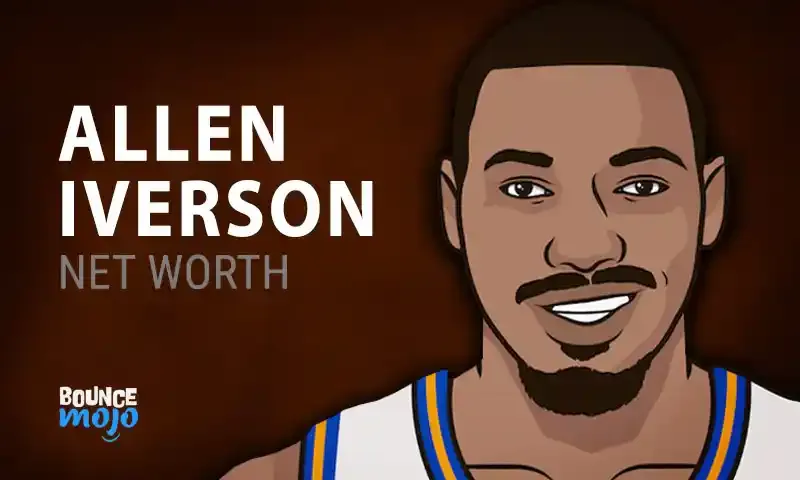
Most people know Allen Iverson as the “practice” guy or the crossover that broke ankles. Both miss the real man completely.
Here’s what most people miss: the six-foot guard who played like he was seven feet tall came within a governor’s signature of spending his adult life in a Virginia prison instead of the Hall of Fame.
The Myth vs. The Reality
The myth is tidy. Allen Iverson: undersized underdog, a scoring machine who willed a mediocre Philadelphia team to the 2001 Finals, the rebel who made tattoos and cornrows cool and then flamed out because he “didn’t work hard.” Practice guy. Cautionary tale. Roll credits.
The reality is messier and far more interesting.
Here’s the deal: Iverson wasn’t a lazy talent who wasted his gifts. He was, by nearly every teammate’s account, one of the toughest competitors the league ever saw, a man who played through separated shoulders and injuries that would sideline bigger stars for weeks. The “practice” narrative flattened a complicated human being into a punchline.
And the “rags to riches” framing misses the part that matters: Iverson never fully left the world that made him. The loyalty that made him beloved is the same loyalty that drained his bank account. The defiance that made him a champion of the overlooked is the same defiance that got him a 15-year sentence at 17.
You might be wondering: how does a teenager go from a jail cell to the first overall pick in three years? To understand that, you have to understand the world he came from.
The World That Made Allen Iverson
Iverson was born in 1975 into a country that was still figuring out what to do with kids like him.
He grew up in Hampton, Virginia, in a Black working-class world that the sports-and-entertainment economy hadn’t yet learned to package or profit from. This was before the NBA fully embraced hip-hop, before players had tattoo sleeves and their own sneaker lines aimed at the streets. The league of the early ’90s was corporate, buttoned-up, defined by the graceful ascension of Michael Jordan into a global brand, a version of Blackness that was polished, palatable, and safe for advertisers.
Now: Iverson arrived as the opposite of all that. He carried the aesthetics and attitude of the neighborhoods America preferred not to see up close, cornrows, do-rags, baggy jeans, a hip-hop soundtrack. When he entered the NBA in 1996, he didn’t just join the culture. He kicked the door in and dragged the streets inside with him.
That collision, corporate basketball meeting unfiltered street culture, is the backdrop for everything Iverson became. He wasn’t the answer to a basketball question. He was the answer to a cultural one the league didn’t know it was asking.
But before any of that, there was a boy in Hampton trying to survive a childhood most people couldn’t imagine.
The Crucible: Early Life and the Climb
The Environment That Shaped Him
Iverson’s mother, Ann, had him when she was 15. His biological father was largely absent. The family lived at the raw edge of poverty, moving from place to place to stay ahead of eviction.
In Not a Game, journalist Kent Babb documents the conditions in unsparing detail, a home where raw sewage backed up through the floors, where the water and electricity were regularly cut off, where a young Allen sometimes wore trash bags on his feet to keep his shoes dry. This wasn’t hardship as a motivational backstory. It was daily, grinding instability.
Basketball and football became his exits, and he was spectacular at both, a genuine two-sport phenom many in Virginia believed was a better football player. He was the kind of athlete a whole town organizes its Friday nights around.
Here’s the truth: that town, and that talent, made him a local hero long before the rest of the country knew his name. And heroes, in a place with little else to celebrate, get watched, by fans, and by people who resent them.
The Catalyst
On Valentine’s Day 1993, a brawl broke out at a Hampton bowling alley between a group of Black teenagers and a group of white patrons. Iverson, a 17-year-old high-school senior and the biggest name in the area, was there.
What happened next changed his life. Iverson was arrested and, along with several other Black teens, charged and convicted of “maiming by mob”, a rarely used statute originally aimed at lynchings. He was sentenced to 15 years, with 10 suspended, and sent to a correctional facility. He always maintained he’d left before the worst of it. Many locals believed the punishment was grotesquely disproportionate and racially charged; the case drew national attention.
He served roughly four months before Virginia’s governor granted him conditional clemency, and the conviction was later overturned on appeal for insufficient evidence. He finished high school through a tutoring program while his athletic future hung by a thread.
It gets better, and stranger. A Georgetown coach named John Thompson would soon reach into that wreckage and pull Iverson out. That’s where the climb truly began. But the man who did the pulling would also become the first of several people who shaped Iverson in ways he’s still reckoning with.
The Key Players
No one saves themselves alone, and Iverson’s story is crowded with people who lifted him, guarded him, and, in some cases, drained him.
Ann Iverson. His mother is the emotional spine of the story. Fierce, loyal, larger than life, she pushed for her son when the world had written him off and never left his orbit. Their bond is unbreakable, and, as Babb’s book explores, financially entangled in ways that complicated Iverson’s adult life.
John Thompson. The legendary Georgetown coach took a massive risk offering a scholarship to a young man with a criminal record and a cloud over his name. He gave Iverson structure, protection, and a national stage. At Georgetown, Iverson became a defensive terror and a scoring dynamo, then declared for the draft after two years, Thompson arguably the last authority figure he fully answered to.
Larry Brown. In Philadelphia, the Hall of Fame coach and Iverson formed one of the most combustible, productive partnerships in NBA history. They clashed constantly, over practice, shot selection, control, yet together they reached the 2001 Finals.
The entourage. And then there was the circle. Childhood friends, family, hangers-on, the people Iverson refused to abandon because they were with him when he had nothing. This is where loyalty curdles into liability, a thread we’ll pull hard on later.
Think about it: every one of these relationships is a version of the same tension, the pull between where Iverson came from and where his talent could take him. That tension explodes at his peak.
The Turning Point
The Pinnacle
The 2000-01 season is Iverson’s mountaintop.
He averaged 31.1 points a game, won the scoring title and the MVP award, and dragged a Philadelphia 76ers roster that had no business contending all the way to the NBA Finals against the Shaq-and-Kobe Lakers juggernaut. In Game 1, he did the unthinkable, beat the Lakers in Los Angeles, dropping 48 points and, in the game’s signature moment, stepping over Tyronn Lue after draining a shot in his face.
The Sixers lost the next four. But the image endured. A six-foot, 165-pound guard, standing over a fallen defender, refusing to bow to the most dominant team in basketball. That was the essence of the man.
Across his career he made 11 All-Star teams, won four scoring titles, and was inducted into the Naismith Basketball Hall of Fame in 2016. As his own net worth story lays out, he out-earned plenty of players now worth far more than he is.
The Price
Here’s the kicker: the very qualities that made him great made the peak impossible to hold.
Iverson’s game was built on absorbing punishment. He led the league in minutes repeatedly, took brutal contact driving into giants, and refused to sit. The body paid. So did the relationships, the constant friction with coaches, the sense that he was fighting the league office and the media as much as opponents.
And the money that arrived with the fame? He treated it the way he treated defenders, as something to run straight through. The pinnacle brought a fortune, and a spotlight that magnified every flaw. Which brings us to the flaws.
The Unvarnished Truth
Iverson was not a saint, and pretending otherwise does him no favors.
He drank, sometimes heavily, and it followed him well past his playing days. He gambled. He was chronically late, to practices, to team functions, to obligations that stars are simply expected to honor. He kept an inner circle that a more calculating superstar would have trimmed years earlier, and he handed out money to it freely, without records or restraint.
Now: none of this makes him a villain. Much of it is the residue of a childhood spent in survival mode. When you grow up watching the lights get cut off, “spend it while you have it” isn’t recklessness, it’s a reflex. When the friends around you were there in the trash-bag-shoes years, cutting them off feels like betraying the only people who ever had your back.
But those instincts, scaled up to nine figures, are financial dynamite. Iverson has since admitted, with real candor, that he trusted the wrong people and never learned the word “no.” He’s spoken about a period so bleak he didn’t have money for a cheeseburger, a jarring line from a man who once signed contracts worth $155 million.
The most honest thing anyone can say about Iverson is this: his greatest strength and his greatest weakness were the same trait. Loyalty. It won him a locker room and lost him a fortune.
Controversies and Criticisms
Iverson spent much of his career at the center of America’s arguments about race, respectability, and who gets to define “professionalism.”
The practice rant. In 2002, after the Sixers’ season ended, a reporter pressed Iverson about missing practices. What followed became legend, Iverson saying the word “practice” more than 20 times, incredulous. “We’re talking about practice, man.” It was played for laughs for two decades. Watch it again with context, though: he’d just lost in the playoffs, was grieving a close friend who’d been killed, and felt his commitment on game night was being questioned. The clip is funny. The moment was raw.
The dress code. In 2005, the NBA introduced a business-casual dress code widely understood to be aimed squarely at Iverson and the hip-hop aesthetic he’d popularized. Critics, including Iverson, called it racially coded, an attempt to sand down the very authenticity that had made the league relevant to young fans in the first place.
The 2002 gun case. Iverson was involved in a well-publicized incident in which he was accused of throwing his wife out of their home and searching for her while armed. Most charges were eventually dropped, but the episode reinforced a media narrative of a star who couldn’t stay out of trouble.
The “street” narrative. Broadly, Iverson was cast by some commentators as a symbol of everything wrong with the modern athlete, too flashy, too defiant, too “street.” That criticism, in hindsight, looks less like analysis and more like discomfort with a Black man who refused to code-switch for corporate approval. Compare his reception to that of a more media-managed contemporary like Carmelo Anthony, and the double standards of the era get hard to ignore.
What We Can Learn From Allen Iverson
Navigating Hard Times
The first lesson is about survival: your past is not your ceiling. A kid can be sentenced to 15 years at 17 and still stand on a Hall of Fame stage at 41. Iverson’s clemency and comeback are a reminder that a single catastrophic chapter, even one written by an unjust system, doesn’t have to be the whole book.
But here’s the truth the money makes plain: surviving your origins is not the same as escaping their instincts. Iverson beat poverty and prison and still got beaten by the spending habits poverty had trained into him. Real freedom meant unlearning survival mode, and that turned out to be the harder fight.
The Success Blueprint
If you want the replicable part, it’s this: Iverson won by refusing to shrink. He was undersized in a league of giants and never once played smaller than he was. He turned a supposed weakness, his size, into the foundation of a style nobody could prepare for.
That’s transferable. The lesson isn’t “be reckless.” It’s “don’t apologize for the thing that makes you different; weaponize it.” His crossover, his fearlessness, his willingness to take the last shot in the face of the Lakers dynasty, that mindset put an undersized guard on the same historical shelf as legends like Michael Jordan, and it echoes in every smaller, skill-first star who’s followed. His placement among the sport’s icons on our richest NBA players ranking tells the financial half of the story; his influence tells the other.
Becoming Better
The deepest lesson is about self-knowledge. Iverson’s downfall wasn’t a lack of talent or heart, it was a failure to build systems that protected him from his own generosity. The players who kept their fortunes didn’t necessarily out-earn him. They out-structured him.
In other words, character and competence aren’t enough on their own. You have to design your life so that your worst impulses can’t sink your best work, a lesson that leads directly to the strangest twist in his whole story.
Final Verdict
Allen Iverson is one of the most important figures in modern basketball, and the word “important” is doing heavier lifting than “great,” though he was that too. He didn’t just score; he changed what an NBA star was allowed to look like, sound like, and be. Curry’s range, the tattoo-covered rosters, the league’s full embrace of hip-hop, a straight line runs back to a six-foot guard from Hampton who refused to become someone else.
And here’s the twist that reframes everything: the man who earned nearly $200 million couldn’t hold onto it, and was ultimately rescued not by his own discipline but by a Reebok contract someone else had the foresight to structure, a lifetime deal with a locked $32 million trust he couldn’t touch. The full mechanics of that rescue live in his net worth breakdown, and it’s the most human ending imaginable: the toughest competitor of his generation, saved from the one opponent he could never beat, himself.
If you want the real story, read Kent Babb’s Not a Game: The Incredible Rise and Unthinkable Fall of Allen Iverson (2016). It’s not a fan’s hagiography and it’s not a hit piece, it’s a rigorously reported, humane account of how the same forces that built him nearly buried him. Read it if you love basketball, and read it more carefully if you’ve ever wondered how loyalty, talent, and trauma can braid together into a life this extraordinary and this fragile.
Shop Allen Iverson on Amazon
Books, audiobooks, merch and more, handpicked for fans.
As an Amazon Associate we earn from qualifying purchases.
Frequently Asked Questions
Where did Allen Iverson grow up?+
Allen Iverson grew up in Hampton, Virginia, in deep poverty. His mother Ann had him at 15, the family moved constantly to dodge eviction, and he has described a childhood home with raw sewage backing up through the floors.
What was the Allen Iverson bowling alley incident?+
In 1993, a brawl broke out at a Hampton bowling alley. Iverson, then a high-school senior, was convicted of maiming by mob under an obscure statute and sentenced to 15 years (10 suspended). He served four months before the governor granted clemency, and the conviction was later overturned on appeal.
Why is Allen Iverson called 'The Answer'?+
The nickname 'The Answer' emerged early in his career - the idea that Iverson was the answer to the 76ers' and the NBA's questions. He later tattooed it on his body, and it became inseparable from his identity as an undersized scorer who refused to back down.
What was Allen Iverson's practice rant about?+
At a 2002 press conference, a frustrated Iverson said the word 'practice' more than 20 times, incredulous that reporters were focused on his missed practices rather than games. The rant became one of the most replayed moments in sports history.
Did Allen Iverson really change basketball culture?+
Yes. His cornrows, tattoos, baggy clothes and hip-hop identity brought street culture into the NBA mainstream and helped trigger the league's 2005 dress code. His crossover and fearless style influenced a generation, from Stephen Curry to countless streetball legends.
Want the money side of the story?
Read Allen Iverson's Full Net Worth Breakdown →Shop Allen Iverson on Amazon
Books, audiobooks, merch and more, handpicked for fans.
As an Amazon Associate we earn from qualifying purchases.