Allyson Felix Net Worth (2026): The Track Icon's Est. $4.5 Million
On This Page
- What Is Allyson Felix’s Net Worth?
- How Does Allyson Felix Make Money?
- How Did Allyson Felix Build Her Fortune?
- What Does Allyson Felix Own?
- 🏠 Real Estate
- 👟 Saysh Equity
- 🏅 Brand and Platform
- Allyson Felix’s Business & Investments
- How Does Allyson Felix Compare?
- Why Allyson Felix’s Fortune Keeps Growing
- Net Worth: Year by Year
- Connected Wealth
- Top Takeaways to Success
- Frequently Asked Questions
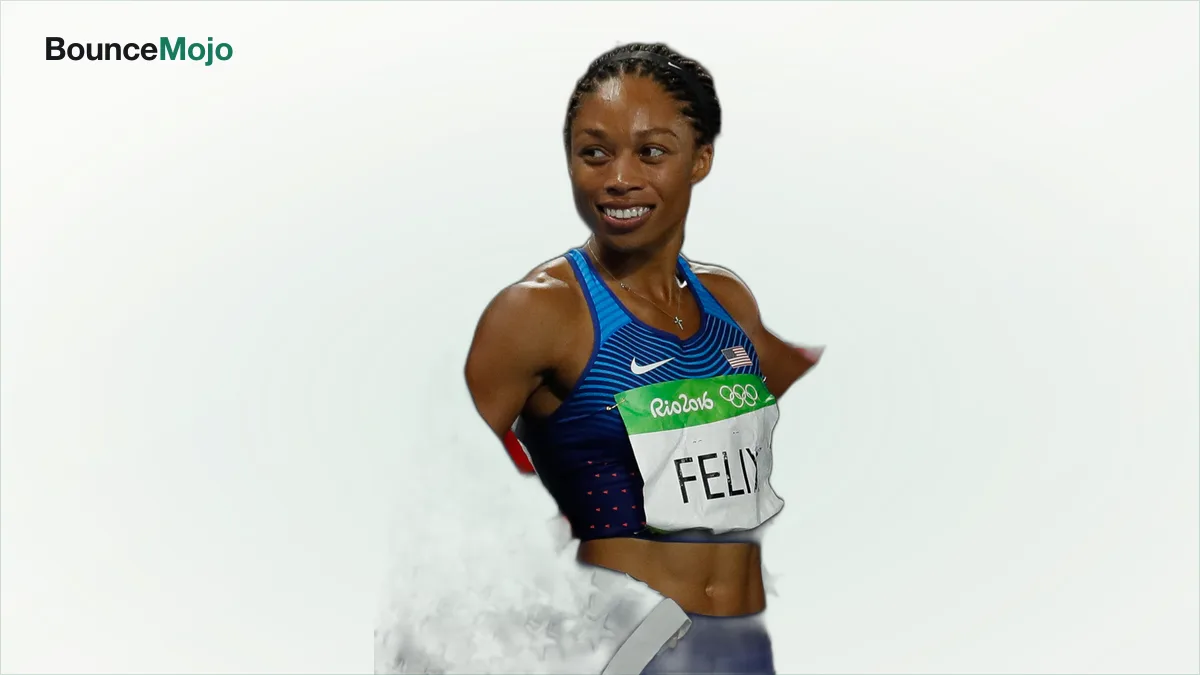
You already know Allyson Felix is the most decorated US track athlete in history. What you probably don’t know is that her most valuable move came after a company tried to cut her pay.
Here’s the reality: Felix is worth an estimated $4.5 million, and while 11 Olympic medals made her famous, it was a public contract fight, and the brand she built out of it, that turned her fame into equity she owns.
What Is Allyson Felix’s Net Worth?
Allyson Felix’s net worth is an estimated $4.5 million in 2026, placing her among the most successful US track athletes financially, though track and field rarely mints the fortunes of team sports. Her figure reflects a career built on longevity, endorsements and, crucially, ownership rather than prize money alone.
That number is an estimate compiled from public reporting by Celebrity Net Worth and US outlets, with sources landing her roughly between $4 million and $5 million depending on how they value her stake in Saysh. Treat $4.5 million as a researched approximation, not an audited figure. Private fortunes shift, and the value of a young brand like hers is hard to pin down.
Here’s why the number matters: Felix turned a low-margin sport into a durable business. Which raises the obvious question.
How Does Allyson Felix Make Money?
Felix’s income came from several streams that evolved as her career did:
- Endorsements. For years, Felix was a marquee Nike athlete, and later signed with Athleta, anchoring her income with brand deals across five Olympic cycles.
- Saysh. After splitting with Nike, Felix co-founded Saysh, her own footwear and lifestyle brand, giving her equity and control rather than a flat fee.
- Prize money and appearance fees. Olympic and World Championship success brought bonuses and appearance income, real but modest next to endorsements.
- Speaking and advocacy. Felix’s stand on maternal rights made her a sought-after speaker and advocate, opening paid platforms beyond sport.
- Board roles and partnerships. Felix has taken on business and board positions, extending her income into corporate and investment work.
In other words, the medals made her marketable. The brand and the advocacy made her an owner.
Here’s why the shift to ownership was so significant. A traditional endorsement, no matter how large, is rented income. It pays while the deal lasts, and it usually shrinks as an athlete ages or wins less. Equity in a company works the other way. If the brand grows, the athlete’s stake grows with it, potentially for decades after the last race. By building Saysh instead of signing another shoe contract, Felix moved from renting her value to owning it, the single most important financial decision an athlete can make. That’s the same equity-over-fee logic that separates the wealthiest names in sports from the merely well-paid ones.
How Did Allyson Felix Build Her Fortune?
Felix’s fortune tracks one of the longest and most decorated careers in track history. She burst onto the scene as a teenage sprinter in the early 2000s, won her first Olympic medals in 2004, and became a fixture of American sprinting for nearly two decades.
The turning point came off the track. Around the birth of her daughter, Felix publicly split with Nike over maternity protections, saying the company wanted to pay her far less around her pregnancy. Rather than absorb it quietly, she went public, testified before Congress, and reshaped the conversation about how sponsors treat athlete-mothers.
Think about it: most athletes lose leverage when they have children. Felix turned that moment into a cause and a company. She co-founded Saysh, converting a contract dispute into ownership, and it’s exactly why she stands among our richest Olympians as a model of athlete entrepreneurship.
What Does Allyson Felix Own?
Felix has lived comfortably rather than lavishly, with a fortune anchored in her brand and diversified earnings rather than trophy assets.
🏠 Real Estate
- Homes in the United States. Felix has owned family property in the US, chosen for family life rather than trophy value. Her real estate reflects a professional athlete’s practicality.
👟 Saysh Equity
Her most valuable asset may be her ownership stake in Saysh, the footwear and lifestyle brand she co-founded. Unlike an endorsement check that stops when the deal ends, equity in a growing brand can appreciate for years.
🏅 Brand and Platform
Felix’s advocacy and her status as the most decorated US track athlete give her a platform that keeps generating speaking, partnership and board income, an intangible asset that outlasts her racing career.
Allyson Felix’s Business & Investments
Strip away the running and Felix looks like a genuine athlete-entrepreneur. The centerpiece is Saysh, the company she co-founded with her brother and agent, Wes Felix. Designed by and for women, Saysh gave Felix something an endorsement never could: ownership of the product, the brand and the upside.
Her business model flipped the usual athlete script. Instead of renting her name to a shoe giant, she built her own, using the very maternity fight that could have ended her earning power as the founding story of a brand aimed at women and mothers.
By the way, Felix’s advocacy became a business asset in its own right. Her testimony on maternal protections, her partnerships around childcare for athlete-mothers, and her public stands made her a leader on issues that resonate with exactly the customers Saysh wants to reach. That alignment of values and commerce is rare, and it’s the engine of her post-track wealth.
Consider what she gave up to build it. When Felix walked away from her longtime sponsor, she was walking away from guaranteed money, the safe, familiar income a superstar athlete can usually count on. Starting a footwear company from scratch meant taking on risk, expense and the very real chance of failure, all while still training and competing at the highest level. Most athletes would never make that trade. The certainty of a big endorsement is simply too comfortable to refuse. Felix refused it anyway, betting on herself and on a market, women and mothers, that the industry had long overlooked.
That bet also reflects a broader shift among modern athletes. The smartest names in sports have stopped treating their fame as a thing to rent out and started treating it as capital to invest. Felix’s Saysh sits alongside the ventures that stars in other sports have built to convert celebrity into ownership. She may compete in a lower-paying discipline than basketball or football, but her financial thinking is straight out of the same playbook that produced the wealthiest athletes alive.
How Does Allyson Felix Compare?
Felix’s $4.5 million is strong for a track athlete, though it trails the sport’s biggest global name. The fastest man in history built a fortune many times larger, because sprinting’s marketing machine rewarded him at a scale that women’s track and field simply hasn’t matched.
But the comparison that matters is about structure. Where most track stars earn during a competitive window and fade, Felix built an ownership stake that can keep growing after her racing days. Her entrepreneurial pivot puts her in rare company among Olympic athletes. For the full picture of where she lands among the Games’ wealthiest names, see our richest Olympians list, and how her fortune sits within the broader ranking of the richest athletes in the world.
Why Allyson Felix’s Fortune Keeps Growing
What separates Felix from most track athletes is that her money increasingly sits in an owned, appreciating asset, her stake in Saysh, rather than in endorsement fees that stop when the deals end.
Her fortune won’t rival team-sport superstars. But it’s built to last, anchored by a brand, a platform and an advocacy legacy that keep opening doors long after her final race. She converted her fame, and even her hardest fight, into equity, which is exactly the playbook that keeps athletes wealthy. For the full ranking of how she stacks up among the Games’ wealthiest, see our richest Olympians list.
Allyson Felix Net Worth: Year by Year
| Year | Net Worth |
|---|---|
| 2012 | $2 Million |
| 2016 | $3 Million |
| 2020 | $3.5 Million |
| 2023 | $4.5 Million |
| 2026 | $4.5 Million (est.) |
Connected Wealth
Shop Allyson Felix on Amazon
Books, audiobooks, merch and more, handpicked for fans.
As an Amazon Associate we earn from qualifying purchases.
🏆 Top Takeaways to Success
- 1
Own the product, not just the ad. After a public split with a major sponsor, Felix launched her own footwear brand, Saysh, turning a contract fight into equity she controls.
- 2
Turn a fight into a platform. Felix used a public dispute over maternity protections to reshape her image and build a brand around athlete-mothers, a market no one else owned.
- 3
Longevity compounds. Competing across five Olympics kept Felix relevant and marketable for nearly two decades, far longer than most sprinters.
- 4
Diversify past the track. Felix built income from endorsements, her brand, speaking and board roles, so her earnings never rode on medals alone.
- 5
Advocacy is an asset. Felix's stand on maternal rights for athletes deepened her brand and opened doors that pure performance never could.
Frequently Asked Questions
What is Allyson Felix's net worth in 2026?+
Allyson Felix's net worth is an estimated $4.5 million in 2026, built on a record-setting Olympic track career, endorsements and her own footwear brand, Saysh.
How many Olympic medals does Allyson Felix have?+
Felix is the most decorated US track and field athlete in Olympic history, winning 11 Olympic medals, including seven golds, across five Games.
How did Allyson Felix make her money?+
Most of Felix's fortune came from endorsements and her business ventures rather than prize money. After a split with Nike, she launched Saysh, her own footwear and lifestyle brand.
Why did Allyson Felix leave Nike?+
Felix publicly split with Nike over maternity protections, saying the company sought to reduce her pay around pregnancy. The dispute made her a leading voice for athlete-mothers and led her to build Saysh.
What is Saysh?+
Saysh is the footwear and lifestyle brand Felix co-founded, designed by and for women, giving her ownership and equity rather than a traditional endorsement fee.
Shop Allyson Felix on Amazon
Books, audiobooks, merch and more, handpicked for fans.
As an Amazon Associate we earn from qualifying purchases.