Iga Swiatek Biography: The Quiet Genius Who Conquered Tennis Young
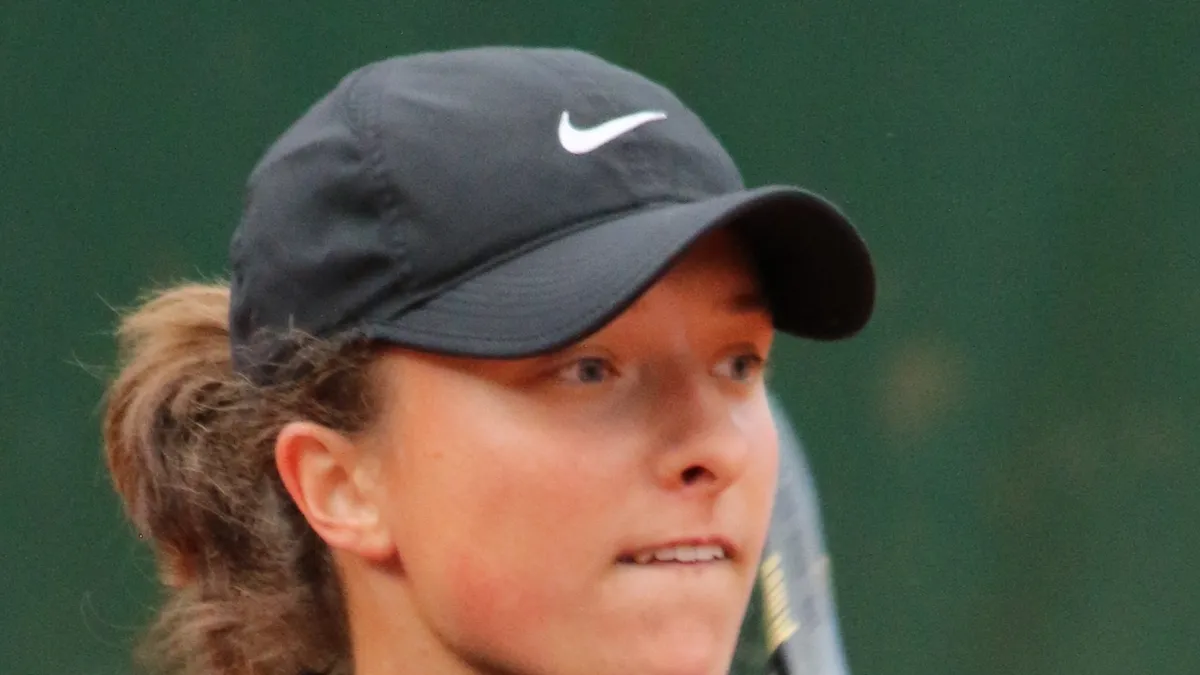
Most people know Iga Swiatek as the calm, dominant queen of clay who ruled tennis in her early 20s. What they miss is how deliberately that calm was built.
Here’s what most people overlook: Swiatek’s greatest weapon is not her forehand or her footwork. It is a mind trained as carefully as her game, in a family that treated Olympic sport as normal.
The Myth vs. The Reality
The myth is that Iga Swiatek is a natural, a serene genius who makes winning look effortless. The trophies and the long No. 1 reign feed that image.
Here’s the truth: the calm is manufactured, in the best sense. Swiatek is one of the most intense competitors in the game, and her composure is the product of relentless mental training, not a placid personality. Behind the steady expression is a fierce, anxious perfectionist who learned to master her own nerves.
Now: she is also younger and more grounded than her dominance suggests. Swiatek reads books between matches, listens to music to calm down, and speaks openly about mental health. The champion is not a machine. She is a thoughtful young woman who engineered her own edge.
But where does a player learn to build a mind like that? It starts with a father who knew exactly what elite sport demands.
The World That Made Iga Swiatek
Swiatek came of age as Poland searched for a global tennis star. The country had produced good players, most notably Agnieszka Radwanska, but never a dominant Grand Slam champion. The hunger for one was real.
Here’s the deal: Swiatek arrived and blew past every expectation, becoming not just a champion but the most successful Polish tennis player in history. She carried a nation’s hopes and exceeded them, all before her mid-20s.
She also arrived at a transformative moment for women’s tennis. The Serena Williams era was ending, the top of the game was wide open, and endorsement money was climbing fast. Swiatek stepped into that gap and seized it.
You might be wondering: how does someone so young handle the weight of a whole country and a wide-open sport? The answer starts in a sporting household near Warsaw.
The Crucible: Early Life and the Climb
The Environment That Shaped Her
Iga Natalia Swiatek was born on May 31, 2001, in Warsaw, Poland. Her father, Tomasz Swiatek, was an Olympic rower who competed at the 1988 Seoul Games. He wanted his daughters to become elite athletes and steered them toward sport early.
Here’s the truth: tennis was a deliberate choice. Iga and her sister were pushed toward individual sports, and Iga’s talent quickly stood out. She trained hard from childhood, backed by a father who understood the sacrifice and discipline the Olympic path requires.
She rose through the junior ranks, winning the 2018 Wimbledon girls’ title, a sign of the talent to come. But nobody predicted how fast the senior breakthrough would arrive.
The Catalyst
The catalyst was one of the great shocks in recent tennis history. At the 2020 French Open, a young, unseeded Swiatek tore through the draw and won the title without dropping a set in the final, announcing herself as a superstar overnight.
What’s the bottom line? The disciplined upbringing and quiet talent exploded into view all at once. One tournament turned a promising teenager into a Grand Slam champion.
But a single shock title and sustained dominance are very different things. And Swiatek was about to prove she was built for the long haul.
The Key Players
Several figures shaped Swiatek’s rise.
Her father, Tomasz Swiatek, laid the foundation, applying an Olympian’s understanding of training and sacrifice to his daughter’s tennis. His early guidance set her on the elite path.
The most distinctive member of her team is her sports psychologist, Daria Abramowicz, who travels with her full-time. Swiatek’s investment in mental performance is central to her story and unusual in its openness, and it is a big reason for her consistency.
Here’s the kicker: her idol shaped her too. Swiatek has long cited Rafael Nadal as her inspiration, especially his work ethic and clay-court mastery. She modeled her relentless approach on his.
Her chief on-court rival became another key player, as Aryna Sabalenka pushed her for the No. 1 ranking and the sport’s top titles. That rivalry raised Swiatek’s game and defined the era.
Those influences set up her sustained dominance, and the pressures that came with it.
The Turning Point
The Pinnacle
Swiatek’s rise after 2020 was staggering. She won multiple French Open titles, cementing her status as the best clay-courter of her generation, then proved she was no specialist by winning the 2022 US Open on hard courts and later a Wimbledon title on grass.
She spent well over 100 weeks at world No. 1, dominating the rankings for long stretches and stacking up titles at a pace few players in history have matched at her age.
The Price
But the dominance came with pressure. Being the best in the world so young meant constant scrutiny and the exhausting task of defending her position every week. Swiatek has spoken about the mental toll of expectation.
Here’s the truth: the calm the public saw was hard-won and sometimes fragile. She has been open about anxiety and the pressure of carrying Polish hopes, and about needing her psychologist and downtime to cope.
That honesty about her struggles is part of what makes her story resonate, and it set up the harder questions she has faced along the way.
The Unvarnished Truth
Swiatek has been unusually candid for a champion. She speaks openly about mental health, anxiety, and the pressure of expectation, breaking the stoic mold many athletes cling to. That vulnerability is a strength, not a weakness.
It gets more complex. In 2024, Swiatek faced a brief anti-doping suspension after a positive test that authorities accepted was caused by a contaminated medication, resulting in a short, reduced ban. For a player whose image is built on integrity, even that limited episode was a difficult, closely watched moment.
She handled it directly, explained the circumstances, and returned to competition. The situation tested her reputation, but her transparency and the accepted explanation largely protected the grounded image she had built.
Controversies and Criticisms
Swiatek’s career has been mostly free of scandal. The main controversy was the 2024 contamination case, which she navigated with an accepted explanation and a short suspension, a stressful but ultimately contained episode.
Now: on court, some critics argued she was dominant on clay but initially less proven on other surfaces, a claim she answered by winning majors on hard courts and grass. Others simply debated how long her reign could last against a rising Sabalenka rivalry.
Through it all, Swiatek’s reputation as a humble, thoughtful champion stayed intact. Her controversies were minor and quickly addressed, leaving her image as one of the cleanest at the top of the sport.
What We Can Learn From Iga Swiatek
Navigating Hard Times
Swiatek’s life teaches the power of mental preparation. She invests in her mind as seriously as her body, traveling with a psychologist and speaking openly about anxiety, and that work sustains her under enormous pressure.
Here’s the lesson: managing your mind is a skill worth real investment. Swiatek’s calm is built, not born, and it is available to anyone willing to do the work.
The Success Blueprint
Her path is a study in modeling greatness. She studied her idol Rafael Nadal’s work ethic, built a professional team around her, and dominated by combining talent with relentless preparation.
That disciplined, mind-first model contrasts with the pure-longevity path of grinders like Svetlana Kuznetsova and Chris Evert, yet all of them prove that consistency wins. Swiatek turned her dominance into a fast fortune, as her net worth story shows.
Final Verdict
Iga Swiatek redefined what a young champion can be, pairing crushing dominance with rare openness about the mind behind it. She gave Poland its greatest tennis star and reshaped the top of the women’s game.
The verdict is clear: her real greatness is the marriage of talent and mental mastery. She did not just win. She engineered a calm, professional machine and then powered it with genuine feeling.
Swiatek is still young, and her story is far from over. But she has already proven a modern truth about elite sport: train the mind as hard as the body, and there may be no ceiling at all.
Shop Iga Swiatek on Amazon
Books, audiobooks, merch and more, handpicked for fans.
As an Amazon Associate we earn from qualifying purchases.
Frequently Asked Questions
Where is Iga Swiatek from?+
Swiatek was born in Warsaw, Poland, and grew up in a sporting family, becoming the biggest tennis star her country has ever produced.
Was Iga Swiatek's father an athlete?+
Yes. Her father, Tomasz Swiatek, was an Olympic rower who competed at the 1988 Seoul Games and pushed his daughters toward elite sport.
When did Iga Swiatek win her first Grand Slam?+
Swiatek won her first Grand Slam at the 2020 French Open as a young, unseeded player, stunning the tennis world.
Why does Iga Swiatek travel with a psychologist?+
Swiatek works closely with sports psychologist Daria Abramowicz, crediting mental preparation as central to her calm, consistent dominance.
Who is Iga Swiatek's tennis idol?+
Swiatek has often cited Rafael Nadal as her idol, especially admiring his relentless work ethic and mastery of clay courts.
Want the money side of the story?
Read Iga Swiatek's Full Net Worth Breakdown →Shop Iga Swiatek on Amazon
Books, audiobooks, merch and more, handpicked for fans.
As an Amazon Associate we earn from qualifying purchases.