Ian Woosnam Biography: The Raw Truth Behind the Welsh Wizard
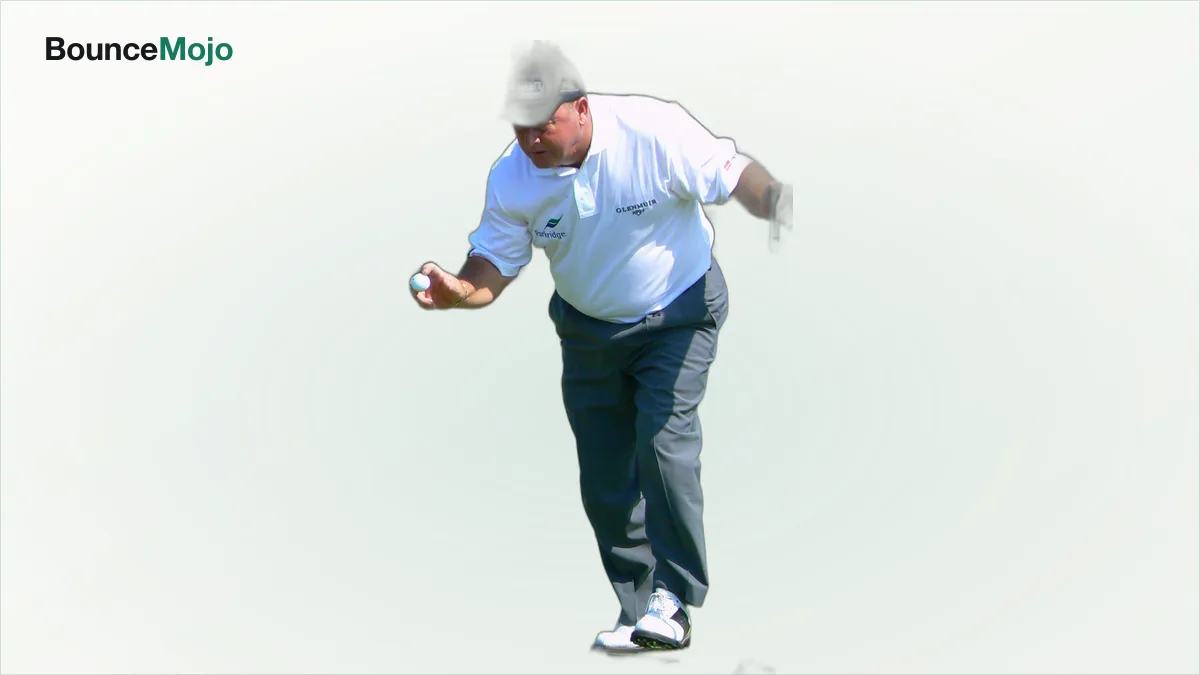
The little Welshman with the huge swing, the pint-sized hitter who bombed it past players a foot taller. That’s the Ian Woosnam most fans remember.
Here’s what most people miss: before the green jacket and the world No. 1 ranking, Woosnam was a farm boy living in a van and eating beans out of a tin.
The Myth vs. The Reality
The myth is charming. Ian Woosnam is the cheerful little Welshman with the effortless power, a natural who bombed drives for fun.
The reality was a grind.
Here’s the truth: Woosnam spent years scraping by on the fringes of professional golf, sleeping in a camper van and surviving on baked beans because he couldn’t afford anything else. The power that looked so natural came from years of backbreaking farm work. Nothing about his rise was easy.
Now think about how his story could have ended. A few more lean years and Woosnam quits, another talented kid who ran out of money before he ran out of ability.
Instead, he broke through in spectacular fashion. And to understand how, you have to start on a small farm near the Welsh border.
The World That Made Ian Woosnam
Ian Harold Woosnam was born on March 2, 1958, in Oswestry, just inside England but with deep Welsh roots. He grew up on his family’s 70-acre dairy farm at St Martin’s, Shropshire.
His father Harold was a former boxer who once dreamed of turning pro before his own parents pushed him toward farming. Harold ran a demanding operation, and young Ian worked it, milking cows twice a day and hauling hay bales that built the compact strength he’d later be famous for.
This was British golf before big money reached the average player. A short kid from a farming family had no obvious path to the top. There were no academies, no sponsors, just Q-School, mini-tours, and the willingness to live rough while chasing a card.
But here’s the kicker: the same farm that toughened him also nearly kept him from ever affording a real shot at the game.
The Crucible: Early Life and the Climb
The environment that shaped him
Woosnam’s talent showed early in amateur golf in Wales, and he turned professional in 1976 shortly after his eighteenth birthday. The problem was money.
He spent his early tour years driving around continental Europe in a camper van, living on baked beans to keep costs down. He missed cuts, scraped for entry fees, and came close to giving up more than once. The romance of pro golf was nowhere in sight.
The ability was there. The bank account was not.
The catalyst
The turning point came when Woosnam finally started winning on the European Tour. His compact power, honed on the farm, made him one of the biggest hitters in the game despite standing only 5 feet 4 inches.
By the late 1980s he was a genuine star, and in 1991 everything converged. He won the Masters at Augusta National, beating Jose Maria Olazabal, and became the first player representing Wales to win a major.
Here’s the deal: that single week didn’t just win him a trophy. It reportedly earned him ten times his prize money in endorsements, transforming his entire financial future.
Want to know the best part? He reached world No. 1 the very same week.
The Key Players
You cannot tell the Ian Woosnam story without a few names.
His father Harold is the first, the ex-boxer whose farm work built the body and whose decision to sell the family’s dairy herd helped fund his son’s golf dream.
Jose Maria Olazabal is the second, the young Spaniard Woosnam edged at the 1991 Masters in the win that defined his career.
His European contemporaries are the third group. Woosnam came up alongside Nick Faldo, Sandy Lyle, Bernhard Langer, and Seve Ballesteros, the golden generation that made Europe a Ryder Cup force. That rivalry pushed him to the very top of the world rankings.
Here’s the truth: everything Woosnam built as a player was about to be crowned by one triumphant week as a captain.
The Turning Point: Triumph and Its Hidden Cost
The pinnacle
Start with the Masters, because it changed his life.
In April 1991, Woosnam held his nerve down the stretch at Augusta and won the green jacket. For a farm boy from the Welsh borders who once lived in a van, it was a storybook triumph. He spent 50 weeks in total as world No. 1, cementing his place among the game’s elite.
The second peak came 15 years later. In 2006, Woosnam captained Europe to a crushing 18.5 to 9.5 victory over the United States at the K Club in Ireland, one of the most dominant Ryder Cup wins in history.
The price
Now the cost, which came in the years between.
After 1991, the majors never came again. Woosnam contended at times but could not add to his single Augusta triumph, and he spent years being asked why a player of his talent had only one. The one-major label followed him.
His captaincy year also carried a sting. A famous rules blunder at the 2001 Open, when he was penalized for carrying too many clubs while in contention, remained a painful “what if” that dogged his reputation for years.
You might be wondering how a man handles being defined by both a triumph and a blunder. The answer shows his resilience.
The Unvarnished Truth
Let’s not pretend it was all cheerful power golf.
Woosnam’s game could run hot and cold, and his putting sometimes let him down at crucial moments. Critics argued that a ball-striker of his caliber should have won more than one major, and the 2001 Open club-counting error became a symbol of the near-misses that shadowed his career.
He was also known for a fondness for the social side of tour life, and he has spoken candidly over the years about the pressures and excesses that came with sudden fame and money.
Here’s the truth: Woosnam’s greatest strength, his fearless, aggressive style, was also his weakness. The same boldness that made him a giant killer sometimes cost him when caution would have served better.
Even so, that fearlessness is exactly what carried a farm kid to the top of the world.
Controversies and Criticisms
For such a beloved figure, Woosnam’s controversies are mostly on-course.
The 2001 Open penalty is the biggest. Discovering an extra club in his bag after starting a strong final round, Woosnam was docked two shots at a moment when he was in the hunt for the Claret Jug. He reacted with famous fury, and the incident became one of golf’s most cited cautionary tales.
Critics also pointed to his single major as a shortfall for a player who spent nearly a year at world No. 1. The expectation his talent created was one he could never fully satisfy.
Beyond that, the knocks are gentle. In a sport with plenty of villains, Woosnam’s biggest failing was being too aggressive and, on one infamous day, one club too heavy.
Here’s the thing though: none of it erases the legacy. Because he made history that no Welshman had made before.
What We Can Learn From Ian Woosnam
Navigating the darkness
When you have no money and no clear path, you either quit or you keep driving the van to the next tournament.
Woosnam kept driving. He endured lean years most players never survive, and he refused to let poverty end his dream. The lesson is simple: talent means nothing without the stubbornness to outlast the hard years.
The success blueprint
Now the part that built the fortune.
Woosnam did something few athletes of his era did well: he turned winnings into assets. He poured his prize money and endorsement windfalls into real estate in Barbados and Jersey, converting fleeting checks into lasting wealth. That investing instinct is why he ranks among the richest golfers in the world. The full money breakdown lives in our Ian Woosnam net worth analysis, and you can see where he sits among the richest athletes overall, alongside fellow major champions like Tiger Woods.
Becoming better
The deepest lesson is about perspective. Woosnam never forgot the van and the beans, and that memory kept him grounded and careful with money even at the height of his fame. He proved you can rise from nothing and still remember where you came from.
So what’s the final word on the Welsh Wizard?
Final Verdict
Ian Woosnam is the rare champion whose humble start makes his triumph land even harder.
On the course, he was a Masters champion, a former world No. 1, and a winning Ryder Cup captain. Off it, he’s a shrewd investor who turned a farm-boy fortune into lasting wealth without ever losing his roots.
Here’s the bottom line: the big swing was never the whole story. Behind it was a short, tough kid who lifted hay bales, lived in a van, and refused to quit until he’d made Welsh golf history.
Anyone who remembers only the power has missed the grit. Woosnam’s real story is the climb, and it’s far richer than the highlight reel.
Shop Ian Woosnam on Amazon
Books, audiobooks, merch and more, handpicked for fans.
As an Amazon Associate we earn from qualifying purchases.
Frequently Asked Questions
Where did Ian Woosnam grow up?+
Woosnam was born on March 2, 1958, in Oswestry, near the England-Wales border, and was raised on his family's 70-acre dairy farm at St Martin's, Shropshire.
What made Ian Woosnam's win historic?+
His 1991 Masters victory made him the first player representing Wales to win a major championship, and he reached world No. 1 the same week.
Why was Ian Woosnam so powerful despite his height?+
At just 5 feet 4 inches, Woosnam built enormous strength from farm labor as a boy, lifting hay bales that gave him a compact, powerful physique.
What were Ian Woosnam's early tour years like?+
He spent them living in a camper van, driving around Europe and surviving on baked beans to save money before his breakthrough.
Did Ian Woosnam captain the Ryder Cup?+
Yes. In 2006 he captained Europe to a commanding 18.5 to 9.5 win over the United States at the K Club in Ireland.
Want the money side of the story?
Read Ian Woosnam's Full Net Worth Breakdown →Shop Ian Woosnam on Amazon
Books, audiobooks, merch and more, handpicked for fans.
As an Amazon Associate we earn from qualifying purchases.