Dave Whelan Biography: The Broken Leg That Built a Retail Empire
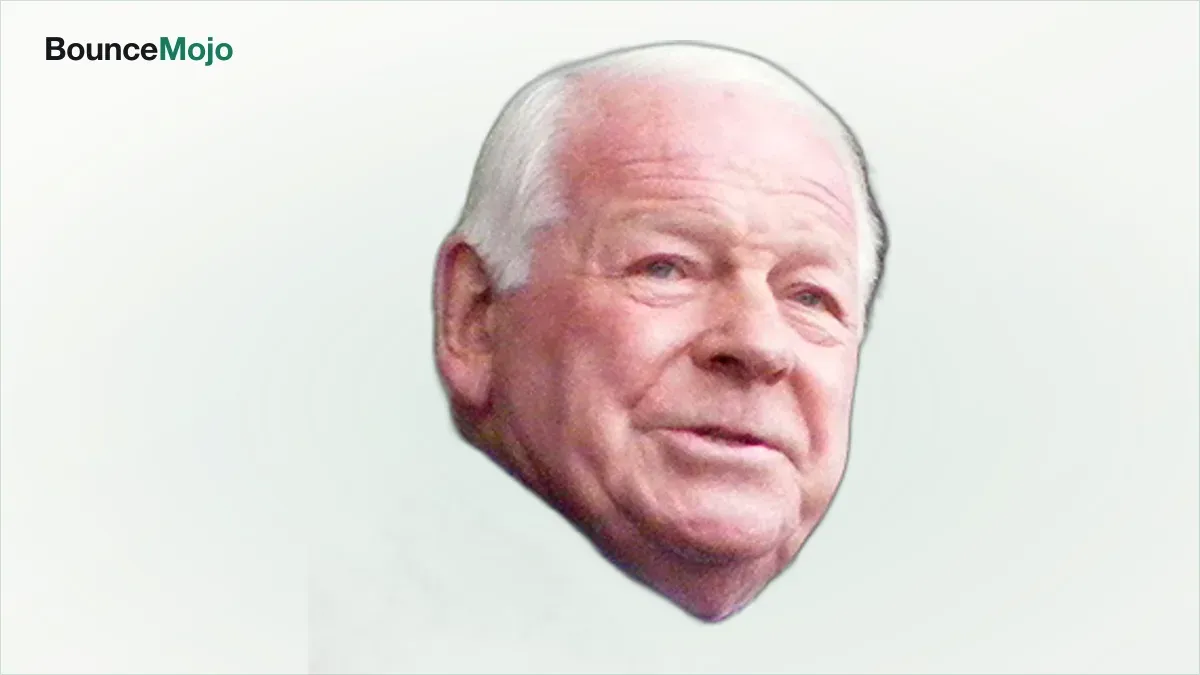
Ask anyone in Wigan for the defining day of Dave Whelan’s life and they all reach for the same one: the 2013 FA Cup Final, Wigan Athletic beating Manchester City. It is the right day. It just isn’t the beginning of the story. It was the answer to something that had happened in the same competition, on the same stage, fifty-three years earlier.
2013: The Trophy That Took Fifty-Three Years
Wigan Athletic had never won a major trophy. Under manager Roberto Martinez, they beat Manchester City in the 2013 FA Cup Final, and the club’s owner finally held the trophy.
For Whelan the symmetry was almost unbearable in the best way, because his own playing career had ended in an FA Cup Final, on that same stage, in the worst possible manner.
The Broken Leg, 1960
In the 1960 FA Cup Final, Whelan was a full-back for Blackburn Rovers against Wolverhampton Wanderers. He broke his leg badly. In an era before modern sports medicine, the injury effectively ended his top-flight career at 23.
For most players of that generation, that was the end of the story: a promising career cut short, then a slow fade. Football in 1960 offered no safety net. There were no image rights, no endorsements, and wages were capped by the rules of the time. A player of Whelan’s era could not expect to retire rich from the game, and life after football was something you built yourself or went without.
He had grown up expecting exactly that. Born in Bradford in 1936, into a Britain shadowed by depression and then war, raised working-class in a household that prized effort and self-reliance, Whelan had always carried the mentality of a man one bad tackle from needing another plan. The tackle came. He had the plan.
One Grocery Shop in Wigan
He took his savings and a small compensation payment and opened a grocery shop in Wigan, determined to build something no tackle could take away.
The shop became a supermarket. He sold the supermarket at a large profit and put the money into sportswear retail, and JJB Sports grew from a single store into one of Britain’s largest sportswear chains, floated on the stock market. The mechanism was simple and repeated for decades: start small, sell up, reinvest every gain in something bigger. It was not luck and it was not football money. Every pound he later spent on Wigan Athletic came out of groceries and trainers.
The people who made it work were close to home. His relatives worked alongside him and later carried the businesses forward, until the Whelan name was synonymous with Wigan commerce. The JJB staff and customers turned one shop into a national chain. And Wigan itself functions in this story less as a setting than as a character: he made his fortune there, based his businesses there, and poured the money back into the town’s football and rugby clubs.
That empire is what made him one of the richest figures in British football, as his net worth story explains, and where he sits among the richest soccer players reflects a route almost nobody else took. Compare it to the brand-driven fortune of David Beckham and the contrast is stark.
Building a Premier League Club Out of a Retail Fortune
Whelan bought Wigan Athletic and invested heavily, building the DW Stadium and driving a small-town club all the way into the Premier League. Then came 2013 and the cup.
His ownership was intensely personal, and some critics thought it too personal, arguing that he tied the club’s fate too tightly to one man. He was a tough, sometimes combative chairman and businessman, unafraid of confrontation and blunt in his opinions, and the same hard edge that had built the empire could make him domineering.
Nor was the empire permanent. JJB Sports, the company that made his fortune, struggled badly against retail competition and eventually collapsed under different ownership after Whelan had stepped back. His DW Sports venture also hit hard times. Building something is one thing; watching parts of it fade is another, and he has done both.
The 2014 Interview
The darkest episode of his public life came a year after the cup. In 2014, defending a managerial appointment in a newspaper interview, Whelan made offensive remarks that drew widespread condemnation. He was charged by the FA, fined and banned from football activity, and later apologised for the hurt caused.
It was a real blemish on the reputation of a figure Wigan otherwise adored, and the most honest thing that can be said about it is that the blunt toughness which built his fortune sometimes betrayed him in public.
What the Injury Actually Cost, and What It Bought
Whelan was one of the great rags-to-riches figures British sport produced, and “self-made” was rarely more literally true. He inherited nothing and earned nothing from football wages. He built it out of a shattered leg and a single grocery shop.
The reframing is this: had he enjoyed a long, ordinary playing career, there would have been no supermarket, no JJB Sports, no Wigan Athletic in the Premier League, and no cup in 2013. The worst day of his life on the Wembley pitch set up the best one. The full mechanics of the fortune are in his net worth breakdown — but the arithmetic that mattered to him was simpler. He lost his dream at 23, refused to be finished, and spent the next sixty years building the answer to it.
Shop Dave Whelan on Amazon
Books, audiobooks, merch and more, handpicked for fans.
As an Amazon Associate we earn from qualifying purchases.
Frequently Asked Questions
Where was Dave Whelan born?+
Dave Whelan was born in Bradford, England, in 1936, into a working-class family, and grew up during and after the Second World War before making his name in football and then business in the Wigan area.
What injury ended Dave Whelan's football career?+
Whelan broke his leg in the 1960 FA Cup Final while playing for Blackburn Rovers against Wolverhampton Wanderers. The injury effectively ended his top-flight career and pushed him toward business.
How did Dave Whelan start in business?+
After football, Whelan opened a grocery shop and then a supermarket in Wigan. He sold the supermarket at a large profit and used the money to build the JJB Sports retail chain.
What was Dave Whelan's greatest moment as an owner?+
As owner of Wigan Athletic, Whelan's greatest moment was the club's stunning 2013 FA Cup victory over Manchester City, a triumph made more poignant because his own playing career had ended in an FA Cup Final.
How old is Dave Whelan?+
Dave Whelan was born on 24 November 1936. He is regarded as one of British sport's great rags-to-riches figures and a long-standing patron of Wigan's football and rugby clubs.
Want the money side of the story?
Read Dave Whelan's Full Net Worth Breakdown →Shop Dave Whelan on Amazon
Books, audiobooks, merch and more, handpicked for fans.
As an Amazon Associate we earn from qualifying purchases.