Andy Roddick Biography: The Last American Slam Champion's Goodbye
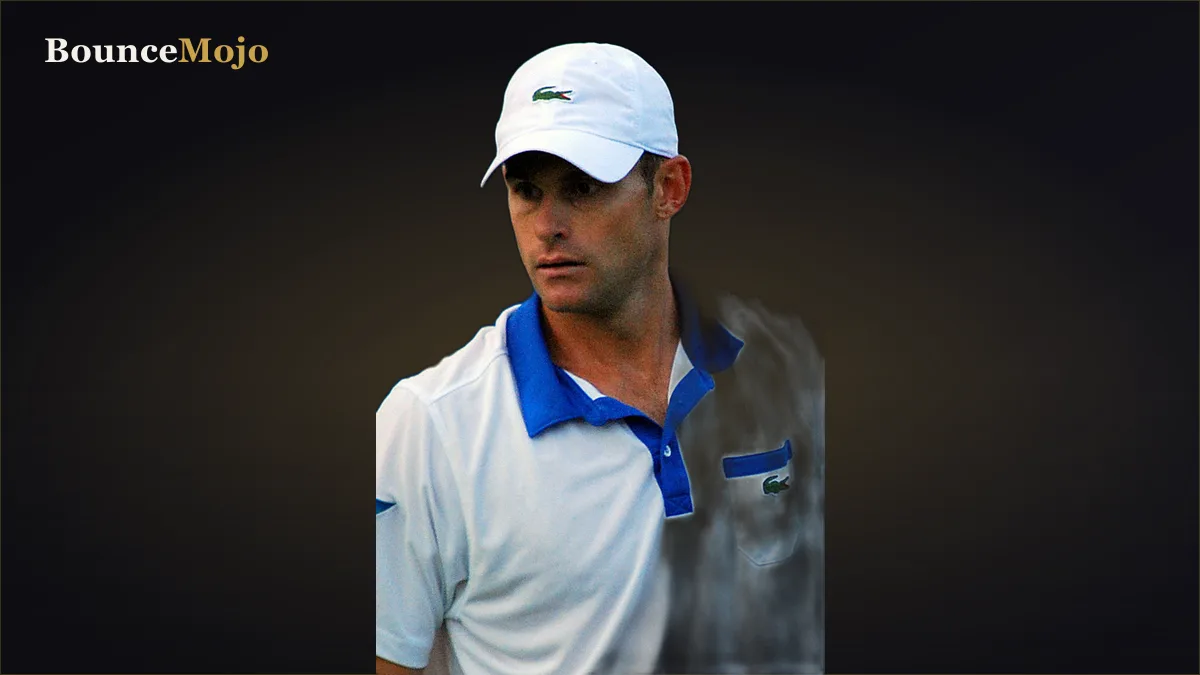
Most people remember Andy Roddick as the guy with the huge serve who kept losing to Roger Federer. That is half the truth, and it misses the better half.
Here’s what most people miss: Roddick is not remembered as tennis’s biggest what-if because he failed. He is remembered that way because he arrived at the exact moment one of the greatest players who ever lived was blocking the door.
The Myth vs. The Reality
The myth is simple. Andy Roddick: big serve, hot temper, always a bridesmaid to Federer, faded early. A cautionary tale about talent that peaked too soon.
The reality is more generous, and more human.
Here’s the deal: Roddick was not a flameout. He was a world No. 1, a US Open champion, a Davis Cup winner, and a fixture in the world’s top ten for years in one of the deepest eras men’s tennis has ever seen. He beat almost everyone. He just happened to share a career window with Roger Federer, Rafael Nadal, and Novak Djokovic, three of the greatest to ever pick up a racket.
Think about it: in almost any other decade, Roddick wins multiple majors and is remembered as an all-time American great. Instead, he became the last American man to win one at all, a distinction that grows heavier every year the drought continues.
You might be wondering: how does a small kid from Nebraska end up with one of the most feared serves in history? To understand that, you have to understand the world that built him.
The World That Made Andy Roddick
Roddick was born in 1982 into an American tennis scene that was used to winning.
Pete Sampras and Andre Agassi ruled the sport. American men expected to compete for majors, and the pipeline of talent seemed endless. This was the world Roddick grew up chasing, a country that assumed its next great champion was always just around the corner.
Now: what nobody knew at the time was that Roddick would be the last of that line, not the start of a new one. The Sampras-Agassi golden age was ending, and a European wave was about to swallow the sport whole.
His family understood sacrifice before Andy ever went pro. His older brother John was a talented junior, and the family moved from Austin to Boca Raton, Florida, so both boys could train year-round in a tennis hotbed. That decision, to uproot a whole household for a shot at greatness, is the backdrop for everything Roddick became.
But before the trophies, there was a small, scrappy kid who had to invent a way to win.
The Crucible: Early Life and the Climb
The Environment That Shaped Him
Andrew Stephen Roddick was born in Omaha, Nebraska, to Jerry, a franchise businessman, and Blanche, a teacher. His mother played tennis for fun and pushed all three sons toward the sport.
Here’s the truth: young Andy was small for his age, and that shaped his entire game. He couldn’t overpower opponents with size, so he learned to win with speed and to hunt for any weapon that gave him an edge. The family moved to Austin, then to Boca Raton when he was ten, dropping him into one of the most competitive junior environments in the country.
He took group lessons. He entered local tournaments at eight. He grinded.
The Catalyst
Then came 1997, and a bit of luck that changed his life.
Messing around one day, Roddick abandoned his standard serving motion and discovered he could generate a massive, violent serve. That accidental discovery became the foundation of his career. Coached by Tarik Benhabiles, he drilled it every afternoon after school until it was a genuine weapon.
By 1999 and 2000 he was cleaning up on the junior circuit, winning the Australian Open and US Open junior titles and reaching world No. 1 among juniors. He turned pro before he even finished high school.
It gets better: within three years, that raw teenager would be standing on center court in New York, a Grand Slam trophy in his hands. But the people who got him there deserve their share of the story.
The Key Players
No one climbs alone, and Roddick’s rise was crowded with people who shaped him.
Blanche and Jerry Roddick. His parents built the launchpad, moving the family twice and backing two tennis-playing sons. Blanche’s love of the game planted the seed in all of them.
John Roddick. His older brother was a top-ten junior and an early rival, sparring partner, and coach. Chasing John gave young Andy a target and a standard.
Roger Federer. Every hero needs a foil, and Roddick’s was the Swiss maestro. Federer beat him in three Wimbledon finals and dominated their head-to-head, yet Roddick never turned bitter. He became one of Federer’s most gracious admirers, a rivalry defined by respect rather than venom. The way Roddick handled losing to the man who is worth over a billion dollars today, chronicled in his own net worth story, says as much about his character as any win. Federer became a genuine friend.
Brad Gilbert and later coaches. Roddick worked with sharp tennis minds who tried to add nuance to a game built on power, pushing him to evolve as the sport changed around him.
Think about it: every one of these relationships pointed toward the same test, could a one-weapon slugger reach the very top? At the 2003 US Open, he answered.
The Turning Point
The Pinnacle
The 2003 US Open is Roddick’s mountaintop.
Playing in front of a home crowd in New York, the 21-year-old rode his serve and his fight to the title, beating Juan Carlos Ferrero in the final. That autumn he climbed to world No. 1. He had done what American tennis expected of its next star, and he had done it young.
He would go on to win 32 ATP titles, five Masters events, and lead the United States to the 2007 Davis Cup. For a while, he was the beating heart of American men’s tennis.
But that US Open trophy carries a weight nobody could have predicted. As of 2026, no American man has won a major since. Roddick’s win didn’t open a floodgate. It slammed one shut.
The Price
Here’s the kicker: the same era that made Roddick a champion also capped his ceiling.
Federer, and soon Nadal and Djokovic, formed a wall Roddick could not climb often enough. He reached four more Grand Slam finals and lost all four, three of them to Federer. The cruelest came at Wimbledon in 2009, when he lost the fifth set 16-14 after coming within two points of the title. He played the match of his life and still walked away with nothing.
That is the price of greatness in the wrong decade. Roddick gave everything and, by the brutal math of majors, still fell short. Which brings us to the parts of the man that trophies never show.
The Unvarnished Truth
Roddick was not a polished robot, and pretending otherwise misses what made him compelling.
He had a temper. He argued with umpires, snapped rackets, and let frustration show in ways that sometimes overshadowed his tennis. Early in his career, critics painted him as a hothead with a one-dimensional game, a big serve attached to a short fuse.
Now: none of that makes him a villain. It made him watchable. Roddick wore his emotions where everyone could see them, and in an era of increasingly corporate athletes, that rawness was refreshing. He was also, by nearly every account, one of the funniest and most self-aware players in the locker room.
The honest read on Roddick is this: he was a very good player who was asked to be a great one by a country that needed a savior. He carried that pressure for a decade without breaking, and he did it with more humor and grace than most people manage.
Controversies and Criticisms
Roddick’s career was more admired than scandalous, but he attracted his share of criticism.
The “one weapon” knock. Critics argued that Roddick relied too heavily on his serve and never developed a complete enough game to beat the sport’s elite consistently. There is truth in it, though it undersells his fight and his return game.
The temper. His on-court outbursts and clashes with officials drew fines and headlines, feeding a narrative of a player who couldn’t always control his emotions in big moments.
The expectation trap. Some observers felt Roddick underachieved, that a player with his physical gifts should have won more. That criticism, in hindsight, looks less fair. Winning a major at all in the Federer-Nadal-Djokovic era was an achievement, not a disappointment.
The comparison game. Roddick was constantly measured against the departed Sampras and Agassi, an impossible standard that no single American of his generation could have met.
What We Can Learn From Andy Roddick
Navigating Hard Times
The first lesson is about losing well. Roddick lost the biggest matches of his life to a better player, over and over, and he never let it poison him. He congratulated Federer, praised him publicly, and kept competing.
Here’s the truth: how you handle the losses you can’t avoid defines your reputation more than the wins you collect. Roddick’s dignity in defeat is why he is beloved today, and why brands and audiences still trust him.
The Success Blueprint
If you want the replicable part, it is this: Roddick took one elite strength and built an entire career around it. He didn’t try to be Federer. He maximized what made him different, a serve nobody could reliably read, and rode it to the top of the world.
That is transferable. The lesson isn’t “have a rocket serve.” It’s “find your one unfair advantage and weaponize it relentlessly.” Roddick’s clarity about his own game put him alongside the sport’s biggest names on our richest tennis players ranking, and his post-career pivot shows the same instinct at work.
Becoming Better
The deepest lesson is about the second act. Roddick saw the end coming and built a media career, a foundation, and a family life before the applause faded. He turned “the last American Slam champion” from a burden into a brand.
In other words, know when the first chapter is ending, and start writing the next one early. The full story of how he converted fame into a lasting fortune lives in his net worth breakdown.
Final Verdict
Andy Roddick is one of the most important American tennis players of the modern era, and “important” is doing real work in that sentence. He didn’t just win a US Open. He became a living marker of how hard the game got, the last of a line and the face of a drought that has humbled American tennis for over twenty years.
And here’s the twist that reframes his whole career: the man remembered for losing to Federer may end up with the more enviable life. Roddick retired in 2012 in an emotional ceremony that reduced a packed stadium to tears, then quietly built a media empire, a happy family, and a fortune that keeps growing. He lost the finals. He won the aftermath.
If you love tennis, remember Roddick not as the runner-up, but as the competitor who squeezed everything out of one loud weapon, kept his dignity when the sport’s giants blocked his path, and walked away a winner in every way that lasts. His story is proof that the scoreboard is not the only thing that keeps score.
Shop Andy Roddick on Amazon
Books, audiobooks, merch and more, handpicked for fans.
As an Amazon Associate we earn from qualifying purchases.
Frequently Asked Questions
Where did Andy Roddick grow up?+
Andy Roddick was born in Omaha, Nebraska, in 1982 and moved with his family to Austin, Texas, and then to Boca Raton, Florida, when he was ten, chasing better tennis development for himself and his older brother John.
Why is Andy Roddick historically important?+
Roddick won the 2003 US Open, and as of 2026 he remains the last American man to win a Grand Slam singles title, a drought that has lasted more than two decades and made his win increasingly significant.
What was the rivalry between Roddick and Federer?+
Roger Federer beat Roddick in three Wimbledon finals (2004, 2005, 2009) and held a lopsided head-to-head record. The 2009 final, lost 16-14 in the fifth set, is considered one of the most heartbreaking near-misses in tennis history.
What is Andy Roddick doing now?+
Roddick hosts the popular Served with Andy Roddick podcast, works in broadcasting, and runs the Andy Roddick Foundation, which supports education programs for underserved young people.
Who is Andy Roddick married to?+
Roddick is married to model and actress Brooklyn Decker. They wed in 2009 and have two children together, living primarily in Austin, Texas.
Want the money side of the story?
Read Andy Roddick's Full Net Worth Breakdown →Shop Andy Roddick on Amazon
Books, audiobooks, merch and more, handpicked for fans.
As an Amazon Associate we earn from qualifying purchases.