LeBron James Biography: The Kid From Akron Who Became a King
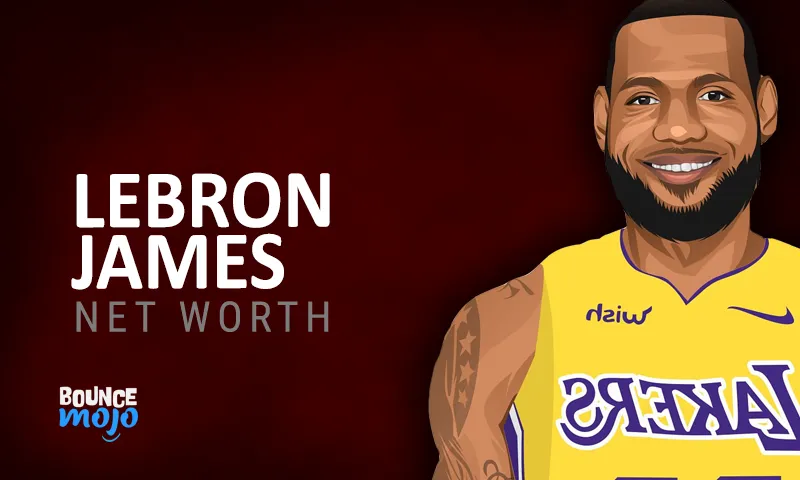
Four rings, the all-time scoring crown, an estimated $1.2 billion, and a nickname handed to him before he could legally vote. The story everyone tells about LeBron James is a story about inevitability.
The number that argues with it is 82.
Eighty-Two Days Absent in Fourth Grade
That is roughly how many days of school LeBron missed in a single year, at age nine, in Akron, Ohio. Not a dramatic collapse. Just a boy who had moved too many times to keep track of which hallway he belonged in, drifting out of attendance records entirely.
Poverty is rarely one catastrophic event. It is a thousand small instabilities stacked on a child. Around age five, LeBron and his mother moved seven times in twelve months, packing what little they had, learning a new set of strangers, over and over. By fourth grade the churn had done what churn does. He was skipping class and slipping through the cracks.
Everything that follows, the covers and the contracts and the confetti, sits on top of that year. It is also, eventually, what he built a school to fix.
Gloria Was Sixteen, and Akron Was Shedding Jobs
LeBron Raymone James was born on December 30, 1984. His mother, Gloria Marie James, was 16 years old. His father, Anthony McClelland, wanted nothing to do with him, and had a criminal record.
Akron in that era was a rubber town losing its rubber. The tire plants that had built the city were shedding jobs, and whole neighborhoods felt the drain. Cold in winter, working-class, unforgiving toward families without a cushion. A teenager raising a son alone in that city had no safety net and no family money. When the work fell through, the rent fell through, and the family moved again.
It was also the decade basketball became culture. Michael Jordan was turning the NBA into a global product, and a pair of sneakers could tell everyone who you were. For a poor kid with a jump shot, the game was not just a game. It was a door that occasionally opened.
Frank Walker’s Spare Room, and the Four Boys Who Came After
Gloria made a decision that must have cost her something. She let her son go live with the family of Frank Walker, a local youth football coach, so he could have a stable roof, regular meals, and a reason to get up in the morning.
Walker put a basketball in LeBron’s hands. From that season on, the attendance record reversed. The kid who had nearly vanished started showing up every day.
Around ages ten and eleven he joined a youth team in Akron and met Dru Joyce III, Sian Cotton, and Willie McGee. Romeo Travis joined later. They called themselves the Shooting Stars, and they were inseparable, four boys from tough backgrounds who made a pact to go to high school together. The group, sometimes called the “Fab Five,” enrolled at St. Vincent-St. Mary, a mostly white private Catholic school in Akron, on scholarships and a shared plan.
Those four are not footnotes in his life. They are the emotional core of his memoir, Shooting Stars, and the reason a lonely kid learned what a family could feel like. Loyalty became his religion, and it started on a rec-league team.
”The Chosen One,” February 18, 2002
By his junior year LeBron was so dominant that Sports Illustrated put him on its cover and called him “The Chosen One.” He was 17. He responded by tattooing “Chosen 1” across his back.
The hype was suffocating. Games moved to a university arena to fit the crowds. National TV networks aired high-school basketball because of one teenager. And the whole weight of it sat on a kid who still could not buy a lottery ticket.
Two people held it up with him. Maverick Carter, a slightly older friend from Akron, would eventually become his business partner and build the empire alongside him. Savannah Brinson, his high-school sweetheart, married him in 2013 and grounded him through every storm; together they have three children, Bronny, Bryce, and Zhuri.
The Decision, the Burning Jerseys, and the 3-1 Comeback
The Cleveland Cavaliers drafted him first overall in 2003, straight out of high school, and handed an 18-year-old the hopes of an entire region. For seven years he tried to save the franchise alone, dragging thin rosters deep into the playoffs and winning back-to-back MVPs. The title never came.
So in the summer of 2010 he went on national television and said he was “taking his talents to South Beach.” The Decision, the infamous one-hour ESPN special, sent him to the Miami Heat to join Dwyane Wade and Chris Bosh. It also detonated his reputation overnight. Fans burned his jersey in the streets of Cleveland. He learned that the same crowd that crowns you will torch you.
He has since admitted the special was a mistake in how it was handled, a young man’s misstep that humiliated Cleveland on live television. It did raise millions for charity. The wound was real anyway.
In Miami he finally broke through, winning championships in 2012 and 2013 and taking Finals MVP both times. Then, in 2014, he went home with a promise. Two years later his Cavaliers did what no team in NBA history had done: erased a 3-1 Finals deficit against a 73-win Golden State team and delivered a championship to a city that had gone 52 years without a major sports title. Grown men wept in the streets of Cleveland. He wept too.
That 2016 title is the emotional summit of the career, the moment the hometown kid actually kept an impossible promise. A fourth ring followed with the Los Angeles Lakers in the 2020 bubble season, running alongside Anthony Davis. In February 2023 he passed Kareem Abdul-Jabbar to become the NBA’s all-time leading scorer, breaking a record that had stood nearly 39 years.
Staying at that altitude is not free. He reportedly spends around $1.5 million a year keeping his body intact, a machine of trainers and chefs and recovery specialists built to extend a career long past when it should have ended.
The Man Who Insists on Controlling His Own Story
He is not a saint, and pretending otherwise does him no favors.
He is thin-skinned. He notices every slight, remembers every doubter, and has built a large share of his motivation around proving people wrong. That chip is a superpower that can curdle into pettiness.
He has been accused of running organizations from the shadows, pushing coaches out and steering roster moves as a player, wielding more power than any athlete should. Some of that is fair. By any honest measure he is a basketball executive who happens to also be on the floor. Detractors extend the charge further, arguing he turned the league into a superstar’s game of musical chairs and popularized the super-team blueprint that fans of an earlier era never forgave.
He also refused to stay quiet on politics and social issues, called out injustice when many athletes did not, and took heat from people who wanted him to “shut up and dribble.” He declined.
Ask whether the loyalty is genuine or branding and the honest answer is probably both. Every one of these criticisms traces back to the same trait: he insists on controlling his own story. That instinct is exactly what turned a poor kid into a mogul.
Equity Instead of Endorsement Checks
The business move that made him a billionaire was refusing flat endorsement checks and demanding equity instead. Ownership stakes in Blaze Pizza and Beats by Dre turned modest bets into eight-figure windfalls. His Nike lifetime deal, reported above $1 billion, keeps paying long after most contracts expire.
Then he built the machine. The SpringHill Company, founded with Maverick Carter, produces the content and pays him as an owner rather than talent. He bought into Fenway Sports Group and became part-owner of Liverpool FC and the Boston Red Sox. He treated fame as capital and let ownership compound. For how that fortune stacks up against the rest of the league, see our richest NBA players list.
The I Promise School Closes the Loop
In 2018 the LeBron James Family Foundation opened the I Promise School, a public school in Akron built for at-risk kids. The exact kids he used to be.
A boy who missed 82 days of fourth grade grew up to open a school. He did not just leave Akron; he went back and built the safety net that never existed for him.
Strip away the arguments about GOAT status and player power and what remains is a nine-year-old who was almost lost, held up by a teenage mother, a coach’s spare bedroom, and four loyal friends, who turned all of it into a throne. Not because any of it was inevitable, but because none of it was.
For the origin story in his own words, read Shooting Stars (2009), written with Buzz Bissinger of Friday Night Lights. It is the truest account of the Akron years and the brotherhood that made him. And to follow the money that turned this Akron kid into the NBA’s first active billionaire, dig into our full LeBron James net worth breakdown.
Shop LeBron James on Amazon
Books, audiobooks, merch and more, handpicked for fans.
As an Amazon Associate we earn from qualifying purchases.
Frequently Asked Questions
Who raised LeBron James?+
His mother, Gloria James, had him at 16 and raised him largely alone in Akron, Ohio, moving through the city's tougher neighborhoods, at one point seven times in a single year. When she needed stability for her son, she let him live for a stretch with the family of youth football coach Frank Walker, who first handed LeBron a basketball at age nine.
What is the book Shooting Stars about?+
Shooting Stars (2009) is LeBron's memoir, co-written with Buzz Bissinger, about his high-school years at St. Vincent-St. Mary and the four teammates, Dru Joyce III, Sian Cotton, Willie McGee and Romeo Travis, who made up the 'Fab Five' brotherhood.
How many championships has LeBron James won?+
Four NBA championships: two with the Miami Heat (2012, 2013), one with the Cleveland Cavaliers (2016), and one with the Los Angeles Lakers (2020). He was named Finals MVP in all four.
Is LeBron James the NBA's all-time leading scorer?+
Yes. On February 7, 2023, LeBron passed Kareem Abdul-Jabbar to become the NBA's all-time regular-season scoring leader, a record that had stood for nearly 39 years.
Want the money side of the story?
Read LeBron James's Full Net Worth Breakdown →Shop LeBron James on Amazon
Books, audiobooks, merch and more, handpicked for fans.
As an Amazon Associate we earn from qualifying purchases.