Scott Dixon Biography: The Quiet Kiwi Kid Who Conquered IndyCar
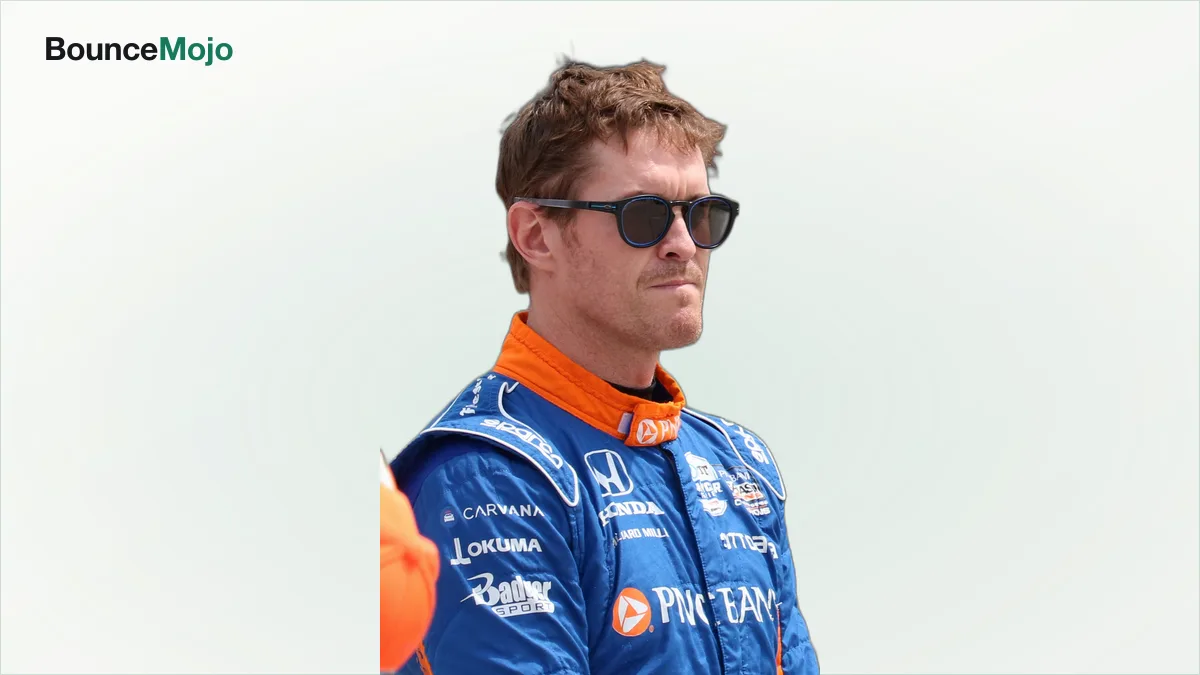
Everybody remembers the six championships and the ice-cold composure. Almost nobody remembers the quiet kid from Auckland who was racing cars before he was old enough for a driver’s license.
Here’s what most people miss: the unflappable calm that made Scott Dixon nearly impossible to beat is the exact thing that made him easy to overlook.
The Myth vs. The Reality
The myth is almost boring, and that’s the point. Scott Dixon, “the Iceman,” calm and mistake-free, quietly stacking championships while flashier drivers grabbed the headlines. Six titles. One of the highest win totals in the sport’s history. A career so steady it can look effortless.
That version is real. It’s also wildly incomplete.
Here’s the truth: the effortless-machine story erases the most important part. Dixon was a kid from New Zealand, a country a long way from the center of world motorsport, who started racing absurdly young, dominated the junior ranks at home, and then had to leave everything behind to prove himself on the other side of the planet. The calm you see now was forged by years of pressure most people never face.
Think about it. We love a story of a natural talent because it’s simple. But Dixon’s greatness isn’t effortless. It’s the product of relentless discipline, an almost inhuman refusal to make mistakes, sustained over more than two decades.
Now, that discipline came from somewhere specific: a country, a family, and a start in the sport so early it shaped everything. Which raises the question: what world produces a driver this composed?
The World That Made Scott Dixon
To understand Dixon, you have to understand the New Zealand he came up in.
He was born on July 22, 1980, and raised near Auckland. This was a country far from the traditional powerhouses of world racing, but with a passionate motorsport culture and a track record of producing drivers who punched well above their nation’s size. For a racing-mad kid, New Zealand offered a ladder, even if the top rungs were on the other side of the world.
The era mattered too. Dixon came of age when American open-wheel racing was a genuine global destination for young talent, a place where a driver from anywhere could, with enough speed and results, land a top seat. The path was clear but brutally competitive: dominate at home, then go abroad and beat the best.
Here’s the deal: Dixon started racing at an extraordinarily young age, reportedly competing in cars while still a young teenager, and his talent was obvious almost immediately. But talent from a small racing nation still has to travel a very long way to reach the top.
But wanting it and reaching it are very different things. And the distance between the two, in Dixon’s case literally half a world, is where the real story lives.
The Crucible: Early Life and the Climb
The environment that shaped him
Two things defined the young Scott Dixon: precocious talent and a willingness to leave home to use it.
He tore through New Zealand and Australasian junior categories, winning at a level and an age that marked him as a special prospect. Racing so young built a maturity and composure in him that most drivers take years longer to develop. He was learning to stay calm under pressure before most kids his age had left school.
For a driver from a small racing nation, though, staying home was never going to be enough. The top of the sport was overseas, and Dixon knew he’d have to go and prove himself against the world’s best.
You might be wondering: how does a teenager from Auckland become a six-time IndyCar champion? The answer is that Dixon treated every step as preparation and never wasted a shot. He arrived in American racing, adapted fast, and started winning almost immediately, banking the results that would define his career.
By the early 2000s, Dixon had moved to American open-wheel racing and made an instant impression. The breakthrough was coming.
The catalyst
The catalyst had a name: Chip Ganassi Racing.
Joining Ganassi’s elite team gave Dixon the equipment and the platform to match his talent, and he seized it immediately, winning the IndyCar Series championship in 2003, early in his tenure. It was the start of one of the longest and most successful driver-team partnerships in the history of motorsport.
Here’s the kicker: Dixon didn’t just find a fast car. He found a home, and he stayed. While other drivers chased new seats and bigger promises, Dixon built two-plus decades of success with a single organization, and that stability became one of his greatest advantages.
The quiet kid from Auckland was about to become an all-time great. And he’d do it his way, without the noise.
The Key Players
No career this long is a solo act, and Dixon was surrounded by people who shaped his path.
Start with Chip Ganassi, the team owner whose organization gave Dixon top-level equipment year after year for more than 25 seasons. That partnership is the backbone of Dixon’s entire career and one of the most enduring in the sport.
Then there’s Emma Davies-Dixon, his wife and a former professional middle-distance runner, whose own elite-sport background made her a true partner in the demanding life of a top racing driver. Their family life gave Dixon the grounded foundation behind the on-track composure.
And there’s Dario Franchitti, his longtime Ganassi teammate and close friend, another driver whose success at the team overlapped with Dixon’s, and whose friendship and rivalry pushed them both.
There’s also the wider New Zealand racing legacy, the drivers before him who proved a Kiwi could conquer the world’s biggest series, lighting the path Dixon followed and then extended.
Now: find the right team, the right partner and the right example, and you can turn talent into an era of dominance. Dixon did exactly that. But even the steadiest career has its hard edges.
The Turning Point
The pinnacle
The pinnacle wasn’t a single moment. It was a decades-long accumulation of them.
Dixon won IndyCar Series championships in 2003, 2008, 2013, 2015, 2018 and 2020, six titles that trail only A.J. Foyt’s seven in the entire history of the sport. And in 2008, he won the Indianapolis 500, the crown jewel of American racing, adding the sport’s most prestigious single race to a résumé already stacked with silverware.
Across his career, Dixon piled up one of the highest win totals in series history and cemented himself as the standard-bearer for consistency in his generation. The recognition eventually reached beyond racing: in the New Year 2026 Honours, Dixon was appointed a Knight Companion of the New Zealand Order of Merit for services to motorsport, becoming Sir Scott Dixon.
Here’s the truth: he became one of the greatest drivers his sport has ever seen, and he did it without ever needing to shout about it.
The price
Because a career built on consistency demands a relentless, unforgiving discipline.
Dixon’s genius, the ability to almost never make a mistake, requires a level of focus and composure sustained over hundreds of races and countless laps at the limit. That kind of consistency isn’t natural. It’s a grind, one that most drivers can’t maintain for a season, let alone two decades.
There’s also the danger inherent in the sport. IndyCar racing at 230 miles an hour carries real risk, and Dixon’s long career meant countless exposures to it, including hard crashes over the years. He kept coming back, calm as ever, but the risk was always there.
He’d spent more than 20 years being the most reliable driver in the paddock. That reliability looked easy from the outside. It was anything but.
The Unvarnished Truth
Dixon is widely admired, but a full picture means acknowledging the harder parts too.
His very consistency, the trait that made him great, also made him easy to underrate. Dixon rarely generated drama or headlines, and in a media landscape that rewards noise, his quiet excellence sometimes got less attention than flashier, less accomplished rivals. Greatness this understated can go strangely unsung.
There’s also the reality that even an all-time-great career has near-misses. Dixon contended for championships he didn’t win and endured seasons where the results didn’t match the effort, the ordinary hardship of a long career at the sport’s top level.
Here’s what’s easy to miss: Dixon’s greatest strength, his ice-cold composure, is also why he never became the household name his record deserves. The same calm that won him six titles kept him out of the spotlight. The gift was, in a sense, its own quiet cost.
None of that diminishes the achievement. It just means Dixon’s greatness rewards those who look closely.
Controversies and Criticisms
Dixon’s career has been remarkably clean, but no honest account skips the debates around it.
The main “criticism,” if it even qualifies, is that Dixon is almost too understated, a champion whose quiet professionalism denied him the fame his record earned. Some argue the sport failed to market one of its greatest-ever drivers because he simply refused to court attention.
On the track, critics occasionally point to championship seasons that slipped away, moments where Dixon and his team fell just short. In a career this long and successful, those near-misses are the closest thing to a blemish.
There’s also the perennial debate about longevity, with observers wondering how long a driver should keep competing at the top. Dixon has answered it the way he answers everything, by continuing to win and contend well into a career length few ever reach.
So what does a life like this actually teach the rest of us? More than the quiet exterior suggests.
What We Can Learn From Scott Dixon
Navigating hard times
Dixon’s real lesson isn’t about talent. It’s about composure under relentless pressure.
For more than two decades, Dixon absorbed the pressure of a top team, the risk of a dangerous sport, and the near-misses that come with any long career, and he never let any of it crack his calm. He kept his focus, kept his consistency, and kept coming back.
In other words: the six championships were the reward. The unshakable composure that produced them, sustained for over 20 years, was the real achievement.
The success blueprint
The blueprint here is about consistency and loyalty over hype.
Dixon didn’t chase flashy moves or bounce between teams. He committed to Chip Ganassi Racing, focused on eliminating mistakes, and let excellence compound over decades. Slow, steady and relentless beat loud and inconsistent every single time.
Want the fuller picture of how that translated into wealth? The full net worth breakdown shows how six championships and 25-plus seasons built a multimillion-dollar fortune the patient way. And to see how he ranks among motorsport’s biggest earners, the richest race car drivers list puts it in context.
The deeper takeaway is about discipline. Dixon proved that in a sport obsessed with speed and drama, the driver who simply refuses to make mistakes, year after year, is the one who ends up on top.
Which brings us to the final reckoning on the man.
Final Verdict
Scott Dixon is going to be underrated, and that’s the irony of his greatness.
Most people will file him under “six championships,” an all-time IndyCar great, second in titles only to A.J. Foyt. A smaller, smarter group will remember something harder to appreciate: a quiet kid from Auckland who started racing impossibly young, crossed the world to prove himself, found a home at one great team, and then out-lasted and out-consistented an entire generation of louder, flashier rivals.
Here’s the bottom line: the championships made him great. The composure made him unbeatable. By refusing to make mistakes across more than two decades, Dixon built a record that speaks far louder than he ever did, and earned a knighthood to go with it.
He is one of the most successful drivers in the history of his sport. He is also living proof that quiet, relentless consistency, not noise, is what builds a legacy that lasts. And in the long run, that is the version worth remembering.
Shop Scott Dixon on Amazon
Books, audiobooks, merch and more, handpicked for fans.
As an Amazon Associate we earn from qualifying purchases.
Frequently Asked Questions
Where did Scott Dixon grow up?+
Dixon was born on July 22, 1980, and grew up near Auckland, New Zealand, where he began racing at a remarkably young age and worked his way up through the country's junior racing scene.
How did Scott Dixon get to America?+
Dixon dominated junior categories in New Zealand and Australasia before moving to American open-wheel racing around 2000, where he quickly established himself and joined Chip Ganassi Racing.
How many IndyCar championships has Scott Dixon won?+
Dixon has won six IndyCar Series championships, in 2003, 2008, 2013, 2015, 2018 and 2020, the second-most in the sport's history behind only A.J. Foyt's seven.
Why is Scott Dixon called the Iceman?+
Dixon earned the nickname 'the Iceman' for his calm, composed and remarkably consistent driving style, rarely making mistakes and staying unflappable under pressure across a decades-long career.
Is Scott Dixon a knight?+
Yes. Dixon was appointed a Knight Companion of the New Zealand Order of Merit in the New Year 2026 Honours for services to motorsport, making him Sir Scott Dixon.
Want the money side of the story?
Read Scott Dixon's Full Net Worth Breakdown →Shop Scott Dixon on Amazon
Books, audiobooks, merch and more, handpicked for fans.
As an Amazon Associate we earn from qualifying purchases.