Larry Bird Biography: The Hick from French Lick Who Ruled the NBA
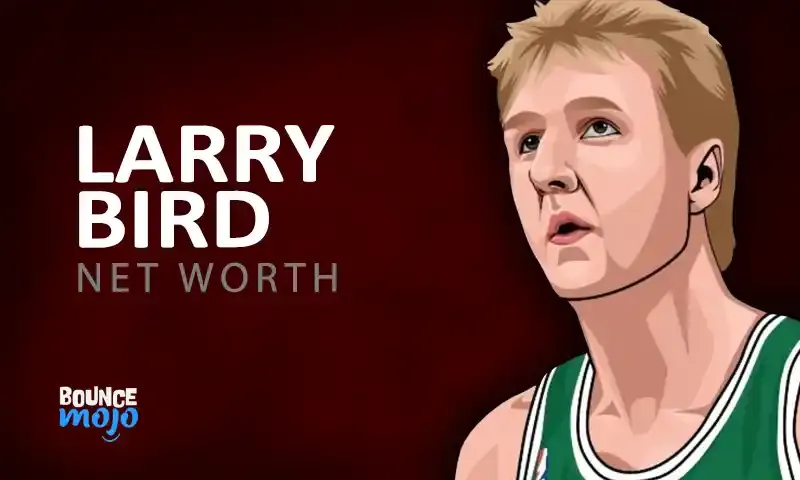
Three rings, three straight MVPs, one of the greatest to ever pick up a ball. Larry Legend, the pale kid who couldn’t run or jump and beat you anyway.
Here’s what most people miss: the toughest opponent Bird ever faced never wore a Lakers jersey. What made him great wasn’t a gift. It was a grudge.
The Myth vs. The Reality
The myth is simple. Larry Bird was a basketball genius, a pale kid with a mustache who couldn’t run or jump but somehow shot the lights out and won three rings for the Boston Celtics.
The reality is harder, and better.
Bird wasn’t a natural in the way people mean it. He was a poor kid from a town most Americans couldn’t find on a map, a boy who buried his father before he ever played a college game, a college dropout who spent a year picking up trash and mowing grass for the town of French Lick. The polish came later. The pain came first.
Here’s the truth: the “Hick from French Lick” nickname started as an insult, and Bird turned it into a brand. He leaned into being the small-town underdog because he knew it rattled opponents who assumed a slow white forward from Indiana couldn’t hurt them. They found out.
What made him great wasn’t a gift. It was a grudge, one he carried against the world from the first day he could hold a basketball.
So where did that grudge come from? To understand Bird, you have to understand the town, and the decade, that built him.
The World That Made Larry Bird
Larry Joe Bird was born in December 1956 in West Baden Springs, Indiana, and raised in nearby French Lick, a faded resort town in the state’s rural south. Once, French Lick had been famous for its grand hotels and mineral springs. By the time Bird was a boy, the money had drained out of it, and the town was living on memories.
Think about it: this was the 1960s and 70s in a corner of America that the boom had forgotten. Factory jobs were disappearing. Families that had gotten by were suddenly scraping. And in that gap, one thing still meant everything in small-town Indiana: basketball.
This was the world of “Hoosiers,” the state where a single high school gym could hold the whole town on a Friday night, where a kid with a jump shot could become a local god. Indiana didn’t just play basketball. It worshipped it. For a boy with no money and no obvious way out, the game wasn’t a hobby. It was a lifeline.
Bird grabbed it with both hands. But the game couldn’t protect him from what was happening at home, and what was coming next would test whether basketball could hold a broken family together at all.
The Crucible: Early Life and the Climb
The environment that shaped him
Money was always tight in the Bird house. His mother, Georgia, worked two jobs, waitressing and cooking, to feed Larry and his five siblings. His father, Joe, found factory work when he could, but the family lived close to the edge, sometimes past it.
Bird has never dressed this up. “Being poor,” he has said, still motivates him “to this day.” That’s not a marketing line. It’s the actual engine of his career.
Now: picture a kid who couldn’t afford the things his teammates had, who learned early that nobody was coming to rescue him. He didn’t get soft. He got relentless. He shot in the cold, shot when his hands were numb, shot until the mechanics were automatic. The jump shot that looked so effortless in the Boston Garden was built over thousands of lonely hours on rough Indiana courts.
He starred at Springs Valley High School, averaging around 31 points and 21 rebounds as a senior and leaving as the school’s all-time leading scorer. Every big program in the Midwest wanted him. And that recruiting frenzy set up the first great disaster of his adult life.
The catalyst
In 1974, Bird signed with the powerhouse: Indiana University, coached by the legendary and terrifying Bob Knight.
It lasted less than a month.
The Bloomington campus, with tens of thousands of students, swallowed him whole. He was a small-town kid who had never seen anything like it, with no money for the things other students took for granted. He felt lost and alone, so he did what nobody expected of a blue-chip recruit. He quit and went home.
Here’s the deal: back in French Lick, Bird didn’t touch a college roster for a year. He enrolled briefly at Northwood Institute, then took municipal jobs, cutting grass, painting street signs, and riding the back of a garbage truck for the town. The future MVP was, quite literally, a garbage man.
Then came the blow that reframes everything.
In February 1975, Larry’s parents having recently divorced, his father Joe Bird died by suicide. Larry was still a teenager, still finding his footing, and now he was carrying a grief that he would rarely speak about publicly for the rest of his life.
Basketball became more than an escape. It became the thing he poured all of that into. Later that year he enrolled at Indiana State University in Terre Haute, a program with no real national history. Nobody expected what happened next.
But here’s the kicker: the loneliest, most broken stretch of Bird’s life was about to produce the most-watched college basketball game ever played. And it came with a name attached that would define him forever.
The Key Players
You cannot tell Larry Bird’s story alone. The people around him, the rival, the mentors, the teammates, are stitched into everything he became.
Start with the rival, because there’s only one.
Earvin “Magic” Johnson came from Lansing, Michigan, another working-class kid, but his game was the mirror image of Bird’s: flashy where Bird was fundamental, joyful where Bird was cold. In 1979 they met in the NCAA final. In the NBA they became the two faces of the league, meeting three times in the Finals through the 1980s. They were built to be enemies, and for years they played the part. You can see the full sweep of Magic’s post-basketball empire in his own Magic Johnson net worth story, which took a very different shape than Bird’s.
Here’s the twist most people don’t know: they became genuine friends. The rivalry that sold the NBA to the world eventually turned into one of the great friendships in sports. Johnson even wrote the foreword to Bird’s autobiography.
Then there’s Red Auerbach, the cigar-chomping Celtics boss who drafted Bird a full year before he could sign him, a gamble on a junior that reshaped the franchise. And Kevin McHale and Robert Parish, the front line that turned the Celtics into a dynasty, with Bird as the brain of the whole operation. His Boston teammates weren’t sidekicks. They were co-authors of the titles.
Against that backdrop stood the villains he invented for himself, the guys he trash-talked into submission. And that habit, that ice-cold gift for getting inside a man’s head, is where the legend really lives.
The Turning Point
The pinnacle
March 26, 1979. Salt Lake City. Bird’s undefeated Indiana State Sycamores, 33-0, met Magic Johnson’s Michigan State in the NCAA championship game.
Michigan State won, 75-64. Bird, hounded all night, shot just 7-of-21 and finished with 19 points. He lost. And it didn’t matter, because roughly 40 million people watched, a television record for a basketball game that still stands. That night, college basketball stopped being a regional curiosity and became a national event. Two kids from nowhere had done it.
Bird joined the Celtics for the 1979-80 season and turned a 29-win team into a 61-win team almost overnight. What followed was one of the great runs in NBA history:
- Three championships with Boston, in 1981, 1984, and 1986.
- Three straight MVP awards, from 1984 through 1986, a feat only a handful of players have ever matched.
- Three straight NBA Three-Point Contest titles, punctuated by him strolling into the locker room in 1988 and asking the field, “Who’s coming in second?” Then winning.
He backed up every word. In a 1986 game against Seattle’s Xavier McDaniel, Bird reportedly announced exactly where he was going to shoot, hit the turnaround over him, and told McDaniel on the way back, “I didn’t mean to leave two seconds on the clock.” That was Larry Bird. The talk was never a bluff.
Want to know the best part? It came at a physical cost that was quietly destroying him the whole time.
The price
Bird’s body was breaking down. Chronic back problems, worsened by years of pounding and, famously, by an off-season injury shoveling crushed rock for his mother’s driveway, turned his final seasons into a war against pain.
By the late 1980s he was playing through a condition that sometimes left him lying flat on the floor next to the bench between shifts. He missed most of the 1988-89 season after surgery to remove bone spurs from both heels. He fought on, even won an Olympic gold medal with the 1992 Dream Team, but his back had the final say.
He retired in August 1992. He was 35, and the greatest shooting forward the game had seen could barely bend over.
Now, most legends fade into golf and nostalgia after that. Bird did something almost nobody in sports history has managed, and it says everything about who he really is.
The Unvarnished Truth
Let’s be honest about the man, because the saint version is boring and false.
Bird could be cold. The trash talk that fans adore was, on the receiving end, genuinely cruel. He hunted for weaknesses and attacked them without mercy. He was a brutal self-critic too, once telling reporters after a Finals collapse that he was “playing like a sissy,” turning the knife on himself as sharply as on any opponent.
He was also a private, guarded man who kept the deepest wounds locked away. He rarely discussed his father’s death. His first marriage ended quickly, and his relationship with his daughter from that marriage was strained for years. The single-minded drive that made him unstoppable on the court left collateral damage off it, as that kind of obsession usually does.
You might be wondering: was he really the fearless competitor of legend, or was some of it armor? The honest answer is both. The confidence was real, but so was the poor, grieving kid underneath, still trying to prove he belonged. He never fully stopped fighting that fight.
That intensity spilled over into moments that critics have never let him forget.
Controversies and Criticisms
Bird arrived just as the NBA was wrestling with race, and his story got tangled in it whether he wanted it or not. He was marketed, fairly or not, as the “great white hope” in a league that was predominantly Black, and that framing followed him everywhere. He didn’t create it, and he often seemed uncomfortable with it, but it shaped how some fans loved him and others resented him.
He added fuel with his mouth, too. His trash talk crossed lines. Opponents called him arrogant. The self-belief that fans romanticize looked, from the other bench, like a man who thought he was better than everyone, mostly because he was, but that didn’t make it easier to swallow.
Later, as an executive, Bird drew criticism for the makeup of teams he built and for a rocky stretch running the Indiana Pacers front office, including the fallout from the infamous 2004 “Malice at the Palace” brawl involving his players. Not every decision aged well.
Here’s the thing, though: even his critics rarely questioned the one thing that mattered most. The man won. And how he pulled off winning as a player, a coach, and an executive is a lesson worth stealing.
What We Can Learn From Larry Bird
Navigating hard times
Bird’s early life is a case study in refusing to be defined by your circumstances. Poverty, a college he couldn’t handle, a year on a garbage truck, a father’s suicide, any one of those could have ended the story. Instead he treated each setback as fuel.
The lesson isn’t “be tough.” It’s more specific than that. Bird channeled pain into a single, obsessive practice: get better at the one thing you can control. He couldn’t fix his family or his bank account as a teenager. He could fix his jump shot. So he did, endlessly, and let the results compound.
The success blueprint
Bird’s genius was preparation, not athleticism. He wasn’t fast. He couldn’t jump. So he out-thought and out-worked everyone, studying angles, memorizing tendencies, and practicing situations until they were reflex.
In other words, he built an edge nobody could copy, because it was made of work, not talent. That’s a blueprint anyone can use. You don’t have to be the most gifted person in the room. You have to be the most prepared.
And after the shooting stopped, he proved the same mind that dominated as a player could dominate off the floor. Bird won Coach of the Year in his very first season leading the Pacers in 1998, then later won Executive of the Year in 2012. That makes him the only person in NBA history named MVP, Coach of the Year, and Executive of the Year, a clean sweep of the league’s three top honors. You can see how those front-office years quietly built his fortune in the full Larry Bird net worth breakdown, and how he stacks up against the game’s wealthiest on our richest NBA players list.
The takeaway: the qualities that made him great, preparation, competitiveness, refusal to lose, weren’t tied to his body. So they didn’t retire when his body did.
Final Verdict
Larry Bird is proof that greatness is often just pain plus obsession, aimed with precision.
He came from nothing, lost his father young, quit the school that was supposed to save him, and still turned himself into one of the ten best basketball players who ever lived, and then, improbably, into an award-winning coach and executive. Not because the universe handed him gifts. Because he decided, over and over, that he would not be beaten.
If you want the story in his own words, read Drive: The Story of My Life, his 1989 autobiography written with Boston Globe legend Bob Ryan and introduced by, of all people, Magic Johnson. It’s honest about the poverty and the loss in a way the highlight reels never are. Anyone who has ever felt like the underdog, or wondered how far pure will can carry raw ability, should read it.
The Hick from French Lick built an empire out of a grudge and a jump shot. That’s the real Larry Legend.
Shop Larry Bird on Amazon
Books, audiobooks, merch and more, handpicked for fans.
As an Amazon Associate we earn from qualifying purchases.
Frequently Asked Questions
Where did Larry Bird grow up?+
Bird grew up poor in French Lick, Indiana, a small town in the southern part of the state, where his mother worked two jobs to raise him and his siblings.
Why did Larry Bird drop out of Indiana University?+
Bird was overwhelmed by the size of the campus at Indiana University in Bloomington and quit after about a month. He returned home, worked municipal jobs, then enrolled at Indiana State, where he became a star.
What happened to Larry Bird's father?+
Larry's parents divorced while he was in high school, and his father, Joe Bird, died by suicide in February 1975. Bird has said the hardship of his upbringing still drives him.
What is the story behind Larry Bird and Magic Johnson?+
Their rivalry began in the 1979 NCAA championship game, when Magic's Michigan State beat Bird's undefeated Indiana State. Both entered the NBA the next season and revived the Celtics-Lakers rivalry.
Did Larry Bird write a book?+
Yes. In 1989 he published his autobiography, Drive: The Story of My Life, co-written with Boston Globe reporter Bob Ryan, with a foreword by Magic Johnson.
Want the money side of the story?
Read Larry Bird's Full Net Worth Breakdown →Shop Larry Bird on Amazon
Books, audiobooks, merch and more, handpicked for fans.
As an Amazon Associate we earn from qualifying purchases.