Zlatan Ibrahimovic Biography: The Rosengard Rebel Who Won Europe
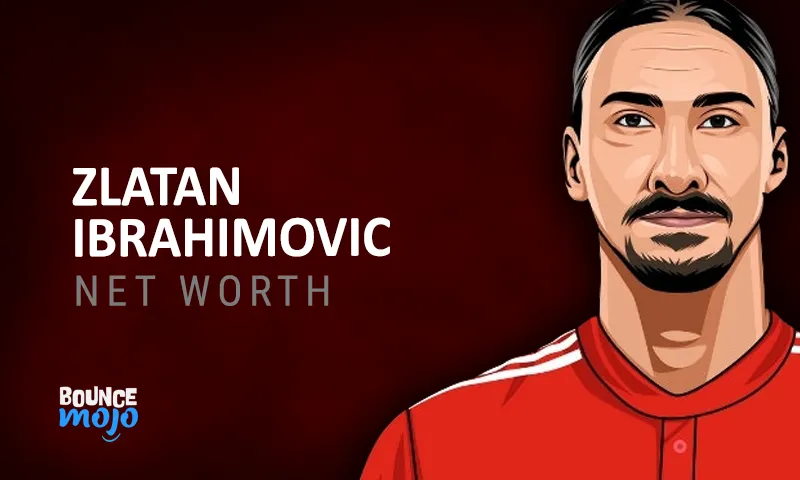
Most people know Zlatan Ibrahimovic as the arrogant genius who talks about himself in the third person. That cartoon hides a far more complicated man.
Here’s what most people miss: the swagger the world laughs at was forged in a childhood so unstable that most kids never make it out. The ego is armor.
The Myth vs. The Reality
The myth is loud. Zlatan Ibrahimovic: the walking ego, the man who calls himself a lion, a god, a superhero, all attitude and audacious goals, half genius and half pantomime villain.
The reality underneath is harder and sadder.
Here’s the deal: the bravado isn’t just showbiz. Zlatan grew up in one of Sweden’s toughest immigrant neighborhoods, in a fractured home, surrounded by crime and instability. The confidence he wears like a crown was built as a shield in a place where showing weakness got you hurt. The lion act is real, but it started as protection.
And the “just an arrogant striker” framing misses the artist. Zlatan scored some of the most technically absurd goals in football history, bicycle kicks from 30 yards, taekwondo-style volleys, and he did it into his forties. The mouth got the headlines. The feet earned the legend.
You might be wondering: how does a kid from a rough estate with a criminal record become one of Europe’s most decorated footballers? To understand that, you have to understand the world that made him.
The World That Made Zlatan Ibrahimovic
Zlatan was born in 1981 in Malmo, Sweden, to immigrant parents, a Bosnian Muslim father and a Croatian mother.
He grew up in Rosengard, a concrete housing estate that became a symbol of Sweden’s immigrant experience. This was not the postcard image of Scandinavia. It was poverty, overcrowding, a mix of cultures and languages, and a level of hardship the rest of the country preferred not to think about.
Now: Rosengard was a place where kids learned early that nobody was coming to save them. Petty crime was common. Families were often broken by migration, divorce and struggle. For a boy like Zlatan, the streets and the football cage were where identity got forged.
His home life was chaotic. His parents split, and he moved between them, his father drinking, his mother overwhelmed. Zlatan later described a childhood short on affection and long on survival instinct.
That world, an immigrant estate on the edge of a wealthy society, is the backdrop for everything he became. But before the fame, there was an angry, isolated kid who was very nearly lost.
The Crucible: Early Life and the Climb
The Environment That Shaped Him
Young Zlatan was, by his own admission, a handful. He stole bikes. He got into fights. He was hot-tempered, rebellious and constantly in trouble, the kind of kid coaches and teachers wrote off.
But on the football pitch, something else emerged. He had freakish skill for a boy his size, a combination of technique, invention and nerve that made him unpredictable. He played with the audacity of someone who had nothing to lose.
Here’s the truth: that same wildness that got him in trouble was inseparable from his genius. Try to coach the chaos out of him and you’d have killed the very thing that made him special. It took the right people to see that.
The Catalyst
Zlatan broke through at Malmo FF, his local club, where his raw talent was impossible to ignore. In 2001, Dutch giants Ajax signed him, and the wider football world got its first real look.
Ajax refined him. It was there that he learned the discipline and technical polish to match his flair, and where his career took off. From Ajax he moved to Juventus, then Inter Milan, beginning a nomadic march through Europe’s biggest clubs.
It gets better, and bigger. Over the next fifteen years he’d win league titles in country after country. But the coaches and mentors who shaped him, and the ones he clashed with, are a story in themselves.
The Key Players
No career this dramatic unfolds alone, and Zlatan’s is full of powerful figures.
Mino Raiola. The late super-agent was arguably the most important business relationship of Zlatan’s life. Raiola engineered his biggest transfers, maximized his wages, and became a friend and confidant. Zlatan credited Raiola with transforming both his career and his fortune.
Pep Guardiola. Their relationship at Barcelona became infamous. Zlatan clashed bitterly with the Catalan coach, feeling stifled by Guardiola’s system and, in his telling, disrespected. The feud, aired openly in his memoir, is one of football’s most quoted fallings-out.
Fabio Capello and other managers. At Juventus and beyond, tough, demanding coaches helped channel Zlatan’s talent into consistency, teaching him the professionalism his early years lacked.
Helena Seger. His long-term partner and the mother of his children, she became a stabilizing force, a businesswoman who helped ground the whirlwind of his life.
Think about it: every one of these relationships involved a battle between Zlatan’s ego and someone trying to shape or restrain it. That tension defined his peak.
The Turning Point
The Pinnacle
Zlatan’s career doesn’t have one mountaintop. It has a whole range.
He won league titles in the Netherlands, Italy, Spain and France, an almost unmatched collection across Europe’s top leagues. At PSG he was a superstar, breaking scoring records. At Manchester United, arriving at 35, he defied age to become a decisive force before a serious knee injury. Even in his forties at AC Milan, he was scoring and leading.
His signature moment for many was a jaw-dropping bicycle kick from distance against England in 2012, a goal so audacious it seemed to sum up his entire persona. As his own net worth story shows, this globe-trotting brilliance also made him one of the richest players of his generation.
The Price
Here’s the kicker: the same restless ego that drove him from triumph to triumph also cost him.
For all his trophies, one prize eluded him: the Champions League. He came close but never won it, a gap critics used to needle him. His constant moving, and his clashes with authority, meant he rarely settled long enough to build a dynasty at a single club.
And the injuries piled up as he refused to slow down, pushing his body past 40. The audacity had a physical bill. Which brings us to the more human, flawed side of the Zlatan story.
The Unvarnished Truth
Zlatan is not a humble man, and he’d be the first to tell you so, at length.
His ego is genuine, not just performance. He has feuded with coaches, teammates and journalists, holding grudges and settling scores in print. His pride made him difficult, and his refusal to bend cost him relationships and, at times, a smoother path.
Now: none of that makes him a villain. Much of the armor traces straight back to Rosengard, to a boy who learned that softness was dangerous and self-belief was the only thing nobody could steal. Confidence wasn’t a choice. It was how he survived.
He has also been candid about his temper and his early lawlessness, the stealing, the fighting, the years he could have gone the wrong way. He doesn’t sanitize it. His memoir is startlingly honest about how close he came to being just another lost kid from the estate.
You might be wondering: does he actually believe the god-and-lion talk? The honest answer is that it hardly matters. The persona became true by being repeated, on the pitch, in interviews, in his book, until the swagger and the man were impossible to separate. He built a myth and then spent a career living up to it.
The most honest thing you can say is this: Zlatan’s arrogance and his authenticity are the same trait. He never once pretended to be someone smaller or safer for the world’s comfort.
Controversies and Criticisms
For all the goals, Zlatan collected controversies like trophies.
The Guardiola feud. His public war of words with Pep Guardiola after their Barcelona season is legendary, a clash of egos and philosophies that Zlatan detailed savagely in his book.
The Champions League gap. Critics have long pointed to his failure to win Europe’s biggest club prize as the asterisk on an otherwise glittering career.
The Hammarby backlash. When Zlatan bought a stake in the Stockholm club Hammarby, fans of rival Malmo, his boyhood club, reacted with fury, even vandalizing a statue of him. The move split Swedish football opinion.
The blunt public persona. His quotes, dismissive of rivals, coaches and sometimes whole nations, delighted fans but regularly landed him in trouble, seen by some as disrespectful bravado.
What We Can Learn From Zlatan Ibrahimovic
Navigating Hard Times
The first lesson is about origins: where you start does not have to decide where you finish. Zlatan came from a broken home on a rough estate, with a criminal streak and every reason to fail. He used the anger and hunger as fuel instead of letting them sink him.
But here’s the truth his story makes plain: escaping that world took more than talent. It took a ferocious, almost irrational self-belief, the kind that let him walk into the biggest clubs in Europe and act like he owned them.
The Success Blueprint
If you want the replicable part, it’s this: Zlatan turned his difference into his brand. He was too big, too brash, too unconventional, and he never once tried to fit in. He made the world adjust to him instead of shrinking to fit it.
That’s transferable. The lesson isn’t “be arrogant.” It’s “stop apologizing for the thing that makes you stand out, and build your whole identity around it.” That self-assurance is exactly what let him monetize his personality and climb our richest soccer players ranking long after his best years.
Becoming Better
The deepest lesson is about reinvention. Zlatan remade himself at club after club, country after country, and again as an aging striker who scored acrobatic goals at 40. He never assumed his story was finished.
In other words, the ability to reinvent, to keep proving yourself in new arenas, is worth more than any single peak. Zlatan treated every fresh challenge as a chance to be underestimated all over again, and then to answer it.
Final Verdict
Zlatan Ibrahimovic is one of the most singular figures football has ever produced, and “singular” matters as much as “great,” though he was certainly great. He didn’t just score goals. He built a persona so vivid it became bigger than any trophy, and he backed it up with two decades of brilliance across Europe’s biggest leagues.
And here’s the twist that reframes everything: the loud, self-mythologizing showman turned that persona into a genuine business empire, brands, stakes and investments that outlast his legs. The full mechanics of that fortune live in his net worth breakdown, and they prove the ego was never just noise. It was a strategy.
If you want the real story, read his memoir I Am Zlatan Ibrahimovic (2011), written with David Lagercrantz. It’s funny, raw and startlingly honest, one of the finest sports autobiographies ever written. Read it if you love football, and read it more closely if you’ve ever been told you were too much. Zlatan turned “too much” into a life’s work.
Shop Zlatan Ibrahimovic on Amazon
Books, audiobooks, merch and more, handpicked for fans.
As an Amazon Associate we earn from qualifying purchases.
Frequently Asked Questions
Where did Zlatan Ibrahimovic grow up?+
Zlatan grew up in Rosengard, a tough, immigrant-heavy housing estate in Malmo, Sweden. His father was a Bosnian Muslim and his mother Croatian, and his childhood was marked by poverty, family breakdown and petty crime.
What clubs did Zlatan Ibrahimovic play for?+
Zlatan played for an extraordinary list of top clubs, including Ajax, Juventus, Inter Milan, Barcelona, AC Milan, PSG, Manchester United and LA Galaxy, winning league titles in several countries.
Why is Zlatan Ibrahimovic so famous for his personality?+
Zlatan became as known for his outsized confidence and quotable arrogance as for his skill, often referring to himself in the third person and delivering blunt, hilarious one-liners that made him a global personality.
Did Zlatan Ibrahimovic write a book?+
Yes. His memoir I Am Zlatan Ibrahimovic (2011), written with David Lagercrantz, became an international bestseller and is widely praised as one of the best sports autobiographies ever written.
What made Zlatan Ibrahimovic special as a player?+
Zlatan combined rare technical skill with unusual size and audacity, scoring spectacular acrobatic goals well into his forties and reinventing himself at club after club across two decades.
Want the money side of the story?
Read Zlatan Ibrahimovic's Full Net Worth Breakdown →Shop Zlatan Ibrahimovic on Amazon
Books, audiobooks, merch and more, handpicked for fans.
As an Amazon Associate we earn from qualifying purchases.