Zinedine Zidane Biography: Genius, Glory and the Final Headbutt
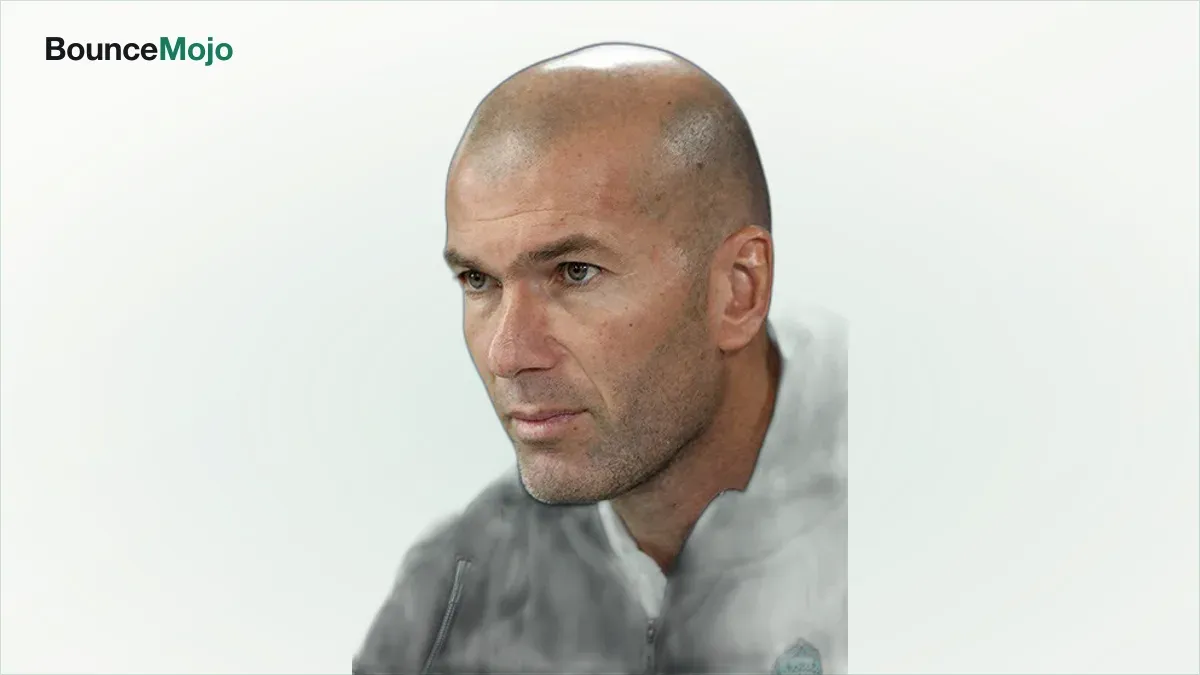
Most people know Zinedine Zidane for two moments: the headers that won a World Cup and the headbutt that ended his career. Both are real. Neither tells the whole story.
Here’s what most people miss: the same fierce pride that made him the most elegant player of his generation is the exact thing that erupted in the final ten minutes of his last-ever game.
The Myth vs. The Reality
The myth is graceful. Zinedine Zidane: the calm maestro, the ballerina in cleats, the man who made the hardest game in the world look like art. Two World Cup headers. A Ballon d’Or. Serenity in motion.
The reality carries an edge the myth leaves out.
Here’s the deal: Zidane was one of the most beautiful players who ever lived, and one of the most combustible. He was sent off 14 times in his career. The same intensity that let him control a match by force of will could snap into violence when he felt his family or his pride was attacked.
And the “quiet genius” framing misses where that intensity came from. Zidane grew up on a hard estate in Marseille, the son of Algerian immigrants, in a France that didn’t always make room for kids like him. The calm was earned, and it sat on top of a fire that never went out.
You might be wondering: how does a boy from a housing project become a national icon? To understand that, you have to understand the world that made him.
The World That Made Zinedine Zidane
Zidane was born in 1972 into a France still wrestling with the legacy of the Algerian War.
He grew up in La Castellane, a housing estate in the tough northern districts of Marseille, the youngest of five children. His parents, Smail and Malika, had emigrated from the Kabylia region of Algeria, a Berber-speaking area, before the war. His father worked as a warehouseman and night-shift security guard. The family was working-class, proud, and rooted in a community of immigrants who found little easy welcome in France.
Now: that background mattered enormously. In the France of Zidane’s youth, the children of North African immigrants often lived on the margins. Football was one of the few arenas where a kid from the projects could be judged purely on talent.
Zidane learned the game on the Place Tartane, a small concrete plaza in the middle of the estate where the neighborhood kids played every day. That cramped, unforgiving surface taught him the close control and balance that would later define him on the world’s biggest stages.
But before the world knew his name, there was a shy, hot-tempered boy who had to leave home to make it.
The Crucible: Early Life and the Climb
The Environment That Shaped Him
La Castellane was not a soft place to grow up. Money was tight, opportunities were few, and pride ran deep. Zidane has spoken about how central his family, and especially his mother, were to his sense of self.
He was talented enough to leave young. At 14 he moved to the AS Cannes academy, away from his family, to chase a professional career. That’s a hard ask for a shy teenager from a close-knit home. He worked through the ranks, made his professional debut, and moved to Bordeaux, where he became a star.
Here’s the truth: the estate never left him. The pride, the loyalty to family, the refusal to be disrespected, all of it came from La Castellane. It would fuel his greatest triumph and his most notorious downfall.
The Catalyst
Zidane’s career turned on the world stage. After a move to Juventus in Italy, he became one of the finest midfielders on the planet, winning Serie A titles and reaching Champions League finals.
Then came the summer that made him immortal. At the 1998 World Cup on home soil, France reached the final against Brazil. Zidane scored two first-half headers from corners. France won 3-0. It was the country’s first world title, and Zidane, the son of Algerian immigrants, was suddenly the face of a united, celebrating nation.
It gets better, and stranger. Three years later, Real Madrid would pay a world-record fee to sign him, and he would score one of the greatest goals in Champions League history. That’s where the climb reached its peak. But the same career would end in a way no one could have scripted.
The Key Players
No one reaches Zidane’s heights alone, and his story is shaped by the people around him.
His family. His parents and siblings are the emotional core of Zidane’s life. His fierce protectiveness of them, especially his mother and sister, is central to understanding both his character and the moment that ended his career.
Aime Jacquet. The France manager who built the 1998 World Cup-winning team trusted Zidane as his creative heart. That platform turned a gifted player into a national hero.
Florentino Perez. The Real Madrid president who signed Zidane in 2001 for a world-record fee, making him the centerpiece of the Galacticos era, and who later welcomed him back as a coach.
Carlo Ancelotti. The manager under whom Zidane served as assistant, a mentorship that helped launch his own coaching career at the Bernabeu.
Think about it: every one of these relationships connects to the same trait, a man defined by loyalty and pride. That combination lifted him to glory and, in one shocking moment, brought him down.
The Turning Point
The Pinnacle
Zidane’s peak stretched across two chapters.
As a player, the summits kept coming. The 1998 World Cup. The 2000 European Championship. A world-record transfer to Real Madrid in 2001. And in the 2002 Champions League final, a stunning left-foot volley against Bayer Leverkusen that remains one of the greatest goals ever scored. He won the Ballon d’Or and cemented his place among the game’s immortals, a story his own net worth breakdown traces in full.
Then came the second pinnacle, the one almost no other legend has matched. As Real Madrid’s coach, Zidane won three straight Champions League titles from 2016 to 2018. He proved his genius wasn’t only in his feet. It was in his mind.
The Price
Here’s the kicker: his greatest stage produced his darkest moment.
In the 2006 World Cup final, his last game before retirement, France faced Italy. Deep in extra time, with the score level, Italian defender Marco Materazzi said something to Zidane, reportedly a slur aimed at his family. Zidane turned, lowered his head, and drove it into Materazzi’s chest. He was sent off. France lost on penalties.
The career of the most elegant player of his generation ended with a red card for violence. The pinnacle and the price arrived in the same instant. Which brings us to the flaws beneath the grace.
The Unvarnished Truth
Zidane was not the serene figure the highlight reels suggest, and pretending otherwise flattens him.
He was sent off 14 times as a player. He stamped, headbutted, and lashed out when provoked. The 2006 final was the most famous eruption, but it was not the only one. Beneath the calm surface ran a current of temper that opponents learned to exploit.
Now: none of this makes him a villain. Much of that fire traced to a deep-rooted pride and a fierce loyalty to family, values forged on a Marseille estate where respect meant everything. When Zidane felt his people were insulted, restraint gave way.
But the honest read is that his temper cost him, and his teams, at the worst possible moments. He has spoken with regret about the 2006 headbutt while refusing to fully apologize for defending his family’s honor. That tension, between the artist and the fighter, is the real Zidane.
Controversies and Criticisms
Zidane’s career included flashpoints that still spark debate.
The 2006 headbutt. The defining controversy of his career. In his final match, Zidane assaulted an opponent on the biggest stage in sport and was sent off. Fans still argue over whether the provocation justified the reaction. Materazzi later admitted he had insulted Zidane’s sister.
The red-card habit. Fourteen dismissals across his career reveal a pattern, not a one-off. Zidane’s discipline was a genuine weakness that occasionally undercut his brilliance.
Coaching departures. Zidane twice walked away from Real Madrid, in 2018 and 2021, at moments that surprised the club. Critics questioned his timing and his reluctance to take on rebuilding projects, though supporters saw a man who knew exactly when to leave on top.
The France succession. For years, speculation swirled that Zidane wanted the France national team job. The uncertainty around his managerial future drew criticism for overshadowing the existing setup.
What We Can Learn From Zinedine Zidane
Navigating Hard Times
The first lesson is about origins: where you start does not cap where you finish. A shy boy from a Marseille housing estate, the son of immigrants on the margins of French society, became the most celebrated athlete his country has produced. Talent plus relentless work broke every ceiling in his way.
But here’s the truth his career makes plain: your greatest strength and your greatest flaw can be the same trait. The pride that drove Zidane to greatness is the pride that got him sent off in a World Cup final. Managing that fire, not extinguishing it, was the real challenge.
The Success Blueprint
If you want the replicable part, it’s this: master one craft so completely that it opens a second. Zidane didn’t just play beautifully. He understood the game so deeply that he became an elite coach, winning three straight Champions Leagues, a feat that put him among the wealthiest and most respected figures on our richest coaches ranking.
That’s transferable. The lesson is that deep expertise in one arena often unlocks a second career most people never see coming. Zidane turned genius on the pitch into genius on the touchline.
Becoming Better
The deepest lesson is about self-command. Zidane’s talent was never in question. His discipline was. The moments that damaged him most were the moments he lost control.
In other words, brilliance without composure is fragile. Zidane’s story shows both the soaring heights that raw ability can reach and the sudden falls that a single loss of control can bring. The goal isn’t to erase your fire. It’s to make sure it never chooses the worst possible moment to burn.
Final Verdict
Zinedine Zidane is one of the greatest footballers who ever lived, and one of the most fascinating, because the grace and the fury lived in the same man. He gave France its first World Cup, scored one of the sport’s most beautiful goals, and then became one of its most decorated coaches. He also ended his playing career with a headbutt seen around the world.
And here’s the twist that reframes everything: the pride that made him a national hero, the fierce loyalty forged on a Marseille estate, is the exact force that erupted in 2006. You cannot separate the artist from the fighter. The same fire that let him bend matches to his will also, once, bent his own legacy.
Zidane’s fortune, laid out in his net worth breakdown, rewards a rare double career as player and coach. But his story rewards something deeper: a look at how greatness and volatility can share a single soul. He remains proof that the most beautiful talent and the most human flaw can belong to the same person, and that both are worth remembering.
Shop Zinedine Zidane on Amazon
Books, audiobooks, merch and more, handpicked for fans.
As an Amazon Associate we earn from qualifying purchases.
Frequently Asked Questions
Where did Zinedine Zidane grow up?+
Zidane grew up in La Castellane, a tough housing estate in northern Marseille, France. He was the youngest of five children born to Algerian immigrant parents from the Kabylia region.
What did Zidane do in the 1998 World Cup final?+
Zidane scored two headers in the 1998 World Cup final as France beat Brazil 3-0 in Paris. It was France's first world title and made Zidane a national hero.
Why did Zidane headbutt Materazzi?+
In the 2006 World Cup final, Zidane headbutted Marco Materazzi in the chest after the Italian defender made a provoking remark. Zidane was sent off, and it was the final act of his playing career.
Was Zidane a successful coach?+
Yes. As Real Madrid manager, Zidane won three consecutive Champions League titles (2016, 2017, 2018), a feat no other coach has achieved in the modern format.
What are Zidane's roots?+
Zidane is of Algerian Kabyle (Berber) heritage. His parents emigrated from the village of Aguemoune in Kabylia before settling in Marseille.
Want the money side of the story?
Read Zinedine Zidane's Full Net Worth Breakdown →Shop Zinedine Zidane on Amazon
Books, audiobooks, merch and more, handpicked for fans.
As an Amazon Associate we earn from qualifying purchases.