Zack Greinke Biography: The Ace Who Almost Quit Baseball
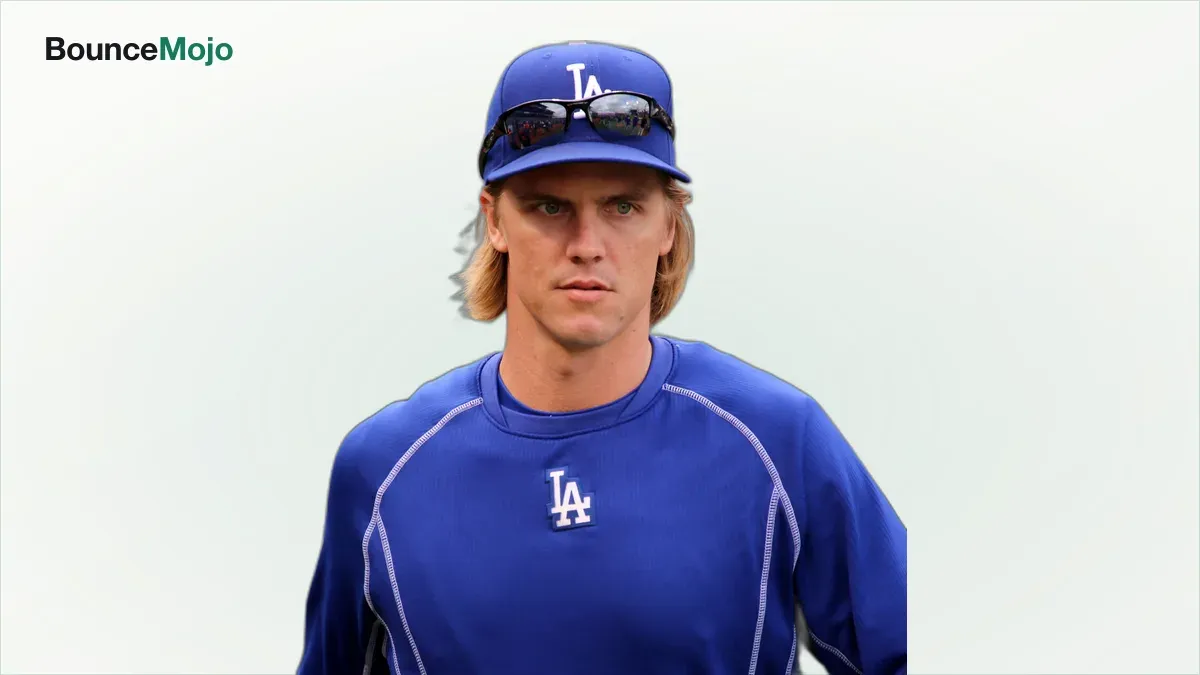
Everybody remembers the Cy Young. Almost nobody remembers that Zack Greinke nearly quit baseball to mow lawns for a living.
Here’s what most people miss: the most important thing Greinke ever did wasn’t a pitch. It was walking away, and then finding a way back.
The Myth vs. The Reality
The myth is that Zack Greinke was a baseball savant, a natural who cruised from a Florida high school to a Cy Young Award because the game came easy.
That version is half true. The other half is much harder.
Here’s the truth: Greinke was so gifted that scouts called him a can’t-miss prospect, yet the same brain that let him dismantle hitters also nearly drove him out of the sport before he turned 23. The story people tell is about a brilliant, eccentric pitcher. The real story is about a young man who stared down clinical anxiety and depression, walked away from the only career he’d ever wanted, and had to rebuild himself from the ground up.
Think about it: how many “sure things” almost vanish before anyone learns their name? Greinke was one of them.
And to understand why, you have to go back to a house in Orlando where two teachers were raising an unusually intense kid.
The World That Made Zack Greinke
Greinke arrived on October 21, 1983, in Orlando, Florida, into a household run by educators. His parents, Donald and Marsha, were teachers, and that mattered.
This wasn’t a baseball-factory upbringing. Greinke grew up in a stable, middle-class home in a state that produces elite athletes but rarely coddles them. He played Little League, sure, but he also excelled at tennis and golf, sports that reward precision, patience, and a solitary kind of focus. That’s a telling detail. Long before he was a pitcher, Greinke gravitated toward games where the pressure sits entirely on you.
Baseball in the early 2000s was still a velocity-obsessed sport, hunting for the next flamethrower. Greinke had the arm, but he also had something rarer: an almost scientific curiosity about how to get hitters out. He thought his way around a diamond while everyone else was trying to overpower it.
But here’s the kicker: the same mind that made him a chess master on the mound would soon become the biggest obstacle of his life.
Which is where the story turns dark.
The Crucible: Early Life and the Climb
The environment that shaped him
At Apopka High School, Greinke wasn’t just good. He was a phenomenon.
He started out as a shortstop, hitting over .400 with 31 home runs across his high school career. He was a two-way threat before that phrase was fashionable. But it was on the mound that he became untouchable. As a senior in 2002, he went 9-2 with a 0.55 ERA and 118 strikeouts in 63 innings, holding opposing hitters to a .107 average. He led Apopka to a 32-2 record and was named the Gatorade National Player of the Year.
The Kansas City Royals took him sixth overall in the 2002 MLB Draft.
You might be wondering: what could possibly go wrong for a talent like that? Everything, and fast.
The catalyst
Greinke reached the majors in 2004 at age 20, and the early results were promising. Then came 2005 and 2006, and the wheels came off in a way no scouting report predicted.
It wasn’t his arm. It was his mind.
Following a morning workout on February 25, 2006, Greinke did something almost unheard of for a top prospect. He walked out of spring training and drove home to Orlando. He thought seriously about going to college instead, or even quitting to mow lawns for a living. He was 22 years old, a first-round pick with a golden future, and he was ready to leave it all.
Here’s the deal: Greinke was diagnosed with social anxiety disorder and depression. He saw a psychologist, was prescribed medication, and began the slow work of getting himself back. Most organizations of that era would have quietly given up on a player like him.
The Royals didn’t. And that patience changed baseball history.
The Key Players
No comeback happens alone, and Greinke’s was stacked with people who refused to write him off.
Start with the Kansas City Royals organization itself. In an era when mental health carried enormous stigma in sports, the team gave Greinke space, time, and support rather than an ultimatum. They let him return on his own terms, first as a reliever in 2007, easing back into the game with lower stakes before rejoining the rotation.
Then there were the psychologists and doctors who treated him, and a family of educators who understood that this was a health issue, not a character flaw. Their steadiness gave him a foundation to rebuild on.
And later in his career, Greinke pitched alongside some of the best arms of his generation. In Los Angeles he shared a rotation with Clayton Kershaw, and in Houston he lined up next to Justin Verlander. Iron sharpened iron. Being around that caliber of pitcher pushed Greinke to keep refining a craft that eventually made him a very wealthy man, as the full net worth breakdown lays out.
Now: surviving the crisis was one thing. Turning it into greatness was another. And Greinke’s peak came with a cost few noticed.
The Turning Point
The pinnacle
The pinnacle came in 2009, and it was total.
Back in the Royals’ starting rotation, Greinke put together one of the finest pitching seasons of the modern era. He went 16-8 with a 2.16 ERA and 242 strikeouts, led the entire major leagues in ERA, made the All-Star team, and won the American League Cy Young Award.
Three years after nearly quitting the game, he was its best pitcher.
It gets better. Greinke wasn’t a one-year wonder. He kept it going for well over a decade, winning six consecutive Gold Gloves from 2014 to 2019, earning Silver Slugger Awards for his hitting, and stacking the elite contracts that built his fortune. He signed a $147 million deal with the Dodgers, then a $206.5 million contract with the Diamondbacks, and pitched effectively into his forties.
He finished with 225 wins and nearly 3,000 strikeouts, a résumé that puts him in serious Hall of Fame conversations.
The price
But every triumph has a bill, and Greinke’s was privacy.
The same anxiety that nearly ended his career never fully disappeared. Greinke spent his entire life managing a condition that made the spotlight genuinely painful. He kept the media at arm’s length, gave famously terse interviews, and guarded his inner world fiercely.
Here’s the truth: for a man who spent his career on the biggest stages in sports, Greinke never got to enjoy the fame the way others did. The attention that thrills most superstars was, for him, a thing to be survived. His greatness and his struggle were never separate. They were the same story.
Which brings up the parts of Greinke that made him one of the most fascinating figures in the game.
The Unvarnished Truth
Greinke was, by any measure, an unusual man in a conformist sport.
His candor about mental health was genuinely rare for his era, and it cost him nothing in performance but plenty in comfort. He was blunt, sometimes awkward, and completely uninterested in the performative side of being a professional athlete. He didn’t cultivate a brand. He barely tolerated interviews.
You might be wondering whether that made him difficult. In truth, it made him honest. Greinke never pretended to be something he wasn’t. In a world of media-trained soundbites, he gave real, sometimes uncomfortable answers, or none at all.
His obsession with the fine details of pitching bordered on the eccentric. Teammates and analysts marveled at his mind, at how he seemed to be solving the game like a math problem while everyone else played on instinct. That intensity was a gift and a burden. The brain that made him elite was the same one that had once nearly broken.
None of that spared him from criticism, though.
Controversies and Criticisms
Greinke’s career is remarkably clean of scandal, which itself is notable. But he wasn’t beyond criticism.
His guardedness with the media frustrated reporters and, at times, fans who wanted more warmth from a star. Some read his quietness as aloofness or disinterest, though those closest to him understood it was rooted in genuine social anxiety, not arrogance.
His final season in 2023 was a hard one on the field. Back with the Royals, he went 2-15 with a 5.06 ERA, a rough statistical end for a pitcher of his caliber. Critics pointed to it as proof he’d hung on too long. Supporters countered that pitching effectively into his forties at all was extraordinary, and that a losing record on a struggling team said more about the roster than the man.
And there’s the eternal Hall of Fame debate: is a career of remarkable consistency, one Cy Young, and elite all-around play enough for Cooperstown, or does he fall just short of the inner circle? Reasonable people argue both sides.
So what does a career like his actually teach the rest of us? Quite a lot.
What We Can Learn From Zack Greinke
Navigating hard times
Greinke’s life is a case study in surviving your own mind.
He didn’t beat his anxiety by pretending it wasn’t there. He named it, got treatment, and built a career around managing it rather than hiding it. The lesson isn’t “toughen up.” It’s the opposite. Greinke got help, and getting help is what let him become one of the best pitchers of his generation.
In other words: the strongest thing he ever did looked, from the outside, like weakness. Walking away to save himself is what made the comeback possible.
The success blueprint
The blueprint here is consistency over flash.
Greinke was rarely the hardest thrower or the loudest name. He simply out-thought hitters, fielded his position better than anyone, and showed up for 20 seasons. That reliability is exactly what turned him into one of the highest-paid pitchers in history. Want the fuller financial picture? The net worth breakdown shows how a craft-over-velocity approach banked more than $330 million. And to see where he ranks among the sport’s richest, the richest baseball players list puts it in context.
The deeper takeaway is about self-knowledge. Greinke understood exactly who he was, protected it, and refused to perform a personality that wasn’t his. That authenticity, uncomfortable as it sometimes was, is why he lasted.
Which brings us to the final reckoning on the man.
Final Verdict
Zack Greinke is going to be remembered as one of the smartest pitchers who ever lived, and that’s only half of it.
The fuller truth is that he’s one of the most important, too. Not because he threw the hardest or won the most, but because he showed a generation of athletes that you could struggle openly with mental health and still reach the absolute summit of your sport. He walked away, came back, and won a Cy Young. That arc is worth more than any trophy.
Here’s the bottom line: the myth is the savant with the untouchable arm. The reality is a young man who nearly quit, got help, and rebuilt himself into a legend.
He never chased the spotlight, and he never needed to. Zack Greinke let the work speak, for two decades, and it said everything.
Shop Zack Greinke on Amazon
Books, audiobooks, merch and more, handpicked for fans.
As an Amazon Associate we earn from qualifying purchases.
Frequently Asked Questions
Where did Zack Greinke grow up?+
Greinke grew up in Orlando, Florida, where his parents were teachers. He starred at Apopka High School as both a shortstop and a pitcher before the Royals drafted him sixth overall in 2002.
Did Zack Greinke really leave baseball for mental health reasons?+
Yes. In 2006 Greinke walked away from spring training and was diagnosed with social anxiety disorder and depression. He considered quitting the game entirely before returning to become an ace.
What is Zack Greinke's biggest career achievement?+
Winning the 2009 American League Cy Young Award with the Kansas City Royals, after leading the majors in ERA. He also won six Gold Gloves and made six All-Star teams.
How long did Zack Greinke play in the majors?+
Greinke pitched roughly 20 seasons in MLB, from 2004 through 2023, finishing with 225 wins and nearly 3,000 strikeouts.
Why is Zack Greinke considered a unique player?+
He was an elite pitcher who was also one of the best fielding and hitting pitchers of his era, and he became a public voice for athlete mental health after his own struggles.
Want the money side of the story?
Read Zack Greinke's Full Net Worth Breakdown →Shop Zack Greinke on Amazon
Books, audiobooks, merch and more, handpicked for fans.
As an Amazon Associate we earn from qualifying purchases.