Yuna Kim Biography: The Raw Truth Behind Korea's Queen of the Ice
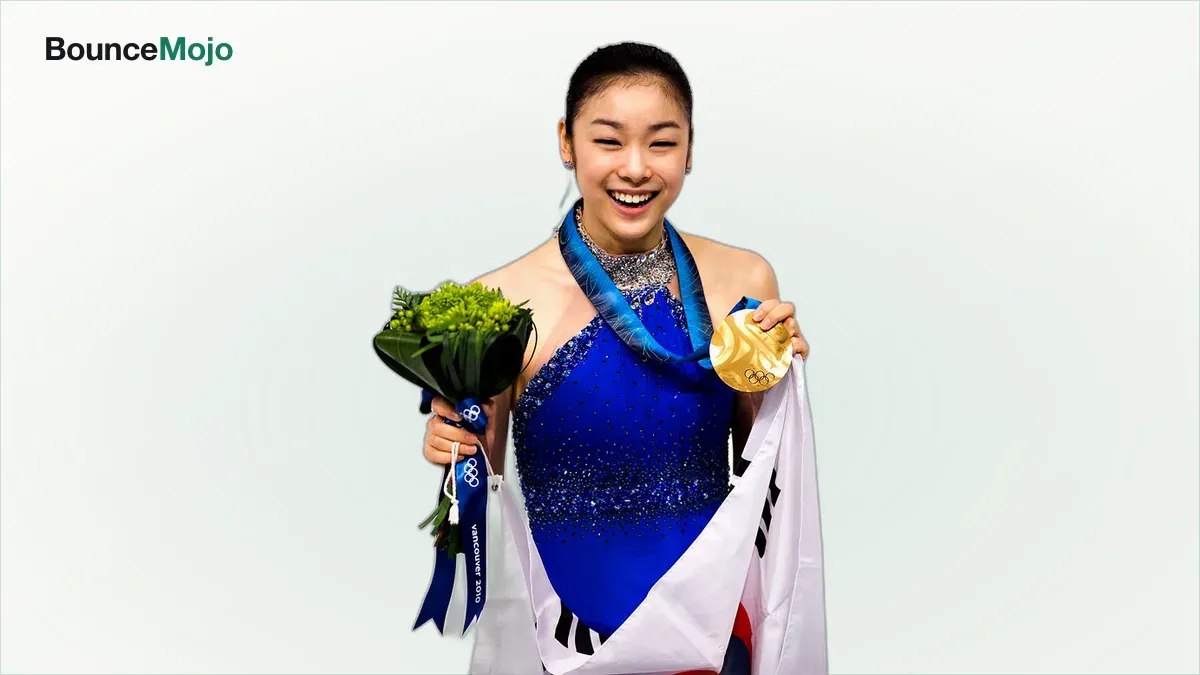
The flawless technique, the serene expression, the world-record scores that seemed to belong to a different sport entirely. That’s the Yuna Kim the world watched in awe.
Here’s what most people miss: she built an entire nation’s figure-skating dream from almost nothing, with no tradition, no facilities, and no roadmap to follow.
The Myth vs. The Reality
The myth is effortless perfection. Yuna Kim is the flawless queen of the ice, all elegance and precision, gliding to gold.
The reality was relentless pressure.
Here’s the truth: Kim built Korean figure skating essentially by herself, competed with an entire nation’s hopes on her back, and delivered under a level of expectation few athletes ever face. The serene image on the ice masked enormous psychological weight off it.
Now think about that. She had no predecessors to follow, no domestic tradition to lean on, and she still became the best in the world.
Here’s the deal: the serene perfection she showed on the ice was the visible tip of something enormous underneath. Every flawless program came after years of training abroad, of a family reorganizing its entire life around a dream with no precedent, and of a young woman shouldering expectations that would have flattened most adults. What looked like effortless grace was actually the hardest kind of composure, the ability to make immense pressure invisible. That is the real story behind the calm expression.
Instead of buckling, she set records. And to understand how, you have to start in a country where almost no one skated.
The World That Made Yuna Kim
Kim Yuna was born on September 5, 1990, in Bucheon, South Korea. She grew up in a nation with virtually no figure-skating culture, few proper rinks, and no history of international success in the sport.
This was the challenge that defined everything. In countries like Russia and the United States, young skaters had systems, coaches, and traditions to guide them. Kim had almost none of that.
Here’s the deal: her mother, Park Mee-hee, recognized her daughter’s rare gift and devoted herself entirely to it, making enormous sacrifices to find coaching, ice time, and eventually training abroad. The family bet their lives on a dream that had no precedent in Korea.
South Korea in the 2000s was a rising sporting nation hungry for global heroes. A homegrown champion in a glamorous Winter Olympic sport would be embraced like almost no other athlete, and that hunger would shape both Kim’s fame and the pressure on her.
Think about how much harder her path was than a Russian or American skater’s. In those countries, a promising child steps into a machine, decades of coaching expertise, established rinks, a pipeline of rivals to sharpen against, and a culture that understands the sport. Kim had none of that. She was, in effect, inventing elite Korean figure skating as she went, with her mother improvising the support system that other nations provide as a matter of course. Every advantage she lacked at home, she would eventually have to import or build herself.
But here’s the kicker: before she could become a queen, a young Kim had to leave her country to find the coaching that could take her to the top.
The Crucible: Early Life and the Climb
The environment that shaped her
Kim’s rise was powered by her mother’s total commitment and her own extraordinary discipline. Without a domestic system to rely on, the family sought out international coaching and moved training abroad to give her a real chance.
Kim developed into a technically brilliant, artistically mature skater, dominating junior competition and announcing herself as a generational talent.
The gift was undeniable. What she needed was the right guidance at the elite level.
The catalyst
The catalyst was her move to train under Brian Orser in Toronto.
Working with Orser, the former Canadian Olympic silver medalist, Kim refined her technique and consistency into something the sport had rarely seen. Under his guidance, she began posting record-breaking scores and beating the world’s best.
Here’s the deal: that partnership turned a phenom into a champion.
Want to know what happened when she finally reached the Olympics carrying a nation’s hopes? She delivered a performance for the ages.
The Key Players
You cannot tell the Yuna Kim story without a few names.
Her mother Park Mee-hee is the first, and the most important. She sacrificed everything to nurture a talent that had no support system in Korea, orchestrating the coaching, the moves abroad, and the relentless pursuit of excellence. The dream was hers as much as her daughter’s.
Brian Orser is the second, the coach who guided Kim to her 2010 Olympic gold and helped her produce some of the greatest performances in skating history. Their eventual split was widely discussed, but the peak they reached together was extraordinary.
Her rivals, particularly Japanese star Mao Asada, are the third thread. The Kim-Asada rivalry was one of the defining battles in women’s skating, two brilliant contemporaries pushing each other across years of competition, adding drama and stakes to every meeting.
Then there is the nation of South Korea itself, arguably the biggest player in her story. An entire country adopted her as its icon, giving her unmatched love and support, and unmatched pressure.
You might be wondering what it actually feels like to carry a nation alone. Consider the math of it. In figure-skating powers, the pressure is spread across many contenders, and a single skater’s failure is absorbed by the depth of the program. Kim had no such cushion. She was the program. When she stepped onto the ice at a major event, she carried the hopes of fifty million people who had no other champion to turn to. That is a weight most athletes never experience, and she bore it not once but across an entire career, with a composure that looked almost superhuman from the outside.
Here’s the truth: everything about Kim’s rise was building toward an Olympic moment, and a later Olympic controversy, that would define her legacy.
The Turning Point: Triumph and Its Hidden Cost
The pinnacle
Start with Vancouver in 2010, because it was as close to perfect as the sport gets.
At the 2010 Olympics, Kim skated two nearly flawless programs and won the gold medal with world-record-shattering scores, a performance widely regarded as one of the greatest in figure-skating history. She became South Korea’s first Olympic figure-skating champion and an instant national legend. Add multiple World Championships and a long list of records, and she stood atop the sport.
That triumph made her the most marketable athlete in Korea, the foundation of the endorsement fortune detailed in our Yuna Kim net worth breakdown.
The price
Now the cost, which came four years later in a storm of controversy.
At the 2014 Sochi Olympics, Kim skated superbly and appeared to many observers to have won, only to be awarded silver behind a home-nation Russian skater. The result sparked international outrage, with many in the skating world and beyond believing she had been robbed of a second gold. Kim herself accepted the outcome with remarkable grace, but the controversy stung an entire nation.
There was also the constant weight of expectation. Carrying Korea’s hopes alone, with no margin for error, exacted a psychological toll few outsiders fully appreciated.
You might be wondering whether a career this celebrated has any real complications. It does, and honesty demands we name them.
The Unvarnished Truth
Let’s not pretend the picture is uncomplicated.
The pressure Kim carried was immense and, at times, unhealthy. Being a single nation’s entire figure-skating identity meant that anything less than gold felt like failure, an unfair burden for any athlete. She has spoken about the mental strain of those years.
There was also the coaching drama. Her split from Brian Orser after her 2010 triumph became a public and somewhat messy affair, complicating the story of her greatest achievement.
And the 2014 judging controversy, while not her doing, left a bittersweet edge on a brilliant career, a reminder that even flawless skating can be undone by a sport’s subjective scoring.
Here’s the truth: Kim’s greatness was real, and so were the strains and disappointments around it. A fair biography holds both.
Even so, the gold, the records, and her dignity answered the biggest questions.
Controversies and Criticisms
For a skater this beloved, Kim’s controversies are largely not of her own making.
The biggest is the 2014 Sochi result, widely seen as a judging injustice that denied her a deserved second gold. It became one of the most debated decisions in Olympic history.
Her 2010 split with coach Brian Orser drew attention and some criticism, a rare public rift in an otherwise pristine career.
And the intense scrutiny of being a national icon meant her every move, on and off the ice, was dissected in Korea, a pressure that occasionally spilled into media controversy.
Here’s the thing though: none of it diminishes the achievement. Because an Olympic gold, a bag of world records, and her grace under fire answered the sporting questions.
What We Can Learn From Yuna Kim
Navigating hard times
When you have no path to follow, you make your own.
Kim built Korean figure skating with almost no tradition, no facilities, and no predecessors. She and her mother improvised a route to greatness that did not exist before. The lesson is that a lack of resources is a challenge, not a verdict, and pioneers create the systems that follow them.
The success blueprint
Now the part that built the fortune.
Kim turned Olympic gold and national-icon status into one of the great endorsement empires in the history of her sport. A clean image, world-record brilliance, and cultural significance made her Korea’s most bankable athlete for years. That approach is why she ranks among the richest Olympians and the wealthiest richest athletes from Olympic sport. She converted love into lasting commercial value.
Becoming better
The deepest lesson is about grace under injustice. When the 2014 result went against her, Kim did not rage or crumble. She accepted it with composure that impressed the world, showing that how you handle unfairness can define you as much as how you handle victory.
So what’s the final word on the Queen of the Ice?
Final Verdict
Yuna Kim is the rare champion who did not just win, she built the very sport she conquered.
On the ice, she was an Olympic gold medalist, a record-setter, and one of the greatest women’s skaters in history. Off it, she became a national icon who carried a country’s hopes with astonishing composure.
Here’s the bottom line: the serene queen carried a weight few could imagine. Behind the flawless performances was a girl from a country with no skating tradition, a mother who sacrificed everything, and an athlete who answered a heartbreaking injustice with pure dignity.
Anyone who remembers only the perfect scores has missed the pioneer underneath. Kim’s real story is trailblazing, resilience, and the grace to rise above even the sport’s cruelest moments.
Here’s the bottom line one more time: Kim did not inherit greatness from a system built to produce it. She and her mother built the path from nothing, in a country that had never seen a champion like her, and she walked it all the way to Olympic gold while carrying a nation on her back. The 2014 injustice could have soured the whole story. Instead, her response to it became part of the legend. That combination of pioneering courage and quiet dignity is why “Queen Yuna” will mean something in Korea for generations.
Shop Yuna Kim on Amazon
Books, audiobooks, merch and more, handpicked for fans.
As an Amazon Associate we earn from qualifying purchases.
Frequently Asked Questions
Where did Yuna Kim grow up?+
Yuna Kim was born on September 5, 1990, in Bucheon, South Korea, and grew up in a country with almost no figure-skating tradition or facilities.
How many Olympic medals did Yuna Kim win?+
Kim won two Olympic medals, a gold in 2010 and a silver in 2014, along with multiple World Championships and world records.
Why is Yuna Kim called 'Queen Yuna'?+
She earned the nickname 'Queen Yuna' as South Korea's first and greatest figure-skating champion, becoming a beloved national icon.
Who coached Yuna Kim to Olympic gold?+
Kim was coached to her 2010 Olympic gold by Brian Orser, the former Canadian Olympic silver medalist, in Toronto.
Was Yuna Kim's 2014 Olympic result controversial?+
Yes. Many observers felt Kim deserved gold rather than silver at the 2014 Sochi Olympics, sparking a major judging controversy.
Want the money side of the story?
Read Yuna Kim's Full Net Worth Breakdown →Shop Yuna Kim on Amazon
Books, audiobooks, merch and more, handpicked for fans.
As an Amazon Associate we earn from qualifying purchases.