Vitor Belfort Biography: The Phenom Who Grew Up in Public
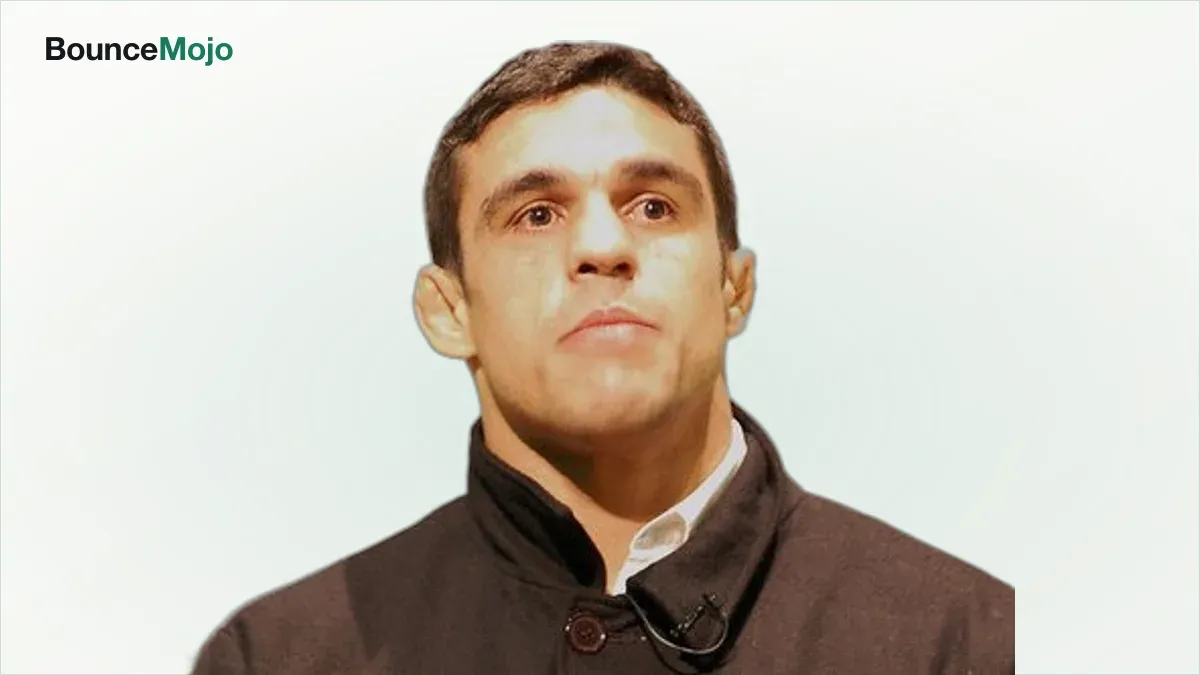
Most people know Vitor Belfort as the teenage phenom with lightning hands. That snapshot freezes him at 19 and misses everything that came after.
Here’s what most people miss: the boy who exploded onto the scene spent the next 25 years growing up in front of the whole world, through triumph, tragedy, controversy and reinvention.
The Myth vs. The Reality
The myth is frozen in time. Vitor Belfort: the 19-year-old with impossible hand speed, blitzing grown men in seconds, the eternal prodigy who never quite became the all-time great everyone predicted. Phenom. What-if. Roll credits.
The reality is a far longer, stranger story.
Here’s the deal: Belfort didn’t flame out. He fought for a quarter of a century, across the UFC, PRIDE and beyond, winning titles, suffering brutal losses, and reinventing himself again and again. The “unfulfilled prodigy” narrative ignores a career of remarkable durability and a man who kept finding new versions of himself.
And the highlight-reel framing misses the human weight he carried. Behind the knockouts was a family shattered by an unspeakable loss, a public faith journey, and controversy that complicated his legacy.
You might be wondering: how does a teenager from Rio become a global star overnight and then stay relevant for decades? To understand that, you have to understand the world he came from.
The World That Made Vitor Belfort
Belfort was born in 1977 in Rio de Janeiro, into a Brazil where martial arts ran deep in the culture.
He came up in the world of Brazilian jiu-jitsu, the grappling art that was quietly conquering global combat sports, and paired it with boxing that gave him fists most grapplers lacked. This was the dawn of modern MMA, a raw, largely unregulated era when no-holds-barred contests were spectacle as much as sport, and the rules were still being invented as fighters went.
Now: Belfort arrived at the perfect moment. MMA needed a young, telegenic star with knockout power, and he was exactly that, handsome, explosive, and Brazilian in a sport where his countrymen were already legends. He became one of the faces of the sport’s chaotic infancy.
That collision, a jiu-jitsu culture meeting the raw new world of cage fighting, is the backdrop for Belfort’s whole career. He wasn’t a product of a polished system. He was a pioneer, learning on the biggest stages as the sport itself figured out what it was.
But before the fame, there was a young man in Rio, discovering a gift that would define, and complicate, his entire life.
The Crucible: Early Life and the Climb
The Environment That Shaped Him
Belfort trained young and rose fast. His combination of jiu-jitsu pedigree and heavy, fast hands set him apart in an era when most fighters specialized in one or the other.
He turned professional and, in 1997, made a UFC debut so explosive it made him an instant sensation. Blinding hand speed, first-round finishes, and youthful confidence earned him “The Phenom” and a level of hype almost no fighter had carried before. He was a teenager competing, and winning, against seasoned men in a sport that punished any weakness.
Think about it: while most future stars were still developing, Belfort was already headlining and beating the best the young sport had to offer.
The speed was the thing everyone remembered. In an era when heavyweight and light heavyweight fighters traded slow, grinding exchanges, Belfort’s hands moved like a welterweight boxer’s. He’d close the distance and unleash a blur of punches that opponents simply couldn’t track. Veterans who had never been rattled found themselves overwhelmed in seconds. That kind of talent, arriving in a teenager, doesn’t just win fights. It creates a legend, and the legend arrived almost overnight.
The Catalyst
Here’s the truth: no fight ever hurt Belfort like what happened outside the cage.
In 2004, his sister Priscila was kidnapped in Brazil. She was never found. The tragedy devastated Belfort and his family, a wound that no championship or paycheck could ever touch. For years he fought while carrying an unimaginable grief, the disappearance of a sibling with no resolution and no closure.
It gets better only in the sense that Belfort kept going. He channeled his life into fighting, faith and family, refusing to let the darkness end his career. The loss reshaped him, deepened him, and drove him forward through a sport that offered structure when life offered none.
That’s where the deeper story truly began. But no fighter’s journey unfolds alone, and Belfort’s is crowded with rivals, mentors and family who shaped him.
The Key Players
No career as long as Belfort’s is built solo, and his story teems with the people who defined it.
His family. His parents, and especially the shadow of his lost sister Priscila, form the emotional core of everything. Family, and later faith and his own children, gave Belfort a reason to keep fighting through decades of highs and heartbreak.
Anderson Silva. His legendary countryman and rival, Silva handed Belfort one of the most famous knockouts in MMA history, a front kick that became an all-time highlight. Their rivalry linked two Brazilian icons across an era and pushed Belfort to reckon with the limits of even his gifts.
The PRIDE and UFC promoters. Across his career, promoters in Japan and America gave Belfort the stages that made him a global name and kept him earning, the mechanics of which live in his net worth breakdown.
His faith community. Later in life, Belfort’s public embrace of Christianity brought a new circle, pastors, family, and a faith-based platform that reshaped his identity beyond the cage.
Think about it: every one of these relationships pulled Belfort between two worlds, the raw violence of the cage and the search for meaning outside it.
The Turning Point
The Pinnacle
Belfort’s peaks came in waves across an unusually long career.
He won a UFC title, starred in PRIDE during MMA’s wild Japanese boom, and mounted a remarkable second act in the UFC’s middleweight division, scoring a string of spectacular head-kick and knockout finishes that reminded everyone of the young Phenom’s power. Few fighters have had so many distinct high points spread across so many years.
As his own net worth story lays out, that longevity translated into a rare thing in fighting, income across multiple eras, from the UFC to PRIDE to a late-career celebrity-boxing payday.
The Price
Here’s the kicker: the same explosiveness that made him a star also made him vulnerable.
Belfort’s aggressive, all-or-nothing style produced highlight-reel wins and highlight-reel losses. He was knocked out in devastating fashion at key moments, including that famous Silva kick. And the long career that built his fortune also meant absorbing punishment across decades, the physical toll of a man who fought far longer than most. The pinnacle brought fame and money, and with them the wear of a career that never seemed to end. Which brings us to the controversy that shadowed one of his best runs.
The Unvarnished Truth
Belfort is not a simple hero, and his story includes real complications.
He was famously streaky, capable of looking unbeatable one night and getting knocked cold the next. His confidence sometimes outran his consistency. And his long career included a run of dominant late-career finishes that came during an era of therapeutic-use exemptions in the sport, a period that drew scrutiny and debate.
Now: none of this erases his achievements or his humanity. Much of his intensity is inseparable from the grief he carried and the faith he found. A man who lost a sister to a kidnapping and fought on for decades is not easily reduced to a highlight or a controversy.
But those complications are real, and pretending otherwise flattens him. Belfort’s legacy is genuinely mixed, brilliant, pioneering, and clouded by questions that fans still debate.
The most honest thing anyone can say about Belfort is this: his greatest strength and his greatest vulnerability were the same trait. All-out aggression. It made him thrilling and it made him breakable.
Controversies and Criticisms
Belfort’s long career came with its share of debate.
The TRT era. A stretch of his most dominant later performances coincided with the sport’s testosterone-replacement-therapy exemptions, a period widely criticized and eventually banned. Belfort’s success during that window remains a point of contention.
The streakiness. Critics argued Belfort never fully realized the potential of “The Phenom,” pointing to inconsistency and crushing losses at the biggest moments.
Celebrity boxing. His late-career pivot to exhibition boxing against celebrities drew mixed reactions, praised as savvy by some, dismissed as a spectacle cash-grab by others.
Public persona. His outspoken faith and confident self-promotion won admirers and skeptics alike, part of a personality as polarizing as his fighting style.
Compared with the personal scandals that follow some stars, Belfort’s controversies center mostly on the era he fought in and debates about his legacy rather than misconduct.
What We Can Learn From Vitor Belfort
Navigating Hard Times
The first lesson is about endurance through grief: you can carry the unbearable and still move forward. Belfort lost a sister in the most horrifying way imaginable and kept building a life anyway.
But here’s the truth his story makes plain: survival isn’t about being untouched by tragedy. It’s about finding something, family, faith, purpose, that gives you a reason to keep going when the pain never fully lifts. Belfort’s refusal to disappear after his sister’s disappearance is the quiet heart of his whole story.
The Success Blueprint
If you want the replicable part, it’s this: stay adaptable and your career can outlast your prime. Belfort earned across four decades because he reinvented himself every time the sport changed, new weight classes, new promotions, new formats, even a new sport in celebrity boxing.
That’s transferable far beyond fighting. The lesson isn’t “box celebrities.” It’s “when one door closes, find another stage for the same skills.” That restlessness kept him among the sport’s well-compensated veterans on our richest MMA fighters ranking long after his championship years.
Becoming Better
The deepest lesson is about meaning. Belfort’s later life pivoted from pure competition toward faith, family and purpose, a search for something the cage could never provide.
In other words, achievement alone doesn’t fill the deepest wounds. Belfort’s journey suggests the real work is building a life that has value beyond the scoreboard, especially once the cheering fades. It’s a lesson that outlasts any highlight reel.
Final Verdict
Vitor Belfort is one of MMA’s true originals, and the word “original” matters more than “greatest.” He was there at the beginning, one of the sport’s first breakout stars, and he stayed long enough to become a bridge between MMA’s raw past and its polished present. Few fighters have lived so much of the sport’s history from the inside.
And here’s the twist that reframes everything: the eternal “phenom,” forever pictured as a 19-year-old with fast hands, actually became something the label never captured, a survivor. A man who outlasted the sport’s eras, absorbed a grief most couldn’t bear, and kept reinventing a life in public. His full earning story, and how he cashed in across four decades, lives in his net worth breakdown, and it’s the story of a prodigy who refused to stay frozen in his own myth.
If you want to understand MMA’s evolution, watch Belfort’s career from start to finish. The teenage blitz, the PRIDE spectacle, the middleweight resurgence, the celebrity-boxing coda. It’s the whole arc of the sport in one restless, complicated, unforgettable fighter.
Shop Vitor Belfort on Amazon
Books, audiobooks, merch and more, handpicked for fans.
As an Amazon Associate we earn from qualifying purchases.
Frequently Asked Questions
Where is Vitor Belfort from?+
Vitor Belfort was born in Rio de Janeiro, Brazil, where he trained in Brazilian jiu-jitsu and boxing before becoming one of MMA's earliest global stars.
Why is Vitor Belfort called 'The Phenom'?+
He earned the nickname with an explosive teenage UFC debut in 1997, blitzing opponents with extraordinary hand speed and becoming a breakout star before he turned 20.
What happened to Vitor Belfort's sister?+
His sister Priscila Belfort was kidnapped in 2004 and never recovered. The tragedy devastated the family and became a defining sorrow of Vitor's life.
Did Vitor Belfort fight in PRIDE?+
Yes. Belfort competed in Japan's PRIDE organization during MMA's early-2000s boom, part of a career that spanned the UFC, PRIDE and other major promotions across decades.
What is Vitor Belfort doing now?+
After winding down his MMA career, Belfort moved into celebrity boxing, business, faith-based work and speaking, remaining one of the sport's most recognizable veterans.
Want the money side of the story?
Read Vitor Belfort's Full Net Worth Breakdown →Shop Vitor Belfort on Amazon
Books, audiobooks, merch and more, handpicked for fans.
As an Amazon Associate we earn from qualifying purchases.