Valtteri Bottas Biography: The Quiet Finn Who Became F1's Cult Hero
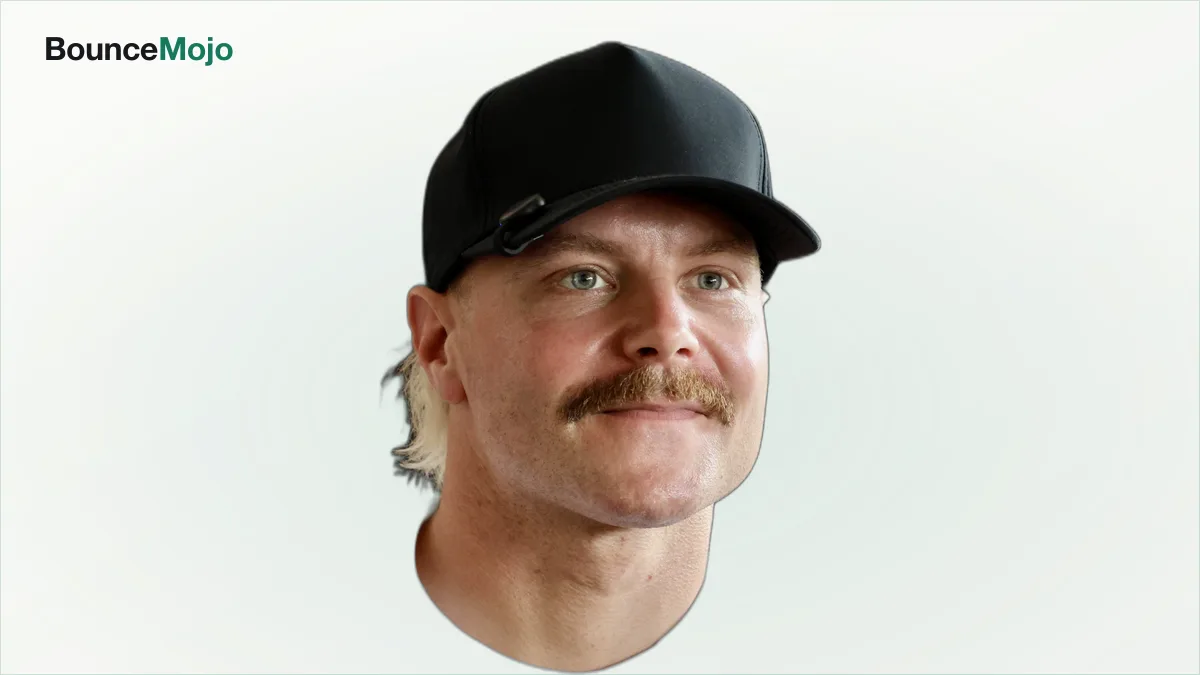
Everybody remembers the mullet, the deadpan humor and the “to whom it may concern.” Almost nobody remembers just how ruthlessly fast the quiet kid from Nastola actually was.
Here’s what most people miss: the personality that made Valtteri Bottas a cult hero came second. First came a raw, understated talent that carried a boy from a small Finnish town into the fastest car on the grid.
The Myth vs. The Reality
The myth is simple and a little unfair. Valtteri Bottas, the dependable Finnish wingman, the guy whose job was to finish behind Lewis Hamilton and not cause trouble. Steady. Quiet. Forgettable.
That version is real enough on paper. It’s also wildly incomplete.
Here’s the truth: Bottas was a genuinely elite qualifier who put a Mercedes on pole position more than a dozen times, won ten Grands Prix, and was fast enough that a seven-time world champion had to respect him every single weekend. The “number two” framing erases just how good you have to be to hold that seat at all.
Think about it. Only a tiny handful of drivers on earth are ever trusted with a title-winning car. Bottas earned that trust the hard way, from karting tracks in Finland to the junior championships, without the family fortune or manufacturer backing some rivals enjoyed. The calm exterior hid a fiercely competitive racer.
Now, that racer didn’t appear out of nowhere. He was forged by a specific country with an outsized motorsport obsession. Which raises the question: what is it about Finland that keeps producing drivers like this?
The World That Made Valtteri Bottas
To understand Bottas, you have to understand Finland’s strange, brilliant relationship with speed.
He was born on August 28, 1989, and raised in Nastola, a small town near the city of Lahti in southern Finland. This is a country of long winters, forests and lakes, and one with a motorsport culture far larger than its modest population would suggest. Finland had already given the world rally legends and Formula 1 world champions like Keke Rosberg, Mika Hakkinen and Kimi Raikkonen by the time Bottas came up.
Here’s the deal: that culture matters. In a nation where kids learn car control on icy roads and rallying is a national sport, precision behind the wheel is almost baked into the environment. The “Flying Finn” archetype, calm, fast and unflappable, was a template young Valtteri could aspire to.
Bottas started in karting as a boy, showing the kind of natural feel that separates future professionals from hobbyists early. The path from a Finnish kart track to a single-seater career was well trodden, and he set out on it with quiet determination rather than fanfare.
But talent alone doesn’t fund a racing career. And the climb from Finland to Formula 1 is where the real grind began.
The Crucible: Early Life and the Climb
The environment that shaped him
Two things defined the young Bottas: a national motorsport heritage and a personality that ran cool under pressure.
Growing up in Nastola, he was surrounded by Finland’s motorsport traditions but not by limitless money. Like most drivers, he had to prove himself at every rung to keep his career alive, winning races and championships to attract the support and sponsorship needed to move up. There was no guaranteed path, only results.
He climbed steadily through the junior formulae, and his breakthrough came in 2011 when he won the GP3 Series championship, a key feeder category. That title put him firmly on the radar of Formula 1 teams and validated years of quiet, methodical progress.
You might be wondering: how does a driver this understated survive the ego-driven world of motorsport? The answer is that his calm was a weapon. Where others cracked under the pressure and politics of the junior ladder, Bottas kept his head down, let his lap times talk, and made himself the reliable, fast option teams could trust.
By his early twenties, the Finnish kid had done enough to earn a foot in the door of Formula 1 itself.
The catalyst
The catalyst was Williams, one of the sport’s most storied teams.
Bottas joined Williams as a test and reserve driver, learning the ropes before making his race debut for the team in 2013. It was a humble start in an era when Williams was no longer a front-running force, but it gave him exactly what he needed: a chance to show he could deliver in Formula 1’s unforgiving environment.
Here’s the kicker: he made the most of a modest car. His standout moment came in the 2014 season, when a resurgent Williams gave him competitive machinery and he responded with multiple podium finishes, announcing himself as a serious talent. He was fast, consistent and mistake-free, precisely the qualities that catch the eye of the biggest teams.
That Williams form set up the phone call that would define his career.
The Key Players
No career this shaped happens alone, and Bottas was surrounded by figures who bent his path.
Start with Toto Wolff, the Mercedes team principal who had also managed Bottas earlier in his career and knew exactly what he was getting. When Mercedes needed a new driver, Wolff’s belief in the reliable Finn put him in the best seat in the sport.
Then there’s Lewis Hamilton, the teammate against whom Bottas would be measured for five seasons. Sharing a garage with one of the greatest drivers in history was both an opportunity and a burden, a constant, brutal benchmark that defined how the world saw him.
There’s also the wider Finnish motorsport lineage, the champions who came before and set the standard. Bottas grew up idolizing the Flying Finns, and joining their ranks as a Grand Prix winner placed him in genuinely elite national company.
And more recently, there’s Tiffany Cromwell, his partner and a professional cyclist, who drew him deep into the world of endurance cycling and helped shape his life and identity beyond Formula 1.
Now: surround yourself with the right people and take the right chance, and you can reach the very top. Bottas did exactly that. But the top of Formula 1 came with a specific and heavy price.
The Turning Point
The pinnacle
The pinnacle came with the phone call from Mercedes.
When reigning champion Nico Rosberg suddenly retired at the end of 2016, Mercedes needed a driver fast, reliable and ready to partner Lewis Hamilton in the dominant car of the era. Bottas got the call. Overnight, he went from the Williams midfield to the best seat on the grid.
He delivered. Bottas won his first Grand Prix in Russia in 2017 and went on to take ten career victories, all in Mercedes colors, along with a string of pole positions that showed his blistering one-lap speed. He finished runner-up in the world championship twice, playing a crucial role in Mercedes’ run of constructors’ titles.
Here’s the truth: he reached a level of the sport only a handful of drivers ever touch, and it still came with a difficult shadow.
The price
Because being Lewis Hamilton’s teammate meant living permanently in another man’s light.
For five seasons, Bottas was cast as the supporting act, the driver expected to back up a generational champion. Every strong weekend was measured against Hamilton, and every title slipped away to the same garage neighbor. It’s a uniquely tough psychological place to occupy, being genuinely elite yet perpetually second.
The pressure eventually told, and Bottas moved on from Mercedes after 2021 to Alfa Romeo, later Sauber, seeking a role where he could lead a team rather than support one. It was a step back in outright competitiveness, but a step toward a different kind of fulfillment.
He’d spent his prime chasing a champion he could rarely beat. The next chapter was about defining himself on his own terms.
The Unvarnished Truth
Bottas’ story isn’t one of unfulfilled potential, though some paint it that way, and the fuller picture is more interesting.
He never won a world championship, and against Hamilton he more often finished second in their intra-team battle. Critics point to that as a ceiling. But the honest read is that very few drivers alive could have done meaningfully better in that specific, brutal comparison.
There’s also the quiet cost of the wingman role. Being the dependable number two can wall a driver off from the glory and the biggest headlines, and Bottas spent years accepting a job that served the team more than his own legend. That takes a particular kind of professional maturity.
Here’s what’s easy to miss: his greatest strength and his greatest limitation were the same trait. The calm, unselfish reliability that made him the perfect Mercedes teammate also made it harder for him to assert the ruthless, me-first edge that champions often need. The temperament was the asset and the ceiling at once.
None of that diminishes the wins. But it does explain why his reinvention off the track became such an important second act.
Controversies and Criticisms
Bottas’ career was relatively free of scandal, which itself says something about the man, but it wasn’t without debate.
The main criticism was always competitive: that he didn’t do enough to challenge Hamilton for titles, and that Mercedes’ team orders too often cast him as a rear-gunner. It’s a fair sporting argument, though it tends to undervalue how strong his qualifying and race performances actually were.
His move to the midfield after 2021 drew its own commentary. Some saw it as accepting reduced ambitions; others, more accurately, saw a driver choosing happiness and a leadership role over the pressure cooker of a top team. His subsequent embrace of a relaxed, self-deprecating public image, the mullet, the charity calendar, the coffee jokes, was even read by a few as unserious, when in fact it made him one of the most commercially valuable and beloved figures in the paddock.
So what does a career like this actually teach the rest of us? Quite a lot, and not the obvious lessons.
What We Can Learn From Valtteri Bottas
Navigating hard times
Bottas’ real lesson is about thriving in someone else’s shadow without losing yourself.
For five seasons he did one of the hardest jobs in sport: being excellent while regularly finishing second to a teammate hailed as an all-time great. Rather than let that bitterness define him, he did the work, stayed professional, and then, when the time was right, chose a path that suited his own happiness over pure prestige.
In other words: he refused to measure his entire worth by a comparison he was never set up to win.
The success blueprint
The blueprint here is about building an identity bigger than your job title.
Bottas turned a career that could have been remembered only as “Hamilton’s teammate” into something richer. He leaned into his personality, built businesses around his real passions, and became a serious gravel cyclist with a whole second life. Want the fuller picture of how that translated into wealth? The full net worth breakdown shows how ten wins and a five-season Mercedes run became a diversified $45 million fortune. And to see how he ranks among the sport’s biggest earners, the richest race car drivers list puts it in context.
The deeper takeaway is about self-definition. Bottas proved you don’t have to be the champion to build a meaningful, wealthy, well-rounded life. The people who last are the ones who become more than their results.
Which brings us to the final reckoning on the man.
Final Verdict
Valtteri Bottas will be remembered for the wrong reasons by casual fans.
Most will file him under “Hamilton’s wingman,” the reliable Finn who finished second. A smaller, smarter group will remember something better: a genuinely fast, dependable racer who earned a place in the best team in the sport, won ten Grands Prix, and then reinvented himself into one of the most likeable and entrepreneurial personalities Formula 1 has ever had.
Here’s the bottom line: the wins made him a Grand Prix winner, but the personality and the second life made him a fan favorite. Bottas showed that a quiet, understated professional can carve out both wealth and warmth in a sport built on ego.
He is a ten-time Grand Prix winner and a two-time championship runner-up. He is also proof that finishing second on the track doesn’t mean finishing second at life. And in the long run, that second story, the human one, is the version worth remembering.
Shop Valtteri Bottas on Amazon
Books, audiobooks, merch and more, handpicked for fans.
As an Amazon Associate we earn from qualifying purchases.
Frequently Asked Questions
Where did Valtteri Bottas grow up?+
Bottas grew up in Nastola, near Lahti in southern Finland, a country with a deep motorsport culture that has produced multiple Formula 1 world champions despite its small population.
How did Valtteri Bottas get into Formula 1?+
Bottas climbed the junior ladder through karting and single-seaters, winning the 2011 GP3 championship, then served as a Williams test and reserve driver before making his F1 race debut with the team in 2013.
How many races did Valtteri Bottas win?+
Bottas won ten Formula 1 Grands Prix, all during his time at Mercedes between 2017 and 2021, and finished runner-up in the world championship twice behind teammate Lewis Hamilton.
Why is Valtteri Bottas so popular with fans?+
Beyond his results, Bottas became a cult favorite for his dry humor and personality, from viral radio messages to his famous mullet and cheeky charity calendar, making him one of the paddock's most liked figures.
What does Valtteri Bottas do outside racing?+
Bottas is a serious gravel cyclist who co-founded the FNLD GRVL event, and he runs coffee, gin and wine ventures. His partner is professional cyclist Tiffany Cromwell.
Want the money side of the story?
Read Valtteri Bottas's Full Net Worth Breakdown →Shop Valtteri Bottas on Amazon
Books, audiobooks, merch and more, handpicked for fans.
As an Amazon Associate we earn from qualifying purchases.