Usain Bolt Biography: The Raw Truth Behind the Fastest Man Alive
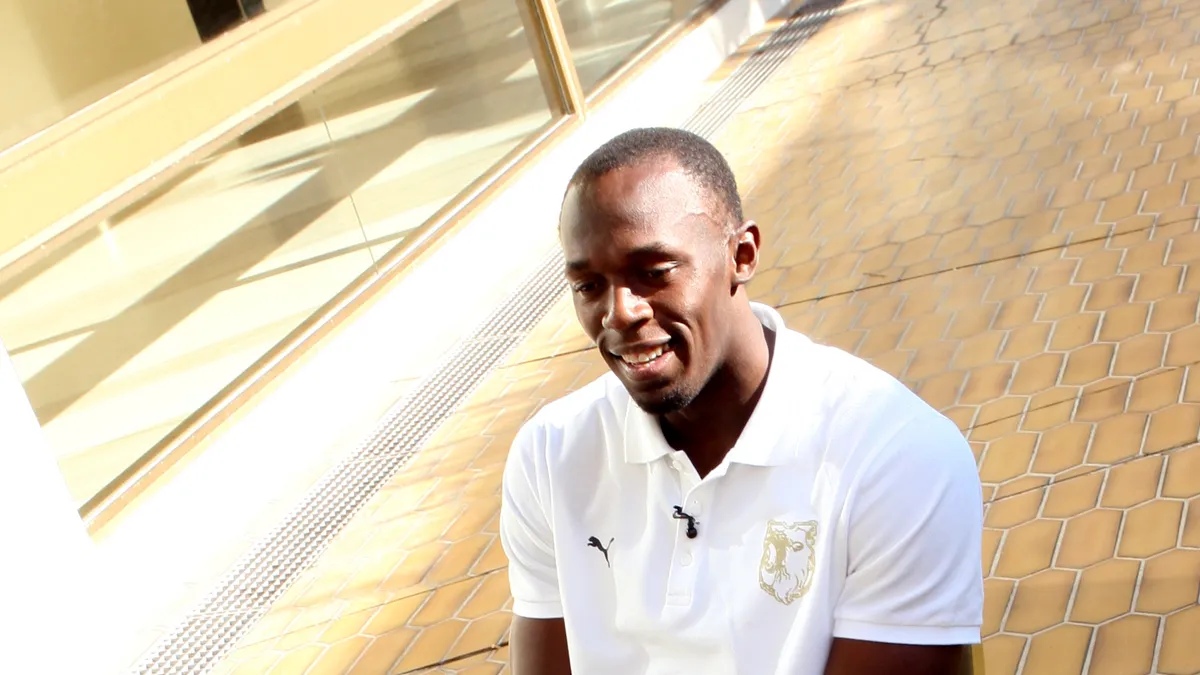
Everybody remembers the pose and the world records. Almost nobody remembers that Usain Bolt wanted to be a cricketer.
Here’s what most people miss: the fastest man in history nearly slipped past track and field entirely, and a curved spine almost stopped him before it even started.
The Myth vs. The Reality
The myth is effortless. Usain Bolt, the smiling giant who jogged the last ten meters and still broke world records, a freak of nature so gifted he could clown around and win anyway. The lightning bolt. The party in spikes.
That version is real. It’s also a trick of the eye.
Here’s the truth: the ease was manufactured. Behind the relaxed grin was a kid with scoliosis, a body that shouldn’t have been able to sprint the way it did, and years of grinding technical work with a coach who nearly gave up on his discipline. The “natural” was one of the most engineered athletes in the sport’s history.
Think about it. We love the idea of the born genius because it’s a great show. Bolt gave us the show on purpose, the antics, the theater, the joy. But the show was a mask over a serious, disciplined competitor who trained his body around a spinal condition and obsessed over his craft.
Now, that combination, playful on the surface, relentless underneath, didn’t come from nowhere. It came from a specific place: a tiny village in the Jamaican hills where a kid had nothing to do but run.
The World That Made Usain Bolt
To understand Bolt, you have to understand Jamaica, and the particular corner of it that raised him.
He was born on August 21, 1986, in Sherwood Content, a rural village in the parish of Trelawny. His parents, Wellesley and Jennifer, ran the local grocery store. This wasn’t a city with academies and facilities. It was the countryside, where a restless kid played cricket and football in the road and ran everywhere because there was space and time and not much else.
Jamaica matters enormously here. The island is, per capita, the greatest sprinting nation on earth, a place where track and field is a national obsession and the high-school championships, “Champs,” fill stadiums and make teenagers famous. A fast kid in Jamaica isn’t a curiosity. He’s a national resource.
Here’s the deal: Bolt grew up inside a culture that knew exactly how to spot and develop sprinters. The pipeline existed. The pressure existed. And the hero worship of speed existed. All he had to do was be fast enough to enter it.
He was. But he almost spent that speed on a completely different sport.
The Crucible: Early Life and the Climb
The environment that shaped him
Young Usain Bolt was a handful, and he wasn’t dreaming of the 100 meters.
He was a hyperactive, sports-mad kid whose first passion was cricket. At Waldensia Primary, he was already the fastest runner over 100 meters by age 12, but speed, to him, was just something that made him a better cricketer and footballer. Running for its own sake didn’t interest him much.
His parents worked hard in the village shop. Money was tight, life was simple, and Bolt’s energy needed an outlet, which is exactly what sport provided. Picture a tall, restless boy in a small village, always moving, always racing his friends, with no idea that the thing he did for fun was a world-class gift.
You might be wondering: how does a cricket-obsessed kid end up the greatest sprinter alive? The answer is one observant adult. At William Knibb Memorial High School, his cricket coach watched him fly down the pitch and told him, in effect, to stop wasting that speed on a bat and ball. Track was where his future lived.
That single redirection changed sporting history.
The catalyst
The catalyst, and the crisis, arrived together in his teens.
Bolt was a prodigy almost immediately. At 15, he won a world junior title on home soil, a teenage sensation carrying the weight of national expectation. But his body was working against him. Around 17, he was diagnosed with scoliosis, a curvature of the spine that he attributed to rapid growth. For a sprinter, whose whole event depends on symmetrical, explosive mechanics, that’s a serious problem.
Here’s the kicker: the very thing that could have ended his career forced the partnership that made it. Managing the scoliosis, and Bolt’s inconsistency and injuries as a young pro, required a coach who could rebuild him from the ground up.
Enter Glen Mills. Mills took over Bolt’s training and did two things at once: he corrected the technical flaws in his running and he managed his body, even consulting a renowned German specialist about his back. Under Mills, the raw, injury-prone teenager became a machine.
The kid who wanted to play cricket was about to become the fastest human who ever lived. But he’d need one night to prove it to the world.
The Key Players
No life this big is a solo act, and Bolt was shaped by a handful of essential people.
Start with Glen Mills, the coach who is inseparable from the legend. Mills didn’t just train Bolt, he saved his career, fixing his mechanics and managing the scoliosis that threatened everything. The famous ease of Bolt’s running was, in large part, Mills’ engineering.
Then there are Wellesley and Jennifer Bolt, his parents. The grocery-store household gave him discipline, humility and a home base he never abandoned, even at the height of global fame. Bolt stayed loyal to the village and the country that made him.
There’s Yohan Blake, his training partner and rival, the man who pushed him in practice and occasionally beat him, keeping the champion sharp. And later, Kasi Bennett, his longtime partner and the mother of his children, who anchored his life after the racing stopped.
And there was the country itself, Jamaica, whose sprinting culture and roaring support turned every Bolt final into a national event.
Now: with the right coach and the right support, Bolt was ready. All that was left was to do something no one had ever seen. And in Beijing, he did.
The Turning Point
The pinnacle
The pinnacle came in Beijing, in August 2008.
Bolt lined up for the 100-meter final as a talented but unproven force, better known for the 200. What happened next rewrote the sport. He ran 9.69 seconds, a world record, and he did it while easing up and celebrating before the finish line, arms spread, chest out. He hadn’t even fully committed to the line, and he’d still gone faster than any human in history.
Days later he took the 200 in world-record time too. Then, at the 2009 World Championships in Berlin, he pushed the marks to their now-legendary numbers: 9.58 seconds in the 100 and 19.19 in the 200, records that still stand and may stand for a generation.
Across three Olympic Games, Beijing, London and Rio, Bolt won eight gold medals and became the first sprinter to defend both the 100 and 200 titles. He didn’t just win. He turned athletics into must-watch global entertainment.
Here’s the truth: he made the hardest thing in sport look like a game, and that illusion was the whole product.
The price
But the mask had a cost.
For years, Bolt carried the crushing weight of expectation. Every start line came with the assumption that he would not only win but break records and entertain, all at once. The showman act was partly genuine joy, and partly a release valve for pressure that would have flattened most athletes. Being the fastest man alive meant never being allowed to just win quietly.
There was also the physical toll. He raced with scoliosis and recurring injuries throughout his career, managing a body that was never as effortless as it looked. And his final race, in London in 2017, ended not in glory but in a cramp and a pulled hamstring in a relay, a limping, human finish to a superhuman career.
The joy was real. So was the pressure underneath it, and the pain the grin kept hiding.
The Unvarnished Truth
Bolt is a beloved figure, but his story isn’t a flawless fairy tale, and it does him no favors to pretend it is.
His career had its wobbles. As a young pro before Glen Mills, he was inconsistent, injury-prone and, by some accounts, not fully committed to the discipline sprinting demands. The party-boy reputation was earned, and it took a coach to channel it. Greatness didn’t come automatically. It came after he got serious.
There’s also the reality of his body. The scoliosis and hamstring troubles meant he was often managing pain and mechanics behind the scenes, which complicates the “effortless natural” image. The ease was a performance layered over hard, careful work.
Here’s what’s easy to miss: his greatest asset, the showmanship, was also a risk. Celebrating before the finish line, clowning in finals, it thrilled fans but drew criticism from purists who felt he disrespected the event. Bolt bet that the entertainment was worth more than the decorum. He was right, but it was a bet.
None of that dims the records. It just makes the man behind them more real.
Controversies and Criticisms
Bolt’s career is remarkably clean by the standards of elite track, which itself is notable in a sport haunted by doping scandals.
The most painful controversy wasn’t his own. In 2017, Bolt was stripped of one of his Olympic relay golds from Beijing after a teammate’s failed drug test, no fault of his, but a loss all the same. It was a bitter reminder that in track and field, an athlete’s legacy can be tangled up in the choices of others.
Some critics also questioned whether his flamboyance crossed into showboating. Slowing down to celebrate mid-race, mugging for cameras in finals, it delighted most fans and irritated a traditionalist minority who felt it cheapened the competition. Bolt never apologized for it. The joy was the point.
And after retirement, his business life hit turbulence, most notably reported financial troubles connected to a Jamaican investment firm where he had money. It was a hard lesson in guarding a fortune as carefully as a lead.
So what does a life like this actually teach the rest of us? More than the highlight reel suggests.
What We Can Learn From Usain Bolt
Navigating hard times
Bolt’s real lesson is about turning obstacles into method.
A curved spine could have ended his sprinting. Instead, managing it forced the discipline and technical partnership that made him unbeatable. The scoliosis didn’t stop him. It shaped how he had to train, and that structure became his edge.
In other words: the problem you can’t remove sometimes becomes the system that saves you.
The success blueprint
The blueprint here is about playing to your rarest strength.
Bolt wasn’t just fast. Plenty of people are fast. What made him the richest and most famous athlete in his sport was personality, the ability to make people feel something while he ran. He leaned into that gift completely, and it made him worth far more than his times alone.
Want the fuller picture of how that translated into wealth? The full net worth breakdown shows how eight golds became a $90 million brand built on Puma, Gatorade and pure charisma. And to see where he ranks among the biggest fortunes in sport, the richest Olympians list puts it in context.
The deeper takeaway is about identity. Bolt understood that the world doesn’t just reward the best, it rewards the most memorable. He became both, and he protected that identity fiercely. If you have a gift, don’t just use it. Make it unforgettable.
Which brings us to the final reckoning on the man.
Final Verdict
Usain Bolt is going to be remembered as effortless, and that’s the one thing he never actually was.
Most people will file him under “natural,” the smiling giant who ran faster than physics should allow and made it look like a warm-up. A smaller, smarter group will remember the truth: a cricket-loving village kid with a curved spine who got redirected by a sharp-eyed coach, rebuilt by a patient one, and who worked ferociously to make the impossible look like fun.
Here’s the bottom line: the records made him a legend, but the joy made him beloved. He didn’t just win the 100 and 200. He made the whole world want to watch, and turned himself into the most bankable name track has ever produced.
He is the fastest man in history. He is also proof that being unforgettable is worth as much as being the best. And in the long run, that combination, the speed and the show, is the version worth remembering.
Shop Usain Bolt on Amazon
Books, audiobooks, merch and more, handpicked for fans.
As an Amazon Associate we earn from qualifying purchases.
Frequently Asked Questions
Where did Usain Bolt grow up?+
Bolt grew up in Sherwood Content, a rural village in Trelawny, Jamaica, where his parents Wellesley and Jennifer ran the local grocery store. He spent his childhood playing cricket and football in the street.
What sport did Usain Bolt play first?+
Bolt's first love was cricket. It was his cricket coach at William Knibb Memorial High School who noticed his blazing speed on the pitch and pushed him toward track and field.
Did Usain Bolt have a health condition?+
Yes. Bolt was diagnosed with scoliosis, a curvature of the spine, which he has said was caused by rapid growth. Managing it was central to his training under coach Glen Mills.
Who was Usain Bolt's coach?+
Bolt's career took off under Glen Mills, the Jamaican coach who refined his technique, managed his scoliosis, and guided him to the 100 and 200 meter world records.
How many Olympic gold medals did Usain Bolt win?+
Bolt won eight Olympic gold medals across the Beijing, London and Rio Games and holds the world records in the 100m (9.58s) and 200m (19.19s), marks that still stand.
Want the money side of the story?
Read Usain Bolt's Full Net Worth Breakdown →Shop Usain Bolt on Amazon
Books, audiobooks, merch and more, handpicked for fans.
As an Amazon Associate we earn from qualifying purchases.