Triple H Biography: The Cerebral Assassin Who Inherited an Empire
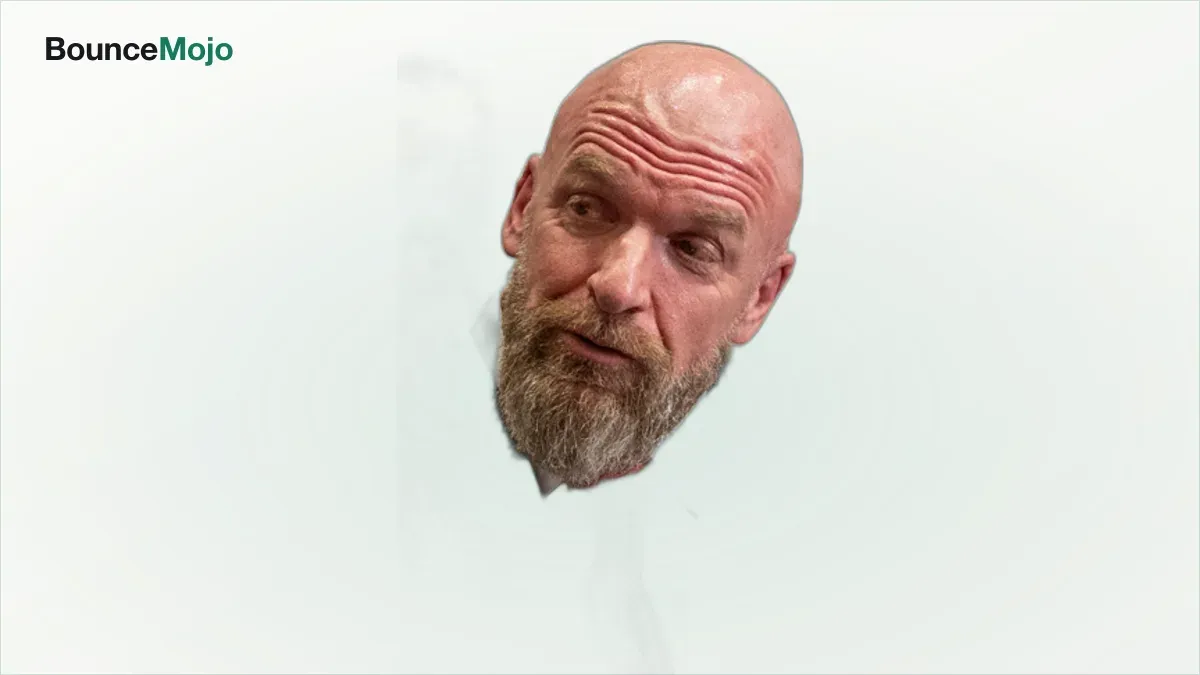
Most people know Triple H as “the Game,” the sledgehammer-swinging villain, or as the powerful executive who now runs WWE’s creative direction. Both pictures skip the skinny New Hampshire kid who lifted weights just to look like his heroes.
Here’s what most people miss: the man who married into wrestling royalty and now shapes the whole industry started with nothing but a gym membership and a fixation on becoming a wrestler.
The Myth vs. The Reality
The myth is that Triple H schemed and married his way to the top, “the boss’s son-in-law” who never really earned it.
The reality is more complicated, and more impressive.
Here’s the deal: long before Stephanie McMahon, Levesque was a genuinely great worker who earned his spot the hard way, through years on the independent circuit and a grueling grind up the WWE ladder. The “politician” reputation only stuck because, by then, he was good enough and connected enough to have real influence.
And the “handed an empire” narrative? It ignores that Levesque built NXT, WWE’s developmental brand, into a critical and commercial success on its own merits, transforming the company’s future talent pipeline. He didn’t just inherit power. He proved he could create value with it.
You might be wondering: how does a bodybuilder from Nashua end up married to the owner’s daughter and running the whole show? To understand that, you have to go back to a New Hampshire gym.
The World That Made Triple H
Levesque was born in 1969 in Nashua, New Hampshire, an ordinary New England town far from the bright lights of the wrestling business.
He was an athletic kid who played baseball and basketball, but the thing that grabbed him was professional wrestling. He has said his first real memory of the business was watching Chief Jay Strongbow, and it lit a fire. At 14, he started bodybuilding, not for sport but with a single goal: to build the kind of body he saw on the wrestlers he idolized.
Now: this was the 1980s, the era of larger-than-life physiques and cartoonish heroes. To make it in wrestling then, you needed to look impossible. Levesque understood that instinctively and treated the gym like a mission, winning the Mr. Teenage New Hampshire title at 19.
The wrestling world he wanted into was booming, but it was also closed and clannish, run by promoters and gatekeepers. A skinny-turned-jacked kid from New Hampshire with no connections had a steep climb ahead.
That collision, a boy obsessed with an industry that had no reason to let him in, is the backdrop for everything. And the first door only opened because of one legendary old-timer.
The Crucible: Early Life and the Climb
The Environment That Shaped Him
The gym was Levesque’s launchpad, in more ways than one.
Working as a manager at a Gold’s Gym in Nashua, he met Ted Arcidi, a world-champion powerlifter with a brief wrestling career. Through that connection, Levesque got an introduction to Walter “Killer” Kowalski, a genuine wrestling legend who ran a training school in Malden, Massachusetts.
That introduction changed his life. Levesque began training under Kowalski in the early 1990s, learning the craft from a master. The physique was already there. Now he had the technique and, crucially, a mentor with credibility.
Here’s the truth: even with all that, the road was slow. He debuted in 1992 as Terra Ryzing, worked the independent scene, and got his first taste of national exposure in World Championship Wrestling as “Jean-Paul Levesque,” a snobbish French-Canadian character. It was steady, unglamorous grinding, exactly the kind that builds a real professional.
The bigger break was still ahead.
The Catalyst
In 1995, Levesque signed with the WWF and became Hunter Hearst Helmsley, a blue-blooded aristocrat gimmick that was later shortened to Triple H.
The character was fine. The connections were better. Levesque became part of “The Kliq,” a backstage group of influential wrestlers including Shawn Michaels and Kevin Nash that wielded enormous power over WWE’s direction in the mid-’90s. That association got him noticed, and briefly punished, but it put him at the center of the business.
It gets better. When the Attitude Era exploded, Levesque and Michaels co-founded D-Generation X, a rebellious, rule-breaking faction that captured the anarchic spirit of the late ’90s. DX made Triple H a genuine main-event star and one of the most recognizable acts in the company.
That fame set the stage for the relationship that would change everything.
The Key Players
No one climbs alone, and Levesque’s rise is defined by a few crucial figures.
Killer Kowalski. His trainer and first real mentor in the business, the man who gave a New Hampshire bodybuilder the craft and credibility to go pro. The debt is foundational.
Shawn Michaels. His best friend and DX co-founder, and one of the great in-ring performers of all time. Their partnership shaped Levesque’s peak years and remains one of wrestling’s tightest bonds. Together they later helped design WWE’s developmental future.
Vince McMahon. His future father-in-law and boss, the owner who recognized Levesque’s value both as a performer and, eventually, as a leader. McMahon’s trust opened the door to the executive suite.
Stephanie McMahon. His wife and business partner, and the person whose family aligned Levesque’s career with ownership of the entire company. Their marriage in 2003 turned a great wrestler into a member of wrestling’s ruling family.
Think about it: mentor, best friend, boss, wife. Each relationship moved Levesque one rung higher, from talent, to star, to executive, to co-architect of the business itself.
The Turning Point
The Pinnacle
Triple H’s in-ring peak was dominant. He became a 14-time world champion, a main-event fixture for over two decades, and one of the defining heels of his generation, the calculating “Cerebral Assassin” and “the Game.”
But his true pinnacle came off the mat. After marrying Stephanie McMahon, Levesque moved into management and founded NXT, WWE’s developmental brand. Under him, NXT grew from a minor project into a critically acclaimed product that reshaped how the company found and built stars.
That success made him indispensable. He rose to Chief Content Officer, overseeing WWE’s entire creative direction. As his own net worth breakdown explains, this executive role, and the equity that came with it, is where his real fortune sits, and it’s what keeps him near the top of our richest wrestlers list.
The Price
Here’s the kicker: the power that lifted him also painted a target on his back.
For years, fans and even peers accused Levesque of using his political influence and family ties to advance his own career at the expense of others, the so-called “burying” of rivals. Whether fair or not, the perception followed him: that his success was as much about who he married as what he did.
There was a physical price too. In 2021, Levesque suffered a serious cardiac event that ended his in-ring career for good. The performer who had built his identity on his body had to reckon with its limits and pivot fully to the boardroom. The pinnacle came with both a reputation to manage and a heart to protect. Which brings us to the flaws.
The Unvarnished Truth
Levesque is not the pure meritocrat his defenders claim, nor the pure schemer his critics insist.
He undeniably benefited from proximity to power, first through The Kliq, then through his marriage into the McMahon family. Storylines during his peak often positioned him to win the biggest matches, and many fans felt promising rivals were sacrificed to protect his standing. The “politics” reputation isn’t baseless.
Now: none of that erases his genuine ability. Much of the resentment is the flip side of real talent and real vision. When you’re good enough to have influence and smart enough to use it, you make enemies. Levesque understood the business better than almost anyone, which made his power both earned and, to some, unfair.
But those instincts have a cost. The same strategic mind that made him a great booker and executive made him, at times, look ruthless and self-serving as a performer. The line between “protecting your value” and “burying the competition” is thin, and Levesque walked it constantly.
The most honest thing you can say is this: his greatest strength and his biggest liability were the same trait. Political intelligence. It made him a leader and made him a lightning rod.
Controversies and Criticisms
Levesque’s career carried the friction that comes with power.
The “burying” accusations. Throughout his main-event run, critics argued Triple H used backstage influence to win key feuds and hold down emerging talent. It became one of the most enduring debates among wrestling fans.
The Kliq’s power. In the mid-’90s, Levesque’s membership in the influential backstage group drew criticism for how much sway a handful of wrestlers held over creative decisions, and he was briefly punished for his role in an infamous unscripted farewell.
The son-in-law narrative. His marriage to Stephanie McMahon fueled a persistent perception that his rise was about family, not merit, a shadow that trailed even his genuine achievements with NXT.
Corporate loyalty questions. As an executive, Levesque has faced scrutiny over his role in a company that has weathered serious controversies at the ownership level, raising questions about how much he knew and how he navigated them.
What We Can Learn From Triple H
Navigating Hard Times
The first lesson is about reinvention under pressure. A career-ending heart event would have finished most performers’ relevance. Levesque used it to complete a transition he’d already started, from body to brain, from ring to office. His story says the end of one chapter can be the start of a bigger one, if you’ve built value beyond the obvious.
But here’s the truth his rise makes plain: the grind came first. Before any of the politics or the marriage, there were years on the independent circuit and under Kowalski’s tutelage. The foundation was real work, and everything else was built on top of it.
The Success Blueprint
If you want the replicable part, it’s this: understand where the real value lives and move toward it. Levesque saw that in wrestling, performers get famous but owners and executives get rich, and he steered his entire career toward ownership and leadership. That insight is the same one that separates the wealthiest names on our richest athletes list from the merely famous ones.
The other lesson is building, not just performing. Founding NXT proved Levesque could create lasting value, which made him indispensable, and the net worth story shows the financial reward.
Becoming Better
The deepest lesson is about legacy over ego. As an executive, Levesque has spent years developing the next generation of stars, a very different pursuit than protecting his own spot. The man once accused of burying rivals became the man responsible for elevating dozens of new performers.
In other words, real power is measured by what you build, not just what you win. And that shift, from competitor to cultivator, leads to the final take on one of wrestling’s most consequential figures.
Final Verdict
Triple H is one of the most important figures in modern wrestling, and “important” outweighs even “great,” though he was a genuine main-event legend. Few people have shaped the business from as many angles: as a star performer, as the architect of its talent pipeline, and now as the executive steering its creative direction.
And here’s the twist that reframes everything: the skinny kid from Nashua who lifted weights just to look like a wrestler ended up not just becoming one, but marrying into the family that owned the sport and rising to run its creative empire. The full financial picture lives in his net worth breakdown, and it shows why the smartest move in wrestling isn’t winning the title, it’s owning a piece of the company that hands it out.
If you want to understand where wrestling is heading, watch what Levesque builds next. The Cerebral Assassin traded the sledgehammer for a boardroom, and he’s still calling the shots.
Shop Triple H on Amazon
Books, audiobooks, merch and more, handpicked for fans.
As an Amazon Associate we earn from qualifying purchases.
Frequently Asked Questions
Where did Triple H grow up?+
Paul Levesque, known as Triple H, grew up in Nashua, New Hampshire. He took up bodybuilding at 14 to look like the wrestlers he admired and won the 1988 Mr. Teenage New Hampshire title.
Who trained Triple H to wrestle?+
Triple H was trained by the legendary wrestler-turned-instructor Walter 'Killer' Kowalski at his school in Malden, Massachusetts, beginning in the early 1990s.
What is D-Generation X?+
D-Generation X was one of the most influential factions of WWE's Attitude Era. Triple H co-founded DX with his best friend Shawn Michaels, and it became a defining rebellious act of late-'90s wrestling.
Is Triple H married to a McMahon?+
Yes. Triple H married Stephanie McMahon, daughter of WWE owner Vince McMahon, in 2003. The marriage aligned him with the family that owned the company and helped pave his path into its leadership.
What does Triple H do now?+
After a cardiac event ended his in-ring career, Triple H became WWE's Chief Content Officer, overseeing creative direction after founding and building the successful NXT developmental brand.
Want the money side of the story?
Read Triple H's Full Net Worth Breakdown →Shop Triple H on Amazon
Books, audiobooks, merch and more, handpicked for fans.
As an Amazon Associate we earn from qualifying purchases.