Travis Pastrana Biography: The Kid Who Turned Fear Into a Franchise
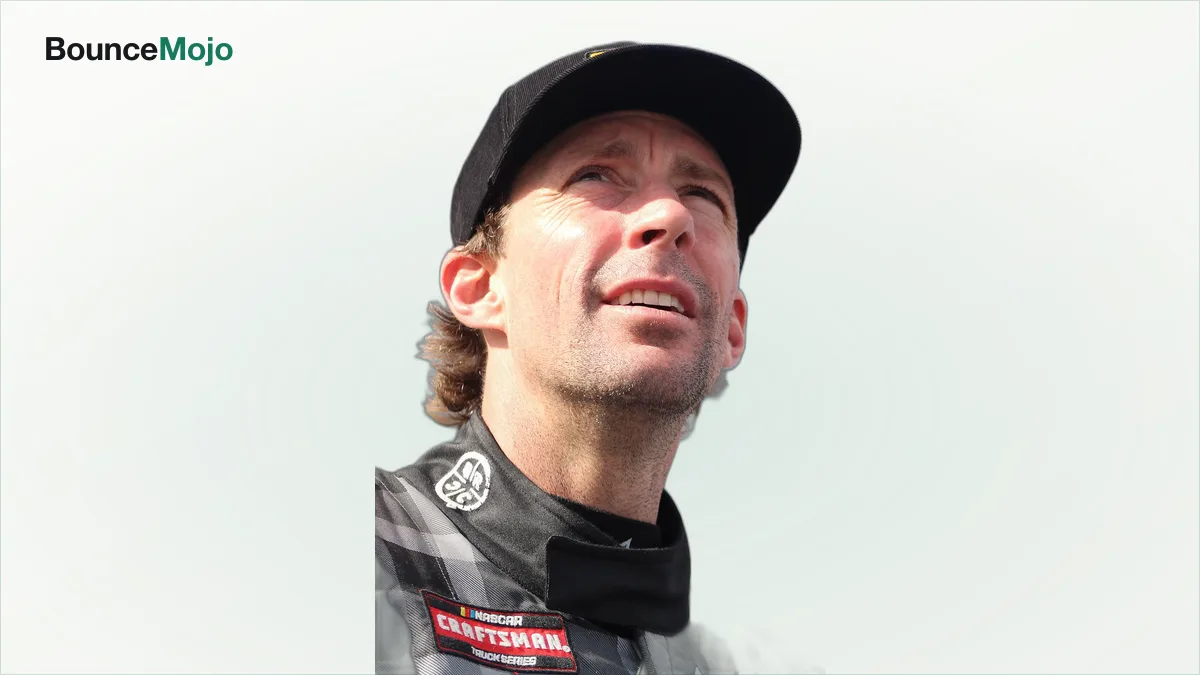
Everybody remembers the jumps. Almost nobody remembers that the boy behind them was breaking bones before he was old enough to drive.
Here’s what most people miss: the thing that made Travis Pastrana terrifying to watch is the exact thing that made him impossible to copy.
The Myth vs. The Reality
The myth is a cartoon. Travis Pastrana, the invincible daredevil, launching bikes and cars into the sky like gravity doesn’t apply to him, walking away from crashes that would flatten anyone else.
That version is real. It’s also wildly incomplete.
Here’s the truth: the “fearless superhuman” story erases the cost. Pastrana has broken dozens of bones, blown out knees, and been knocked unconscious more times than most athletes crash in a lifetime. The invincibility was actually a very human body pushed to the edge over and over by a mind that simply refused to quit.
Think about it. We love a story of a natural daredevil because it lets us off the hook. If Pastrana was just born without fear, then his feats are freakish and unrepeatable. But that’s not the whole story. He was a relentless, calculating rider who studied risk obsessively and paid for every stunt in the training room.
Now, that drive didn’t appear out of nowhere. It was forged by a specific family, a specific place, and a specific moment when action sports were about to explode. Which raises the question: what world produces a kid this fearless and this focused at the same time?
The World That Made Travis Pastrana
To understand Pastrana, you have to understand the Maryland he grew up in, and the era when action sports went mainstream.
He was born on October 8, 1983, and raised near Annapolis, Maryland. This wasn’t a motocross heartland like California. It was the East Coast, and his family made their own scene. His parents, Robert and Debby, backed his obsession early, and the family property eventually became “Pastranaland,” a compound stocked with ramps, dirt jumps and foam pits.
But the era mattered too. Pastrana came of age just as the X Games and extreme sports were exploding into mainstream culture in the late 1990s. A talented, camera-friendly kid with no fear could suddenly become a star, not through a traditional league, but through spectacle and television.
Here’s the deal: Pastrana started riding motorcycles as a small child and was competing seriously before most kids finish middle school. By his teens he was already a national amateur motocross force, riding under the number 199 that would become his signature.
But the path to fame ran straight through pain. And that pain is where the real story starts.
The Crucible: Early Life and the Climb
The environment that shaped him
Two things defined young Travis Pastrana: talent and injury.
The talent was undeniable. He was a motocross prodigy, winning amateur titles and turning pro as a teenager. But the injuries came just as fast. Pastrana crashed hard and often, and by adulthood his medical history read like a war record: broken bones, torn knees, concussions, spinal injuries. For most athletes, that’s a career ender. For Pastrana, it was Tuesday.
His family didn’t try to slow him down. They built him a place to go faster and safer, which is exactly the paradox of Pastranaland: a facility designed to let him take bigger risks with a little more control.
You might be wondering: how does a kid survive that much punishment and keep going? The answer is that Pastrana wasn’t reckless in the way it looked. He obsessively rehearsed, used foam pits to practice never-before-done tricks, and calculated risk far more than his highlight reel suggested. He wasn’t fighting fear. He was engineering around it.
By his mid-teens he was a professional, and the sport was about to hand him a stage.
The catalyst
The catalyst was freestyle motocross and the X Games.
As FMX exploded, Pastrana became its most daring star. He won X Games gold and built a reputation for attempting things nobody else would, culminating in a double backflip landed at the X Games in 2006, a trick many riders considered impossible. He also stunned crowds with a record-setting long-distance jump in Las Vegas.
Here’s the kicker: Pastrana didn’t just do tricks. He created moments. His stunts were engineered to go viral before “viral” was even the word for it, and that instinct for spectacle would become the foundation of everything he built next.
The prodigy had become a phenomenon. But he refused to stay in one lane.
The Key Players
No career this sprawling is a solo act, and Pastrana was surrounded by people who shaped his path.
Start with his parents, Robert and Debby, who backed a dangerous dream instead of talking him out of it and built the facility that let him chase it. Their support is woven through his whole story.
Then there’s Ken Block, the late rally star and businessman who became both a friend and a rival. Block and Pastrana pushed each other in rally and in building action-sports brands, and Block’s own crossover success ran parallel to Pastrana’s. Block died in a snowmobile accident in January 2023, a loss felt across the entire action-sports world.
There’s also Lyn-Z Adams Hawkins, a champion skateboarder who became his wife, grounding a life built on chaos, and the whole Nitro Circus crew of riders and stuntmen who turned his ideas into a touring show.
Now: surround yourself with people who share your obsession, and a solo talent becomes a movement. Pastrana was about to prove it.
The Turning Point
The pinnacle
The pinnacle wasn’t a single medal. It was the moment Pastrana turned himself into a franchise.
Nitro Circus began as a DVD and a scrappy MTV series documenting Pastrana and his friends attempting insane stunts. It could have stayed a cult clip reel. Instead, it grew into a global live arena tour and a full media brand, with Pastrana as the founding face and creative force.
At the same time, he conquered a second sport entirely. Pastrana moved into rally racing and won multiple Rally America championships, then crossed into NASCAR, racing in the Xfinity and Truck series and eventually starting the 2023 Daytona 500. Few athletes in history have competed at a high level across motocross, freestyle, rally and stock-car racing.
Here’s the truth: he became one of the most versatile action-sports athletes ever, and he turned that versatility into a business.
The price
Because the same relentless drive that built the legend came with a bill his body kept paying.
Pastrana’s injury list is staggering, and each crash carried real risk of something permanent. He has spoken candidly about the toll, the surgeries, the recoveries, the knowledge that one bad landing could change everything. Living at the edge of what’s physically possible means occasionally paying the full price for it.
He also carried the pressure of being the guy expected to top himself every time. When your fame is built on doing the impossible, the bar only ever rises, and Pastrana spent years chasing feats that got progressively more dangerous.
He’d built a life out of defying limits. Learning where the limits actually were became its own hard lesson.
The Unvarnished Truth
Pastrana is not a reckless thrill-seeker who got lucky, and pretending otherwise misses the point.
He is one of the most calculated risk-takers in sports, a man who rehearses obsessively and understands the physics of what he’s attempting. But he has still gambled his body repeatedly, and that willingness to keep going after devastating injuries is both his greatest strength and a genuine vulnerability.
There’s also the reality of a life spent as a spectacle. Being the guy who always goes bigger can trap an athlete in an escalation with no natural finish line. Pastrana’s smartest move was recognizing that and building businesses that could outlive his own jumping career.
Here’s what’s easy to miss: his greatest asset was never a single trick. It was his understanding that in action sports, the story and the show matter more than the trophy. He didn’t just perform. He produced.
None of that diminishes the athletics. But it explains why his second act, as a founder and series owner, may end up bigger than his first.
Controversies and Criticisms
Pastrana’s career carried real debate, and it’s worth being honest about it.
The biggest criticism is simply the danger. Some argue that stars like Pastrana glamorize extreme risk to young fans, and that the injury toll of the sport is downplayed for entertainment. Nitro Circus itself has faced scrutiny over the hazards its performers accept.
There’s also a fair debate about the “fearless natural” narrative. Critics point out that Pastrana had resources most young riders never get, a supportive family, a private training compound, sponsors early, which undersells how much circumstance, not just guts, enabled his rise. Pastrana had extraordinary drive. He also had a launching pad most talented kids never see.
And as with any daredevil brand, there’s tension between spectacle and safety. Pastrana has generally handled it by emphasizing training, foam pits and preparation, but the fundamental risk of what he does never fully goes away.
So what does a life like this actually teach the rest of us? More than you’d expect.
What We Can Learn From Travis Pastrana
Navigating hard times
Pastrana’s real lesson isn’t about fearlessness. It’s about what to do when your body can’t keep writing checks.
For most of his life, his value came from doing things nobody else would. As the injuries stacked up, he had to build something that didn’t depend on him launching off a ramp. So he created tours, media and a racing series, turning his name and ideas into assets that keep working while his body recovers.
In other words: the stunts were the easy part. Building a business that survives your own physical limits, that was the real trick.
The success blueprint
The blueprint here is about owning the spectacle instead of just performing it.
Pastrana could have stayed a paid stuntman. Instead, he co-founded Nitro Circus and helped launch Nitro Rallycross, taking a stake in the shows and series that carry his name. That ownership is why his risk-taking translated into lasting wealth.
Want the fuller picture of how that translated into money? The full net worth breakdown shows how motocross, Nitro Circus and rally turned into a multimillion-dollar business. And to see how he ranks among the sport’s biggest fortunes, the richest race car drivers list puts it in context.
The deeper takeaway is about reinvention. Pastrana proved that being the best at something dangerous isn’t a long-term plan by itself. The people who last are the ones who turn their moment into a machine that keeps running.
Which brings us to the final reckoning on the man.
Final Verdict
Travis Pastrana is going to be remembered for the wrong thing.
Most people will file him under “the double backflip guy,” the daredevil who jumped everything. A smaller, smarter group will remember something harder and more valuable: a relentless Maryland kid who broke his body chasing the impossible, refused to pick a single sport, and then quietly turned all that chaos into a durable entertainment business.
Here’s the bottom line: the stunts made him famous. The businesses made him matter. By building Nitro Circus and Nitro Rallycross, he gave action sports a stage that will outlast his own competitive career.
He is one of the most versatile athletes his sport has ever seen. He is also proof that the biggest jump of his life wasn’t off a ramp. It was from performer to owner. And in the long run, that’s the version worth remembering.
Shop Travis Pastrana on Amazon
Books, audiobooks, merch and more, handpicked for fans.
As an Amazon Associate we earn from qualifying purchases.
Frequently Asked Questions
Where did Travis Pastrana grow up?+
Pastrana grew up in Annapolis, Maryland, where his family built a training compound nicknamed 'Pastranaland' with ramps, foam pits and courses that let him practice stunts at home.
How did Travis Pastrana get famous?+
Pastrana became famous as a teenage motocross and freestyle motocross prodigy, winning an X Games gold and pulling off stunts nobody else would try, including a landmark double backflip.
What is Nitro Circus?+
Nitro Circus is the action-sports brand Pastrana co-founded, which grew from home-video and MTV roots into a global live-tour and media empire featuring death-defying stunts.
Did Travis Pastrana race in rally and NASCAR?+
Yes. Pastrana won multiple Rally America championships, competed in NASCAR's Xfinity and Truck series, and made a Daytona 500 start in 2023, making him one of the sport's rare multi-discipline stars.
Is Travis Pastrana married?+
Yes. Pastrana is married to professional skateboarder Lyn-Z Adams Hawkins, and the couple have raised their family around the action-sports lifestyle in Maryland.
Want the money side of the story?
Read Travis Pastrana's Full Net Worth Breakdown →Shop Travis Pastrana on Amazon
Books, audiobooks, merch and more, handpicked for fans.
As an Amazon Associate we earn from qualifying purchases.