Tomas Berdych Biography: The Quiet Giant Who Toppled Federer
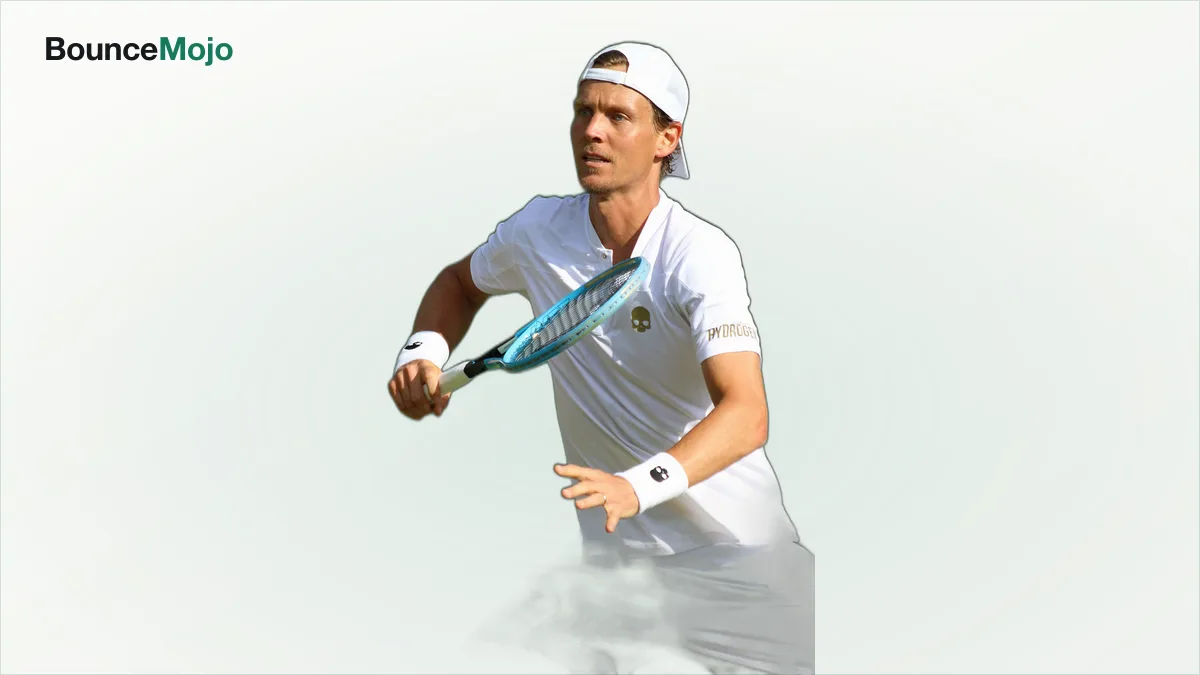
Most people remember Tomas Berdych as a big-hitting Czech who never quite won the big one. That is half the story, and it skips the more remarkable half.
Here’s what most people miss: Berdych was not a fringe player who got lucky once. He was one of the most consistent elite athletes of his entire era, a man who parked himself among the best in the world for a decade and, on his best day, could beat literally anyone.
The Myth vs. The Reality
The myth is simple. Tomas Berdych: robotic, emotionless, all power and no soul, the guy who never won a major.
The reality is more human, and more impressive.
Here’s the deal: Berdych was a Wimbledon finalist, a two-time Davis Cup champion, and a top-ten fixture for roughly a decade in the deepest era men’s tennis has ever seen. He beat Roger Federer, Rafael Nadal, and Novak Djokovic at various points. He just never strung together the two perfect weeks it takes to win a Slam when one of those three was standing in his way.
Think about it: staying in the top ten for ten straight years, while Federer, Nadal, and Djokovic devoured almost every major, is a staggering feat of durability. Most players get one good run and vanish. Berdych was elite year after year.
You might be wondering: how does a quiet kid from a small Czech town become a global power player and a millionaire many times over? To understand that, you have to understand the world he came from.
The World That Made Tomas Berdych
Berdych was born in 1985 in the Czech Republic, a country with a proud tennis tradition and a serious development system.
Czech and Czechoslovak tennis had produced legends before him, and the pathways for young talent were real. This was the world Berdych rose through, a system that turned promising juniors into professionals and expected results.
Now: what made Berdych’s timing brutal was the generation he entered. Just as he reached his prime, Federer, Nadal, and later Djokovic and Murray formed a wall that swallowed nearly every trophy. Berdych was good enough to be a champion in almost any other era. He simply arrived in the wrong one.
His background was modest. Born in the small town of Valašské Meziříčí, he did not come from wealth or a famous tennis dynasty. He climbed through work, size, and raw ball-striking talent, which became the foundation of everything he built.
But before the Wimbledon final, there was a raw teenager learning to harness a body built for power.
The Crucible: Early Life and the Climb
The Environment That Shaped Him
Tomáš Berdych was born into a Czech tennis culture that knew how to develop champions. He grew tall and strong, and coaches quickly saw that his height could become a weapon: a huge serve and flat, punishing groundstrokes off both wings.
Here’s the truth: Berdych’s game was built on power from the start, but power alone doesn’t survive at the top. He had to learn movement, patience, and how to control the enormous force he generated. That refinement took years of grinding through the junior and challenger circuits.
He turned pro in 2002 and wasted little time signaling his ceiling. What set him apart from other big hitters was temperament. Berdych was not a wild slugger swinging for the fences and spraying errors. He was methodical, almost engineer-like, in how he built points, using his size to dictate rather than to gamble. That discipline is what let a power game survive the marathon of a professional season, year after year, when flashier hitters flamed out.
The Catalyst
Then came Athens, 2004.
At the Olympic Games, a teenage Berdych upset Roger Federer, then the dominant world No. 1. It was a jolt of a result, the kind that tells the tennis world a new contender has arrived. Suddenly the quiet Czech with the booming serve was a name to watch.
From there he climbed steadily, breaking into the top ten and becoming a permanent fixture among the elite. He didn’t explode overnight. He accumulated, tournament by tournament, into one of the most reliable players in the sport.
It gets better: within a few years, that young upset artist would put together the fortnight of his life on the most famous court in tennis. But the people who shaped his rise deserve their share of the story.
The Key Players
No one climbs alone, and Berdych’s career was shaped by key figures.
The Czech development system. Berdych came up through a national structure that produced generations of talent, giving him the coaching and competition he needed to reach the top.
Radek Stepanek. His veteran Davis Cup teammate and doubles partner, Stepanek was a crucial figure in the Czech Republic’s Davis Cup triumphs, and the two formed the backbone of a golden era for Czech tennis.
Roger Federer, Rafael Nadal, and Novak Djokovic. The great wall of his generation. They were the rivals who blocked his path to a major, yet also the measuring sticks that made his best wins matter. Beating men now worth fortunes far beyond his own, chronicled in his own net worth story, is how Berdych proved his ceiling.
Ester Satorova. The Czech model he married in 2015, and the anchor of the private, stable family life he built away from the tour.
Think about it: every one of these relationships pointed toward the same test, could Berdych beat the greats when it counted most? At Wimbledon in 2010, for two glorious weeks, he did.
The Turning Point
The Pinnacle
The 2010 Wimbledon Championships are Berdych’s mountaintop.
On the sport’s most storied grass, he did the near-impossible. He upset defending champion Roger Federer in the quarterfinals. Then he beat Novak Djokovic in the semifinals. Two of the greatest players in history, dispatched in consecutive matches, to reach his first and only Grand Slam final.
He also anchored the Czech Republic to Davis Cup titles in 2012 and 2013, becoming a national hero, and he won 13 ATP titles including a Masters crown in Paris. He climbed to world No. 4. For a stretch, he was genuinely among the best players alive.
But that Wimbledon final carries the sting that defined his career. In the final, he ran into Rafael Nadal at his peak and lost. The closest he ever came to a major, and the wall held.
The Price
Here’s the kicker: the same durability that made Berdych rich also framed him as the eternal nearly-man.
Because he was always there, always in the second week, always dangerous, the absence of a title became his story. He reached the latter stages of majors again and again, only to meet a Federer, Nadal, or Djokovic operating on another level. Consistency became both his greatest asset and the source of his “why can’t he win one” narrative.
That is the price of excellence in a golden age. Berdych gave a decade of elite tennis and, by the cruel math of Slams, finished with zero. Which brings us to the parts of the man the results never showed.
The Unvarnished Truth
Berdych was not the cold machine his image suggested, and pretending otherwise misses what made him compelling.
He was famously reserved on court, which critics read as robotic or emotionless. In truth he was intensely private, a professional who channeled his emotion inward rather than performing it for the cameras. That reserve cost him fan affection but reflected a serious, disciplined competitor.
Now: none of that makes him bland. It makes him underrated. Berdych was widely respected by peers as a fierce, honest competitor and a consummate professional, the kind of player who showed up, prepared, and gave everything without drama.
The honest read on Berdych is this: he was a very good player asked to be great in an era with too many greats. He carried that reality with quiet dignity, and he built a life around stability rather than spectacle.
Controversies and Criticisms
Berdych’s career was more admired than scandalous, but he drew his share of criticism.
The “no major” label. His lack of a Grand Slam became the defining critique, framing a decade of elite tennis as somehow incomplete.
The “cold” perception. His reserved on-court demeanor led some to call him emotionless or hard to root for, an image problem more than a character flaw.
The consistency paradox. Critics argued that being always good but never dominant meant Berdych lacked the killer edge to win the biggest titles. There is truth in it, though it undersells how hard sustained excellence is.
The late-career fade. Injuries eventually eroded his level, and his final seasons before retiring in 2019 lacked the sharpness of his prime, a quiet ending for a long career.
What We Can Learn From Tomas Berdych
Navigating Hard Times
The first lesson is about durability. Berdych didn’t win a major, but he refused to fade, staying elite for a decade in the hardest era imaginable. He kept showing up, kept competing, kept banking results.
Here’s the truth: consistency over a long horizon beats a single brilliant flash. Berdych’s decade in the top ten is why his career, and his fortune, dwarfed many flashier players who burned out fast.
The Success Blueprint
If you want the replicable part, it is this: Berdych maximized his one great asset, raw power, then disciplined it with movement and professionalism until it was sustainable. He didn’t reinvent himself. He refined a weapon and rode it for years.
That is transferable. The lesson isn’t “hit harder.” It’s “build your strength into a durable system, then protect it.” Berdych’s professionalism put him alongside the sport’s biggest names on our richest tennis players ranking, and his marketability shows the same discipline at work.
Becoming Better
The deepest lesson is about knowing when to stop. Berdych retired at 34 with his fortune, his reputation, and his family life intact, rather than clinging on through decline.
In other words, walk away while you are still whole, and you keep everything that matters. Berdych timed his exit so that the fortune, the body, and the private life he had guarded so carefully all came through intact. The full story of how he converted a long career into lasting wealth lives in his net worth breakdown.
Final Verdict
Tomas Berdych is one of the most quietly accomplished players of the modern era, and “quietly” is doing real work in that sentence. He didn’t win a major. He did something few ever manage: he stayed elite for a decade against the greatest generation the sport has produced.
And here’s the twist that reframes his whole career: the man remembered for what he didn’t win beat everyone worth beating at least once, including Federer on Federer’s favorite court. He built a fortune, a family, and a legacy of relentless consistency, then left on his own terms.
If you love tennis, remember Berdych not as the nearly-man, but as the quiet giant who toppled the greats when it mattered, carried a nation’s Davis Cup hopes, and proved that sustained excellence is its own rare kind of greatness. His story is proof that the scoreboard is not the only thing that keeps score.
Shop Tomas Berdych on Amazon
Books, audiobooks, merch and more, handpicked for fans.
As an Amazon Associate we earn from qualifying purchases.
Frequently Asked Questions
Where did Tomas Berdych grow up?+
Tomas Berdych was born on September 17, 1985, in Valašské Meziříčí, a small town in the Czech Republic. He took up tennis as a boy and rose through the Czech development system to become the country's leading player of his generation.
What was Tomas Berdych's biggest achievement?+
Berdych reached the 2010 Wimbledon final, beating both Roger Federer and Novak Djokovic on the way before losing to Rafael Nadal. He also led the Czech Republic to Davis Cup titles in 2012 and 2013.
Did Tomas Berdych ever beat Roger Federer?+
Yes, several times. His most famous win came at Wimbledon 2010, where he upset the defending champion Federer in the quarterfinals, one of the biggest results of his career.
Why was Tomas Berdych called consistent?+
Berdych stayed inside the world's top ten for roughly a decade, a rare feat during the era of Federer, Nadal, and Djokovic. He was famous for reliable deep runs rather than dramatic peaks or collapses.
Who is Tomas Berdych married to?+
Berdych is married to Czech model Ester Satorova. The couple wed in a lavish 2015 ceremony in Monaco, where Berdych based much of his life, and they have kept a private family existence.
Want the money side of the story?
Read Tomas Berdych's Full Net Worth Breakdown →Shop Tomas Berdych on Amazon
Books, audiobooks, merch and more, handpicked for fans.
As an Amazon Associate we earn from qualifying purchases.