Tom Lehman Biography: The Grinder Who Almost Quit and Reached No. 1
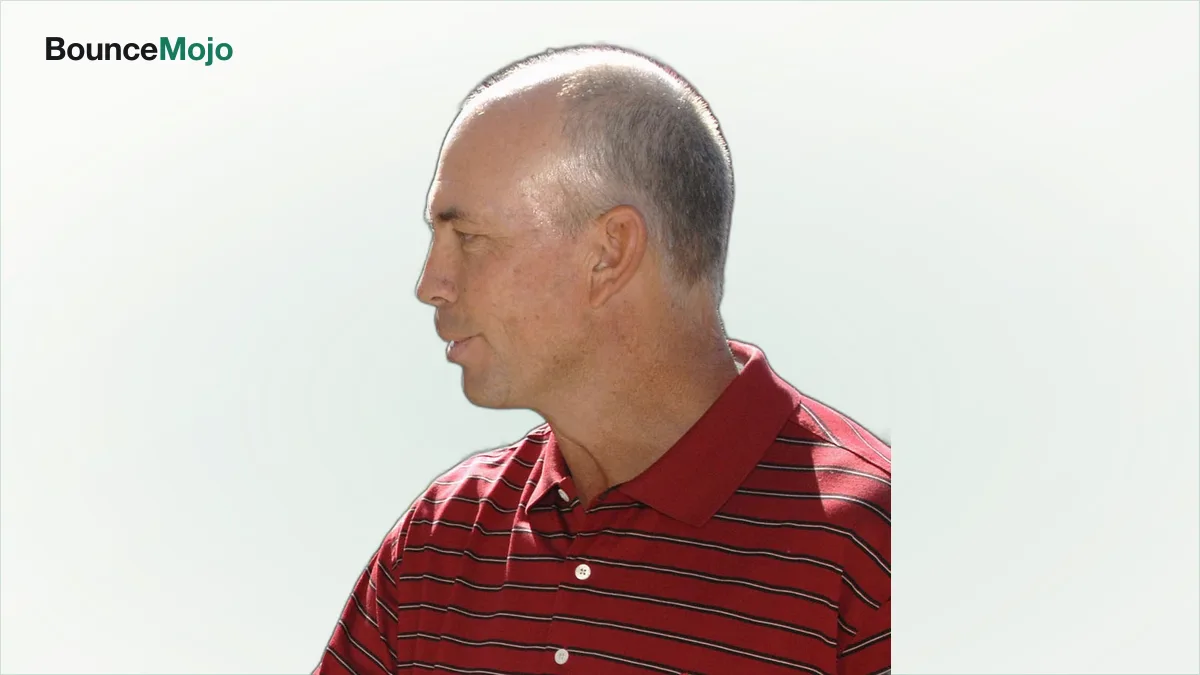
Tom Lehman was broke, buried in golf’s minor leagues, and close to giving up. A few years later he was the best player in the world.
Here’s what most people miss: the man who reached world No. 1 spent nearly a decade failing first.
The Myth vs. The Reality
The myth of Tom Lehman is that of a solid, steady American pro who won an Open and had a nice career.
Here’s the truth: Lehman’s story is one of the great comebacks in modern golf.
Before the trophies, before the No. 1 ranking, he was a failed tour pro scraping by on obscure circuits, wondering whether the game would ever pay him back. His rise wasn’t smooth or inevitable. It was clawed out over years, against real doubt and real financial pressure.
The public sees a major champion. The reality is a man who was one bad season from quitting golf altogether, and who chose to keep going anyway.
You might be wondering: what kind of upbringing builds that stubbornness? Start in the cold heart of Minnesota.
The World That Made Tom Lehman
To understand Lehman, you have to understand where he came from, and how unlikely a place it was to produce a world No. 1.
Golf’s elite tend to emerge from warm-weather states with year-round practice seasons. Lehman came from Minnesota, where winters shut the courses for months and the golf calendar is short. Producing a top player from that environment took extra grit and extra hunger.
He was born in Austin, Minnesota, in 1959 and raised in Alexandria. He worked his game into shape well enough to become a three-time All-American at the University of Minnesota, then turned pro in 1982 believing the tour was his destiny.
Now: destiny had other plans. The pro game humbled him fast.
Think about it. A decorated college star, full of confidence, running headfirst into the brutal reality that talent alone guarantees nothing on tour.
And that collision would test everything he believed about himself.
The Crucible: Early Life and the Climb
The environment that shaped him
Lehman reached the PGA Tour in the mid-1980s and struggled. He lost his card and found himself exiled to golf’s wilderness.
For years he played wherever he could get a game: the Asia Golf Circuit, the Southern African Tour, the second-tier developmental circuit back home. The money was thin. The travel was grinding. The glamour was nonexistent. This was survival golf, played by a man trying to keep a dream alive on fumes.
But here’s the kicker: those brutal years didn’t break him. They forged him. Learning to compete for small purses in far-flung places built a resilience that soft, early success never could.
He kept telling himself the next breakthrough was coming. For a long time, it wasn’t.
The catalyst
The turning point arrived in 1991. Lehman dominated what is now the Korn Ferry Tour, winning three times and claiming Player of the Year, a performance that punched his ticket back to the PGA Tour for good.
The message was clear. The years of grinding hadn’t been wasted. They had sharpened a player who was finally ready to win at the highest level, and his best golf was still ahead.
The Key Players
No one climbs alone, and Lehman leaned on a tight circle through the lean years.
His wife, Melissa, was his anchor through the uncertainty, the partner who stuck with him when the paydays were tiny and the future was foggy. That stability at home gave him room to keep chasing a goal that looked, for years, out of reach.
His faith was another constant. A committed Christian, Lehman drew steadiness from his beliefs, and it shaped his reputation as one of the most grounded, respected figures in the game.
Here’s the deal: Lehman’s success wasn’t a solo act. It was built on loyalty at home and conviction inside.
Then there were his peers and rivals. He arrived at the top just as a young Tiger Woods was emerging, and he shared eras and Ryder Cup rooms with stars like Ernie Els and, later, fellow captains like Jim Furyk. He earned their respect the hard way.
Now the comeback was complete, and the biggest week of his life was about to arrive.
The Turning Point
The pinnacle
The year was 1996, and it changed everything.
At the Open Championship at Royal Lytham & St Annes, Lehman held off the field to win the Claret Jug, his first and only regular major. It was the crowning moment of a career that had once looked finished. That same year, he was named PGA Tour Player of the Year and climbed to No. 1 in the Official World Golf Ranking.
Sit with that for a second. A player who had grinded through Asia and Africa for scraps, who had nearly quit the game, was now the best golfer on the planet. From the minor leagues to world No. 1, the arc barely seems real.
The No. 1 ranking lasted only about a week, arriving just as Tiger Woods began his takeover of the sport. But it happened, and no one could ever take it away.
The price
But here’s what the long road demanded.
Lehman paid in years. His breakthrough came later than most stars, meaning his prime window at the very top was shorter than his talent might have earned in another life. He reached No. 1, but only briefly, and the game’s next dominant force arrived at almost the same moment.
He also paid in near-misses. He contended at other majors, most agonizingly the U.S. Open, without ever adding a second regular major to his name. The window at the summit is small, and Lehman reached it late.
Which raises the fairest questions about a career defined by persistence.
The Unvarnished Truth
Let’s be honest about the limits of the Lehman story.
He was a one-major champion, not a serial winner at the top level. His late arrival meant fewer prime years than the truly great names enjoyed. And his reign at No. 1 was fleeting, overshadowed almost immediately by the Woods era.
Here’s the vulnerable truth: some will always frame Lehman as a player who touched greatness rather than one who lived there. His major count is modest for a former world No. 1, and his best years came in a narrow band.
But that framing misses the point of his whole story. The miracle wasn’t that he stayed at the top forever. It was that he ever got there at all.
Still, off the course, Lehman gave critics almost nothing to work with.
Controversies and Criticisms
This is where Lehman’s story is almost defiantly clean.
He is one of the least controversial figures the modern game has produced. No scandals, no feuds, no ugly headlines. His faith and family-man reputation defined his public image, and he carried himself with a steadiness that earned near-universal respect.
The criticism he attracted was purely competitive: that he peaked late, that his time at No. 1 was brief, that he never added a second major. His 2006 Ryder Cup captaincy ended in a heavy U.S. defeat, drawing some second-guessing.
But those are golf debates, not character stains. The larger truth is that Lehman built a Hall-of-Fame-caliber comeback and a real fortune while remaining, by every account, a genuinely decent man.
So what does a career like this actually teach?
What We Can Learn From Tom Lehman
Navigating hard times
When the money ran thin and the dream looked dead, Lehman refused to quit. That’s the whole lesson.
He played on tours nobody watched, in countries far from home, for purses that barely covered expenses, because he believed the breakthrough was still possible. And it was. His entire career rested on the years he chose not to walk away.
Here’s the truth: most people give up right before the turn. Lehman’s rarest trait was the endurance to keep going through the exact stretch that breaks almost everyone else.
The success blueprint
Want to know the best part? Lehman’s blueprint is available to almost anyone, because it isn’t built on prodigy talent.
Keep improving. Take the humble jobs and the small stages when that’s all there is. Lean on the people who believe in you. Stay ready, so that when the door finally opens, you can walk through it. Lehman turned a decade of failure into a major title and a fortune, which you can trace in his full net worth breakdown.
The philosophical takeaway is simple. Late is not the same as never. Sometimes the longest road leads to the highest place.
Final Verdict
Tom Lehman’s story rewards a second look.
Strip away the tidy label of “solid pro,” and you find an Open champion, a former world No. 1, a PGA Tour Player of the Year, a Ryder Cup captain, and a senior-circuit force with three more majors, all built by a man who nearly gave up the game.
He is proof that persistence can beat prodigy, that failure early is not failure forever, and that the top of the mountain is sometimes reached by the people willing to climb the longest.
No published memoir tells the full story yet. Until one does, the record speaks plainly: years in the wilderness, one unforgettable summer at the summit, and a comeback that few in golf will ever match.
Shop Tom Lehman on Amazon
Books, audiobooks, merch and more, handpicked for fans.
As an Amazon Associate we earn from qualifying purchases.
Frequently Asked Questions
Where was Tom Lehman born and raised?+
Lehman was born in Austin, Minnesota, in 1959 and raised in Alexandria, Minnesota, before starring at the University of Minnesota.
Why did Tom Lehman nearly quit golf?+
After failing on the PGA Tour in the mid-1980s, he spent years grinding on overseas and second-tier tours with little money, and seriously considered leaving the game before his 1991 breakthrough.
What is Tom Lehman's biggest achievement?+
He won the 1996 Open Championship at Royal Lytham & St Annes, was named PGA Tour Player of the Year, and reached world No. 1 that same year.
Did Tom Lehman captain the Ryder Cup?+
Yes. He captained the United States Ryder Cup team in 2006 at The K Club in Ireland, capping a career that included multiple appearances as a player.
How successful was Tom Lehman on the senior tour?+
Very. On PGA Tour Champions he won a dozen titles, including three senior major championships, building a lucrative second career after turning 50.
Want the money side of the story?
Read Tom Lehman's Full Net Worth Breakdown →Shop Tom Lehman on Amazon
Books, audiobooks, merch and more, handpicked for fans.
As an Amazon Associate we earn from qualifying purchases.