Todd Helton Biography: The Raw Truth Behind the Toddfather
A Tennessee kid with a rifle arm and a picture-perfect swing. He could have been a football star. Instead he became a baseball one.
Here’s what most people miss: the man who defined the Colorado Rockies once stood ahead of Peyton Manning on a depth chart, one knee injury away from a completely different life.
The Myth vs. The Reality
The myth is that Todd Helton was a natural, a hitter so gifted that Cooperstown was always waiting for him.
The reality took much longer to resolve.
Here’s the truth: Helton was a two-sport athlete who had to choose a lane, a player long doubted by Hall of Fame voters because his home ballpark inflated his numbers, and a man who stumbled off the field before finally earning his place. Nothing about his legacy came easily or quickly.
Now think about the patience it took. Helton retired in 2013 and didn’t get the Hall of Fame call until 2024, more than a decade of waiting and wondering.
To understand the whole arc, you have to start in the hills of East Tennessee.
The World That Made Todd Helton
Todd Lynn Helton was born on August 20, 1973, in Knoxville, Tennessee. He was a gifted athlete from the start, excelling at both baseball and football at Central High School.
Knoxville is University of Tennessee country, football country, and Helton grew up in the heart of it. He was good enough at both sports to draw serious college interest, a rare combination of a quarterback’s arm and a hitter’s eye.
This was a sports-obsessed corner of the American South, where football is close to religion. For a two-sport star, the pull toward the gridiron was enormous. Choosing baseball meant walking away from a game his entire region worshipped.
But here’s the kicker: before he could fully choose, a single injury made the decision for him, and it changed baseball and football history at once.
The Crucible: Early Life and the Climb
The environment that shaped him
Helton went to the University of Tennessee and did the near-impossible, starring in two major sports at a big-time program.
On the diamond he was a standout. On the football field he was the starting quarterback entering 1994, ahead of a true freshman named Peyton Manning.
Then his knee gave out early that season.
The catalyst
The injury sidelined Helton, and Manning stepped in and never gave the job back.
Think about that fork in the road. One knee injury launched one of the greatest quarterback careers in NFL history and pushed Helton fully toward baseball.
Here’s the deal: Helton committed to the sport that suited him best. The Colorado Rockies drafted him in the first round in 1995, he reached the majors in 1997, and he set about becoming the best player the young franchise had ever seen.
Want to know what he did with that chance? He never left, and he rewrote the record book.
The Key Players
You cannot tell the Helton story without a few names.
Peyton Manning is the first, and the connection runs deep. The two were Tennessee teammates and remained close friends for life. The knee injury that sidelined Helton is the reason Manning got his shot, a twist neither man forgot.
Larry Walker is the second. The Canadian slugger was Helton’s Rockies teammate and the first player from the franchise to reach the Hall of Fame, blazing the trail Helton would eventually follow.
His family is the third thread. Through the highs of his career and the public low points that came later, Helton’s wife and children anchored a life that stayed rooted in the mountains and in his Tennessee origins.
Here’s the truth: everything Helton built as a player would eventually be tested by a Hall of Fame debate, and by his own mistakes.
The Turning Point
The pinnacle
Start with the greatness, because it was enormous.
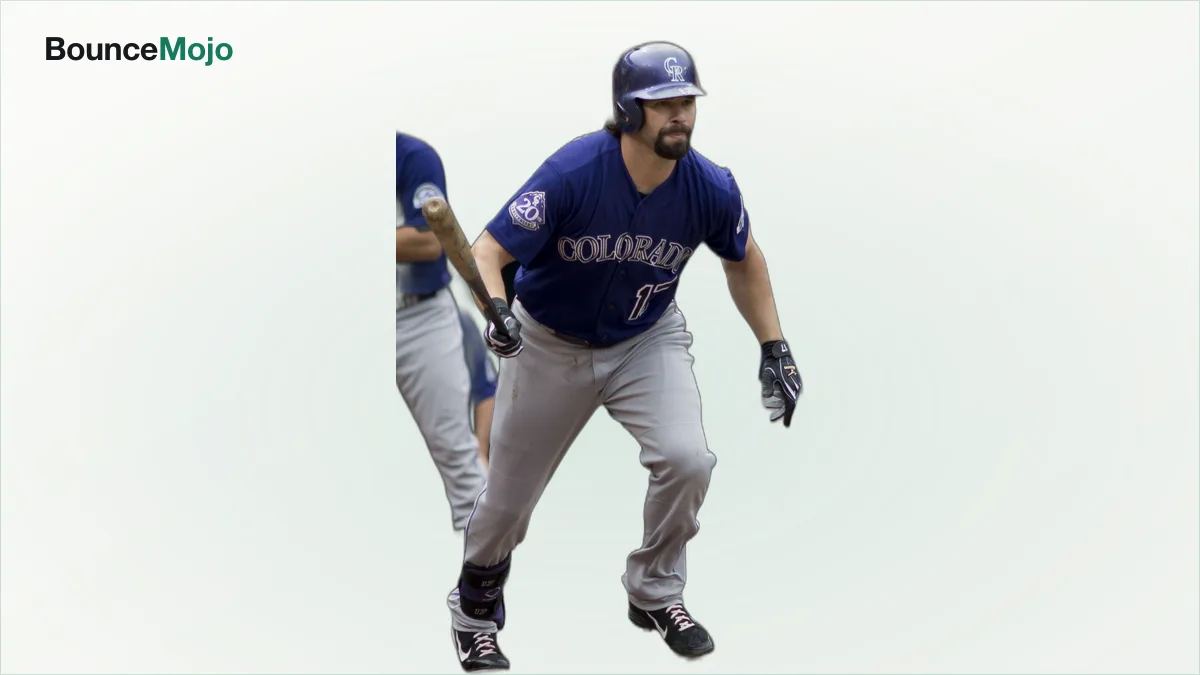
Helton spent all 17 of his seasons with the Rockies and became the franchise’s defining player. He won a batting title, hit for high average with real power, earned Gold Gloves at first base, and set nearly every major club record: hits, home runs, doubles, RBIs, and more. For a generation of Colorado fans, he was the team.
The final validation came in 2024, when he was elected to the Baseball Hall of Fame with 79.7% of the vote and inducted that July, joining Larry Walker as the second Rockies legend in Cooperstown.
The price
Now the cost, which was measured in years of doubt.
Because Helton played half his games at Coors Field, where the thin air inflates offense, voters spent years discounting his numbers. He retired in 2013 and then waited, ballot after ballot, as the debate dragged on. The induction was a triumph, but it arrived only after more than a decade of uncertainty.
You might be wondering whether the wait was the only shadow over his career. It wasn’t. Some of the hardest moments were his own doing.
The Unvarnished Truth
Let’s not pretend it was all clean.
Helton was cited for driving under the influence in 2013, near the end of his career, and again in 2019 after crashing his car in Tennessee. Those incidents were serious low points for a player who had built a respected image.
He addressed the mistakes publicly and accepted the consequences, but they remain part of his story, a reminder that even beloved athletes are human and fallible off the field.
Here’s the truth: Helton’s career was mostly about excellence and loyalty, but it also included real errors in judgment that hurt people and his own name. Telling the story honestly means including both.
Even so, the totality of his career, and the way he owned his mistakes, kept the respect of the game intact.
Controversies and Criticisms
Helton’s controversies fall into two buckets, one about his numbers and one about his conduct.
The Coors Field debate is the first. Critics argued for years that his home ballpark inflated his statistics, and that argument delayed his Hall of Fame induction more than a decade. Supporters countered that his skills traveled and that he dominated regardless.
The DUI citations are the second, and more serious. They were genuine failures that Helton has acknowledged, and they complicate an otherwise admirable legacy.
Beyond those, the knocks are few. Helton was a loyal, productive, respected teammate for 17 seasons.
Here’s the thing though: the Hall of Fame voters ultimately decided the greatness outweighed the doubts. The plaque settled the biggest argument.
Quote Analysis
Helton’s words reflect a grounded, plainspoken athlete.
On his loyalty to Colorado, he often spoke about pride in being a one-team player, a rarity he clearly valued. Staying put was a choice, not just circumstance.
On the long Hall of Fame wait, he expressed patience and gratitude rather than bitterness, framing the eventual call as worth the years of uncertainty. It was the perspective of a man used to grinding through slumps.
And on his football past, he spoke warmly about his friendship with Peyton Manning and the strange twist of fate that sent them down different roads, treating it with humor rather than regret.
What We Can Learn From Todd Helton
Navigating the darkness
When you make real mistakes, ownership matters more than image.
Helton stumbled off the field and didn’t hide from it. The lesson isn’t that mistakes don’t count. It’s that facing them honestly, and letting your larger body of work speak, can preserve a legacy that a lesser response would sink.
The success blueprint
Now the part that built the career and the fortune.
Helton chose the sport that fit him, stayed loyal to one franchise for 17 years, and structured his money with foresight, deferring part of his contract into a lifetime income stream. That patience, on the field and in the paperwork, is why he ranks among the richest baseball players in the world. The full money breakdown lives in our Todd Helton net worth analysis, and you can see where he sits among the richest athletes overall, alongside fellow one-team legend Cal Ripken Jr..
Becoming better
The deepest lesson is about patience. Helton waited more than a decade for Cooperstown and never lobbied loudly or lost his composure. He proved that if the work is real, the recognition can be worth the wait.
So what’s the final word on the Toddfather?
Final Verdict
Todd Helton is the rare athlete whose greatness had to survive both a debate and his own missteps.
On the field, he’s a batting champion, a Gold Glover, the greatest player in Rockies history, and a Hall of Famer. Off it, he’s a Tennessee two-sport star who chose baseball, made mistakes he owned, and stayed loyal to one team for 17 seasons.
Here’s the bottom line: Helton’s real story is the fork in the road and the long wait that followed. The quarterback who became a first baseman, doubted for his ballpark and humbled by his errors, still ended up exactly where the best players go. Anyone who remembers only the Coors Field debate has missed the swing that earned the plaque.
Shop Todd Helton on Amazon
Books, audiobooks, merch and more, handpicked for fans.
As an Amazon Associate we earn from qualifying purchases.
Frequently Asked Questions
Where did Todd Helton grow up?+
Helton was born on August 20, 1973, in Knoxville, Tennessee, where he starred as a two-sport athlete at Central High School before attending the University of Tennessee.
Did Todd Helton play football before baseball?+
Yes. Helton was a quarterback at Tennessee and started ahead of a young Peyton Manning before a knee injury opened the door for Manning and pushed Helton fully toward baseball.
How long did Todd Helton play for the Rockies?+
Helton spent his entire 17-season career with the Colorado Rockies, holding nearly every major club batting record.
When was Todd Helton inducted into the Hall of Fame?+
Helton was elected in 2024 with 79.7% of the vote and inducted that July, the second Rockies player to reach Cooperstown after Larry Walker.
Did Todd Helton have off-field troubles?+
Yes. Helton was cited for DUI in 2013 and again in 2019, low points in an otherwise respected career that he addressed publicly.
Want the money side of the story?
Read Todd Helton's Full Net Worth Breakdown →Shop Todd Helton on Amazon
Books, audiobooks, merch and more, handpicked for fans.
As an Amazon Associate we earn from qualifying purchases.