Tito Ortiz Biography: The Bad Boy Behind the UFC's Early Rivalries
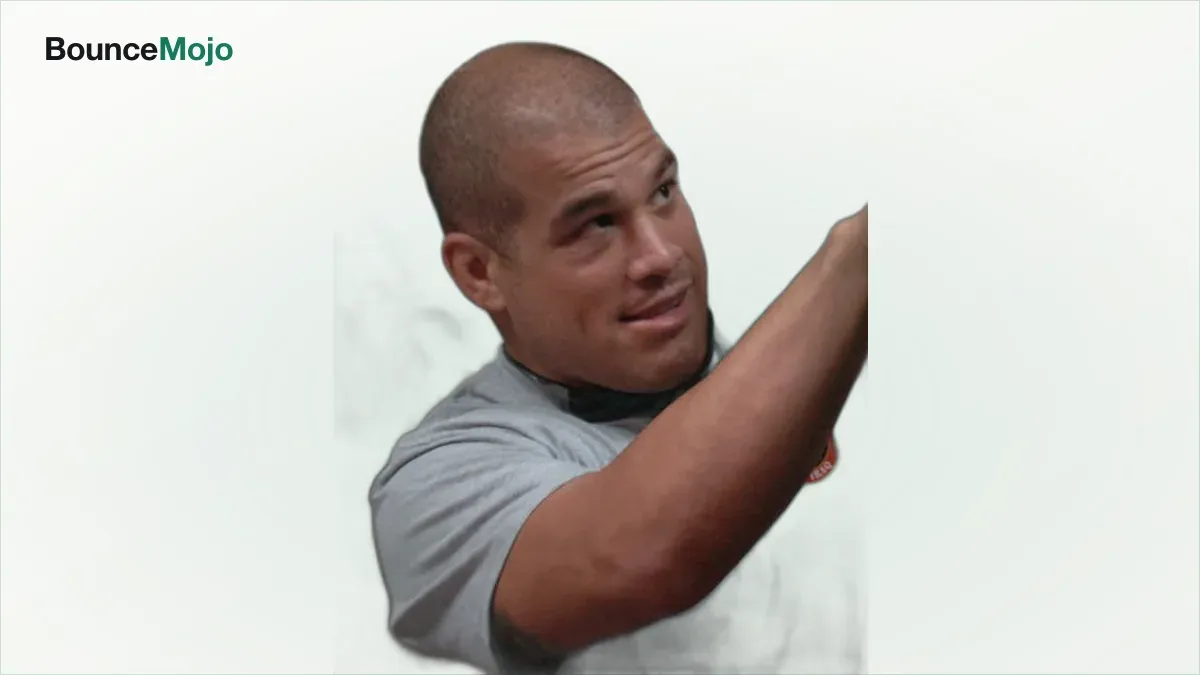
Most people know Tito Ortiz as the loudmouth villain of early UFC, the gravedigger act, the trash-talk T-shirts, the feuds. That cartoon skips how much the sport owes him.
Here’s what most people miss: before the UFC was a billion-dollar machine, it needed stars and stories to survive, and Tito Ortiz supplied both when almost no one else could.
The Myth vs. The Reality
The myth is the villain. Tito Ortiz: the arrogant Huntington Beach Bad Boy who talked too much, dug imaginary graves for his opponents, and became MMA’s first great heel. Loudmouth. Showman. Roll credits.
The reality is heavier, and more important.
Here’s the deal: the trash talk wasn’t just ego. It was survival, for Ortiz and for the sport. In an era when the UFC was banned in states, dropped by cable providers, and fighting for its life, drama sold tickets. Ortiz understood, before almost anyone, that fighting needed feuds and characters to matter. The villain act was a business plan.
And the “born bad” framing misses where the anger came from. Ortiz grew up in a home wrecked by addiction and instability. The chip on his shoulder was earned the hard way, long before any camera found him.
You might be wondering: how does a troubled kid from a broken California home become one of the faces of an entire sport? To understand that, you have to understand where he started.
The World That Made Tito Ortiz
Ortiz was born in 1975 and raised largely in Huntington Beach, California.
His childhood was hard. His family struggled with addiction and instability, and Ortiz drifted toward trouble early. This was the world that shaped him, a working-class California upbringing marked by chaos, where a young man could easily slide into a bad ending.
Now: the sport that would make him famous barely existed. In the late 1990s, mixed martial arts was a fringe, controversial spectacle, condemned by politicians and banned in much of the country. There was no money in it, no mainstream respect, no clear path to a career. A kid betting on MMA was betting on almost nothing.
That’s the backdrop for everything Ortiz became. He didn’t join a thriving industry. He helped drag a dying one into relevance, one loud, ugly, watchable rivalry at a time.
But before the fame, there was a troubled boy who found his one lifeline on a wrestling mat.
The Crucible: Early Life and the Climb
The Environment That Shaped Him
Ortiz has been open about a rough childhood shaped by his parents’ struggles with addiction. He got into trouble as a kid and could have gone the way of many boys from unstable homes.
Wrestling saved him. He found the sport in high school and it gave him structure, discipline and a place to channel his aggression. He wrestled in junior college and built the grappling base that would define his fighting style.
Here’s the truth: that mat was the difference between two very different lives. Wrestling gave a chaotic kid a purpose, and when the young, wild world of no-holds-barred fighting appeared, Ortiz was ready for it.
He crossed into early UFC events, raw and hungry, at the exact moment the sport needed young, athletic wrestlers who could actually fight.
The Catalyst
Ortiz’s breakout came through conflict. His early feuds, particularly the bad blood tied to the Lion’s Den camp and fighters like Guy Mezger, gave him a villain’s edge that made him compelling.
He won the UFC light heavyweight title and, crucially, learned to sell it. The custom T-shirts, the gravedigger celebration, the constant trash talk, all of it turned Ortiz into a character fans loved to hate. In a sport starved for stars, that made him gold.
It gets better, and stranger. His biggest rivalries, with a former mentor turned rival and a fellow legend, would help drive the UFC’s first real pay-per-view booms. But the people around Ortiz, his rivals, his managers and his own combustible nature, are the reason the story reads the way it does.
The Key Players
No pioneer rises alone, and Ortiz’s story is defined by the men he fought and the men he feuded with.
Ken Shamrock. The elder statesman and one of the UFC’s original icons became Ortiz’s great villain-versus-villain rival. Their trilogy of fights drew some of the biggest audiences the young sport had seen, pure box-office drama.
Chuck Liddell. Once a friend and training partner, Liddell became Ortiz’s most famous rival. Their bouts headlined era-defining cards and helped push the UFC toward the mainstream. As Ortiz’s own net worth story shows, these feuds were the engine of his earning power.
Dana White. Before he ran the UFC, White briefly managed Ortiz. Their relationship later curdled into one of the sport’s most public feuds, a business-and-personal rift that shadowed Ortiz’s UFC years.
The next generation. Stars like Conor McGregor and Khabib Nurmagomedov would later cash the megachecks Ortiz’s era made possible, inheriting a mainstream platform the pioneers built with feuds like his.
Think about it: nearly every defining relationship in Ortiz’s career was a rivalry. Conflict was his currency, and it carried him to his peak.
The Turning Point
The Pinnacle
Ortiz’s mountaintop was his light heavyweight title reign in the early 2000s.
He won the belt and defended it repeatedly, becoming one of the UFC’s first dominant champions and its biggest villain-draw. His feuds with Shamrock and Liddell turned into some of the promotion’s earliest blockbuster events, helping prove that MMA could sell pay-per-view on personality, not just violence.
He was inducted into the UFC Hall of Fame, recognized as a pioneer who helped carry the sport through its most fragile years. For a time, Tito Ortiz was arguably the face of the UFC.
The Price
Here’s the kicker: the same volatility that made him a star made his career and life turbulent.
The rivalries got personal and bitter. His relationship with the UFC soured, especially his feud with Dana White. His personal life drew tabloid attention, including a high-profile, tumultuous relationship. And the physical toll of a long fighting career, plus the emotional cost of constant conflict, wore on him. The pinnacle brought fame and money, but also a swirl of drama that never quite settled. Which brings us to the harder truths.
The Unvarnished Truth
Ortiz is a pioneer, but he’s a complicated one.
The chip on his shoulder that fueled his rise also made him combustible. He carried grudges, feuded publicly and often, and his career was as defined by beef as by belts. His personal life spilled repeatedly into the headlines, from a turbulent celebrity relationship to legal and personal troubles.
Now: none of this erases his importance. The anger and hunger born of a hard childhood are the same forces that made him a compelling, marketable fighter when the sport desperately needed one.
But the trade-offs were real. His feuds sometimes overshadowed his accomplishments, and his post-fighting ventures, including a brief, controversial run in local politics, drew as much criticism as praise. Ortiz has always been a lightning rod.
The most honest thing you can say is this: his greatest strength and his greatest weakness were the same trait. A refusal to back down. It made him a star and a survivor, and it also kept him at the center of conflict his entire life.
Controversies and Criticisms
Ortiz spent much of his career and public life courting controversy.
The Dana White feud. Ortiz’s long, bitter public rift with the UFC president became one of the sport’s most notorious business-and-personal feuds, coloring his final UFC years.
The tumultuous personal life. His high-profile relationship with adult-film star Jenna Jameson generated relentless tabloid coverage and personal drama that followed him for years.
The politics detour. Ortiz served briefly as a city official in Huntington Beach before resigning amid controversy, a chapter critics saw as ill-suited to public office and out of step with the community.
The endless feuds. More broadly, Ortiz’s career was so wrapped in rivalries and grudges that some felt the drama overshadowed a genuinely important fighting legacy. He was, for better and worse, never far from a fight outside the cage.
What We Can Learn From Tito Ortiz
Navigating Hard Times
The first lesson is about finding your lifeline. Ortiz came from a home that could have destroyed him, and wrestling gave him a way out. He grabbed the one structure available and built a life on it.
But here’s the truth his story makes plain: the same intensity that saves you can trap you. Ortiz escaped a chaotic childhood only to spend his career and public life surrounded by conflict. Escaping your origins is one fight. Escaping their patterns is another, and harder, one.
The Success Blueprint
If you want the replicable part, it’s this: Ortiz understood that attention is value. He built a persona, the Bad Boy, the gravedigger, the message shirts, that made every fight an event and made him marketable when the sport had few stars.
That’s transferable, minus the bitterness. The lesson is “give people a story, not just a performance.” He turned that persona into Punishment Athletics, a brand that outlived his purses. The full mechanics of that live in his net worth breakdown.
Becoming Better
The deepest lesson is about longevity through reinvention. Ortiz fought for two decades across multiple promotions, kept his name alive through branding and feuds, and squeezed a long career out of a sport that chews fighters up.
In other words, staying relevant is its own skill. Ortiz proved that a pioneer who brands himself relentlessly and refuses to fade can earn long after his prime, even if the constant conflict cost him peace along the way.
Final Verdict
Tito Ortiz is one of the most important figures in the history of the UFC, and “important” is carrying more weight than “great,” though he was a genuine champion. He didn’t just win a belt. He helped keep a banned, broke, disrespected sport alive by giving it something it badly needed: stars, stories and feuds people would pay to watch. Every fighter cashing a megacheck today is standing on a foundation Ortiz helped pour.
And here’s the twist that reframes everything: the loudmouth villain everyone loved to hate was, in business terms, ahead of his time. A troubled kid from a broken Huntington Beach home turned a chip on his shoulder into a title, a persona, and an apparel brand that outlasted his fight purses. The full financial story lives in his net worth breakdown, and it’s a fitting ending for a pioneer: the man who understood, before nearly anyone, that in fighting the story sells the ticket.
Ortiz’s legacy isn’t tidy. It’s loud, messy and combative, exactly like the man. But without pioneers like him willing to play the villain and sell the feud, the sport that made McGregor and Khabib rich might never have survived its early, fragile years.
Here’s the part history keeps proving: the biggest stars of any generation are standing on the work of the ones who came before. Ortiz fought when the UFC had no guaranteed future, when a bad news cycle could have ended the whole enterprise. He gave it heat, headlines and a reason for casual fans to tune in. Whatever you make of the feuds, the tabloid drama or the politics, he did the unglamorous work of making people care about a sport nobody was sure would last. That’s a legacy no highlight reel fully captures, and it’s the truest measure of the Huntington Beach Bad Boy.
Shop Tito Ortiz on Amazon
Books, audiobooks, merch and more, handpicked for fans.
As an Amazon Associate we earn from qualifying purchases.
Frequently Asked Questions
Where did Tito Ortiz grow up?+
Tito Ortiz grew up in Huntington Beach, California, in a troubled household affected by addiction. He found structure through high-school and college wrestling before crossing into early no-holds-barred fighting.
Was Tito Ortiz a UFC champion?+
Yes. Ortiz became the UFC light heavyweight champion and one of the promotion's first genuine stars, defending the title multiple times in the early 2000s during a defining era for the sport.
Why was Tito Ortiz called the 'Huntington Beach Bad Boy'?+
The nickname came from his hometown and his brash, trash-talking persona. Ortiz leaned into being a villain and showman, with trademark celebrations and custom message T-shirts that made him a marketable star.
Who were Tito Ortiz's biggest rivals?+
Ortiz's most famous rivalries were with Ken Shamrock and Chuck Liddell. His feuds helped drive some of the UFC's earliest big pay-per-view events and defined the sport's first era of stars.
What has Tito Ortiz done outside fighting?+
Ortiz built the Punishment Athletics apparel brand, fought across promotions like Bellator, worked in coaching, and briefly entered local California politics as a city official.
Want the money side of the story?
Read Tito Ortiz's Full Net Worth Breakdown →Shop Tito Ortiz on Amazon
Books, audiobooks, merch and more, handpicked for fans.
As an Amazon Associate we earn from qualifying purchases.