Thierry Henry Biography: The Reluctant Kid From Les Ulis Turned King
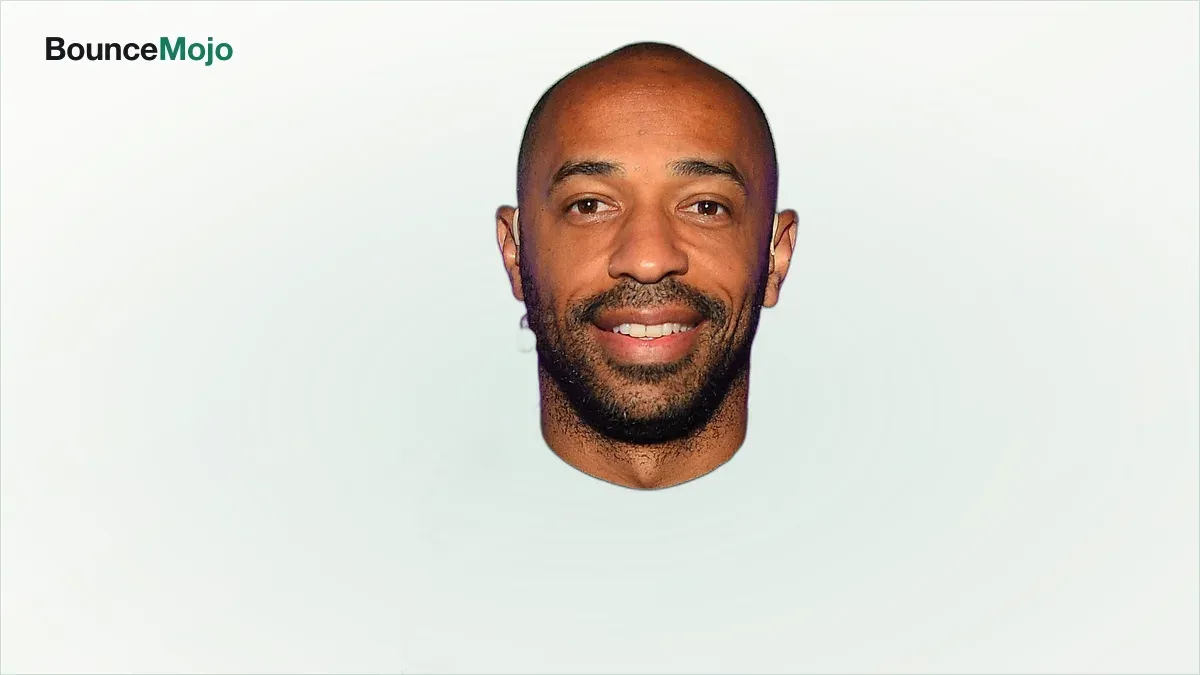
A World Cup winner, Arsenal’s greatest ever goalscorer, and one of the most elegant forwards the game has produced: Thierry Henry is a genuine icon.
Here’s what most people miss: as a boy, Henry wasn’t even sure he wanted to play football at all.
The Myth vs. The Reality
The myth of Thierry Henry is a naturally gifted artist, a player born to glide across the pitch and score with impossible ease.
Here’s the truth: that elegance was drilled into him under enormous pressure.
Strip away the highlight reels and you find a child from a rough Paris suburb pushed hard by a demanding father, a boy who wasn’t initially even that keen on the game. You find a raw, awkward talent who had to be reinvented in England before he became the finished masterpiece. The effortlessness people admired was manufactured through years of relentless work.
Now: most fans know the Arsenal god, the Barcelona treble winner, the World Cup champion. They don’t see the small apartment in Les Ulis, the intense father driving him to matches, or the reluctant kid who had to be pushed onto the pitch.
To understand Thierry Henry, you have to go back to the suburbs south of Paris. And to a family that had crossed an ocean for a better life.
The World That Made Thierry Henry
Les Ulis, a suburb south of Paris. Tough in places, working-class, and full of the children of immigrants chasing opportunity in a country that didn’t always welcome them.
That’s where Thierry Daniel Henry was born on August 17, 1977. His father Antoine came from Guadeloupe, from the small island of La Désirade. His mother Maryse came from Martinique. They were immigrants from the French West Indies who had moved to mainland France to build something better, and they raised Thierry in a modest apartment.
Think about it: the son of two Caribbean immigrants, growing up in a Parisian estate with a reputation for toughness, becoming one of the greatest footballers France ever produced. The odds were never in his favor.
Henry showed talent early, and it was spotted when he was just seven, earning him a place at the local club CO Les Ulis. But the real driving force wasn’t the young Thierry’s own ambition. It was his father’s.
Here’s the deal: Antoine Henry was intense, demanding, and utterly determined that his son would make it. He took Thierry to matches, enrolled him in junior teams, and pushed him relentlessly, even when the boy himself wasn’t especially drawn to football.
That pressure would shape everything about the player Henry became.
The Crucible: Early Life and the Climb
The environment that shaped him
Growing up under Antoine’s demands was not easy. The father’s intensity gave Henry a fearsome work ethic and drive, but it also brought pressure that a young boy had to carry every single day.
Henry has spoken about how his father pushed him hard, how approval was tied to performance. That environment produced a player who was fiercely self-critical and endlessly hungry to improve, traits that made him great and, at times, difficult to satisfy.
His obvious gifts carried him through the French youth system and into the academy at Monaco, where he made his professional debut in 1994 under a young manager named Arsene Wenger. Henry was fast, raw, and played mostly on the wing, a promising talent but far from the finished article.
The catalyst
Then came the detour that nearly derailed him.
In 1999, Henry moved to Juventus in Italy. It was a disaster. Played out of position on the wing in a defensive league, he struggled badly and looked lost, his confidence draining. The wonderkid from France suddenly seemed like a flop.
You might be wondering: how does a Juventus failure become a World Cup winner and Arsenal legend?
Here’s the kicker: Arsene Wenger came to the rescue. The man who had given Henry his debut at Monaco signed him for Arsenal in 1999 and made one radical change, converting him from a winger into a central striker. It transformed everything. Henry exploded into one of the most lethal forwards on earth, and the rest is history.
The Key Players
Henry’s rise ran through a few crucial figures.
Arsene Wenger is the most important of all, the mentor who believed in Henry twice, at Monaco and at Arsenal, and who unlocked his greatness by moving him up front. Without Wenger’s faith and that positional switch, Henry might have remained a struggling winger.
At Arsenal, he formed a legendary understanding with Dennis Bergkamp, the Dutch master whose vision and touch complemented Henry’s pace and finishing perfectly. Bergkamp was both partner and mentor, elevating Henry’s game to another level.
And for France, Henry was part of a golden generation alongside Zinedine Zidane, winning the 1998 World Cup on home soil and Euro 2000. Playing with Zidane, one of the greatest of all time, sharpened Henry and put him at the center of one of the best international sides ever assembled.
But all the glory was building toward a peak that made Henry immortal, and a low that nearly undid him.
The Turning Point
The pinnacle
The 2003-04 season. Arsenal’s Invincibles.
Henry led an Arsenal side that went the entire Premier League season unbeaten, a feat unmatched in the modern era. He was the beating heart of that team, scoring goals of breathtaking quality and winning back-to-back Player of the Year awards. He became Arsenal’s all-time leading goalscorer, a record that still stands, and cemented himself as one of the greatest players in the club’s history.
Later, he added the one prize Arsenal couldn’t give him, a Champions League and a treble with Barcelona in 2009, sharing a pitch with the emerging Lionel Messi.
The price
But greatness came with a shadow.
For all his brilliance, Henry never won the Champions League with Arsenal, losing the 2006 final. And in the twilight of his career came the moment that stained his legacy: the handball against Ireland.
Here’s the truth: at his peak, Henry seemed untouchable, a symbol of grace and fair play. That reputation made the fall all the harder when it came. The higher you climb, the further the drop when you stumble, and Henry’s stumble came on one of football’s biggest stages.
That moment, and how the world reacted, revealed the harder edges of an icon.
The Unvarnished Truth
Let’s be honest about the man. Henry could be prickly, self-absorbed, and difficult.
The relentless drive his father instilled made him a fierce competitor, but it also made him hard to please and, at times, sulky when things didn’t go his way. He clashed with teammates and could be sharp with the press. The elegance on the pitch masked a complicated, demanding personality off it.
His early coaching career revealed some of these limits too. A spell managing AS Monaco went poorly, showing that the qualities that made him a great player didn’t automatically translate to management.
Now: the honest read is that the same intensity that drove a reluctant kid to greatness also made him a challenging figure. The perfectionism was the engine and the flaw, all at once.
And nothing tested his carefully built image like one infamous handball.
Controversies and Criticisms
The defining controversy of Henry’s career was the handball against Ireland.
In a 2009 World Cup qualifying playoff, with the tie on the line, Henry clearly handled the ball before crossing for the goal that sent France to the World Cup and knocked Ireland out. The replay was undeniable. The outrage was enormous. For a player long associated with sportsmanship and grace, being branded a cheat on the world stage was devastating, and it haunted his reputation for years.
Henry admitted the handball afterward, which earned some respect, but the damage was done. It remains the first thing many neutrals associate with him, a cruel footnote to a glittering career.
Beyond that, his difficult managerial stint at Monaco drew criticism, raising questions about whether a legendary player could ever become a great coach.
Strip away the noise, though, and there are real lessons in how Henry rose from a Paris estate to the top of the game. That’s where this gets useful.
What We Can Learn From Thierry Henry
Navigating hard times
The lesson of Henry’s Juventus failure is that the wrong environment can hide your greatness.
He looked like a flop in Italy, played out of position in a system that didn’t suit him. He wasn’t broken, he was misused. When Wenger moved him to center-forward at Arsenal, the same player became world-class. The takeaway is that struggle sometimes means you’re in the wrong role, not that you lack the talent.
The success blueprint
Now: Henry’s blueprint is transformation through reinvention.
He began as a raw winger. He became one of history’s great strikers by embracing a completely new role and mastering it. He didn’t cling to what he knew, he adapted, and that willingness to change unlocked everything. The lesson is that flexibility beats stubbornness when your career hits a wall.
It gets better: he applied the same reinvention to his life after football. Rather than fading away, Henry built a hugely successful second career in broadcasting, keeping himself relevant and wealthy long after retirement, the full story of which you can read in his net worth breakdown. The player who reinvented himself on the pitch reinvented himself off it too.
Becoming better
The deepest lesson is about carrying pressure without being crushed by it.
Henry grew up under enormous expectation from a demanding father. He could have buckled. Instead he channeled that pressure into a work ethic that made him great, while learning, over time, to soften the perfectionism that once made him so hard on himself and others. Growth, for Henry, was as much about the man as the player.
Which leaves one question worth answering plainly.
Final Verdict
Thierry Henry is one of the greatest forwards football has ever seen, and it says something about the cruelty of sport that a single handball still competes with the Invincibles for space in his story.
The World Cup. The unbeaten season. The Arsenal scoring record. The Barcelona treble. The graceful, devastating brilliance that made a reluctant kid from Les Ulis into a king. All of it real, all of it earned under the weight of his father’s expectations.
He sits comfortably among the richest soccer players today, a respected voice on television and a permanent legend at Arsenal. For the son of two immigrants raised in a small apartment south of Paris, that is a remarkable distance traveled, handball and all.
Shop Thierry Henry on Amazon
Books, audiobooks, merch and more, handpicked for fans.
As an Amazon Associate we earn from qualifying purchases.
Frequently Asked Questions
Where did Thierry Henry grow up?+
Thierry Henry grew up in Les Ulis, a tough suburb south of Paris, in a small apartment. His father Antoine was from Guadeloupe and his mother Maryse from Martinique, immigrants from the French West Indies who moved to mainland France for a better life.
Was Thierry Henry's father hard on him?+
Yes. Henry's father Antoine was an intense, demanding presence who pushed his son to train even when the young Thierry wasn't especially drawn to football, driving him to matches and enrolling him in local junior teams from an early age.
What are Thierry Henry's biggest achievements?+
Henry won the 1998 World Cup and Euro 2000 with France, became Arsenal's all-time top scorer and a key figure in the unbeaten 'Invincibles' side, and won a Champions League and league titles with Barcelona.
What is the Thierry Henry handball controversy?+
In a 2009 World Cup qualifying playoff against Ireland, Henry handled the ball before setting up the decisive goal that sent France to the tournament, a moment that sparked outrage and haunted his reputation despite his admission of the handball.
What does Thierry Henry do after retirement?+
Henry became one of football's most respected pundits, working for major networks, and has coached and managed at club and international level, including a spell in charge of AS Monaco and work with the French setup.
Want the money side of the story?
Read Thierry Henry's Full Net Worth Breakdown →Shop Thierry Henry on Amazon
Books, audiobooks, merch and more, handpicked for fans.
As an Amazon Associate we earn from qualifying purchases.