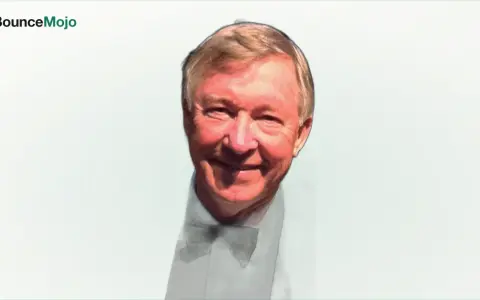
Ted DiBiase Biography: The Real Man Behind the Million Dollar Laugh

Ted DiBiase made millions playing a man who thought money could buy anything.
Here’s what most people miss: the man who mocked the poor on television grew up as an orphaned kid who lost his father in a wrestling ring and later gave his life to God. The laugh was an act. The story underneath it is anything but.
The Myth vs. The Reality
The myth is that Ted DiBiase was a smug, gold-plated millionaire who bought his way through wrestling.
Here’s the truth: almost none of it was real.
The reality is that DiBiase was a hardworking journeyman from a fractured family, a man who earned his money the hard way in dusty territory arenas long before Vince McMahon handed him a tuxedo and a wad of cash. The “Million Dollar Man” was a performance, one of the greatest in wrestling history, but a performance all the same.
What made DiBiase special was not arrogance. It was craft. He was one of the finest in-ring workers of his generation, respected by peers for his psychology and reliability. The character worked precisely because a genuinely skilled wrestler was selling it.
And to understand how he built that skill, you have to go back to a tragedy that shaped his whole life.
The World That Made Ted DiBiase
Theodore Marvin DiBiase was born on January 18, 1954, in Omaha, Nebraska. His biological father was an entertainer, but the man who gave him his name and his calling was “Iron” Mike DiBiase, a respected professional wrestler who married Ted’s mother and adopted him.
Picture it: a boy growing up around the wrestling business in an era of smoky arenas and traveling carnivals of a sport.
Here’s the deal: that world was brutal and unstable. In 1969, when Ted was fifteen, Iron Mike suffered a fatal heart attack in the ring during a match in Lubbock, Texas. The boy lost his father to the very business he would one day dominate.
The aftermath was hard. His mother struggled with depression and alcoholism, and young Ted was sent to live with his grandparents in Willcox, Arizona. He grew up fast, leaned on sports, and carried the weight of a family legacy soaked in both glory and grief.
That grief would push him straight toward the ring.
The Crucible: Early Life and the Climb
The Environment That Shaped Him
DiBiase channeled his energy into athletics. He earned a football scholarship to West Texas State University, a program that produced a surprising number of pro wrestlers. But injury derailed his football dreams, and he dropped out to chase the family trade.
The territory system was a grind. Wrestlers drove hundreds of miles between towns, wrestled nightly for modest pay, and lived out of suitcases. DiBiase learned the craft in Mid-South Wrestling and the NWA, and he traveled to All Japan Pro Wrestling, where the demanding style sharpened him into a world-class worker.
Now: that apprenticeship mattered. By the mid-1980s, insiders knew DiBiase as one of the most polished performers in the business, even if the mainstream audience had not yet met him.
The Catalyst for Breakout
Then came 1987, and the call that changed everything.
Vince McMahon offered DiBiase a character: a wealthy, arrogant villain who believed everybody had a price. The “Million Dollar Man” was born. DiBiase leaned into the role with a gleeful cruelty, stuffing cash in fans’ mouths, buying off opponents, and delivering a laugh that became instantly infamous.
But here’s the kicker: the gimmick was almost too good. DiBiase never won the WWF Championship, in part because his character was more valuable as an unattainable schemer than as a champion. He famously tried to buy the title, then commissioned his own gold-plated Million Dollar Championship instead.
The character made him a star. The man behind it was about to hit bottom.
The Key Players
DiBiase’s story runs through a handful of essential figures.
The most important is Iron Mike DiBiase, the adoptive father whose death shaped everything. Losing him young gave DiBiase both his path into wrestling and the emotional weight he carried for decades.
Then there is Vince McMahon, the promoter who saw a great worker and handed him a career-defining character. The “Million Dollar Man” was a McMahon-era creation, and it turned a respected journeyman into a household name.
You might be wondering about the man at his side.
On screen, DiBiase was rarely alone. His bodyguard and manservant, Virgil, became a memorable part of the act, a silent enforcer who eventually turned on his cruel boss in one of the era’s satisfying storylines.
And beyond the ring, DiBiase’s own family carried the torch. His son, Ted DiBiase Jr., followed him into WWE, extending the bloodline into a second generation.
Those relationships built the legend. But fame nearly destroyed the man.
The Turning Point
The Pinnacle of Achievement
At his peak, DiBiase was everywhere. He headlined WrestleMania IV against “Macho Man” Randy Savage, main-evented the first SummerSlam, and won the 1988 King of the Ring tournament. He captured the WWF Tag Team Championship three times alongside Irwin R. Schyster as Money Inc.
It gets better: he did it all as a heel, the villain fans loved to hate. Few wrestlers have ever built a more complete character without a world title to show for it. DiBiase proved you could be a main-event star on charisma and craft alone.
For a stretch, the “Million Dollar Man” was one of the most recognizable acts in all of entertainment.
The Price of Admission
But the road exacted a terrible price. Away from the cameras, DiBiase’s life was unraveling. The endless travel, the temptations of fame, and infidelity strained his marriage and left him, by his own later admission, spiritually empty.
Here’s the truth: the man who played someone with everything felt like he had nothing that mattered. The character’s cynicism about money masked a real emptiness in the performer.
That crisis forced a reckoning. DiBiase’s marriage and his sense of self were on the line, and the persona that made him rich could not save him.
What pulled him back was not another payday.
The Unvarnished Truth
DiBiase has been remarkably candid about his failings, and that honesty is central to his later life.
He has spoken openly about the affairs and the emptiness that came with fame, refusing to hide behind the glamour of his character. In a business built on kayfabe and image, DiBiase chose to tell the uncomfortable truth about a life that looked perfect and felt hollow.
His turn to faith was genuine and public. DiBiase became a born-again Christian, then an ordained minister, and rebuilt his life around his family and his ministry. The transformation was dramatic: the man who mocked virtue on television became a preacher.
Think about it: that arc is its own kind of integrity. DiBiase did not pretend the character was who he really was. He named his mistakes, sought change, and built a second act around redemption rather than nostalgia.
That second act, though, has not been free of controversy.
Controversies and Criticisms
DiBiase’s later years brought a serious cloud over the family name.
His nonprofit, Heart of David Ministries, was named in reporting connected to the Mississippi welfare scandal, one of the largest public-corruption cases in the state’s history. Investigators examined how federal welfare funds flowed to various organizations, and the DiBiase family became part of that story.
Here’s the deal: the scandal complicates a redemption arc that once looked clean. It is a real and ongoing chapter, and any honest account of DiBiase has to sit with the tension between the preacher’s message and the questions raised about the money.
DiBiase’s defenders point to decades of genuine ministry and speaking work. His critics point to the welfare reporting. Both are part of the record.
His own words, over the years, reveal how he sees himself.
Quote Analysis and Literary Breakdown
DiBiase’s most famous lines come from his character, but his real reflections cut deeper.
“Everybody’s got a price.” This catchphrase defined the “Million Dollar Man,” a cynical worldview that money can buy anyone. It made him a great villain precisely because audiences feared it might be true.
On his conversion, DiBiase has spoken about hitting bottom and finding faith. The man who preached that everyone had a price came to believe some things could not be bought at all, a direct rebuttal of his own gimmick.
On his father’s death, he has described the lasting impact of losing Iron Mike so young. That loss framed his entire relationship with the business that both took his father and gave him his living.
Read together, the quotes trace a man moving from cynicism to belief, from performance to confession.
There is a clear lesson in that arc.
What We Can Learn From Ted DiBiase
Navigating Hard Times
DiBiase’s early life teaches endurance. He lost his father in the ring, watched his mother struggle, and grew up in a fractured home, yet he built a career anyway. Hardship did not stop him. It fueled him.
His mid-life crisis teaches something harder: that success can hollow you out. DiBiase had fame and money and still hit bottom. His response was to face it honestly rather than perform through it, a lesson in confronting emptiness instead of numbing it.
The Success Blueprint
The professional lesson is about character and craft. DiBiase became a legend without a world title because he mastered his role and made it unforgettable. He proved that being the best at your part matters more than the trophies. That staying power is why he still ranks among recognizable names on our richest wrestlers list, and why his path is worth comparing to grinders like Chris Masters who came up in a very different era.
The financial lesson is about the long tail of a great brand. DiBiase turned one character into decades of appearance and licensing income, showing how a single strong idea can pay for a lifetime.
Becoming Better
The deepest lesson from DiBiase is about redemption and honesty. He was handed a character built on greed, played it to perfection, then rejected its message in his own life. He admitted his failures publicly, sought to change, and built a second calling around service. Whatever one makes of the later controversies, the arc itself, from cynic to preacher, is a study in a man trying to become better than the villain he played. That willingness to confront the gap between image and reality is rare in any public life.
That contradiction points to a complicated final take.
Final Verdict
Ted DiBiase’s story is about the distance between a character and a man. He played the richest, cruelest villain in wrestling and lived as a working-class kid who lost his father young and spent decades chasing something more than money.
He earned his fame the hard way, in the territories, before a single gimmick made him iconic. He main-evented the biggest shows of his era without ever holding the top belt. Then he walked away from the cynicism that made him rich and gave his life to faith.
The later welfare controversy complicates the redemption story, and it should. DiBiase is neither a simple hero nor a simple villain. He is a man who built a legend on the idea that everybody has a price, then spent his second act insisting that some things cannot be bought.
That is the strange power of Ted DiBiase. He gave the world one of its greatest performances about the emptiness of money, and then, off camera, tried to prove the point in his own life. The laugh was fake. The struggle behind it was real. And the story of the “Million Dollar Man” turned out to be about everything money could not buy.
Shop Ted DiBiase on Amazon
Books, audiobooks, merch and more, handpicked for fans.
As an Amazon Associate we earn from qualifying purchases.
Frequently Asked Questions
Where did Ted DiBiase grow up?+
Ted DiBiase was born on January 18, 1954, in Omaha, Nebraska. After his adoptive father died, he was raised partly by his grandparents in Willcox, Arizona.
Was Ted DiBiase's father a wrestler?+
Yes. His adoptive father was 'Iron' Mike DiBiase, a well-known professional wrestler who died of a heart attack in the ring in 1969, when Ted was a teenager.
Did Ted DiBiase ever win the WWF Championship?+
No. In storyline he tried to buy the title and created his own Million Dollar Championship. He did win the WWF Tag Team titles three times and the 1988 King of the Ring.
What is Ted DiBiase doing now?+
DiBiase became an ordained minister and founded Heart of David Ministries, doing faith-based speaking, while still appearing at wrestling conventions and Legends events.
Is Ted DiBiase in the WWE Hall of Fame?+
Yes. Ted DiBiase was inducted into the WWE Hall of Fame in 2010, honoring one of the most iconic heel characters in the company's history.
Want the money side of the story?
Read Ted DiBiase's Full Net Worth Breakdown →Shop Ted DiBiase on Amazon
Books, audiobooks, merch and more, handpicked for fans.
As an Amazon Associate we earn from qualifying purchases.