Stone Cold Steve Austin Biography: The Rattlesnake Who Beat the Boss
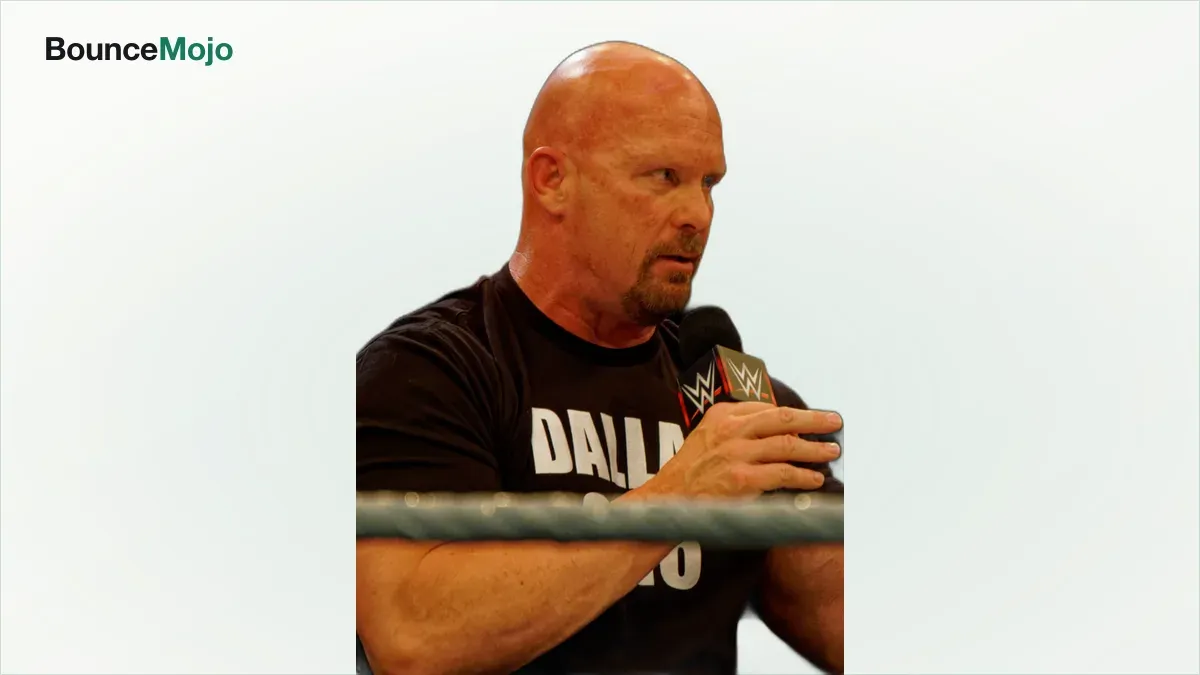
Most people know Stone Cold Steve Austin as the beer-drinking, middle-finger-raising icon who told his boss to shove it. That character was so big it buried the real, harder story underneath it.
Here’s what most people miss: the man who became the biggest star in wrestling history was fired over the phone, told he had no future, and nearly had his neck broken on live television at his peak.
The Myth vs. The Reality
The myth is that Stone Cold was born a rebel, a natural badass who kicked down the door and took over wrestling by sheer attitude.
The reality is a slower, tougher climb.
Here’s the deal: before “Stone Cold,” Steve Austin was “Stunning” Steve Austin, a solid, unremarkable performer in WCW who got unceremoniously fired while injured, reportedly told over the phone that he had no marketability. The confident icon fans remember was forged out of that rejection, not handed to him.
And the anti-authority rebellion? It wasn’t a natural gift, it was a reinvention. Austin studied what wasn’t working, found the raw, relatable anger of the average working person, and channeled it into a character. The Rattlesnake was engineered by a man who had every reason to be furious at the business that discarded him.
You might be wondering: how does a fired, injured mid-carder become the biggest draw in wrestling history? To understand that, you have to go back to Texas.
The World That Made Stone Cold
Austin was born in 1964 and raised in Victoria, Texas, in modest, working-class circumstances.
His parents divorced when he was young, and his mother moved the family and remarried, with Steve taking his stepfather’s name. Money was tight, and life in small-town Texas was built on toughness, football and the kind of blue-collar grit that would later define his character better than any script.
Now: this background is the whole key. When Austin eventually became “Stone Cold,” he wasn’t playing a fantasy hero. He was channeling the frustration of ordinary people who hated their bosses, worked hard for little, and wanted to see someone finally stand up and fight back. He came by that authenticity honestly.
Wrestling in the 1980s and early ’90s, meanwhile, was still ruled by cartoonish good guys and larger-than-life heroes. The industry hadn’t yet figured out that audiences were hungry for something rawer and more real. Austin would become the answer to a question the business didn’t know it was asking.
That collision, a genuinely tough Texan and an industry ready for authenticity, is the backdrop for everything. But first, he had to fail at his original dream.
The Crucible: Early Life and the Climb
The Environment That Shaped Him
Football, not wrestling, was Austin’s first path.
He was a talented linebacker who earned a scholarship, playing at Wharton County Junior College and then the University of North Texas. He was strong, disciplined and athletic, exactly the raw material a pro-wrestling career needs. But he dropped out just short of graduating and, drawn to the wrestling he’d watched growing up, enrolled in Chris Adams’s wrestling school in Texas.
Here’s the truth: he wasn’t an overnight sensation. He debuted in 1989 under his real name as Steve Williams, grinding through the Texas and regional circuits before signing with WCW in 1991 and becoming “Stunning” Steve Austin.
He was good. He held titles. But WCW never saw him as a top star, and that limited vision was about to hand him the rejection that changed everything.
The Catalyst
In 1995, WCW fired Austin while he was recovering from an injury, reportedly delivering the news by phone and telling him he lacked marketability.
That firing was the turning point. Furious and determined, Austin passed through Extreme Championship Wrestling, where the raw, uncensored environment let him rediscover his edge and his voice. Then WWE signed him, initially saddling him with a bland “Ringmaster” gimmick.
It gets better. Austin fought for something truer to himself, and the beer-drinking, boss-hating “Stone Cold” character was born. His breakthrough came at the 1996 King of the Ring, where his “Austin 3:16” promo, mocking a religious slogan, became an instant cultural phenomenon and a merchandise juggernaut.
The fired mid-carder had found the character that would make him immortal.
The Key Players
No one climbs alone, and Austin’s rise had a few defining figures.
Chris Adams. His original trainer, the man who taught him the craft in Texas and gave him his start in the business.
Bret Hart. Their match at WrestleMania 13 in 1997 is one of the greatest in history, a “double-turn” that transformed Austin from villain into beloved anti-hero. Hart’s willingness to elevate him in that moment helped make Austin a star.
Vince McMahon. The single most important on-screen relationship of Austin’s career. Their rivalry, blue-collar everyman versus corporate tyrant boss, became the beating heart of the Attitude Era and the storyline that saved WWE. Ironically, the man Austin “fought” was the boss who profited most from his stardom.
The fans. Austin’s real partnership was with the millions of ordinary people who saw themselves in him. His stunners, his beer, his defiance, all of it worked because the crowd desperately wanted a hero who felt like one of them.
Think about it: trainer, rival, boss, audience, each played a role in transforming a fired wrestler into a cultural icon. And the transformation peaked at the exact moment his body started to fail.
The Turning Point
The Pinnacle
Austin’s peak, from 1997 to 2001, made him the biggest star in wrestling history.
His feud with boss Vince McMahon drove WWE past WCW in the ratings war and defined the Attitude Era. He headlined WrestleManias, sold millions of “Austin 3:16” shirts, and became a mainstream celebrity whose beer-guzzling, authority-defying persona transcended wrestling entirely. For a stretch, no one in the business was bigger, not even his great rival, The Rock.
That peak built a legacy that still pays. As his net worth breakdown explains, his WWE Legends deal, merchandise royalties, podcasts and beer brand keep him near the top of our richest wrestlers list decades later, proof that an iconic peak can fund a lifetime.
The Price
Here’s the kicker: the very intensity that made him great was destroying his body.
At SummerSlam 1997, a botched piledriver from Owen Hart badly injured Austin’s neck, temporarily paralyzing him in the ring. He kept wrestling, but the damage was permanent. He adapted his style, but the injury shortened his career and left lasting physical costs.
There was a personal price too. The relentless schedule and the pressure of carrying the company strained his personal life, and Austin has been candid about difficult periods, including legal trouble and struggles away from the ring. The pinnacle came with a broken neck and a body running on borrowed time. Which brings us to the flaws.
The Unvarnished Truth
Austin is not the flawless folk hero the highlight reels suggest.
He walked out on WWE in 2002, frustrated with creative decisions, in a departure that damaged relationships and the company at the time. He faced a domestic violence charge in 2002 involving his then-wife, an episode he later called a low point and expressed regret over. The tough-guy image had a darker edge in real life.
Now: none of this erases his impact, but it complicates the myth. Much of the strain traces back to the same intensity that made him a star, a man who gave everything to the business and, at his lowest, let that pressure spill into damage he later owned.
But those instincts have a cost. The uncompromising toughness that fans loved could curdle into stubbornness and worse away from the cameras. Austin’s honesty about his mistakes in later years is part of what makes his legacy hold up, but the mistakes were real.
The most honest thing you can say is this: his greatest strength and his biggest liability were the same trait. Raw, uncompromising intensity. It made him the biggest star in wrestling and, at times, his own worst enemy.
Controversies and Criticisms
Austin’s career carried real friction alongside the glory.
The 2002 walkout. Frustrated with a creative direction he disagreed with, Austin left WWE abruptly, a move that hurt the company and his standing before an eventual reconciliation.
The domestic violence charge. A 2002 incident involving his then-wife led to a charge Austin pleaded no contest to, a serious low point he has publicly acknowledged and expressed remorse for.
The injury risks he took. Austin’s willingness to keep wrestling through a broken neck, while heroic to fans, drew concern about the toll the business takes on performers and the pressure to keep going.
The tough-guy image. Critics have noted the tension between the beloved everyman character and the real struggles behind it, a reminder that on-screen personas rarely match the full human being.
What We Can Learn From Stone Cold Steve Austin
Navigating Hard Times
The first lesson is about turning rejection into rocket fuel. Austin was fired and told he had no future, and used that exact humiliation to reinvent himself into the biggest star the business had ever seen. His story says that being discarded by people who couldn’t see your value can be the beginning, not the end.
But here’s the truth his neck injury makes plain: intensity has limits. Austin gave his body to the business and paid for it with a shortened career. The lesson isn’t only to push hard, it’s to recognize when the cost is becoming permanent.
The Success Blueprint
If you want the replicable part, it’s authenticity plus monetization. Austin won by being genuinely himself, blue-collar, defiant, real, at a moment the audience craved exactly that. Then he turned that authentic character into lasting products: beer, merchandise, media. The net worth story shows the payoff, and it’s the same “own your brand” logic that builds durable wealth across our richest athletes list.
The other lesson is timing. Austin read the cultural moment perfectly, delivering the anti-authority hero people wanted when they wanted him.
Becoming Better
The deepest lesson is about ownership of your mistakes. Austin’s later years have been marked by candor, about his injuries, his walkout, his personal failures, that has actually strengthened his legacy. The man who never backed down in the ring learned to admit fault outside it.
In other words, real toughness includes the courage to face your own worst moments. And that honesty leads to the final take on wrestling’s most consequential everyman.
Final Verdict
Stone Cold Steve Austin is one of the most important figures in wrestling history, and “important” barely covers it, he is arguably the single biggest reason WWE survived and won its war for the industry. He didn’t have the smoothest style or the most polished promos. He had something rarer: he felt real, and millions of people saw themselves in his fury.
And here’s the twist that reframes everything: the man fired for having “no marketability” built one of the most marketable characters in entertainment history, a persona so durable that its beer, its merchandise and its podcasts still generate a fortune decades after his last full-time match. The complete financial picture lives in his net worth breakdown, and it shows that one perfectly timed, perfectly authentic character can pay for a lifetime.
If you want to understand why authenticity beats polish, study Stone Cold Steve Austin. He got fired for being himself, then made himself immortal by refusing to be anyone else.
Shop Stone Cold Steve Austin on Amazon
Books, audiobooks, merch and more, handpicked for fans.
As an Amazon Associate we earn from qualifying purchases.
Frequently Asked Questions
What is Stone Cold Steve Austin's real name?+
Stone Cold Steve Austin was born Steven James Anderson on December 18, 1964, in Austin, Texas. After his mother remarried, he took his stepfather's surname and became Steven Williams.
Where did Steve Austin grow up?+
Austin grew up in Victoria, Texas, after his parents divorced and his mother moved the family there. He played football and became a linebacker before turning to wrestling.
How did Steve Austin become Stone Cold?+
After being fired by WCW and passing through ECW, Austin joined WWE and developed the beer-drinking, anti-authority Stone Cold persona, which exploded into one of wrestling's biggest characters ever.
What was the Austin vs. McMahon feud?+
The rivalry between Stone Cold and boss Vince McMahon was the centerpiece of WWE's Attitude Era. The everyman-versus-boss story struck a cultural nerve and helped WWE win its ratings war in the late 1990s.
Why did Steve Austin stop wrestling?+
A serious neck injury, aggravated by a botched move at SummerSlam 1997, made continuing dangerous. Austin retired from full-time competition in the early 2000s, with only rare appearances since.
Want the money side of the story?
Read Stone Cold Steve Austin's Full Net Worth Breakdown →Shop Stone Cold Steve Austin on Amazon
Books, audiobooks, merch and more, handpicked for fans.
As an Amazon Associate we earn from qualifying purchases.