Steven Gerrard Biography: The One-Club Captain Who Carried Liverpool
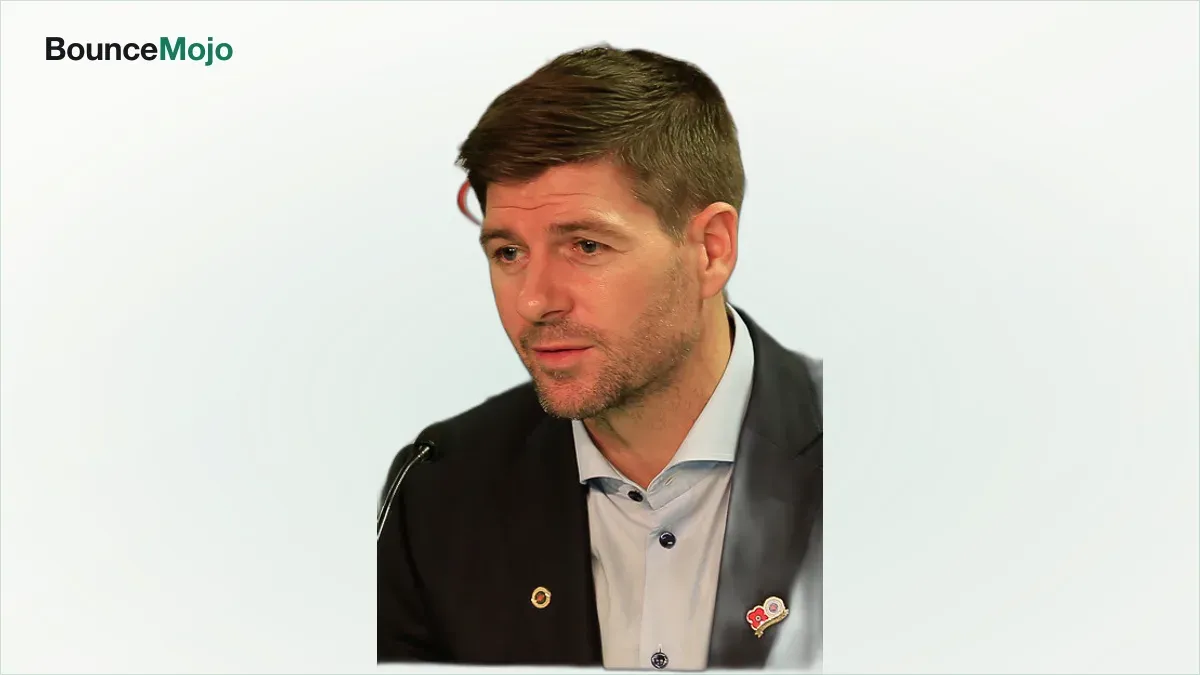
Most people know Steven Gerrard as the man who dragged Liverpool back from the dead in Istanbul. Fewer know the tragedy that bound him to the club before he ever kicked a ball for it.
Here’s what most people miss: the captain who could have won more trophies at a bigger club stayed loyal to a team that never quite let him lift the one prize he wanted most.
The Myth vs. The Reality
The myth is heroic. Steven Gerrard: the ultimate one-club man, the Scouse warrior who carried an ordinary Liverpool side on his back for a decade and produced miracles when it mattered most.
The reality carries more ache than the anthem lets on.
Here’s the deal: Gerrard’s loyalty, the thing fans love most about him, is also the source of his deepest regret. He stayed at Liverpool through years when the club couldn’t build a title-winning team around him, and he retired without ever winning the Premier League, the one trophy that would have completed him.
And the “fearless captain” story misses the vulnerability underneath. This is a man who came agonizingly close to leaving, who slipped at the worst possible moment, and who has spoken openly about the pressure of being asked to be a hero week after week.
You might be wondering: why would a player good enough to win everything anywhere choose to stay and fall short? To understand that, you have to understand the world he came from.
The World That Made Steven Gerrard
Gerrard was born in 1980 in Whiston and raised in Huyton, a tough, working-class part of Merseyside where football wasn’t a hobby but a religion.
His bond with Liverpool was sealed by tragedy before his career began. In 1989, when Gerrard was eight, his 10-year-old cousin Jon-Paul Gilhooley died at Hillsborough, the youngest of the 97 Liverpool fans killed in the disaster. That loss fused Gerrard to the club and the city at a level far beyond fandom. Playing for Liverpool wasn’t a job. It was a duty to a grieving community.
Now: that context is everything. Merseyside in the 1980s and 1990s was a place shaped by economic decline and the collective grief of Hillsborough, and its football club was the beating heart of local identity. To wear the armband there was to carry the emotions of a whole city.
Gerrard came up in a golden age of English central midfielders, alongside rivals like Frank Lampard, in a Premier League that was becoming the richest league on earth. But where money increasingly pulled players toward the biggest clubs, Gerrard’s roots pulled him the other way.
That backdrop, grief, loyalty, and a working-class code, is the key to everything he became. But first he had to survive a childhood determined to make him tough.
The Crucible: Early Life and the Climb
The Environment That Shaped Him
Gerrard was spotted by Liverpool scouts as a small boy and joined the academy at nine. He wasn’t physically imposing early on, and injuries, including serious back and groin problems, threatened his development as a teenager.
Here’s the truth: he nearly didn’t make it physically. Growth issues and injury scares meant his path to the first team was far from guaranteed, and he had to fight through pain to survive the academy.
But his drive was relentless. By 1998 he had forced his way into the first team, and within a few years he was the most dynamic young midfielder in England.
The Catalyst
The breakthrough came in the early 2000s. Gerrard became the engine of a Liverpool side that won a cup treble in 2001, and by 2003 he was captain, at 23, the youngest in the club’s modern history to carry that weight.
It gets better. The armband transformed him. He played like a man responsible not just for a result but for a city’s mood, driving forward, scoring from distance, dragging teammates with him.
That’s where the legend truly began. But the men who shaped him, and the rival who defined him, are the next part of the story.
The Key Players
No captain leads alone, and Gerrard’s story is full of figures who lifted and pushed him.
Rafael Benitez. The manager who guided Liverpool to Istanbul in 2005. Rafael Benitez built a tactical structure that maximized Gerrard’s drive, and together they delivered the club’s greatest modern night.
Jamie Carragher. His fellow academy graduate, defensive rock and lifelong friend, Jamie Carragher formed the Scouse spine of the team alongside Gerrard. The two shared the same loyalty and the same near-misses.
Frank Lampard. His great rival for England’s midfield. The Gerrard-versus-Frank Lampard debate raged for a decade, two brilliant midfielders who somehow never quite clicked together for the national team, a puzzle that dogged England for years.
Jurgen Klopp. The manager who arrived as Gerrard’s playing days ended and became a mentor and friend in his transition to coaching, later inspiring the title Gerrard never won as a player.
Think about it: every one of these relationships circles the same theme, brilliance shadowed by what got away. That tension detonated at his peak.
The Turning Point
The Pinnacle
Istanbul, 2005, is Gerrard’s mountaintop.
In the Champions League final against AC Milan, Liverpool trailed 3-0 at halftime and looked finished. Then Gerrard headed a goal, roared his teammates back to life, and Liverpool scored three times in six minutes before winning on penalties. It remains one of the greatest comebacks in the history of the sport, and Gerrard was its heartbeat.
That night made him immortal. As his net worth story lays out, it also cemented a brand that still earns.
The Price
Here’s the kicker: the peak came wrapped in what he never won.
Weeks after Istanbul, Chelsea came for him with a huge offer, and Gerrard came within hours of leaving. He stayed, choosing Liverpool over money and, arguably, over guaranteed titles. That loyalty defined him. It also meant that in the richest era of English football, Gerrard never won the Premier League, the one trophy that would have completed the story. The pinnacle was glorious. The price was a lifetime of what-ifs.
Which brings us to the moment that came to symbolize them all.
The Unvarnished Truth
Gerrard was a giant, but he was not immune to the weight he carried.
He has spoken candidly about the mental toll of being Liverpool’s talisman, the exhaustion of being expected to be the hero every week, the loneliness of carrying a team that often couldn’t match his level. He sometimes tried to do too much, a captain so desperate to drag his side to victory that he over-reached.
Now: none of this is weakness. It’s the honest cost of caring too much. A man bound to a club by grief and duty was never going to protect himself emotionally. He gave everything, and giving everything leaves scars.
His most human moment came in 2014. With Liverpool closer than ever to a first league title in decades, Gerrard slipped against Chelsea, lost the ball, and conceded a goal that helped end the dream. The slip. It became a cruel symbol of a career full of glory and just out of reach of the one prize he craved.
The most honest thing to say about him is this: his loyalty and his hunger were the same force. They made him a legend, and they made his near-misses hurt more than anyone else’s.
Controversies and Criticisms
Gerrard’s career was less scandal-plagued than most, but it wasn’t without storms.
The near-move to Chelsea. His 2005 flirtation with leaving Liverpool, twice really, drew criticism from fans who felt betrayed, even though he ultimately stayed. It exposed the tension between loyalty and ambition at the heart of his story.
The 2008 nightclub incident. Gerrard was involved in an altercation at a bar and faced an affray charge. He was cleared, but the episode dented his clean-cut image temporarily.
The England question. For years, critics blamed Gerrard and Frank Lampard for England’s failure to build a functioning midfield, arguing the two stars couldn’t play together. The debate followed both men through a generation of tournament disappointment.
The slip. Fair or not, Gerrard’s 2014 slip became a stick used to beat him, a single unlucky moment turned into a symbol. It was harsh treatment of a player who gave Liverpool everything for 17 years.
What We Can Learn From Steven Gerrard
Navigating Hard Times
The first lesson is carrying grief into greatness. Gerrard’s bond with Liverpool was born of tragedy, and rather than let it crush him, he turned that weight into purpose. He played for something bigger than himself.
But here’s the truth his career makes plain: caring deeply is a double-edged gift. It fueled his miracles and it magnified his pain. The lesson isn’t to care less. It’s to accept that the things you love most will also be the things that can hurt you most, and to give anyway.
The Success Blueprint
If you want the replicable part, it’s this: Gerrard mastered the biggest moments. Istanbul, FA Cup finals, decisive late goals, he produced when the stakes were highest, dragging ordinary teams to extraordinary results by sheer will.
That’s transferable. Talent gets you into the room; the ability to deliver under maximum pressure is what makes you a legend. His placement among the wealthiest names on our richest soccer players ranking rewards a career defined by rising when it mattered most.
Becoming Better
The deepest lesson is about the value of loyalty in a world that prices everything. Gerrard could have chased trophies and bigger money elsewhere. He chose to stay, to be Liverpool’s forever, and in doing so he built something no trophy could buy: a permanent place in the identity of a club and a city.
In other words, some things are worth more than winning. Gerrard traded certain titles for lasting meaning, and decades from now, that trade will look wiser than any medal.
There’s a quieter lesson too, about turning identity into a future. When Gerrard’s legs finally slowed, he didn’t drift. He built a second career in management on the foundation of the loyalty he’d shown as a player, using the credibility of the one-club captain to open doors in dugouts from Glasgow to Saudi Arabia. The point is worth holding onto: the reputation you build in your first act is the capital you spend in your second. Gerrard spent 17 years earning trust. He’s been cashing it in ever since, and it has paid far better than any single transfer ever could.
Final Verdict
Steven Gerrard is one of the greatest midfielders England ever produced, and one of its most beloved one-club men, and the loyalty is inseparable from the legend. He gave Liverpool 17 years, a Champions League miracle, and the fierce identity of a captain who bled for the badge, even as the one trophy he wanted most stayed just out of reach.
And here’s the twist that reframes everything: the boy bound to Liverpool by the loss of a cousin at Hillsborough grew into the man who gave that grieving club its greatest night, then stayed loyal to it through years that cost him titles he could have won elsewhere. The full picture of how he turned that loyalty into a lasting $90 million fortune and a thriving second career lives in his net worth breakdown. If you want the story in his own words, his 2015 autobiography My Story is unusually honest about the regret, the pressure, and the slip that a legend still can’t quite shake.
Shop Steven Gerrard on Amazon
Books, audiobooks, merch and more, handpicked for fans.
As an Amazon Associate we earn from qualifying purchases.
Frequently Asked Questions
Where did Steven Gerrard grow up?+
Steven Gerrard grew up in Huyton, a working-class area of Merseyside, near Liverpool. He was scouted by the club as a boy and joined the academy at age nine, staying with Liverpool for the rest of his playing career.
What tragedy affected Gerrard's childhood?+
Gerrard's 10-year-old cousin Jon-Paul Gilhooley died in the 1989 Hillsborough disaster, in which 97 Liverpool fans were killed. The tragedy shaped Gerrard's bond with the club and the city throughout his life.
Why did Gerrard nearly leave Liverpool?+
In 2005, shortly after the Istanbul triumph, Gerrard came extremely close to signing for Chelsea, even appearing set to leave, before a dramatic change of heart kept him at Liverpool. He later called it the hardest decision of his career.
What was Gerrard's greatest match?+
The 2005 Champions League final in Istanbul, where Gerrard scored and inspired Liverpool's comeback from 3-0 down against AC Milan to win on penalties, is regarded as his defining performance and one of the greatest finals ever.
What is 'the slip'?+
In 2014, with Liverpool close to a first league title in decades, Gerrard slipped and lost possession against Chelsea, leading to a goal that helped derail the title bid. The moment became a painful symbol of near-misses in his career.
Want the money side of the story?
Read Steven Gerrard's Full Net Worth Breakdown →Shop Steven Gerrard on Amazon
Books, audiobooks, merch and more, handpicked for fans.
As an Amazon Associate we earn from qualifying purchases.