Stephanie McMahon Biography: The Heiress Who Ran the Family Empire
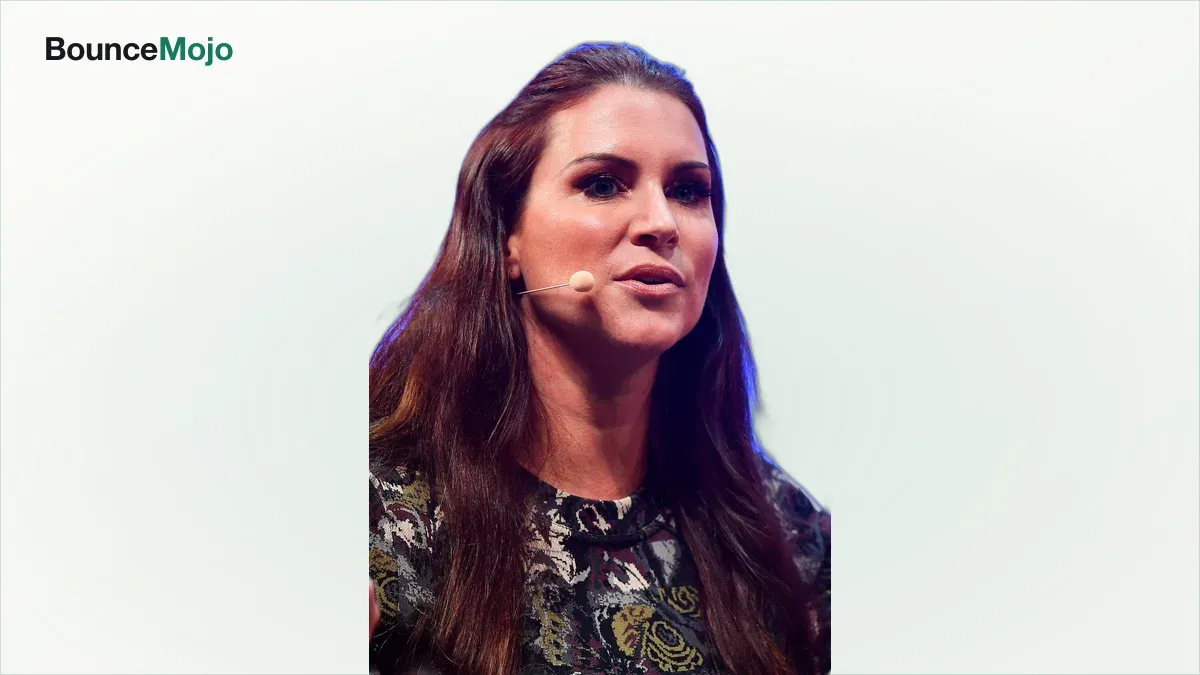
Most people know Stephanie McMahon as the sneering “billion-dollar princess,” the on-screen villain who tormented fan favorites. That character was a mask over a far more serious operator.
Here’s what most people miss: the woman who played a spoiled heiress on television actually started at the bottom of her own family’s company and climbed, job by job, to run it.
The Myth vs. The Reality
The myth is that Stephanie McMahon is a pampered heiress who inherited a throne, all attitude and entitlement, exactly like the character she played.
The reality is nearly the opposite.
Here’s the deal: Stephanie didn’t skip the line. She worked as a receptionist and account executive in her father’s company in the late 1990s, learning the operation from the ground floor before she ever became a household name. The “billion-dollar princess” was a performance. The real Stephanie was a grinder.
And “handed the empire”? When she finally reached the top as co-CEO in 2022, it was after more than two decades of climbing through creative, branding and executive roles. She earned the résumé, even if the surname opened the first door.
You might be wondering: how does the boss’s daughter avoid becoming just the boss’s daughter? To understand that, you have to understand the family she was born into.
The World That Made Stephanie McMahon
Stephanie was born in 1976 into American wrestling royalty.
Her father, Vince McMahon, was in the process of transforming a regional promotion into a global entertainment juggernaut. Her mother, Linda, ran the business side and would later become its CEO. Her brother Shane grew up in the company too. The dinner table was a boardroom, and the family name was the brand.
Now: that inheritance was a blessing and a burden. Growing up McMahon meant unimaginable access and opportunity, but it also meant living inside a fishbowl, where every choice would be measured against the family legacy and every success dismissed as nepotism.
The wrestling world of the 1990s and 2000s, meanwhile, was exploding into the mainstream, the Attitude Era, national television, pay-per-view spectacle. WWE was becoming a cultural force, and Stephanie was positioned at the very center of it, whether she wanted the scrutiny or not.
That collision, a young woman with a famous name and everything to prove, is the backdrop for everything. And she chose to prove it by starting at the very bottom.
The Crucible: Early Life and the Climb
The Environment That Shaped Her
Stephanie grew up around the business but was expected to earn her place in it.
She attended Boston University, graduating with a communications degree, and modeled WWE merchandise as a teenager. Then, rather than being installed in a corner office, she took entry-level work, receptionist, account executive, learning how the company actually functioned from the inside.
Here’s the truth: that grounding mattered. By understanding the operation at every level, Stephanie built the kind of practical knowledge that a purely inherited title never provides. She wasn’t just a McMahon. She was becoming a genuine executive.
The public, though, would meet her first as a character, not a businesswoman.
The Catalyst
In 1999, Stephanie stepped in front of the camera, and the storyline swallowed her.
She was written into some of the Attitude Era’s most talked-about plots, culminating in the on-screen persona that would define her public image: a manipulative, entitled authority figure the fans loved to hate. The “billion-dollar princess” was born, and she played the villain brilliantly.
It gets better, and stranger. Her on-screen storylines increasingly intertwined with a rising star named Triple H, and life imitated art. The two began a real relationship, married in 2003, and formed a power couple that would help steer the company’s future.
That partnership was the turning point, personally and professionally.
The Key Players
No one climbs alone, and Stephanie’s rise is a family affair, plus one crucial outsider-turned-insider.
Vince McMahon. Her father, the architect of the entire empire, and the towering figure she both worked under and, eventually, replaced. Their relationship, loving, complicated, professionally entangled, shaped every stage of her career.
Linda McMahon. Her mother, the company’s former CEO and a model of a woman running the business side of a wrestling empire. Linda’s example showed Stephanie that a McMahon woman could lead, not just perform.
Shane McMahon. Her brother and sometime rival within the family and the storylines, part of the sibling dynamic that WWE turned into decades of drama.
Triple H. Her husband and business partner, whose own rise from performer to Chief Content Officer paralleled hers. Together they aligned two careers around the same company, compounding the family’s influence and wealth.
Think about it: father, mother, brother, husband, every key relationship in Stephanie’s life ran through the same company. Her family and her career were the same thing, which was both her greatest advantage and her heaviest weight.
The Turning Point
The Pinnacle
Stephanie’s pinnacle came in 2022, when her father Vince stepped down amid controversy and she was named Chairwoman and co-CEO of WWE alongside Nick Khan.
For a moment, the woman who had spent decades climbing through the ranks sat at the very top of the company she’d grown up inside. She had already served as Chief Brand Officer since 2013, shaping WWE’s global image, and now she held the highest office. It was the culmination of a career that began at a reception desk.
But her true, lasting reward was quieter and more financial. As her net worth breakdown explains, her ownership of WWE stock, later converted in the sale to TKO Group, is the real foundation of her fortune, and it’s what keeps her near the top of our richest wrestlers list, far more than any title ever did.
The Price
Here’s the kicker: the top job came at the worst possible moment, and she didn’t keep it long.
Stephanie’s ascent to co-CEO happened during a turbulent period for the company and her family, and when her father returned in early 2023 to steer the company toward a sale, she resigned. The woman who had climbed for two decades stepped away from the summit almost as soon as she reached it.
There was a personal cost too. Being a McMahon meant her career was never fully her own, forever tangled with her father’s decisions, her family’s controversies, and a surname that both empowered and constrained her. The pinnacle came with a price: she led the empire only briefly, and largely on someone else’s timeline. Which brings us to the flaws.
The Unvarnished Truth
Stephanie is not the flawless executive her defenders describe, nor the entitled princess her critics claim.
She undeniably benefited from being born a McMahon. The first opportunities, the on-screen platform, the fast track into leadership, none would have existed without the family name. Pretending she rose purely on merit ignores the obvious advantage of her birth.
Now: none of that erases the real work. Much of the resentment she absorbed was the flip side of privilege, the automatic suspicion that a boss’s daughter can’t be competent. Stephanie spent years proving otherwise, and by most accounts she was a genuinely capable brand executive who modernized WWE’s image.
But those advantages have a cost. Her career was permanently shadowed by nepotism, meaning even her real achievements were discounted. And her deep entanglement with the family business meant she inherited its controversies as well as its wealth, unable to fully separate her name from her father’s decisions.
The most honest thing you can say is this: her greatest strength and her biggest liability were the same thing. The McMahon name. It gave her everything and made everything she earned suspect.
Controversies and Criticisms
Stephanie’s career carried the friction that comes with power and privilege.
The nepotism narrative. Throughout her rise, critics argued Stephanie’s positions owed more to her surname than her skill, a shadow that trailed even her genuine accomplishments as Chief Brand Officer.
The on-screen villainy. Her “billion-dollar princess” character was so effectively hateable that some of the animosity bled into public perception of the real woman, blurring the line between performer and person.
Family and company scandals. As a McMahon and a senior executive, Stephanie was inevitably linked to the serious controversies surrounding her father and the company’s ownership, raising uncomfortable questions about proximity and knowledge.
The brief, turbulent tenure. Her sudden rise to co-CEO and equally sudden resignation fueled debate about how much real power she held versus how much was dictated by her father’s return and the looming sale.
What We Can Learn From Stephanie McMahon
Navigating Hard Times
The first lesson is about proving yourself under suspicion. Stephanie spent a career being told her success wasn’t earned, and answered it by out-working the assumption, starting at reception and learning every level of the business. Her story says that when people expect you to coast, the antidote is competence they can’t deny.
But here’s the truth her exit makes plain: sometimes the hardest move is knowing when to step back. Rather than cling to a title amid chaos, Stephanie resigned, protecting her legacy and her stake. Walking away can be its own kind of strength.
The Success Blueprint
If you want the replicable part, it’s ownership over titles. Stephanie’s real wealth came not from being co-CEO but from holding equity in the company, stock that appreciated and converted into a lasting fortune. The net worth story shows the payoff, and it’s the same equity-first logic that builds durable wealth across our richest athletes list.
The other lesson is learning the whole business. By understanding WWE from reception desk to boardroom, Stephanie built the practical foundation that no inherited title could provide.
Becoming Better
The deepest lesson is about separating the person from the performance. For decades Stephanie was defined by a villain she played and a name she was born into. Her genuine skill as a brand builder, and her eventual choice to step back on her own terms, showed a person who was more than either the character or the surname.
In other words, you are not the role you’re cast in or the family you’re born into. And that distinction, between the myth and the operator, leads to the final take on one of wrestling’s most powerful women.
Final Verdict
Stephanie McMahon is one of the most significant figures in modern wrestling, and “significant” fits better than “great,” because her importance is about power and legacy, not in-ring artistry. She helped modernize WWE’s brand, briefly led the entire company, and remains central to the family that shaped the industry.
And here’s the twist that reframes everything: the woman the world knew as a spoiled on-screen heiress actually built her fortune the least glamorous way possible, by owning stock in the company she worked inside for a lifetime. The full financial picture lives in her net worth breakdown, and it shows that her real power was never the title of co-CEO. It was the equity, the quiet, appreciating stake that made a wrestling heiress genuinely wealthy on her own terms.
There’s a lesson buried in that for anyone who has ever been underestimated. Stephanie could have coasted on the family name and been dismissed as exactly what the villain character suggested. Instead she learned the business from the ground up, held onto her equity through every twist, and walked away on her own terms with a fortune that was genuinely hers.
If you want to understand the business behind the spectacle, study Stephanie McMahon. The princess was a character. The businesswoman was real.
Shop Stephanie McMahon on Amazon
Books, audiobooks, merch and more, handpicked for fans.
As an Amazon Associate we earn from qualifying purchases.
Frequently Asked Questions
Who is Stephanie McMahon's father?+
Stephanie McMahon is the daughter of Vince McMahon, the longtime chairman who built WWE into a global empire, and Linda McMahon, the company's former CEO who later entered U.S. politics.
What roles did Stephanie McMahon hold at WWE?+
Stephanie rose from receptionist and account executive to creative writing roles, then Chief Brand Officer in 2013, and finally Chairwoman and co-CEO in 2022 before resigning in early 2023.
Was Stephanie McMahon a wrestler?+
Yes, as an on-screen performer. She was a memorable villainous authority figure and a multi-time on-screen Women's Champion in WWE storylines, often feuding alongside or against her real-life family.
Is Stephanie McMahon married to Triple H?+
Yes. Stephanie married wrestler and executive Paul 'Triple H' Levesque in 2003. The two became one of the most powerful couples in the wrestling business and have three daughters.
Why did Stephanie McMahon leave WWE?+
Stephanie stepped back from an active leave, briefly returned as Chairwoman and co-CEO in 2022 after her father departed, then resigned in early 2023 when Vince McMahon returned ahead of the company's sale.
Want the money side of the story?
Read Stephanie McMahon's Full Net Worth Breakdown →Shop Stephanie McMahon on Amazon
Books, audiobooks, merch and more, handpicked for fans.
As an Amazon Associate we earn from qualifying purchases.