Stan Wawrinka Biography: The Late Bloomer Who Beat the Best
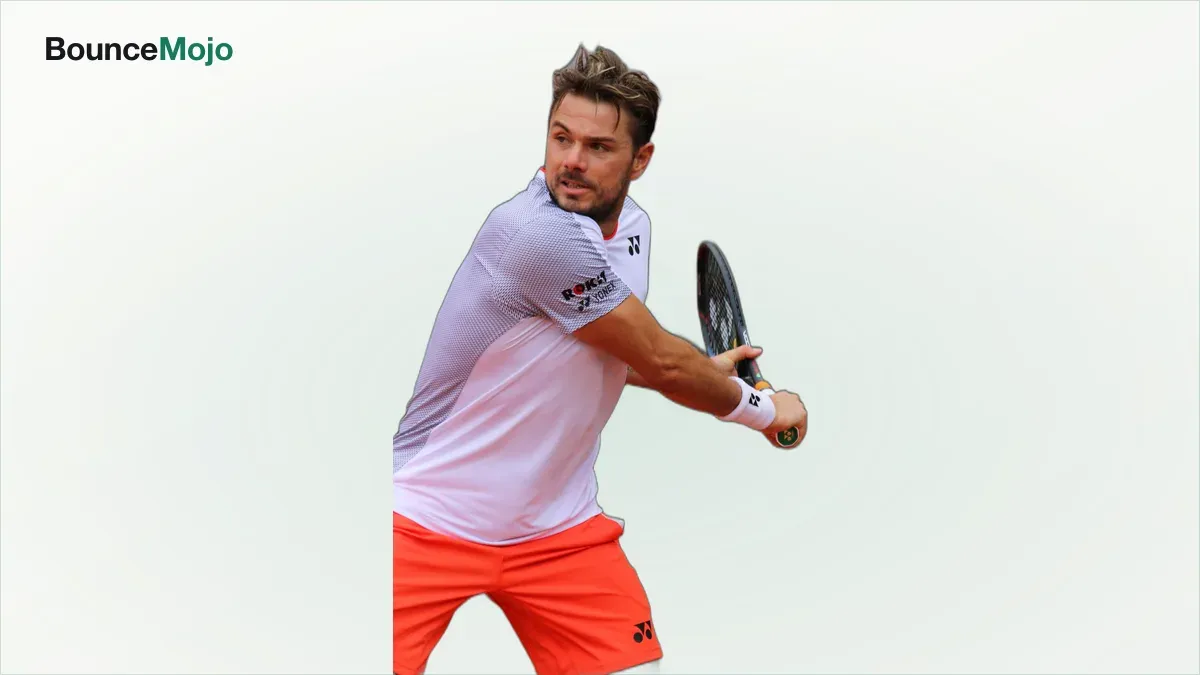
Most people remember Stan Wawrinka as the other Swiss guy, the one who wasn’t Federer. The full story is about a man who spent years in a shadow, then stepped out and beat the best in the world when it counted most.
Here’s what most people miss: he won all three of his major titles at an age when most players are fading, and he won them by beating the greatest champions of his era in their own finals.
The Myth vs. The Reality
The myth is dismissive: Stan Wawrinka, the second-best Swiss player, a solid pro who got lucky a few times in Federer’s slipstream. Nice backhand, roll credits.
The reality is far more impressive.
Here’s the deal: Wawrinka is a three-time Grand Slam champion who beat the best players in the world in every single one of his major finals. He did not luck into anything. He conquered the toughest era in men’s tennis history by producing his finest tennis in the biggest moments.
And the “shadow of Federer” narrative? It ignores that Wawrinka carved out a genuinely great career on his own terms, with a game and a story entirely his own.
You might be wondering: how does a player written off for years suddenly beat the best in the world after 28? To understand that, you have to understand where he came from.
The World That Made Stan Wawrinka
Wawrinka was born in 1985 near Lausanne, Switzerland, and raised on a farm run by his parents.
Swiss tennis had exactly one story in the 2000s, and it belonged to his compatriot, one of the greatest players who ever lived. For a young Wawrinka, that was both an inspiration and an enormous shadow to escape. Everything he did would be measured against a legend from his own small country.
Now: into that impossible comparison walked a grounded, hardworking farm kid with a booming one-handed backhand and a slow-burning belief in himself. Wawrinka would take years to bloom, but when he did, he would do it spectacularly.
Think about it: a player defined for a decade as second-best in his own nation, who eventually beat everyone in the world. That collision, of patience and eventual explosion, is the backdrop for everything he became.
The Crucible: Early Life and the Climb
The Environment That Shaped Him
Wawrinka’s upbringing was rural and grounded. His parents ran a farm, and he grew up with a strong work ethic and little of the polished, academy-bred slickness of some rivals. He left school at 15 to pursue tennis full time, betting everything on the game.
His signature weapon, the one-handed backhand, developed into one of the most beautiful and powerful shots in the sport. But for years, he was seen as a talented player who could not quite reach the top tier.
Let that land. He committed his whole future to tennis as a teenager, with no guarantee it would ever pay off at the highest level.
Here’s the truth: the patience forged on that farm, the willingness to grind for years without a breakthrough, was exactly what his late-blooming career would require.
The Catalyst
The turning point came in his late twenties, when he began working with coach Magnus Norman and famously had a Samuel Beckett quote tattooed on his arm: “Ever tried. Ever failed. No matter. Try again. Fail again. Fail better.”
That philosophy became his identity. Instead of accepting his ceiling, Wawrinka rebuilt his game and his mind, adding belief to his obvious talent.
It gets better, and suddenly. In 2014, at 28, Wawrinka won the Australian Open, his first major, beating the world No. 1 in the final. The player everyone had written off had only just begun.
The Key Players
No champion rises alone, and Wawrinka’s story turns on a handful of crucial figures.
Magnus Norman. The coach and former world No. 2 who unlocked Wawrinka’s belief and helped him win his majors. Their partnership was the hinge of his whole career.
Roger Federer. His compatriot, Davis Cup partner, and the shadow he spent years escaping. Together they won the Davis Cup for Switzerland in 2014, a shared triumph that meant the world to Wawrinka.
Novak Djokovic and Rafael Nadal. The rivals he beat in Grand Slam finals, proving he could conquer the very best when it mattered most.
His family. The farming parents whose work ethic shaped a player built for the long, patient road rather than the quick rise.
By the way, every one of these relationships points at the same theme: a man who needed the right belief and the right people to turn talent into greatness. That greatness peaked in a stunning three-year run.
The Turning Point
The Pinnacle
Wawrinka’s peak was a burst of major titles that shocked the sport.
He won the 2014 Australian Open, the 2015 French Open, and the 2016 US Open, and in every final he beat a top-ranked, all-time-great opponent. He also helped Switzerland win the Davis Cup and climbed to world No. 3. For a player once seen as a permanent runner-up, it was a staggering transformation. His own net worth story shows how those marquee wins reshaped his earning power.
Three majors, each won the hard way, against the best players alive, at an age when most careers wind down.
The Price
Here’s the kicker: the explosive, physical game that made him a champion took a heavy toll on his body.
Wawrinka played with enormous power and effort, and knee problems began to catch up with him. He underwent surgery and endured long spells on the sidelines, and he never quite reached those same heights again, though he kept competing for years afterward.
The pinnacle came at a physical cost. And how he handled the long, difficult decline, refusing to walk away, revealed as much about him as the titles did.
The Unvarnished Truth
Wawrinka was more emotional and vulnerable than his powerful game suggested.
He spoke openly about self-doubt, about the years of feeling like he would never escape his compatriot’s shadow, and about the mental battles behind his late breakthrough. His famous tattoo was less a slogan than a confession: he had failed, repeatedly, and had to learn to fail better.
Now: none of that is weakness. It is honesty rare among elite athletes. Wawrinka let the world see that greatness came only after real struggle and doubt.
The most honest thing about Wawrinka is that his biggest strength, a fearless, all-or-nothing game, grew directly out of his biggest vulnerability, the fear that he was not good enough. He turned doubt into power.
Controversies and Criticisms
Wawrinka’s career was largely free of scandal, and his criticisms were mostly about circumstance.
The eternal second-best label. For years he was dismissed as merely the other Swiss player, a framing his three majors eventually demolished.
Inconsistency. Critics noted that Wawrinka could be brilliant one week and ordinary the next, a fair point about a player whose game lived on high-risk shot-making.
The late peak. Some questioned whether his sudden rise after 28 could last. Injuries eventually slowed him, but the titles were undeniable.
Playing on too long. As with many champions, some argued he kept competing past his best. Wawrinka carried on regardless, driven by love of the game rather than rankings.
What We Can Learn From Stan Wawrinka
Navigating Hard Times
The first lesson is about patience under a shadow: you do not have to bloom on anyone else’s timeline. Wawrinka spent years labeled second-best, then broke through when many assumed his window had closed.
But here’s the truth his tattoo makes plain: failure is not the opposite of success, it is the road to it. Wawrinka failed for years and used those failures as raw material for his eventual greatness.
The Success Blueprint
If you want the replicable part, it’s this: Wawrinka added belief to talent and committed fully to a high-risk, high-reward game that gave him a chance against anyone. He stopped playing not to lose and started playing to win.
That’s transferable. The lesson isn’t “just be aggressive.” It’s “back yourself completely, especially when the stakes are highest.” That approach made him a three-time major champion and a wealthy figure on our richest tennis players ranking.
Becoming Better
The deepest lesson is about self-acceptance. Wawrinka stopped comparing himself to his legendary compatriot and started building his own identity, both on court and off.
In other words, he understood that his story did not have to match anyone else’s. The farm kid who escaped a giant’s shadow proved that a different, slower path can still lead somewhere extraordinary.
Final Verdict
Stan Wawrinka is one of the most underrated champions in modern tennis, and “underrated” fits better than “second-best,” because his results were anything but. He won three majors, beat the greatest players of his era in their own finals, and did it all after most careers begin to fade.
And here’s the twist that reframes everything: the man dismissed for years as merely the other Swiss player turned out to be a big-match killer who conquered the toughest field the sport has ever seen. The full picture of the fortune he built lives in his net worth breakdown, and it fits him perfectly: a late bloomer from a Swiss farm who bet everything on belief and cashed it in on the biggest stages of all.
Wawrinka never needed to be the most famous or the most consistent of his generation. He just needed to be the bravest when it mattered, and the most honest about the doubt he overcame, which is exactly why that backhand, and that story, endure.
Shop Stan Wawrinka on Amazon
Books, audiobooks, merch and more, handpicked for fans.
As an Amazon Associate we earn from qualifying purchases.
Frequently Asked Questions
Where did Stan Wawrinka grow up?+
Wawrinka grew up near Lausanne, Switzerland, on a farm run by his parents. He left school young to focus on tennis, an unusual path for a future major champion.
How many Grand Slams did Stan Wawrinka win?+
Wawrinka won three Grand Slam singles titles: the 2014 Australian Open, the 2015 French Open, and the 2016 US Open, beating top-ranked rivals in each final.
Why is Stan Wawrinka called a late bloomer?+
Wawrinka won all three of his majors after turning 28, an age when many players decline, breaking through only after years in the shadow of his compatriot.
What is Stan Wawrinka known for?+
Wawrinka is famous for one of the best one-handed backhands in tennis history and for beating the very best players in the world in Grand Slam finals.
Who coached Stan Wawrinka to his titles?+
His breakthrough came under coach Magnus Norman, a former world No. 2 who helped transform Wawrinka into a Grand Slam champion.
Want the money side of the story?
Read Stan Wawrinka's Full Net Worth Breakdown →Shop Stan Wawrinka on Amazon
Books, audiobooks, merch and more, handpicked for fans.
As an Amazon Associate we earn from qualifying purchases.