Shiv Nadar Biography: The Engineer Who Bet Against IBM
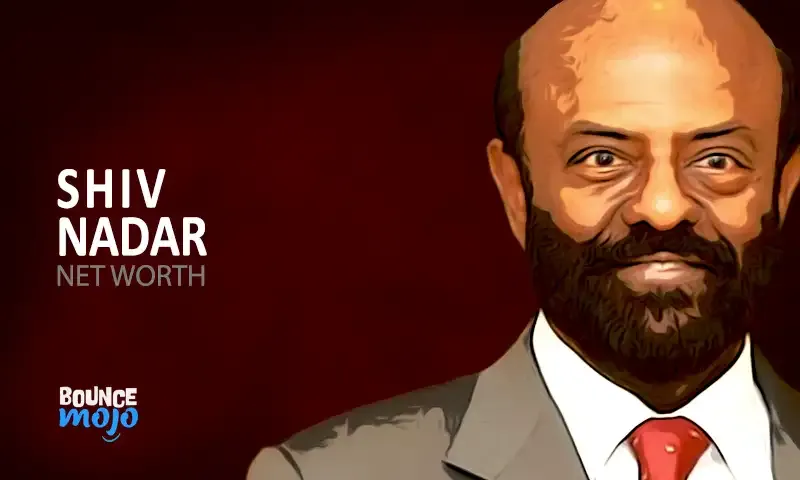
The standard version of Shiv Nadar’s life starts in a garage in Delhi in 1976. The more interesting version starts nine years earlier, on a factory floor in Pune, with a young engineer deciding that a secure job at a respected industrial group was the wrong place to spend a life.
Moolaipozhi to Coimbatore: A Very Ordinary Excellent Education
He was born on 14 July 1945 in Moolaipozhi, a village in what is now Thoothukudi district, Tamil Nadu, to Sivasubramaniya Nadar and Vamasundari Devi. His schooling was scattered across the state — Kumbakonam, Madurai, Trichy — before pre-university study at the American College in Madurai and an electrical and electronics engineering degree from PSG College of Technology, Coimbatore, completed in 1967.
It is worth being clear about what this was and was not. It was not poverty. It was a solidly-off south Indian family that valued schooling and could pay for it. Nor was it privilege of the kind that opens doors in Delhi. What Nadar had was a good regional engineering degree in a country that, in 1967, had almost no technology industry for such a degree to enter.
Walking Out of Cooper Engineering
His first job was at Cooper Engineering, part of the Walchand group, in Pune. He left it — along with a cluster of colleagues including Arjun Malhotra, Ajai Chowdhry, Subhash Arora, Yogesh Vaidya and D.S. Puri — to build something of their own.
They did not begin with computers. They began with teledigital calculators, sold through a venture called Microcomp. Calculators paid the bills and, more usefully, taught the group how to sell an unfamiliar electronic product to Indian buyers who had never bought one.
In 1976 the group founded HCL with roughly ₹187,000. Six figures in rupees. Eight founders. No institutional backing.
The Departure That Made HCL
Then India’s regulatory environment did something no business plan could have predicted.
Foreign-exchange rules in the late 1970s required multinationals to dilute their Indian ownership. IBM, which effectively was computing in India, refused and wound down its Indian operations rather than accept the terms. An entire installed base of machines, customers and service contracts was left without a supplier.
HCL was one of the small local firms standing there when it happened. It launched the HCL 8C in 1978 — a microcomputer priced around ₹300,000, which HCL has long claimed as one of the earliest personal computers built anywhere, three years ahead of the IBM PC. Whether that claim survives strict scrutiny is arguable. What is not arguable is that a company two years old was designing and shipping its own hardware in a market where nobody else could.
Expansion followed the same instinct — go where the market is, not where the comfort is. Far East Computers opened in Singapore in 1980, an unusual move for an Indian firm of that size. A push into US hardware in 1989 largely failed against American regulation and incumbents. Nadar’s response in 1991 was to stop fighting and partner: HCL-HP, a joint venture with Hewlett-Packard, which got the company into American accounts through the front door.
From Selling Boxes to Selling Engineers
The most consequential decision came late. In 1998 Nadar split the group into separate businesses, with HCL Technologies carved out as the global IT services arm; it listed publicly the following year.
That split is the whole story of Indian IT compressed into one corporate action. Hardware was a low-margin, capital-hungry business that India could not win globally. Software services and engineering R&D were labour-intensive, high-margin, and exactly what India had in surplus. Nadar had spent twenty years building a hardware company and then correctly concluded that the hardware company was not the future.
HCLTech today runs one of the largest engineering and R&D services operations in the world and employs well over a hundred thousand people. The full net worth breakdown traces how a founding stake in that business compounded, and the richest CEOs list sets him against the other operator-founders.
The Indian government awarded him the Padma Bhushan in 2008, its third-highest civilian honour.
Giving as Institution-Building, Not Cheque-Writing
Nadar’s philanthropy has a specific and slightly unfashionable shape: he builds institutions and then keeps funding them for decades, rather than distributing grants widely.
SSN College of Engineering opened in Chennai in 1996, named for his father, endowed with HCL stock. VidyaGyan, announced in 2008, put rural children from Uttar Pradesh through free residential schooling selected on merit from across the state’s districts. Shiv Nadar University followed. Commitments through the Shiv Nadar Foundation now exceed $1 billion, and he has repeatedly topped Indian philanthropy rankings — in one recent financial year the foundation’s giving ran into thousands of crores.
The pattern is unmistakably an engineer’s. Every one of these is a school. He is not trying to relieve a condition; he is trying to build the thing that produced him, at scale, for people who would not otherwise get it.
His wife, Kiran Nadar, has done something structurally similar in a different field: an Asian Games medallist and internationally ranked bridge player, she assembled one of India’s most significant private art collections and put it into the Kiran Nadar Museum of Art in Delhi rather than keeping it on a wall.
March 2025: Signing It Over
The handover was gradual and then absolute. Their only child, Roshni Nadar Malhotra, became chairperson of HCLTech in July 2020. Nadar stepped back from executive roles the following year.
Then in March 2025 he executed two gift deeds transferring 47% of his stake in HCL Corporation and Vama Delhi to her, giving her majority control of the group outright. India’s markets regulator granted an exemption from the open-offer requirement, and the filings described it plainly as a family arrangement to settle succession. It made her one of the wealthiest people in India and one of very few women anywhere to control a technology company of that size.
Most founders of that generation hold on until they cannot. Nadar handed over the chair at 75 and the shares at 79, in writing, while alive and able to watch what happened next. For a man whose entire career consisted of exiting a position before it stopped working — the factory job, the calculators, the hardware business — it is the most consistent thing he ever did.
Shop Shiv Nadar on Amazon
Books, audiobooks, merch and more, handpicked for fans.
As an Amazon Associate we earn from qualifying purchases.
Frequently Asked Questions
Where was Shiv Nadar born?+
He was born on 14 July 1945 in Moolaipozhi, a village in what is now the Thoothukudi district of Tamil Nadu, and was schooled across several towns in the state before studying electrical engineering at PSG College of Technology, Coimbatore.
How was HCL founded?+
Nadar and a group of colleagues who had quit Cooper Engineering founded HCL in 1976 with roughly ₹187,000 in capital, after first selling teledigital calculators through a venture called Microcomp to generate cash.
What was the HCL 8C?+
It was HCL's first microcomputer, launched in 1978 and sold for around ₹300,000. HCL has long claimed it as one of the earliest personal computers built anywhere, predating the IBM PC by three years.
Who runs HCL now?+
His daughter Roshni Nadar Malhotra. She became chairperson of HCLTech in July 2020, and in March 2025 Nadar transferred 47% of his stake in the group holding companies to her by gift deed, handing over control outright.
How much has Shiv Nadar given to philanthropy?+
More than $1 billion committed through the Shiv Nadar Foundation, nearly all of it into education — SSN College of Engineering, VidyaGyan rural boarding schools, and Shiv Nadar University. He has repeatedly topped Indian philanthropy rankings.
Want the money side of the story?
Read Shiv Nadar's Full Net Worth Breakdown →Shop Shiv Nadar on Amazon
Books, audiobooks, merch and more, handpicked for fans.
As an Amazon Associate we earn from qualifying purchases.