Sergio Ramos Biography: The Defender Who Refused to Lose
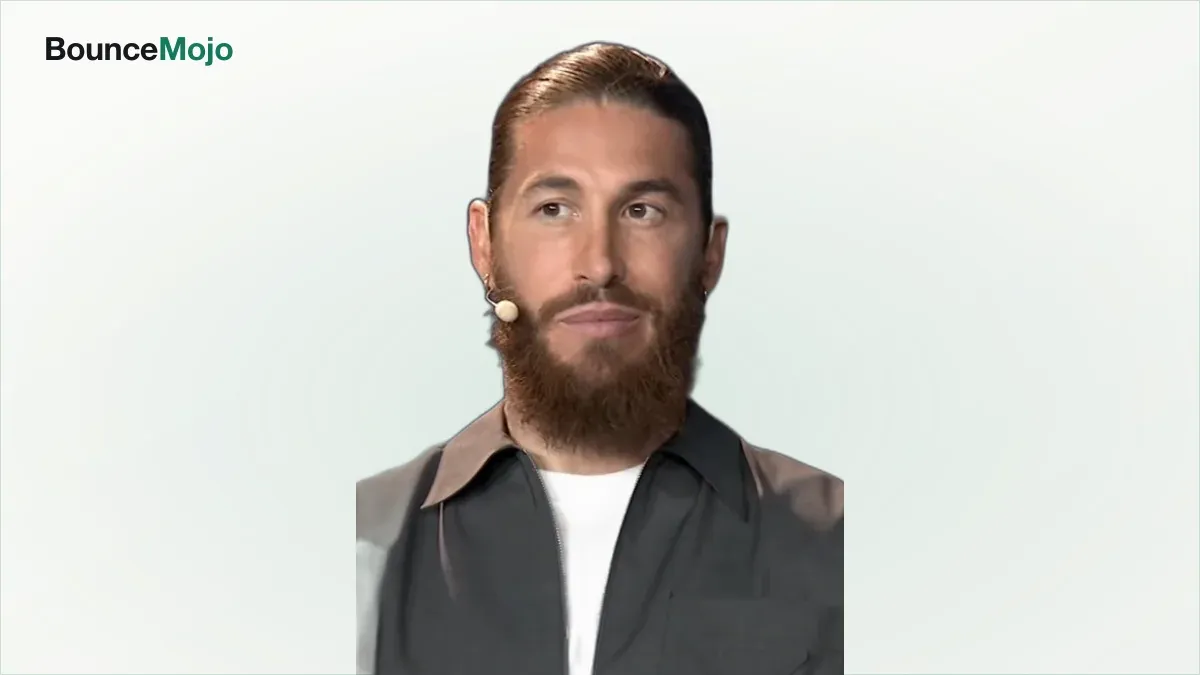
Most people know Sergio Ramos as the tattooed defender who scored the header, or picked up the red card. Both images capture his fire and miss his mind.
Here’s what most people miss: the man remembered for his aggression was one of the most intelligent, calculating leaders the game has ever seen, a defender who turned raw will into 16 years of controlled dominance.
The Myth vs. The Reality
The myth is loud. Sergio Ramos: the reckless enforcer, the red-card king, the tattooed hard man who kicked his way to glory. A brawler in a Real Madrid shirt. Roll credits.
The reality is far more calculated.
Here’s the deal: Ramos was never just a bruiser. He was a supremely intelligent footballer, comfortable on the ball, capable of stepping into midfield, and blessed with a striker’s instinct for the crucial goal. His long list of last-minute headers in decisive games was not luck. It was a defender who understood exactly when a match needed him.
And the “hot-headed” image hides his greatest quality: leadership. Ramos captained Real Madrid and Spain through their most successful era in living memory. You don’t lead the biggest club in the world for a decade by accident. The aggression was a tool, not a flaw.
You might be wondering: how does a kid from a small town near Seville become the iron captain of European football’s most demanding club? To understand that, you have to understand where he came from.
The World That Made Sergio Ramos
Ramos was born in 1986 in Camas, a small town near Seville, into a Spain where football was a religion and Andalusia was its passionate southern heartland.
This was a working-class world where family was everything and toughness was a virtue. Ramos grew up in a close-knit household, deeply attached to his siblings, and immersed in the culture of southern Spain: bullfighting, flamenco, horses, and fierce local pride. That culture prized bravery and a refusal to back down.
Now: Spanish football in Ramos’ youth was on the verge of its golden age. The national team, long underachievers, was about to become the best in the world, winning back-to-back Euros and a World Cup. Ramos would be at the center of it, one of the players who ended decades of Spanish disappointment.
That backdrop matters. Ramos carried the pride, courage, and stubbornness of Andalusia into everything he did, and it made him both beloved and infuriating.
But before the trophies, there was a boy following his big brother’s lead.
The Crucible: Early Life and the Climb
The Environment That Shaped Him
The most important figure in young Sergio’s life was his older brother, Rene, who spotted his talent early and steered him toward Sevilla, the club of their region.
The Ramos family was tight and supportive, and Sergio’s drive was obvious from the start. He was fearless, competitive, and desperate to win, traits that would define his entire career. Rene would later become his professional agent, keeping the family at the heart of Sergio’s affairs.
Here’s the truth: Ramos rose fast. He broke into Sevilla’s first team as a teenager and impressed immediately with his maturity and toughness. Real Madrid, the biggest club in the country, came calling when he was just 19.
The Catalyst
The move to Real Madrid in 2005 was the moment everything changed.
Ramos arrived as a promising young right-back and had to prove he belonged among galacticos and global superstars. It gets better: he didn’t just survive, he thrived, gradually moving into central defense and growing into a leader far beyond his years.
You might be wondering how a young full-back became the emotional core of a dynasty. Through relentless will and an instinct for the biggest moments. As the years passed, Ramos took on more responsibility, more pressure, and eventually the captain’s armband, becoming the player the whole club leaned on.
But the man who would define an era needed one night, and one impossible header, to become immortal.
The Key Players
No captain leads alone, and Ramos’ story is shaped by a handful of defining figures.
Rene Ramos, his brother. The guiding hand of his career and later his agent. Rene shaped his path from Sevilla to Real Madrid and kept the family in control of his business, a bond that anchored everything.
Iker Casillas. The Spain and Real Madrid captain before him, a teammate and, at times, a complicated rival as Ramos rose to inherit the leadership of both club and country.
Cristiano Ronaldo. His superstar teammate and close friend at Real Madrid, the pair forming the backbone of the club’s Champions League dynasty and a genuine friendship off the pitch.
Zinedine Zidane. The manager who led Real Madrid to three straight Champions League titles with Ramos as his captain and defensive leader, trusting him completely.
Think about it: the same fierce loyalty and pride that made Ramos a beloved captain is exactly what made his eventual exit so painful. That collision defines his final act at Madrid. But first came the summit.
The Turning Point
The Pinnacle
Ramos’ mountaintop is a run of glory almost no defender can match.
He won the 2010 World Cup with Spain and two European Championships, then anchored Real Madrid to four Champions League titles. But the single defining moment came in the 2014 final against Atletico Madrid. With Real losing and the clock in the 93rd minute, Ramos rose to head home an equalizer that forced extra time. Real went on to win “La Decima,” their tenth European Cup, and Ramos’ header became legend. His full net worth story shows how that status kept paying long after.
He scored in another Champions League final, captained the club through its greatest era, and became one of the most decorated players in football history.
The Price
Here’s the kicker: the same all-in intensity that made him a champion also made him a target.
Ramos amassed a record number of red cards, and his aggressive, provocative style earned him enemies across Europe. Rivals accused him of gamesmanship and worse. The fire that won matches also cost his teams players and drew constant controversy.
And the peak did not end gently. After 16 years, his Real Madrid career closed in a bitter contract dispute in 2021, and the club legend left on a free transfer in an emotional, unsatisfying farewell. The pinnacle and the pain were bound together. Which brings us to the flaws behind the captain.
The Unvarnished Truth
Ramos was a magnificent competitor, but honesty requires the sharp edges.
His discipline was a genuine problem. The record red cards were not all bad luck; some came from cynical, tactical fouls or moments where his temper got the better of him. He played on the edge, and sometimes over it, willing to bend the rules and rough up opponents to win.
Now: none of this makes him a villain. It makes him a fierce competitor whose greatest strength, his refusal to lose, occasionally curdled into recklessness. He would take a booking, or worse, if he believed it protected his team. Ruthless, but rarely cowardly.
His pride caused friction too. The contract standoff that ended his Real Madrid career reflected a man who knew his worth and would not be undervalued, even by the club he loved. Admirable to some, stubborn to others.
The most honest thing you can say about Ramos is that his greatest quality and his greatest flaw were the same thing: an absolute, uncompromising will to win at any cost.
Controversies and Criticisms
Ramos’ career carried plenty of friction to go with the trophies.
The red-card record. His disciplinary history is among the worst of any elite defender, and critics argue his aggression crossed the line too often, costing his teams and injuring opponents.
The gamesmanship accusations. Rivals, most famously after the 2018 Champions League final where Mohamed Salah was injured in a challenge with Ramos, accused him of cynical, dangerous play. Ramos denied intent, but the incident followed him.
The bitter Real Madrid exit. His 2021 departure over a contract dispute divided fans. Some blamed the club, some blamed Ramos’ demands, but nearly everyone agreed a legend deserved a cleaner goodbye.
None of these erase his greatness, and even his fiercest critics concede his leadership and big-game brilliance. But they complete the portrait of a player who lived permanently at the edge.
Quote Analysis and Literary Breakdown
Ramos’ words reveal a leader obsessed with winning and loyalty.
On never giving up. His whole philosophy lived in his refusal to accept defeat until the final whistle, embodied by his stoppage-time goals. The subtext: for Ramos, a match was never over while he was still on the pitch.
On captaincy and responsibility. He spoke often about the weight of leading Real Madrid, revealing a man who took the armband as a sacred duty, not a decoration.
On his emotional Real Madrid farewell. His tears at the exit press conference told the story words could not. The hard man who feared no striker was undone by leaving the club he loved.
Read together, the words of a competitor for whom football was never just a game, but a matter of pride, loyalty, and identity.
What We Can Learn From Sergio Ramos
Navigating Hard Times
The first lesson is about will under pressure. Ramos’ career is built on refusing to accept a losing situation, most famously in that 93rd-minute header. He teaches that a game, or a life, is not decided until it is truly over.
But here’s the truth his exit makes plain: even the strongest leaders face endings they cannot control. Ramos handled a bitter, unwanted departure and kept playing at the top, proving that resilience matters as much when things fall apart as when you are winning.
The Success Blueprint
If you want the replicable part, it’s this: master your role so completely that you redefine it. Ramos took the unglamorous job of defending and turned it into leadership, goals, and global stardom. He made a center-back a superstar.
That rare achievement put him among the wealthiest players in the game, as our richest soccer players ranking shows, and it stands beside the fortunes on our richest athletes list.
Becoming Better
The deepest lesson is about roots and identity. For all his global fame, Ramos never lost his Andalusian soul, his love of horses, his family bonds, his home region. That grounding gave him a stability that fame and money could not.
In other words, knowing exactly who you are lets you carry pressure that would crush others. Ramos led the biggest club in the world because he never forgot the boy from Camas. And that leads to the quiet twist that closes his story.
Final Verdict
Sergio Ramos is one of the greatest defenders in football history, and one of its most complicated icons. He was a champion and a lightning rod, a leader and a provocateur, a man who won everything while dividing opinion at every turn. His will to win rewrote what a defender could be.
And here’s the twist that reframes everything: the fiercest competitor of his generation found his deepest peace far from the noise, on a horse farm in the Andalusian countryside he never really left. The man who lived on the edge of every match built a quiet life around family, horses, and home. The full mechanics of how that career funded such a life live in his net worth breakdown, and it is the most fitting ending imaginable: the ultimate warrior, most at peace where the fighting stops.
Shop Sergio Ramos on Amazon
Books, audiobooks, merch and more, handpicked for fans.
As an Amazon Associate we earn from qualifying purchases.
Frequently Asked Questions
Where did Sergio Ramos grow up?+
Sergio Ramos grew up in Camas, a small town near Seville in Andalusia, southern Spain. He came from a close, working-class family and idolized his older brother Rene, who guided his early career.
What is the significance of Ramos' 2014 Champions League header?+
In the 2014 final against Atletico Madrid, Ramos scored a towering header in the 93rd minute to force extra time, rescuing Real Madrid from defeat and setting up 'La Decima,' the club's tenth European Cup. It is one of the most famous goals in the club's history.
Why is Sergio Ramos known for red cards?+
Ramos holds the record for one of the most red cards in La Liga and Champions League history. His aggressive, all-in defending and win-at-all-costs mentality made him both a leader and a lightning rod for controversy.
How did Ramos leave Real Madrid?+
After 16 years, Ramos left Real Madrid in 2021 in an emotional and somewhat bitter departure over a contract dispute, joining Paris Saint-Germain on a free transfer. Many fans felt the club legend deserved a better farewell.
Who is Sergio Ramos married to?+
He is married to Spanish television presenter and model Pilar Rubio. The couple are one of Spain's most famous pairings and have four sons together.
Want the money side of the story?
Read Sergio Ramos's Full Net Worth Breakdown →Shop Sergio Ramos on Amazon
Books, audiobooks, merch and more, handpicked for fans.
As an Amazon Associate we earn from qualifying purchases.