Sergio Garcia Biography: The Prodigy Who Waited 18 Years to Win
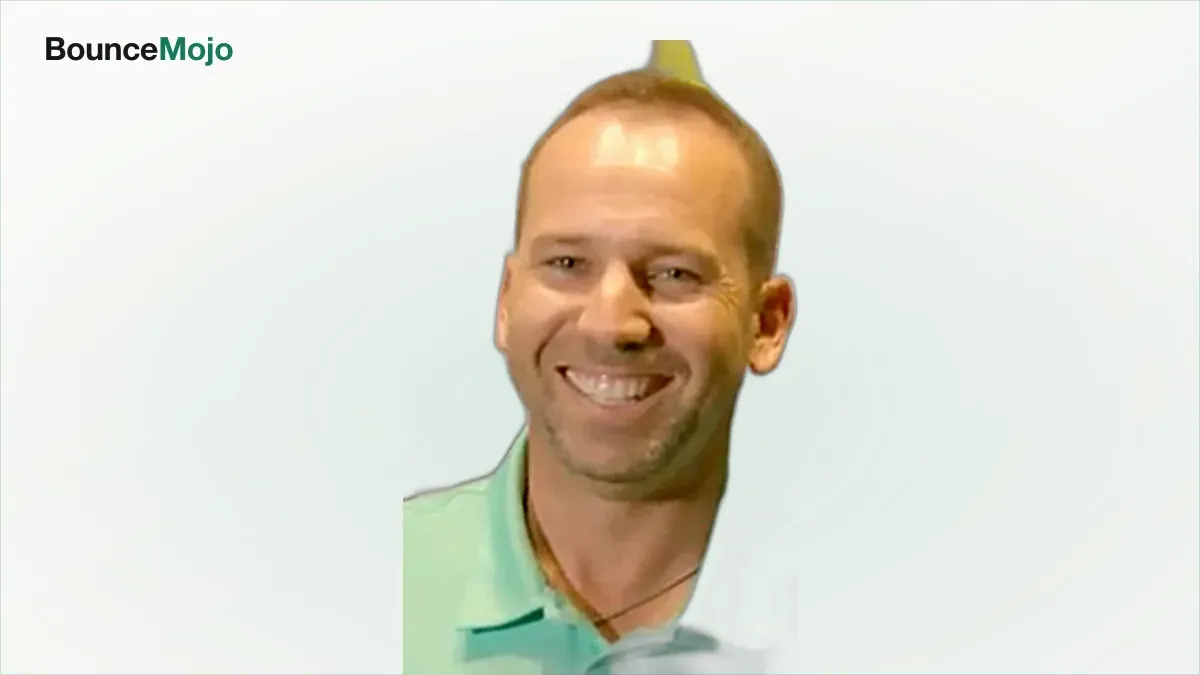
For nearly 20 years, Sergio Garcia was golf’s most gifted heartbreak. The kid who had everything except the one thing that mattered.
Here’s what most people miss: the temper, the tears, the collapses everyone remembers were never the real story. The real story is what it takes to keep swinging when the whole sport has decided you’ll always come up short.
The Myth vs. The Reality
The myth of Sergio Garcia is that he was a hothead who choked when it counted. The petulant Spaniard who spat in a cup, badmouthed course setups, and folded on Sundays.
Here’s the truth: that caricature buried a far more human story.
Yes, Sergio wore his emotions on his sleeve. Yes, he said things he regretted. But the same fire that got him in trouble was the fire that made a two-year-old fall in love with the game and never let go. Behind the “villain” headlines was a genuine prodigy carrying an entire nation’s expectations, competing in an era ruled by the most dominant golfer who ever lived.
The public saw a brat. The reality was a deeply talented, deeply feeling athlete who kept getting up after gut-punches that would have ended lesser careers.
You might be wondering: what kind of world produces a kid this good, this young, and this scrutinized? Start with the country and the era that made him.
The World That Made Sergio Garcia
To understand Sergio, you have to understand Spanish golf, and the giant shadow he grew up chasing.
Spain had produced one true golfing god: Seve Ballesteros, the charismatic genius who turned a whole country onto the sport. When Sergio emerged, Spain wanted its next Seve, and it wanted him immediately. That is a crushing weight to hand a teenager.
He was born in 1980 in Borriol, a small town near the Mediterranean coast. His father, Víctor, was the professional at the local club, so Sergio grew up inside golf the way other kids grow up inside a family business. He was hitting balls before he could really talk.
Now: timing is everything, and Sergio’s timing was cruel. He turned pro right as Tiger Woods was redefining the ceiling of the sport.
Think about it. Every generation of golfer had a shot at being number one, except the ones who peaked exactly when Tiger did. Sergio walked into his prime in the middle of a Tiger monsoon.
And their first great collision came almost immediately.
The Crucible: Early Life and the Climb
The environment that shaped him
Sergio’s childhood was golf, full stop. His father cut down a set of clubs so a toddler could swing them. By 12 he’d won his club championship. By his mid-teens he was rewriting European amateur record books.
He won the British Amateur Championship in 1998 and made the cut at the Masters as an amateur. He’d already set records as the youngest player to make the cut at major European Tour events, breaking through as a teenager against seasoned professionals. This wasn’t a kid with promise. This was a kid who was already, by any measure, one of the best amateurs on earth, and one whose exploits were being reported around the world before he could legally drink in most countries.
But here’s the kicker: raw talent that arrives that early comes with a target on its back. Expectations calcified fast. He wasn’t allowed to just be good. He had to be the next Seve, the next great thing, right now.
The catalyst
The moment that made him a global name came at the 1999 PGA Championship at Medinah. Sergio, just 19, hit a miraculous shot from behind a tree with his eyes closed on impact, then sprinted up the fairway with a leaping scissor-kick to see where it landed. The image went around the world.
He finished second that week. To Tiger Woods.
It was the perfect origin story and the perfect curse in one afternoon: dazzling, fearless, and one shot short. The pattern was set.
The Key Players
No one shapes a career alone, and Sergio’s cast was vivid.
His father, Víctor, was his first and most important coach, the man who built the swing and the love of the game. That bond ran through his entire career.
Then there was Tiger Woods, the rival who was never quite a friend. Their careers were forever intertwined, from Medinah onward, and the relationship curdled at times into open friction. Woods was the wall Sergio kept running into, the benchmark he could never fully clear, and the pressure of that comparison marked him for years.
Here’s the deal: rivalries make players, but they can also define them by what they lack. For a long time Sergio was defined by the trophies Tiger had and he didn’t.
Later came Angela Akins, the woman who steadied him. A former college golfer and Golf Channel reporter, she became his wife in 2017, the same year his career finally turned. Friends and family have pointed to that stability as part of why the breakthrough came when it did.
Now the talent was there. The support was there. The only thing missing was the one thing everyone kept asking about.
The Turning Point
The pinnacle
For 18 years the question followed him like a shadow: when will Sergio finally win a major?
He’d come agonizingly close. Second at the 1999 PGA. Second at the 2007 Open Championship, where he lost a playoff to Padraig Harrington after leading. Playoff heartbreak, closing-hole disasters, missed short putts on the biggest stages. He once said openly that he didn’t think he was good enough to win a major, an astonishing admission from a player of his gifts.
Then came April 2017. The Masters. Augusta National.
On his 74th major-championship start, at 37 years old, Sergio and Justin Rose staged one of the great Sunday duels in Masters history. They went to a playoff. On the first extra hole, Sergio rolled in a birdie putt and finally, finally, dropped to his knees.
The green jacket went on the man everyone had written off as the eternal runner-up. And he did it in the same week he’d been playing, in his words, some of the most relaxed golf of his life, newly engaged and finally at peace.
The symbolism ran deep. He’d made his Masters debut as a teenager, dreaming of exactly this, and it took nearly 20 years to arrive. When it finally did, he named his first daughter Azalea, after the flowers and the famous par-5 13th hole at Augusta where he’d made a crucial par during that winning week. The man who’d been defined by heartbreak turned his greatest triumph into a piece of family history.
The price
But here’s what those 18 years cost him.
They cost him confidence, publicly. They cost him a reputation, as the near-misses hardened into a narrative about his temperament. Every collapse became evidence in a case against his character, fair or not.
He paid in ridicule. He paid in self-doubt he admitted to out loud. He paid in the slow erosion of being called soft on Sundays for the better part of two decades. Winning the Masters didn’t just add a trophy. It lifted a weight he’d carried since he was a teenager.
Which brings up the parts of his story that were never so tidy.
The Unvarnished Truth
Let’s be honest about the rough edges.
Sergio’s temper was real. He slammed clubs, argued with officials, and complained about course conditions in ways that drew fines and criticism. At the 2019 Saudi International he was disqualified for damaging putting greens in frustration, a genuine low point he later apologized for.
Here’s the vulnerable truth: the same emotional wiring that made him magnetic to watch also made him his own worst enemy at times. He felt everything intensely, and on a golf course that can be a gift or a curse, sometimes in the same round.
He wasn’t a manufactured brand. He was a real, flawed, combustible competitor who never learned to hide it. And in a sport that prizes composure above almost everything, that honesty cost him goodwill he sometimes deserved to keep.
Still, no story this long escapes real controversy.
Controversies and Criticisms
The heaviest one came in 2013.
At a European Tour event dinner, asked a joking question about Tiger Woods, Sergio made a remark widely condemned as racist. He apologized quickly and repeatedly, called it “totally stupid and out of place,” and reached out privately as well. But the comment left a lasting stain and became the ugliest chapter of his public life.
There were smaller controversies too: the green-damage disqualification, the on-course outbursts, the friction with fans and officials over the years.
And then there was LIV Golf. When Sergio joined the Saudi-backed breakaway league in 2022, he became a lightning rod in golf’s civil war, criticized by some as chasing money over legacy and cheered by others as a veteran securing his family’s future. He didn’t shy from the fight, at times clashing openly with the establishment he left behind.
The critics had material. But reducing Sergio to his worst moments misses the fuller, more complicated man underneath.
What We Can Learn From Sergio Garcia
Navigating hard times
When it got hard, Sergio kept teeing it up. That’s the whole lesson.
Eighteen years of near-misses would have hollowed out most competitors. He kept showing up at every major, kept putting himself in position to be heartbroken again, because the only way to eventually win was to keep risking the loss.
Here’s the truth: resilience isn’t the absence of doubt. Sergio doubted himself out loud, and still walked to the first tee. That’s a harder, more human kind of toughness than pretending you’re never afraid.
The success blueprint
Want to know the best part? His breakthrough is a lesson in patience and self-forgiveness.
The Masters came only after he’d stopped strangling the club and started, as he put it, accepting that the outcome wasn’t fully in his control. Stability off the course helped. So did lowering the temperature on his own expectations. Sometimes the win arrives only when you loosen your grip on it.
His career also shows the compounding value of longevity. Two decades of steady excellence, banked and reinvested, built a fortune far larger than any single victory, and you can see exactly how it added up in his full net worth breakdown.
The philosophical takeaway is simple. You are not your worst Sunday, and you are not your worst quote. Keep going long enough, and you get the chance to write a better ending.
Final Verdict
Sergio Garcia’s story rewards a second look.
Strip away the tantrums and the tabloid moments, and you find a genuine prodigy who carried a nation’s hopes, dueled the greatest player of his era for two decades, absorbed heartbreak after public heartbreak, and finally, at 37, on his 74th try, got to drop to his knees on the most famous grass in golf.
He is proof that talent alone guarantees nothing, that persistence outlasts ridicule, and that redemption, when it finally comes, tastes sweeter for the wait.
No definitive memoir tells the whole arc yet. Until one does, the record stands on its own: a teenage sensation who became golf’s greatest “will he ever” story, and then answered the question with a green jacket and a putt he’d waited his whole life to make.
Shop Sergio Garcia on Amazon
Books, audiobooks, merch and more, handpicked for fans.
As an Amazon Associate we earn from qualifying purchases.
Frequently Asked Questions
Where was Sergio Garcia born and raised?+
Sergio was born in Borriol, Castellón, Spain, on January 9, 1980, and learned golf at the Club de Campo del Mediterráneo, where his father Víctor was the club professional.
How old was Sergio Garcia when he turned professional?+
He turned pro in 1999 at age 19, after a decorated amateur career that included winning the British Amateur Championship.
What is Sergio Garcia most famous for?+
His breakthrough came at the 2017 Masters Tournament, which he won in a playoff over Justin Rose for his first major title after 73 previous attempts.
Why was Sergio Garcia called 'El Niño'?+
The nickname 'El Niño' (the kid) stuck from his teenage years, when he burst onto the professional scene as one of the youngest and most exciting players in the game.
Who is Sergio Garcia married to?+
He is married to Angela Akins, a former Golf Channel reporter and granddaughter of a Texas high-school football coaching legend. They have two children.
Want the money side of the story?
Read Sergio Garcia's Full Net Worth Breakdown →Shop Sergio Garcia on Amazon
Books, audiobooks, merch and more, handpicked for fans.
As an Amazon Associate we earn from qualifying purchases.