Sean Payton Biography: The Replacement QB Who Won a Super Bowl
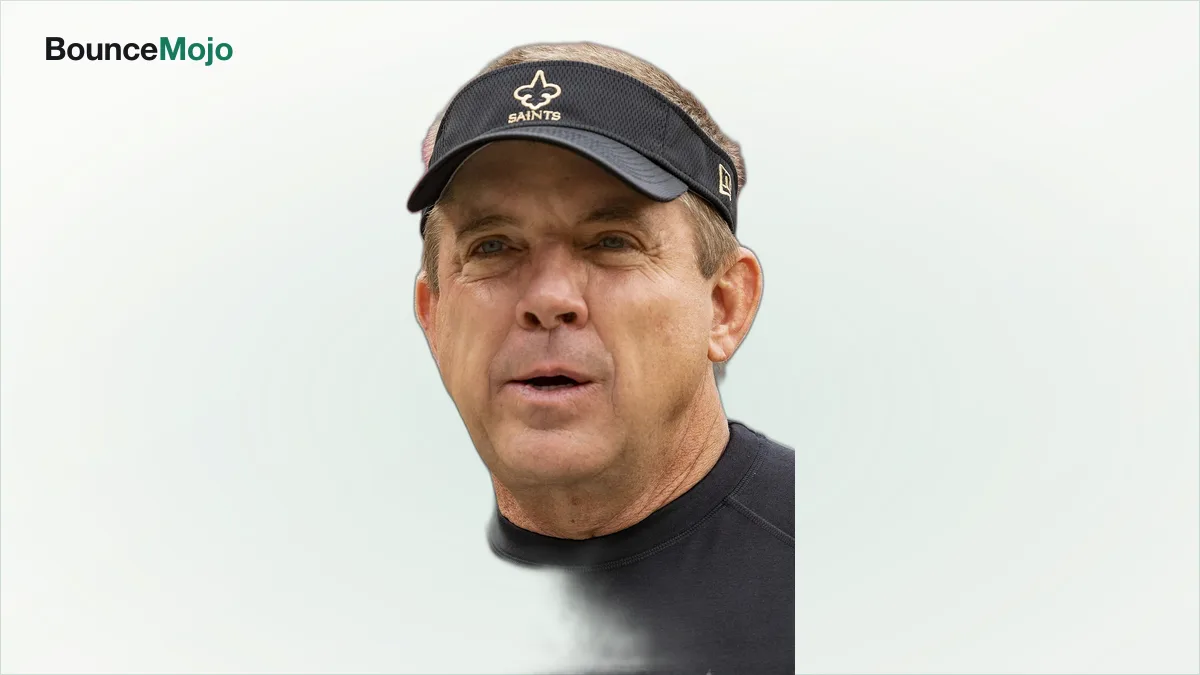
Everybody remembers the Super Bowl trophy and the surprise onside kick. Almost nobody remembers that the man who called it was once a strike-breaking quarterback nobody wanted.
Here’s what most people miss: the thing that should have ended Sean Payton’s football story, being too small and too overlooked to make it as a player, is the exact thing that made him a great coach.
The Myth vs. The Reality
The myth is a swaggering genius. Sean Payton, the offensive mastermind, the gambler who called an onside kick in the Super Bowl and won. A coach who always seemed destined to hoist a trophy.
That version is real. It’s also wildly incomplete.
Here’s the truth: Payton was an undrafted quarterback who couldn’t crack an NFL roster the normal way, who got on the field only as a replacement player during a strike, and who spent years grinding through obscure coaching jobs before anyone took him seriously. The confident play-caller was built on a foundation of rejection.
Think about it. We love a story of the natural-born leader because it makes the trophy look inevitable. But Payton’s path was anything but. He was told, over and over, that he wasn’t good enough as a player. What he had wasn’t destiny. It was a refusal to leave the game that didn’t want him.
Now, that stubbornness came from somewhere. It was forged by a specific upbringing and a specific era of football. Which raises the question: what makes a man this determined to belong?
The World That Made Sean Payton
To understand Payton, you have to understand the football-mad Midwest he came up in.
He was born on December 29, 1963, in San Mateo, California, but grew up in Naperville, Illinois, a suburb of Chicago where high school football mattered and a talented quarterback could dream big. This was the American heartland of the sport, where the game was woven into community life.
But the era mattered too. Payton came of age when the NFL was still a closed, brutally competitive world for quarterbacks, and the paths to a roster were few. He starred at Eastern Illinois University, setting passing records, but the leap from a smaller college program to the pros was a chasm most players never crossed.
Here’s the deal: Payton had a real arm and a sharp football mind, but not the pedigree or the measurables that got quarterbacks drafted in that era. He went undrafted, and the door to the NFL, the only place he wanted to be, stayed shut.
But a shut door didn’t mean he’d stop knocking. And that persistence is where the real story starts.
The Crucible: Early Life and the Climb
The environment that shaped him
One thing defined young Sean Payton: he would not accept that his football life was over.
After going undrafted, he chased the game wherever it would have him, through arena football and minor leagues, refusing to hang it up. Then came the strangest chapter. During the 1987 NFL players’ strike, when regulars walked out, Payton took the field as a replacement quarterback for the Chicago Bears, one of the so-called “Spare Bears.” It was the only way he’d ever play in the NFL, and it came with an asterisk and some scorn.
That’s a specific kind of education: getting your NFL snaps through a side door, knowing the whole world sees you as a fill-in. It could have been humiliating. Payton treated it as proof that he’d do whatever it took to stay in the game.
You might be wondering: how does a replacement-player quarterback become a Super Bowl-winning coach? The answer is that Payton understood the game far better than his playing career ever let him show. When the playing dream finally died, he poured that knowledge into coaching, starting at the very bottom of the college ranks and clawing upward.
By the late 1990s, that grind carried him into the NFL as an assistant. The overlooked quarterback had found his real position: on the sideline.
The catalyst
The catalyst had a name: Bill Parcells.
After coordinator stints with the Eagles and Giants, Payton joined Bill Parcells’ staff with the Dallas Cowboys. Parcells was old-school, demanding and famously hard on his assistants, and he became the mentor who sharpened Payton’s raw, aggressive football instincts into disciplined, championship-level coaching.
Here’s the kicker: Parcells didn’t just teach Payton schemes. He taught him how to run a team, how to manage a locker room, how to handle pressure and the press. Payton’s brash creativity, tempered by Parcells’ rigor, became a formula. That combination is what made him ready when a head-coaching job finally came.
In 2006, the New Orleans Saints hired Payton as head coach. The city was still reeling from Hurricane Katrina, the franchise was a mess, and few expected much. Payton was about to prove all of them wrong.
The replacement quarterback had his own team at last. But what he did with it would tie his name to a city forever.
The Key Players
No career this improbable is a solo act, and Payton was shaped by people who bent his path.
Start with Bill Parcells, the mentor who transformed him. Much of what made Payton a winner, the discipline, the command, the poise under pressure, traces directly back to his years under Parcells in Dallas.
Then there’s Drew Brees, the quarterback Payton built his Saints around. Their partnership, coach and franchise passer, drove one of the most productive offensive eras in NFL history and delivered the championship that defined them both.
And there’s the city of New Orleans itself, a player in the story as much as any person. Payton’s Saints became a symbol of the city’s recovery after Katrina, and that emotional weight turned a football team into something much larger.
There was also Mickey Loomis, the Saints’ general manager, whose long partnership with Payton gave him the stability and roster support to build a consistent winner.
Now: find the right mentor, the right quarterback and the right stage, and you can author something historic. Payton was about to do exactly that. But triumph came with a bill he’d eventually have to pay.
The Turning Point
The pinnacle
The pinnacle came in Miami, in February 2010.
Payton’s Saints reached Super Bowl XLIV against Peyton Manning and the favored Indianapolis Colts. To open the second half, Payton made one of the boldest calls in Super Bowl history, an onside kick nicknamed “Ambush.” It worked, swung the momentum, and New Orleans went on to win the franchise’s first championship.
For a city still rebuilding from Katrina, the victory was about far more than football. And for Payton, the undrafted, replacement-player quarterback, it was total vindication, proof that a lifetime of being underestimated had led somewhere extraordinary.
Across his career, the totals became remarkable: a Super Bowl title, multiple division crowns, one of the most prolific offenses of his era, and a reputation as one of the sharpest play-callers in the sport.
Here’s the truth: he reached the summit of his profession, and the very aggressiveness that got him there would soon get him into trouble.
The price
Because the win-at-all-costs culture Payton fostered had a dark side.
In 2012, the NFL suspended Payton for the entire season over “Bountygate,” a scandal in which Saints players were alleged to have received cash bonuses for hard hits and injuring opponents. It was an unprecedented punishment for a head coach, and it cost Payton a full year of his career and a serious blow to his reputation.
The suspension forced a reckoning. Payton had built a program on toughness and edge, and that same edge had crossed a line the league would not tolerate. He served the year out, then returned in 2013, but the episode permanently complicated the story of his Saints tenure.
He’d spent his whole life fighting to be taken seriously in football. The scandal was a reminder that the drive which built him could also undo him if left unchecked.
The Unvarnished Truth
Payton is not a flawless figure, and pretending otherwise does his story a disservice.
The Bountygate suspension is the obvious mark. Whatever the exact details, it happened on his watch, and he accepted responsibility as the man in charge. It’s a permanent line in his biography.
There’s also the matter of his early self-presentation. Reports over the years suggested Payton embellished aspects of his playing background as he broke into coaching, padding a résumé that couldn’t stand on NFL credentials alone. It’s a very human flaw, an overlooked man trying to be taken seriously, but it’s part of the record.
Here’s what’s easy to miss: his greatest strength and his sharpest flaws come from the same place. The relentless, aggressive, whatever-it-takes drive that made him a champion is the exact thing that pushed him into the Bountygate mess and the early exaggerations. The gift and the risk were the same trait.
None of that erases the trophy. But it does explain why Payton is a more complicated figure than the highlight-reel onside kick suggests.
Controversies and Criticisms
Payton’s career has carried real controversy, and it’s worth being honest about it.
The defining one is Bountygate. The full-season suspension in 2012 was among the harshest penalties ever handed to an NFL head coach, and it attached a lasting asterisk to the Saints’ golden era.
There’s also the long-running critique of his ego and brashness. Payton is confident to the point of abrasive, quick to feuds and bold public statements, and detractors argue that swagger has sometimes gotten ahead of his results outside of New Orleans.
There’s a fairer debate, too, about how much of his success was Drew Brees. Some argue that Payton’s offense was elevated by a Hall of Fame quarterback, and point to leaner years to question how much was scheme versus talent. His work rebuilding a contender in Denver has become part of answering that.
So what does a life like this actually teach the rest of us? A lot, and not the lessons you’d expect.
What We Can Learn From Sean Payton
Navigating hard times
Payton’s real lesson isn’t about winning. It’s about refusing to accept a closed door.
He was undrafted, undersized for the pro game, and reduced to playing as a strike replacement. Most people would have taken the hint and walked away from football. Payton refused, redirecting the same drive into coaching and grinding upward from the bottom until he reached the very top.
In other words: the trophy was the reward. The years of rejection he pushed through to get near it, that was the real work.
The success blueprint
The blueprint here is about converting a failed dream into a better one.
Payton couldn’t make it as an NFL quarterback. But everything he learned trying, the study, the frustration, the intimate understanding of the position, became the foundation of a coaching career far bigger than any playing career he could have had. He didn’t get the job he wanted. He built a better one.
Want the fuller picture of how that translated into wealth? The full net worth breakdown shows how a Super Bowl and a run of premium contracts became a multimillion-dollar fortune. And to see how he ranks among the sport’s biggest earners, the richest coaches list puts it in context.
The deeper takeaway is about reinvention. Payton proved that the role you dream of isn’t always the one you’re meant for. The people who succeed are often the ones who fail at the first version and are humble and driven enough to find the second.
Which brings us to the final reckoning on the man.
Final Verdict
Sean Payton is going to be remembered for the wrong snapshot.
Most people will freeze him at that onside kick, the gambler genius with the trophy. A smaller, smarter group will remember something harder and more valuable: an undrafted quarterback who got onto an NFL field only as a strike replacement, who was told he’d never make it, and who turned that rejection into one of the most respected coaching careers in football.
Here’s the bottom line: the Super Bowl made him famous. The climb to get there, from replacement player to champion coach, made him matter. By refusing to let football discard him, Payton built a career, a fortune, and a bond with a city that outlasts any single game.
He is a Super Bowl-winning coach and one of the sharpest offensive minds of his generation. He is also living proof that being unwanted is not the end of the story, sometimes it’s just the start of a better one. And in the long run, that version, the overlooked man who wouldn’t quit, is the one worth remembering.
Shop Sean Payton on Amazon
Books, audiobooks, merch and more, handpicked for fans.
As an Amazon Associate we earn from qualifying purchases.
Frequently Asked Questions
Where did Sean Payton grow up?+
Payton was born in San Mateo, California, on December 29, 1963, and grew up in Naperville, Illinois, where he starred as a high school quarterback before playing college football at Eastern Illinois University.
Did Sean Payton play professional football?+
Yes, though briefly. Undrafted out of Eastern Illinois, Payton bounced through minor and arena leagues and served as a replacement quarterback for the Chicago Bears during the 1987 NFL players' strike, one of the so-called 'Spare Bears.'
Who was Sean Payton's coaching mentor?+
Payton's most important mentor was Bill Parcells, under whom he coached with the Dallas Cowboys. Parcells sharpened Payton's discipline and game management before Payton became a head coach in New Orleans.
What did Sean Payton win with the Saints?+
Payton led the New Orleans Saints to victory in Super Bowl XLIV in February 2010, the franchise's first championship, in a run that became a symbol of the city's recovery after Hurricane Katrina.
What was the Bountygate scandal?+
In 2012, Payton was suspended for the entire season over 'Bountygate,' a scandal in which Saints players were alleged to have received bonuses for injuring opponents. He returned to coaching in 2013.
Want the money side of the story?
Read Sean Payton's Full Net Worth Breakdown →Shop Sean Payton on Amazon
Books, audiobooks, merch and more, handpicked for fans.
As an Amazon Associate we earn from qualifying purchases.