Sanya Richards-Ross Biography: The Reluctant Champion's Grace
Most people know Sanya Richards-Ross as the smooth, dominant 400m runner who finally won her Olympic gold in London. That version is true, and it skips the part that actually explains her.
Here’s what most people miss: for years, the best quarter-miler in the world was also the most haunted, chasing a single individual gold that kept slipping away, and carrying a private doubt no amount of speed could outrun.
The Myth vs. The Reality
The myth is effortless. Sanya Richards-Ross: the elegant sprinter, the model of a champion, gliding around the track in a way that made 400 meters of agony look like art. Beautiful, dominant, inevitable.
The reality carried far more weight.
Here’s the deal: for most of her prime, Richards-Ross was the best 400m runner alive and yet, at the biggest moments, she kept falling short of individual Olympic gold. She won everything else. Relays, world titles, Diamond League circuits. But the single medal that defines a quarter-miler stayed out of reach far longer than her talent said it should.
And the “graceful superstar” framing misses the pressure entirely. Behind the poise sat a woman wrestling with expectation, faith and a health scare, all while carrying the label of the runner who was supposed to win but hadn’t yet.
You might be wondering: how does the most dominant 400m runner of her era spend years chasing the one thing that keeps eluding her? To understand that, you have to go back to Kingston.
The World That Made Sanya Richards-Ross
Richards-Ross was born in 1985 in Kingston, Jamaica, on an island where sprinting is a national religion.
She started running as a little girl, competing by age seven, surrounded by a culture that treats fast children as future heroes. But her parents wanted more than local glory. When she was 12, the family made a life-altering move to Fort Lauderdale, Florida, chasing the American high-school and college pipeline that could turn talent into a scholarship and a career.
Now: the world of elite women’s 400m running she was entering is one of the most punishing in all of sport. The event is a full-speed sprint stretched past the point of pain, a race that hollows out even the fittest athletes in its final meters. It rewards not just speed but nerve, and it breaks runners who can’t handle the last 100 meters when their legs turn to concrete.
That world, brutal, unforgiving and mentally merciless, is the arena where Richards-Ross would build her greatness and meet her demons. And she entered it as an immigrant kid determined to justify her family’s sacrifice.
But before the Olympic stage, there was a teenager becoming unbeatable in Texas.
The Crucible: Early Life and the Climb
The Environment That Shaped Her
The move to Florida worked. Richards-Ross became a high-school star, then landed at the University of Texas, where she won multiple NCAA championships and established herself as the best collegiate quarter-miler in the country.
She turned pro and immediately dominated. Fast, fluid and relentless, she ran the 400m better than anyone on the planet for stretches of the 2000s, breaking the American record and stacking up world titles and circuit wins. Her Jamaican roots and Texas polish combined into a runner who looked destined for everything.
This is crazy: by her early twenties, Richards-Ross was already the woman to beat in her event worldwide, and the expectations only grew heavier.
Here’s the truth: the talent arrived early and obvious. The mental battle, the part of the story that actually tested her, was still to come.
The Catalyst
The turning point wasn’t a win. It was a loss that stung for years.
At the 2008 Beijing Olympics, Richards-Ross was the overwhelming favorite in the 400m. She led. And then, in the final meters, her legs betrayed her and she faded to bronze, watching a gold she was supposed to own slip away. It was the kind of defeat that can define, or destroy, a career.
That heartbreak changed her. She had to decide whether the label “best runner who can’t win the big one” would become permanent.
It gets better, and harder. Instead of breaking, Richards-Ross spent the next four years rebuilding her body and her nerve for one more shot at the medal that had escaped her. But she didn’t do it alone.
The Key Players
No champion climbs solo, and Richards-Ross’ story is full of people who held her up.
Her family. The parents who uprooted their lives in Jamaica gave her both the opportunity and the sense of purpose that drove her. Their sacrifice was the pressure and the fuel behind every race.
Aaron Ross. She met the future NFL cornerback during her University of Texas years, and the two married in 2010. His parallel life as a two-time Super Bowl champion made them one of sport’s notable power couples, and gave her a partner who understood the weight of elite competition.
Her coaches. The technical guidance that shaped her flawless 400m form and rebuilt her confidence after Beijing came from a tight circle of trainers who believed the gold was still there.
Her faith. More than any person, Richards-Ross has credited her Christian faith as the steadying force through the doubt, the injuries and the pressure. It became the frame for her whole story.
Think about it: every one of these anchors pointed toward the same test, standing on the line in London with one last chance to become an Olympic champion. That test arrived in 2012.
The Turning Point
The Pinnacle
London, 2012. The redemption she’d chased for four years.
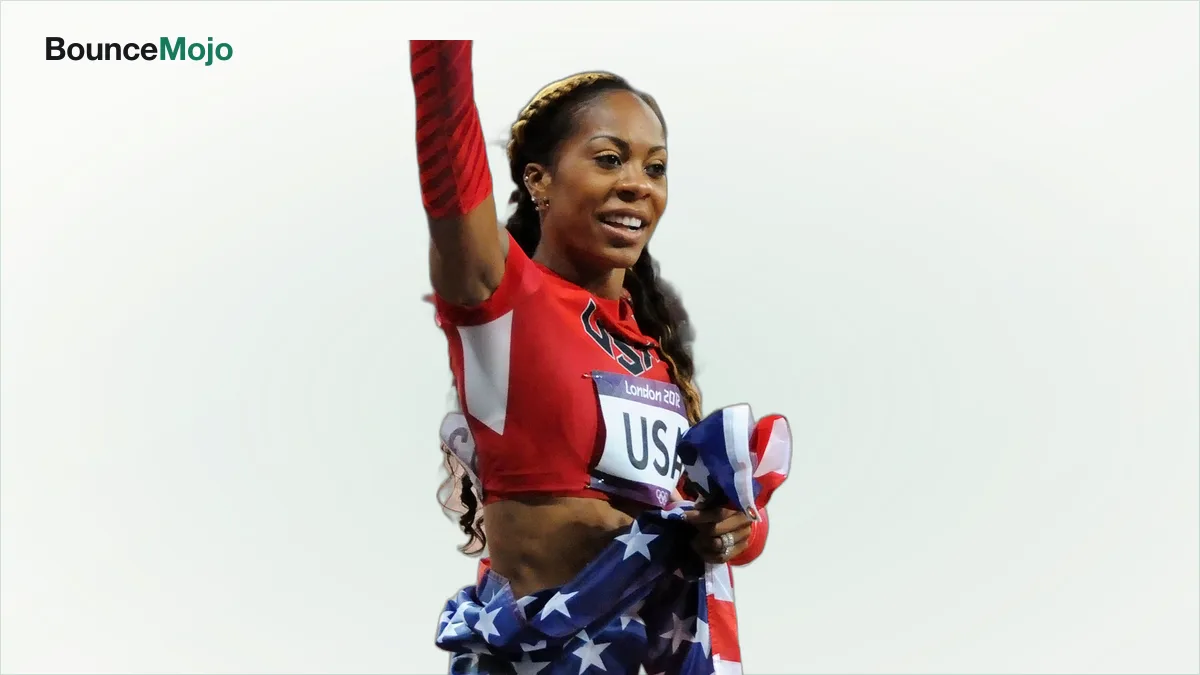
This time, Richards-Ross ran the race of her life and finally won individual 400m Olympic gold, erasing the ghost of Beijing and claiming the title her career had been missing. She added a 4x400m relay gold at the same Games, her third Olympic relay title after 2004 and 2008.
As her own net worth story explains, that London gold was the crown on a career that also included a 2009 world 400m title and years atop the sport. She had answered every doubt.
The image endured: the dominant runner who was supposed to win, finally winning, on the biggest stage there is.
The Price
Here’s the kicker: the wait cost her.
Those years between Beijing and London were heavy with pressure, injury and the quiet fear that the gold might never come. She competed while managing a health condition, Behçet’s syndrome, an autoimmune disorder she has spoken about publicly, and carried the mental burden of being a favorite who kept falling short.
That she reached the summit at all is what makes the story land. But the toll of chasing it, physically and emotionally, was real, and it set up the harder truths beneath the poised exterior.
The Unvarnished Truth
Richards-Ross is not a serene, untroubled champion, and treating her that way erases her courage.
In her memoir and interviews, she has been strikingly honest about her struggles: the crushing pressure, the doubt, and a painful decision she disclosed about ending a pregnancy before the 2008 Olympics, a choice she has said she deeply regretted and wrestled with for years. She has spoken candidly about the guilt, the faith crisis and the healing that followed.
Now: none of that honesty is weakness. It’s the opposite. A champion willing to reveal her hardest private moments in print, knowing the judgment it would invite, showed a different kind of strength than any race required.
But the honest version matters. Richards-Ross’ calm surface hid real anguish, and her willingness to name it, rather than protect the perfect image, is part of why her story resonates far beyond track fans.
The most honest thing anyone can say about her is this: her grace was never the absence of pain. It was what she chose to do with it.
Controversies and Criticisms
Richards-Ross’ career and public life drew their share of scrutiny.
The Beijing collapse. For years, critics used her 2008 fade as proof she couldn’t win when it mattered most. That narrative followed her until London silenced it, but it defined how she was covered for a full Olympic cycle.
The memoir revelation. Her disclosure in Chasing Grace about ending a pregnancy before the 2008 Games sparked intense public debate and criticism from multiple directions. Some praised her honesty; others judged her harshly. She has said she shared it to help others and to be truthful about her faith journey.
The reality-TV turn. Joining The Real Housewives of Atlanta surprised fans who saw her as a serious, faith-centered athlete. Some felt the franchise clashed with her image, while others saw a savvy media move. She weathered the mixed reaction and used the platform on her own terms.
The through-line is clear: Richards-Ross was criticized most for being honest and for refusing to stay boxed into a single image, and that refusal is exactly what made her a fuller, more human figure than her medals alone suggest.
What We Can Learn From Sanya Richards-Ross
Navigating Hard Times
The first lesson is about persistence through public failure: a single devastating loss does not have to be the end of your story. Richards-Ross faded to bronze on the sport’s biggest stage, absorbed years of doubt, and came back to win the gold anyway. She teaches that redemption is a choice you make after the failure, not a gift.
But here’s the truth her story makes plain: surviving the setback wasn’t enough. She had to rebuild her nerve, her body and her faith to try again, and that rebuilding, not the talent, is what delivered London.
The Success Blueprint
If you want the replicable part, it’s this: Richards-Ross planned her second act before her first one ended. She built a media presence, wrote a book and diversified her income while still competing.
That’s transferable. The lesson isn’t “run a fast 400.” It’s “your peak has an expiration date, so build the next thing before you need it.” Her transition into broadcasting, media and business put her among the more financially stable retired stars, and as our richest Olympians ranking shows, the athletes who last are the ones who plan the exit.
Becoming Better
The deepest lesson is about honesty as strength. Richards-Ross could have protected a flawless image forever. Instead she told the hardest truths about her life, knowing the cost.
In other words, she became better by refusing to perform perfection, converting private pain into a message that helped others feel less alone. That’s a victory no medal count measures.
Final Verdict
Sanya Richards-Ross is one of the greatest 400m runners in history, and the word “great” undersells the arc. She didn’t just win gold. She won it after years of falling short, and then told the world the unvarnished truth about what the chase cost her.
And here’s the twist that reframes everything: the runner who looked the most effortless was carrying some of the heaviest weight, and she turned that weight into her most lasting work off the track. Her memoir, Chasing Grace, is where the poised champion finally speaks plainly, and it’s worth reading for anyone who wants to understand what grace under pressure actually feels like from the inside.
If her story teaches anything, it’s that the real race is rarely the one on the track, and that the bravest thing a champion can do is admit, out loud, how hard the winning really was. The full picture of how her career and her honesty translated into a lasting living lives in her net worth breakdown, and it’s the rare champion’s ending where the truth she told matters as much as the medals she won.
Shop Sanya Richards-Ross on Amazon
Books, audiobooks, merch and more, handpicked for fans.
As an Amazon Associate we earn from qualifying purchases.
Frequently Asked Questions
Where did Sanya Richards-Ross grow up?+
She was born in Kingston, Jamaica, and started running as a child there. At age 12, her family moved to Fort Lauderdale, Florida, so she could chase an American athletic scholarship.
What is Sanya Richards-Ross' greatest achievement?+
Her defining triumph was winning the individual 400m gold at the 2012 London Olympics, capping years as the world's dominant quarter-miler. She also won three Olympic relay golds.
What is Chasing Grace about?+
Chasing Grace is Richards-Ross' 2017 memoir, which frames her career around the four phases of a race (push, pace, position and poise) and connects each to lessons about faith and life.
Who is Sanya Richards-Ross married to?+
She is married to Aaron Ross, a former NFL cornerback who won two Super Bowls with the New York Giants. The couple has been together since her University of Texas days.
Was Sanya Richards-Ross on reality TV?+
Yes. She joined The Real Housewives of Atlanta for its fourteenth and fifteenth seasons, one of several media ventures she pursued after retiring from track.
Want the money side of the story?
Read Sanya Richards-Ross's Full Net Worth Breakdown →Shop Sanya Richards-Ross on Amazon
Books, audiobooks, merch and more, handpicked for fans.
As an Amazon Associate we earn from qualifying purchases.